Skip to content


Easy dinner recipes for one are single-serving meals built around one portion, not a family recipe cut in half. This guide shows how to scale recipes down, pick the right pan, use up small amounts of ingredients, and freeze single portions. The featured recipe is a creamy Tuscan chicken for one, ready in 30 minutes.
Cooking for one is the hardest serving size in the kitchen. Recipes are written for four, grocery packs are sized for a family, and a single chicken breast can feel like too much effort for one plate. If you want comfort food tonight, our comfort food suggestions page is the place to start, and this guide is the one that teaches you to cook it for one.
This guide works in a different order from most dinner lists. It starts with the math for scaling a recipe down, then the pans and tools that fit one portion, then seven dinner patterns you can cook without a recipe. After that comes one full recipe measured for one person, a plan for using up small amounts, and a freezer system that keeps single portions ready.
What cooking dinner for one really means
Three things go wrong when you cook for one. First, the math fights you, because a recipe for four does not divide neatly into one portion. Second, the shopping fights you, because ingredients come in packs sized for a family. Third, the pan fights you, because a small amount of food in a big pan dries out and overcooks at the edges.
There are three ways to deal with it, and most solo cooks use all three. You can scale a recipe down to one serving, which suits fresh food like fish, eggs, and salads. You can cook the full recipe and freeze the rest in single portions, which suits soups, stews, and casseroles. Or you can cook a solo portion from the start, which suits a single chicken thigh or a single fillet of fish.
The trick is picking the right approach for the dish in front of you. Food that keeps well and tastes better the next day is worth cooking in full. Food that depends on freshness is worth cooking as one portion. The sections below show how to tell the difference, and the recipe at the end puts it all together in one pan.
How to scale any recipe down for one person
The quarter rule and the half rule
Most recipes serve four, so one serving is a quarter of the recipe. Divide each ingredient by four and you have the amounts for one plate. That sounds simple, and for dry goods like rice and pasta it is. One portion of dry pasta is about 90 to 110 grams, and one portion of dry rice is about 75 to 90 grams.
Halving is often the easier move. Cut a four-serving recipe in half and you get two servings, which is dinner tonight and lunch tomorrow. Cut it in half again and you have one serving. If the dish is meant for a family table, our easy dinner ideas for family page covers the full-size versions, and this guide covers the single-serving side.
The halving cheat sheet
Some amounts divide neatly and some do not. The table below comes from the University of Illinois Extension guide to cooking for one or two, and it is worth keeping inside a cabinet door. Use it whenever a recipe gives you an amount that does not divide cleanly.
| When the recipe calls for | Use for half |
|---|---|
| 1/4 cup | 2 tablespoons |
| 1/3 cup | 2 tablespoons + 2 teaspoons |
| 1/2 cup | 1/4 cup |
| 2/3 cup | 1/3 cup |
| 1 tablespoon | 1 1/2 teaspoons |
| 1 teaspoon | 1/2 teaspoon |
| 1/2 teaspoon | 1/4 teaspoon |
| 1/4 teaspoon | 1/8 teaspoon |
| 1/8 teaspoon | a dash |
Salt, spices, and eggs do not scale the same way
Salt and spices hit harder in a small batch, so cut them back more than the rest. Start with a little less than the scaled amount, taste, and add more. You can always add more salt. You cannot take it away, and a small pan of food has nowhere to hide an oversalted bite.
Eggs are the other problem. A recipe that calls for three eggs does not divide into one serving, because you cannot use three quarters of an egg easily. Dietitian Julie Garden-Robinson of North Dakota State University Extension suggests using two eggs and removing 2 to 4 tablespoons of liquid from the recipe. If a recipe calls for one egg, just leave it in, because one egg still does its job in a smaller dish.
Time and temperature when you cook less
Oven temperature stays the same when you scale a recipe down. Only the time changes, and it changes by less than you might expect. A single chicken thigh roasted at 400 degrees still takes about 30 minutes, while four thighs take about 35. Check for doneness about 5 to 10 minutes sooner than the recipe says, and trust what you see over the clock.
The stovetop is faster for the same reason. One chicken thigh pulls less heat from the pan than four, so it browns sooner. A slow cooker is the exception, because it needs to be at least half full to cook properly. A 2-quart slow cooker fits one or two people, while a single serving in a big one can dry out.
The right size pan and the right tools for one
Pans that fit one portion
The pan matters more than the recipe when you cook for one. A small amount of food in a big pan spreads out too thin, dries out, and overcooks at the edges. The rule is simple. If the food barely covers the bottom of the pan, the pan is too big, so switch to a smaller one.
An 8-inch skillet is the workhorse for one person. It fits a single chicken thigh, one fish fillet, or a small stir-fry, and the food stays deep enough to brown instead of steam. A 1-quart saucepan handles one portion of soup or sauce. A halved casserole goes in an 8×8 dish instead of a 9×13, and a loaf pan works for small baked dishes.
The small tools worth owning
You do not need a new kitchen, just a few small pieces. A small baking dish or a couple of ramekins handles casseroles and baked pasta for one. A set of 1-cup and 2-cup containers makes portioning and freezing easy. A toaster oven or an air fryer heats fast and fits a single portion without warming up a full oven.
A kitchen scale earns its place faster than anything else on this list. It takes the guesswork out of scaling, because 100 grams of dry pasta is one generous serving and 150 to 200 grams of raw chicken is one portion. Once you know those two numbers, most recipes stop needing math at all.
Seven single-serving dinner patterns that always work
You do not need a recipe every night. Seven patterns cover almost every solo dinner, and each one starts with a single unit of protein, one vegetable, and one starch. Learn the patterns and the shopping list writes itself, because the same few ingredients show up in all of them.
One chicken thigh with vegetables
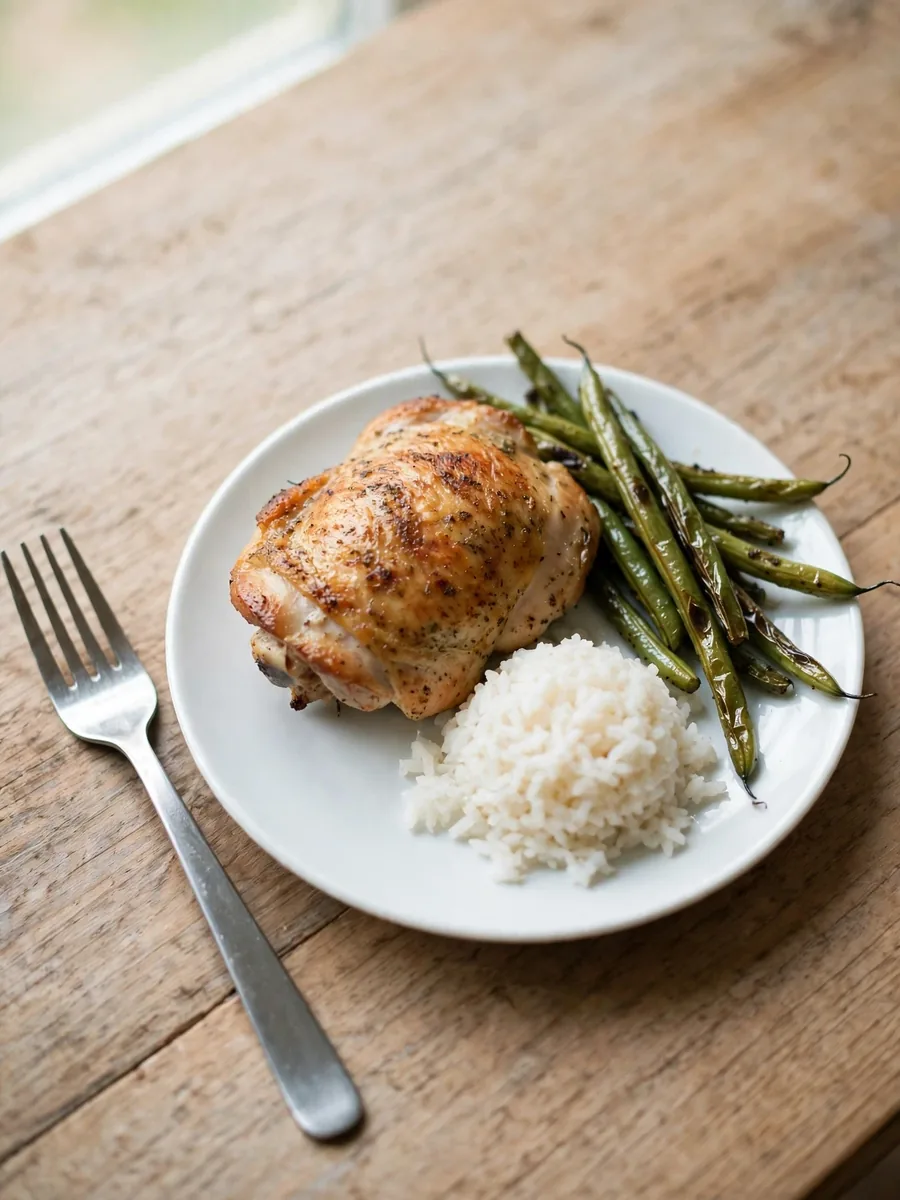
A single chicken thigh with a vegetable and a starch is the weeknight default for solo cooks. It takes about 35 minutes in a 400 degree oven on a small sheet pan, with crisp skin and roasted vegetables on the side. Buy one thigh at the meat counter, or portion a family pack into single bags and freeze them flat.
One fillet of fish
One fillet of fish cooks in about 10 minutes and needs no scaling at all. A 6 to 8 ounce fillet pan-roasts in 4 minutes per side with butter and a herb, and it pairs with rice or a small salad. For a fuller fish dinner, our steelhead trout recipe works the same way, and these quick single serve fish dinners cover more single-fillet ideas.
One egg or two
Eggs are the most solo-friendly protein there is, because the unit is the egg. A frittata for one cooks in an 8-inch skillet, shakshuka works in a small pan, and soft-scrambled eggs with toast make a real dinner in 10 minutes. Fried egg and rice is the fastest option, and it uses up leftover rice from the night before.
One portion of pasta
Pasta is the easiest solo dinner to size, because you cook exactly as much as you want and the rest of the box keeps. One portion is about 100 grams of dry pasta, and olive oil with garlic, lemon, parsley, and Parmesan turns it into dinner. These simple solo cooking ideas include more one-bowl pasta nights that follow the same pattern.
One grain bowl
A grain bowl is half a cup of cooked grain, a protein, a vegetable, and a sauce. The dressing and the protein change while the structure stays the same, which makes it the most flexible solo dinner there is. Cook the grain in a batch on Sunday, keep it in the fridge, and build a different bowl from it each night.
One pot of soup or stew
Soup is the one solo dinner where cooking the full recipe is usually the right call. A full pot scales badly in reverse, but it freezes beautifully in single portions. Make the pot on Sunday, eat one bowl fresh, and freeze the rest in 1-cup containers. Cook fresh pasta or rice separately when you reheat, so it does not turn to mush in the soup.
One sheet pan dinner
A sheet pan dinner for one is one piece of meat and a cup or two of vegetables on a small pan. Use the same temperature as the full recipe and check about 5 minutes early. Everything cooks together, the pan goes in the dishwasher, and there is nothing else to wash. It is the lowest-effort real dinner on this list.
The featured recipe: Creamy Tuscan chicken for one
Prep time: 5 minutes
Cook time: 25 minutes
Serves: 1 serving
Why this recipe leads the guide
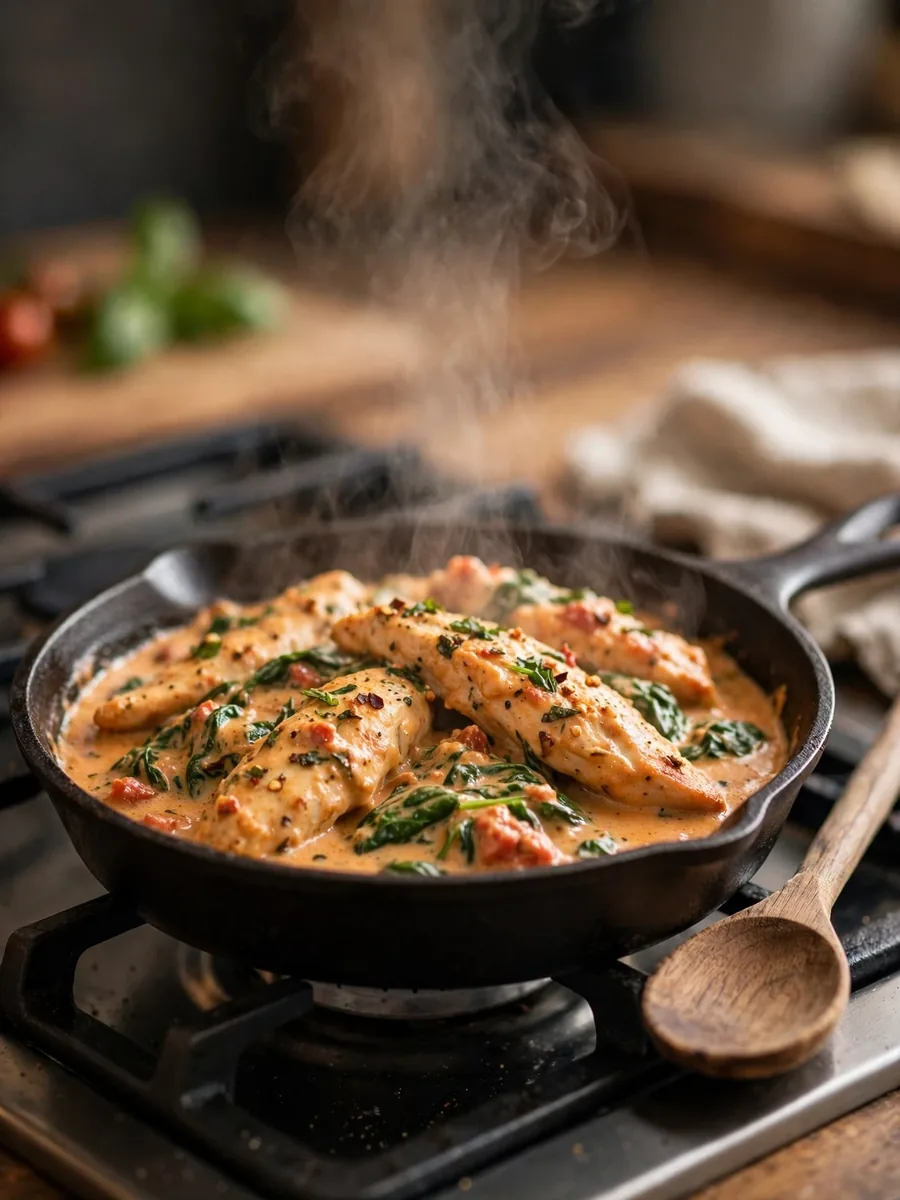
This recipe leads the guide because it is built for one from the start, not scaled down from a family dinner. One chicken breast, one cup of broth, and one cup of spinach go into a single skillet, and the sauce comes together in the same pan. It takes 30 minutes from start to finish, and there is nothing left over to store.
The amounts below come from One Dish Kitchen, where the recipe is by Joanie Zisk, a chef and the author of The Ultimate Cooking for One Cookbook. One Dish Kitchen publishes 601 calories per serving for this exact recipe, so the figure on this page matches the dish you are actually making. The sauce is rich, so serve it on its own or over a small portion of pasta or rice.
Ingredients
- 1 tablespoon all purpose flour
- 1/8 teaspoon salt
- 1/8 teaspoon black pepper
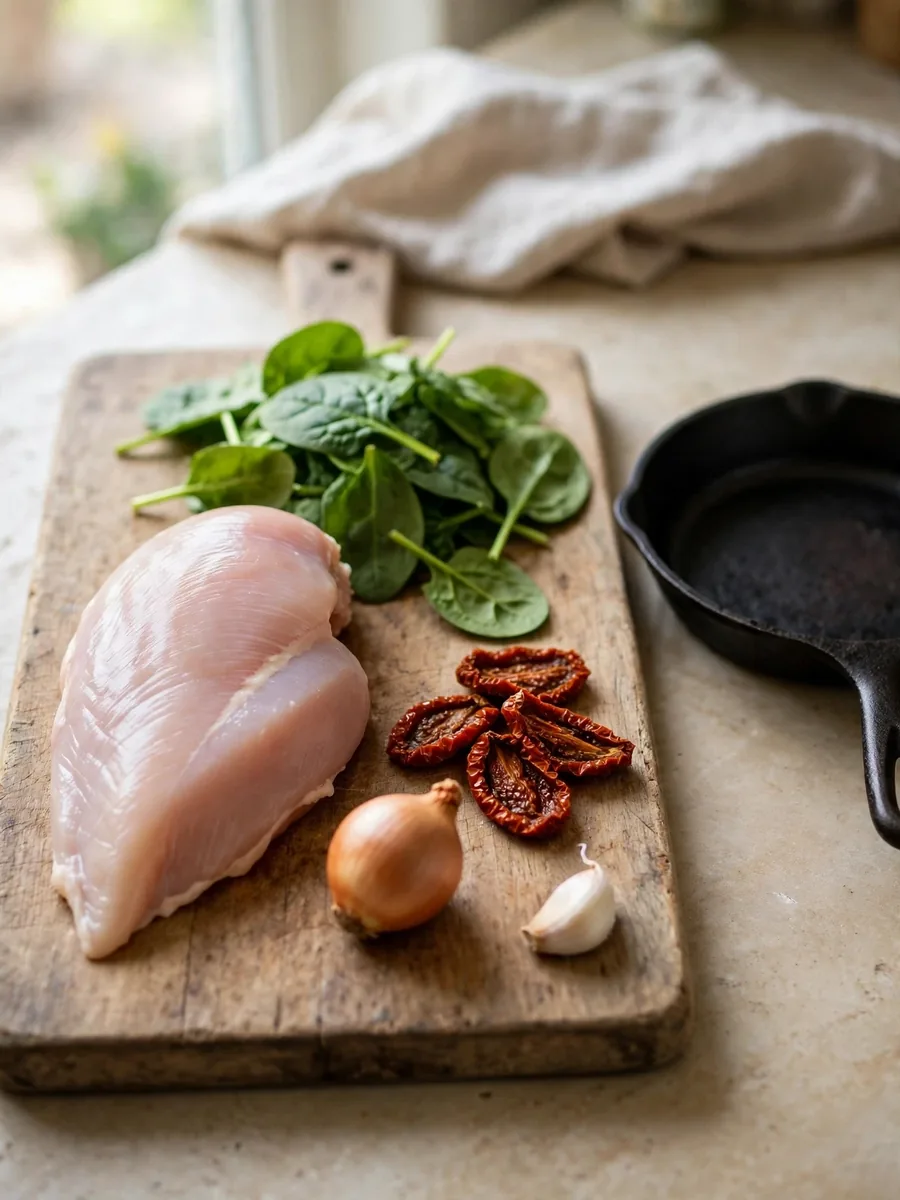
- 1 (5 to 6 ounce) boneless, skinless chicken breast, sliced into 1/4 inch strips
- 1 tablespoon olive oil
- 1/2 cup chopped onions
- 1 clove garlic, minced
- 1/8 teaspoon red pepper flakes, optional
- 1 cup low sodium chicken broth
- 1/4 cup heavy cream
- 2 tablespoons sun-dried tomatoes, packed in oil
- 1 teaspoon tomato paste
- 1/4 teaspoon Italian seasoning
- 2 tablespoons grated Parmesan cheese
- 1 cup fresh spinach, packed
- 2 to 3 fresh basil leaves, torn
Steps
- Mix the flour, salt, and pepper in a small bowl. Slice the chicken breast into strips about 1/4 inch thick, then turn them in the flour mixture until each strip is coated.
- Heat the olive oil in a 10-inch skillet over medium heat. Lay the chicken strips in the pan and cook for 3 minutes without moving them, then flip and cook for 3 more minutes until browned and cooked through. Move the chicken to a plate.
- Add the chopped onions to the same pan and cook for about 2 minutes, until soft and clear. Stir in the garlic and red pepper flakes and cook for 30 seconds more.
- Pour in the chicken broth and scrape up the browned bits from the bottom of the pan with a wooden spoon.
- Stir in the cream, sun-dried tomatoes, tomato paste, and Italian seasoning. Bring it to a boil, then turn the heat down to medium-low and simmer uncovered for 3 to 5 minutes, until the sauce thickens and reduces by about half.
- Stir in the Parmesan cheese and the spinach. Keep simmering until the spinach wilts into the sauce.
- Return the chicken to the pan and simmer until it is warmed through. If the sauce is too thick, stir in more cream one tablespoon at a time.
- Spoon the chicken and sauce into a bowl and top with the torn basil leaves. Serve at once.
Using up small amounts before they go bad
Solo cooking leaves small amounts behind. Half an onion, a splash of cream, a cup of broth, and a few sun-dried tomatoes sit in the fridge after the lead recipe, and each one has a second dinner in it. The trick is to plan the second dinner before you cook the first, so nothing waits long enough to spoil.
The leftover cream goes into a small pot of soup or a pan sauce the next night. The spinach wilts into eggs or a quesadilla. The broth cooks one portion of rice or a cup of orzo. The sun-dried tomatoes and Parmesan top a piece of toast or a small pasta. One shopping trip feeds three dinners when the ingredients overlap this way.
The ingredients that last longest
Buy for shelf life when you shop for one. Carrots, celery, onions, and cabbage keep for two to three weeks in the fridge, and potatoes keep for weeks in a cool, dark spot. Leafy greens last three to four days, mushrooms four to five, and berries three to four, so buy those only when you have a plan to use them within a few days.
Freezer portions for one
The freezer is what makes solo cooking cheap. Cook a full pot of something that freezes well, eat one serving fresh, and portion the rest into single servings right away, while it is still warm. Label every container with the dish name and the date, because two months from now you will not remember what the mystery container holds.
Soups, stews, chili, casseroles, cooked chicken, cooked ground beef, cooked rice, and cooked beans all freeze well. Casserole recipes are a good place to start, because one dish holds the protein, the starch, and the vegetables together, and a halved casserole fits a single-serving container. Potatoes turn grainy after freezing, cream sauces can separate, and pasta cooked in soup turns to mush, so leave those out or add them fresh when you reheat.
Storage times come from the FoodSafety.gov cold food storage chart. Soups and stews keep 3 to 4 days in the fridge and 2 to 3 months in the freezer. Cooked meat or poultry keeps 3 to 4 days in the fridge and 2 to 6 months in the freezer. Frozen food kept at 0 F or below stays safe indefinitely, and the months on the chart are about quality, not safety.
A simple week of dinners for one
A week of solo dinners does not need seven different recipes. It needs three fresh dinners, two planned leftovers, and two freezer portions, with the same few ingredients doing double duty. The table below uses the patterns from this guide, and the lead recipe fits on any night you want something richer.
| Day | Dinner |
|---|---|
| Monday | Creamy Tuscan chicken for one |
| Tuesday | One chicken thigh with green beans and rice |
| Wednesday | Leftover Tuscan chicken over pasta |
| Thursday | One fillet of fish with a small salad |
| Friday | Freezer soup or chili |
| Saturday | One portion of pasta with garlic and Parmesan |
| Sunday | Sheet pan sausage and vegetables |
If the week fills up, these fast weeknight meals are the ones to reach for first, because they are built for nights when cooking feels like too much effort. Keep two freezer portions on hand at all times, and a busy week still ends with a real dinner.
Troubleshooting solo dinners
The chicken came out dry
Dry chicken usually means the pan was too big or the heat was too high. A small amount of food in a wide pan overcooks at the edges before the middle is done. Use the 8-inch skillet, keep the heat at medium, and slice the breast into thin strips so it cooks in 3 minutes per side.
The sauce is too thin
A thin sauce usually means it did not simmer long enough to reduce. Let it bubble uncovered for another 2 to 3 minutes and it will thicken as the liquid cooks off. If it is still thin, stir in more Parmesan one tablespoon at a time, because the cheese thickens the sauce as it melts.
The sauce is too thick
A thick sauce is the easiest fix on this list. Stir in more cream one tablespoon at a time until it loosens to the texture you want. A splash of broth works too, and it keeps the sauce from getting richer with every spoonful you add.
You still made too much food
It happens, even with the math in this guide. Portion the extra into a single-serving container before you sit down to eat, so it goes into the freezer instead of the fridge, where it would sit until it spoils. Label it with the name and the date, and it becomes a freezer dinner for next week instead of waste.
It tastes flat
A small batch can taste flat when the seasoning was scaled down too far. Taste the dish, add a pinch of salt, and finish with a squeeze of lemon or a spoonful of Parmesan. Acid and salt wake up a sauce faster than more spice, and both are already in the kitchen.
Frequently asked questions
How do I cook for one without wasting food?
Buy smaller amounts or use the freezer. Freeze extra bread, cooked rice, sliced meat, and sauce in single portions, and plan meals that share ingredients. Cook a double portion of a recipe that freezes well and eat the second serving later in the week.
What are easy meals to make for one person?
An omelet with toast, pasta with a quick sauce, a single-serve stir-fry, quesadillas, rice bowls, a baked potato with toppings, and a sheet-pan chicken thigh with vegetables. These cook in one pan and make a single serving without leftovers, or one extra serving for tomorrow's lunch.
How long do leftovers last in the fridge and freezer?
FoodSafety.gov gives 3 to 4 days in the fridge for cooked meat, poultry, soups, and stews. In the freezer, soups and stews keep 2 to 3 months and cooked meat or poultry keeps 2 to 6 months. Frozen food kept at 0 F or below stays safe indefinitely, and the months on the chart are about quality.
What size pan should I use when cooking for one?
Use an 8-inch skillet for a single chicken thigh or fish fillet, a 1-quart saucepan for one portion of soup or sauce, and an 8x8 dish instead of a 9x13 for a halved casserole. If the food barely covers the bottom of the pan, the pan is too big.