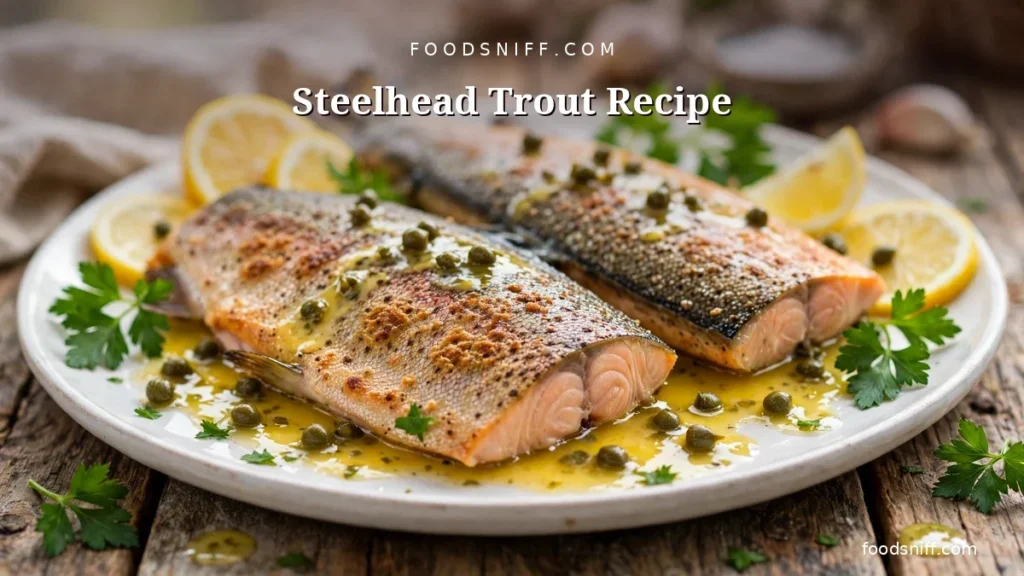
Steelhead Trout, Pan Seared in 25 Minutes
A steelhead trout recipe works best when you treat the fish like what it is: a lean trout that cooks fast and dries out faster. Pan sear skin-on fillets for about 3 minutes a side, then finish them in a lemon butter caper sauce. The whole meal lands in 25 minutes, and the fish stays flaky instead of chalky.
The sauce does the heavy lifting here. Butter, lemon juice, capers, and garlic take about 2 minutes in the same pan, and they give the mild fish the punch it needs. No marinade, no overnight plan, no special equipment beyond a skillet and a thermometer.
This recipe uses four fillets and serves four people. It fits a weeknight, but it also holds up for guests, since the fish looks like salmon on the plate and costs less at most fish counters.
Is Steelhead Trout the Same as Salmon?
No, and the difference matters at the stove. Steelhead is the sea-run form of rainbow trout, Oncorhynchus mykiss. It belongs to the salmon family, but it is not a salmon species. The pink-orange flesh fools people at the fish counter, and the name “steelhead salmon” on some menus does not help. NOAA Fisheries describes steelhead as a sea-run rainbow trout, and that classification is the whole story.
The flesh tells you the rest. Steelhead runs milder and a little leaner than most salmon, with a clean, lightly sweet flavor and a flaky texture. Salmon, especially Chinook or Atlantic, carries more fat, which gives it a richer taste and a wider margin for error.
Why the Fat Gap Changes Your Cooking Time
Steelhead has less of that cushion. One comparison of the two fish puts the fat gap at roughly 15 to 20 percent less in steelhead, and notes that steelhead dries out 2 to 4 minutes faster than salmon in the same pan.
That gap is the reason so many steelhead recipes disappoint. Cooks use salmon timing on a leaner fish, then wonder why the fillet turns dry. Pull steelhead a few minutes earlier than you would salmon, and the problem mostly disappears.
Swapping Salmon and Steelhead
Substitution works in both directions, with one adjustment. If a recipe calls for salmon and you have steelhead, cut the cooking time by about a quarter and check doneness early. If a recipe calls for steelhead and you have salmon, add a couple of minutes and lean on the thermometer.
What to Buy, Fresh or Frozen
Price is the other reason to learn this fish. Steelhead usually sells for less than salmon at the same counter, and it shows up fresh more often in shops that do not carry a wide salmon selection. For a family fish dinner, that price gap adds up fast, and these easy fish dinner recipes stretch the same idea across other catches too.
Skin On or Skinless
Buy skin-on fillets when you can. The skin protects the flesh in the pan, crisps up into the best part of the dish, and tells you at a glance which side goes down first.
Skinless fillets cook fine, but they stick more easily and lose that crisp edge. Ask the fishmonger to pin bone the fillets, or run your fingers along the center line at home and pull any pin bones out with tweezers.
How to Pick Fresh Fillets
Fresh steelhead should smell like clean water, not like fish. The flesh should look bright pink-orange and spring back when you press it. Dull color, a strong smell, or flesh that stays dented means the fillet has sat too long. FDA consumer advice says to cook or freeze fresh seafood within two days of purchase, so buy it the day you plan to cook it, or the day before at most.
Frozen Steelhead Works Too
Frozen steelhead is a solid backup, and it is often the better buy outside coastal cities. Thaw it overnight in the fridge, never on the counter, and pat it very dry before it hits the pan. Water on the surface is the enemy of a good sear. A wet fillet steams instead of browning, and the skin never crisps.
Thickness Decides the Time
Fillet thickness decides the cooking time more than weight does. A fillet that is 1 inch thick at its center needs about 3 minutes per side in a hot skillet. A thin tail piece, closer to 1/2 inch, needs about 2 minutes per side. If your fillets vary in thickness, start the thick ones first and add the thin ones a minute later, so everything finishes together.
How to Cook Steelhead Trout
Prep time: 10 minutes | Cook time: 15 minutes | Total time: 25 minutes | Serves: 4 | Category: Main Dishes
Season the fish, heat the pan, and work in order. The sauce comes together while the fillets rest, so nothing sits around getting cold.
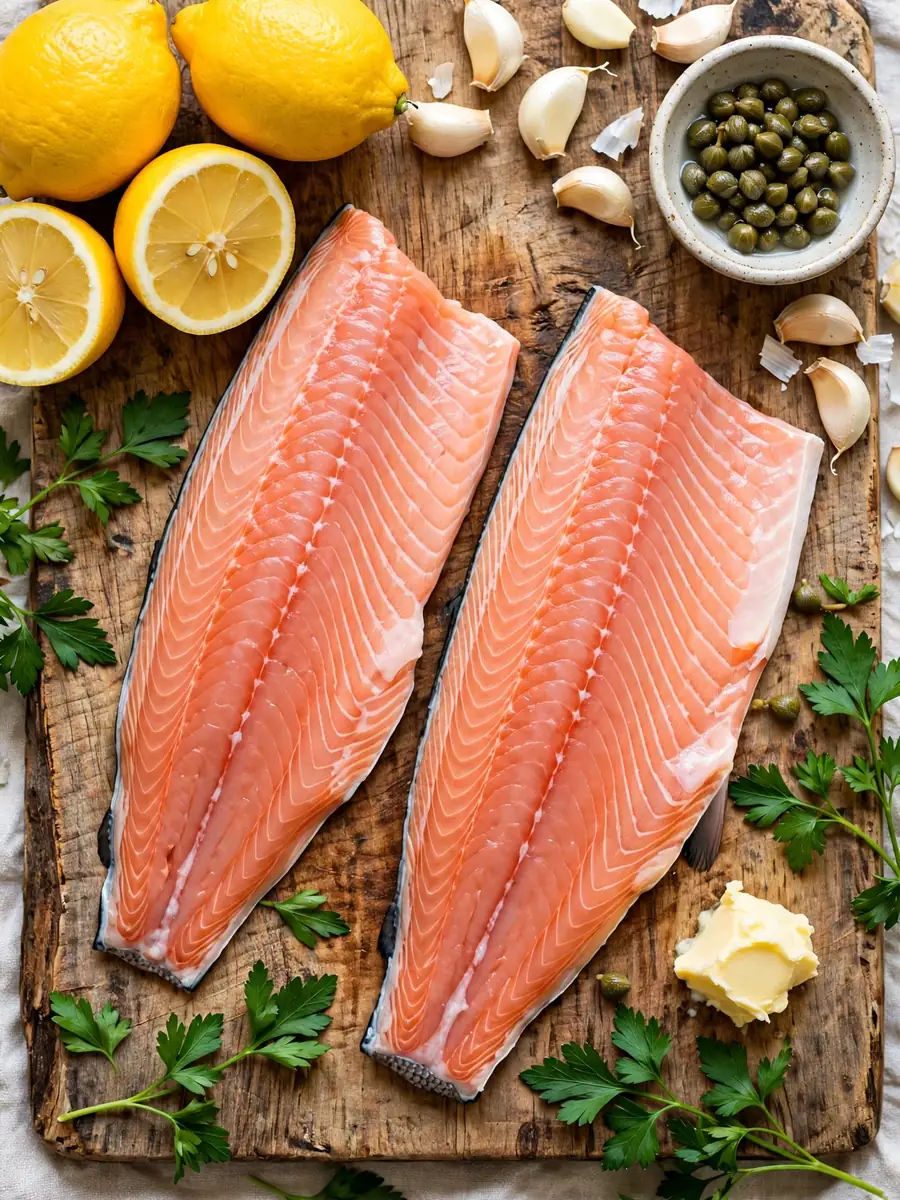
Ingredients
- 1 1/2 pounds steelhead trout fillets, skin on, cut into 4 pieces
- 1 teaspoon kosher salt
- 1/2 teaspoon black pepper
- 1/2 teaspoon garlic powder
- 1 tablespoon olive oil
- 3 tablespoons unsalted butter
- 2 tablespoons fresh lemon juice
- 2 tablespoons capers, drained
- 2 cloves garlic, thinly sliced
- 2 tablespoons fresh parsley, chopped
- 1 lemon, cut into wedges, for serving
Steps
- Pat the fillets dry with paper towels. Season the flesh side with salt, pepper, and garlic powder.
- Heat the olive oil in a large skillet over medium-high heat until it shimmers.
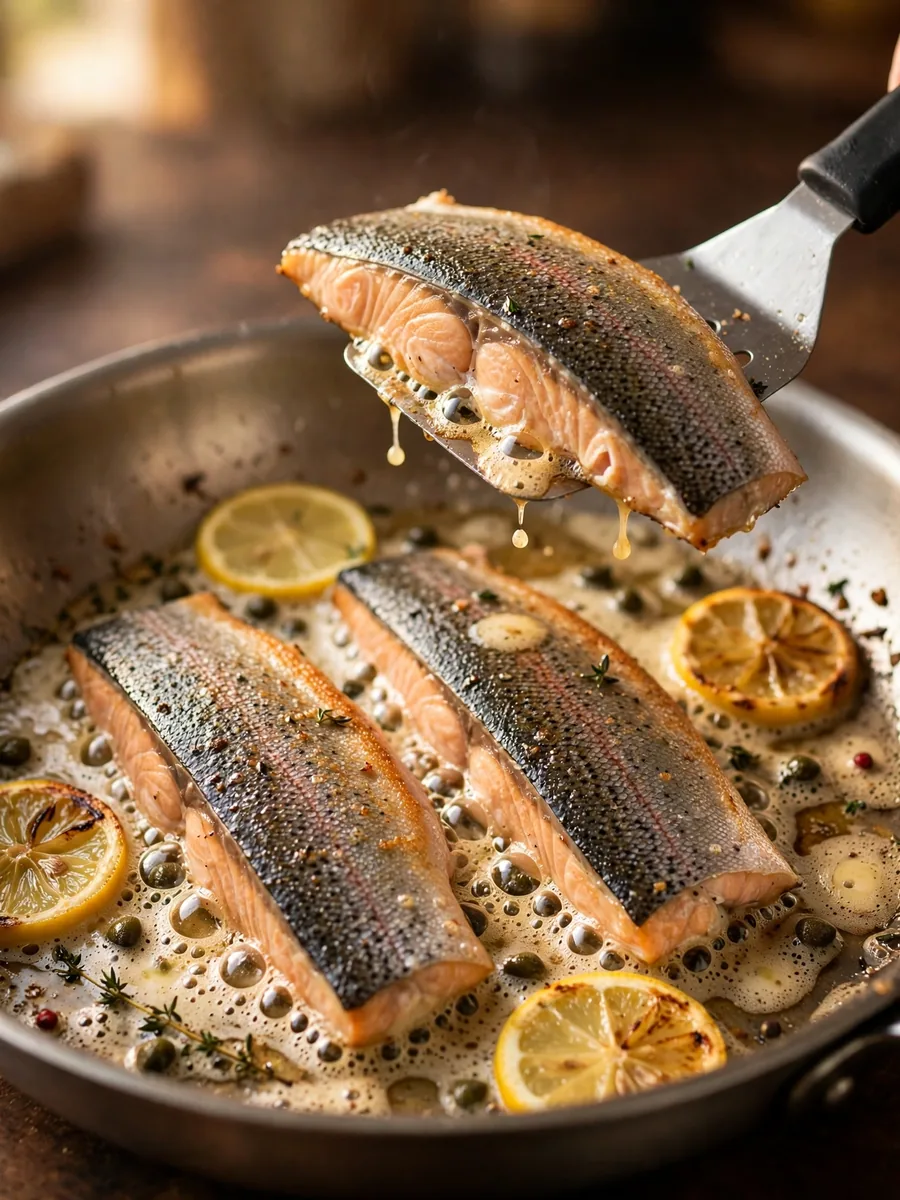
- Lay the fillets in the pan skin side down. Press each one gently with a spatula for 10 seconds so the skin makes full contact.
- Cook for 3 minutes without moving the fish. The skin should release easily when it is ready to flip.
- Flip the fillets and cook for 2 to 3 minutes more, until the flesh flakes easily and a thermometer reads 140 to 145 degrees F in the thickest part.
- Move the fish to a plate and tent it loosely with foil.
- Lower the heat to medium. Add the butter to the same pan and let it melt.
- Stir in the lemon juice, capers, and sliced garlic. Cook for 1 minute, until the garlic softens and the sauce smells bright.
- Spoon the sauce over the fillets. Sprinkle with parsley and serve with lemon wedges.
The pan does double duty here, and that is not laziness. The browned bits left from searing the fish dissolve into the butter and give the sauce a depth that a clean pan never reaches. Scrape the bottom of the skillet with a wooden spoon as the butter melts, and you will see the color change.
If your pan is smaller, cook in two batches. Crowded fillets steam each other, and steamed fish never gets crisp skin.
Other Ways to Cook It
Pan searing is the fastest route, but it is not the only one. The Big Man’s World tested this same fish in the oven, the air fryer, and on the grill, and each method works with the same lemon butter sauce. Use the method that fits your evening and your equipment.
Oven Baked
Place the fillets on a foil-lined baking sheet and pour the prepared lemon butter sauce over them. Bake at 375 degrees F for 20 to 25 minutes, until the fish flakes easily. For a larger batch, The Big Man’s World covers the pan with foil for the first 15 minutes, then uncovers it to finish.
Air Fryer
Season the fillets with salt and pepper and set them in the basket, working in batches if the basket is small. Cook at 400 degrees F for 8 to 10 minutes. The Big Man’s World notes the air fryer gives especially crispy skin, and the sauce goes over the fish before serving.
Grilled
Brush the fillets with olive oil, season with salt and pepper, and grill over medium-high heat skin side down for about 10 minutes. Flip and cook 3 to 5 minutes more, depending on thickness. The Big Man’s World often keeps the fish skin side down the whole time for extra crispiness.
The Doneness Window Is Narrow
Steelhead goes from perfect to dry in about two minutes. That is the single fact that separates a good steelhead trout recipe from a forgettable one, and it is the detail most ranking pages bury under ingredient lists.
Pull at 140 to 145 Degrees
The FDA recommends cooking fish to 145 degrees F, and that number is the safe target.
Several well tested recipes, including Diethood’s baked version, pull the fish at 140 to 145 degrees F in the thickest part, then let it rest for 5 minutes. Carryover heat finishes the job while the sauce comes together. If you wait for 145 degrees F on the thermometer before you take the fish out of the pan, it will read closer to 150 by the time it reaches the table.
The Fork Test
The fork test works as a backup. Press a fork into the thickest part and twist gently. The flesh should separate into flakes and look opaque all the way through, with no translucent center. If it still looks glossy and raw in the middle, give it one more minute, not three.
Those White Spots Are Albumin
White spots on the surface are albumin, a protein that squeezes out as the fish cooks. It looks odd and it is completely harmless. Spoon sauce over it and move on.
Five Mistakes That Dry It Out
Most steelhead failures trace back to the same five habits, and all of them are easy to fix.
Cooking It Like Salmon
Salmon forgives an extra two minutes because its fat keeps the flesh moist. Steelhead does not have that buffer. Set a timer, check the thickest fillet early, and pull the fish the moment it flakes.
Moving the Fish Too Soon
The skin bonds to the pan while it cooks, then releases on its own when the crust forms. If you try to flip at 90 seconds, the skin tears and sticks. Wait the full 3 minutes, then nudge one corner with a thin spatula. If it lifts cleanly, flip. If it resists, give it 30 seconds more.
Starting With a Cold Pan
Oil that has not reached temperature lets the fish sit and steam before it starts to sear. Wait until the oil shimmers and a drop of water flicks off the surface. That takes about 2 minutes over medium-high heat, and it is worth the wait.
Skipping the Rest
Fish that goes straight from pan to plate loses its juices the moment you cut into it. Five minutes under loose foil lets the temperature even out and the flesh relax. The sauce takes about 2 minutes to make, so the timing works out on its own.
Using Bottled Lemon Juice
Fresh lemon juice tastes brighter and less bitter, and the difference shows in a sauce with only four ingredients. One lemon gives about 2 tablespoons of juice, which is exactly what this recipe needs. The same lemon gives you wedges for the table, so nothing goes to waste.
These are small habits, and they are the kind of weeknight dinner secrets that separate a recipe you repeat from one you forget. None of them needs new equipment or extra shopping. They just need a timer and a little patience.
Variations Worth Trying
The pan method stays the same, and the flavor can change completely. Three tested directions below keep the same 25 minute timing and the same lemon butter base, with one swap each.
Brown Butter Sauce
Melt the butter in a separate skillet over medium heat until it turns rich brown and smells nutty, then build the sauce from there. The Big Man’s World calls this a culinary school trick, and says the nutty depth transforms the sauce completely. Save it for nights when guests are coming.
Maple Glaze
Brush the fillets with a mix of maple syrup and soy sauce during the last minute of cooking, for a sweet and savory finish. Arteflame uses the same maple and soy pairing on grilled steelhead, and The Recipe Master brushes it over the fish before broiling for the final 2 to 3 minutes.
Cajun Spice
Coat the fillets in a Cajun spice rub of paprika, garlic powder, cayenne, and oregano, then sear as usual and finish with lime butter instead of lemon. The Recipe Master serves this version with dirty rice or a creamy avocado slaw to balance the heat.
What to Serve With It
Sides That Soak Up the Sauce
Steelhead pairs with sides that soak up sauce or add crunch. Roasted asparagus, green beans, or a simple green salad keep the plate light. Mashed potatoes or crusty bread catch the lemon butter that runs off the fish, which is the best part of the plate for some people.
Diethood serves its baked version with peas and a creamy horseradish dill sauce, and that combination works just as well with the pan seared fish here.
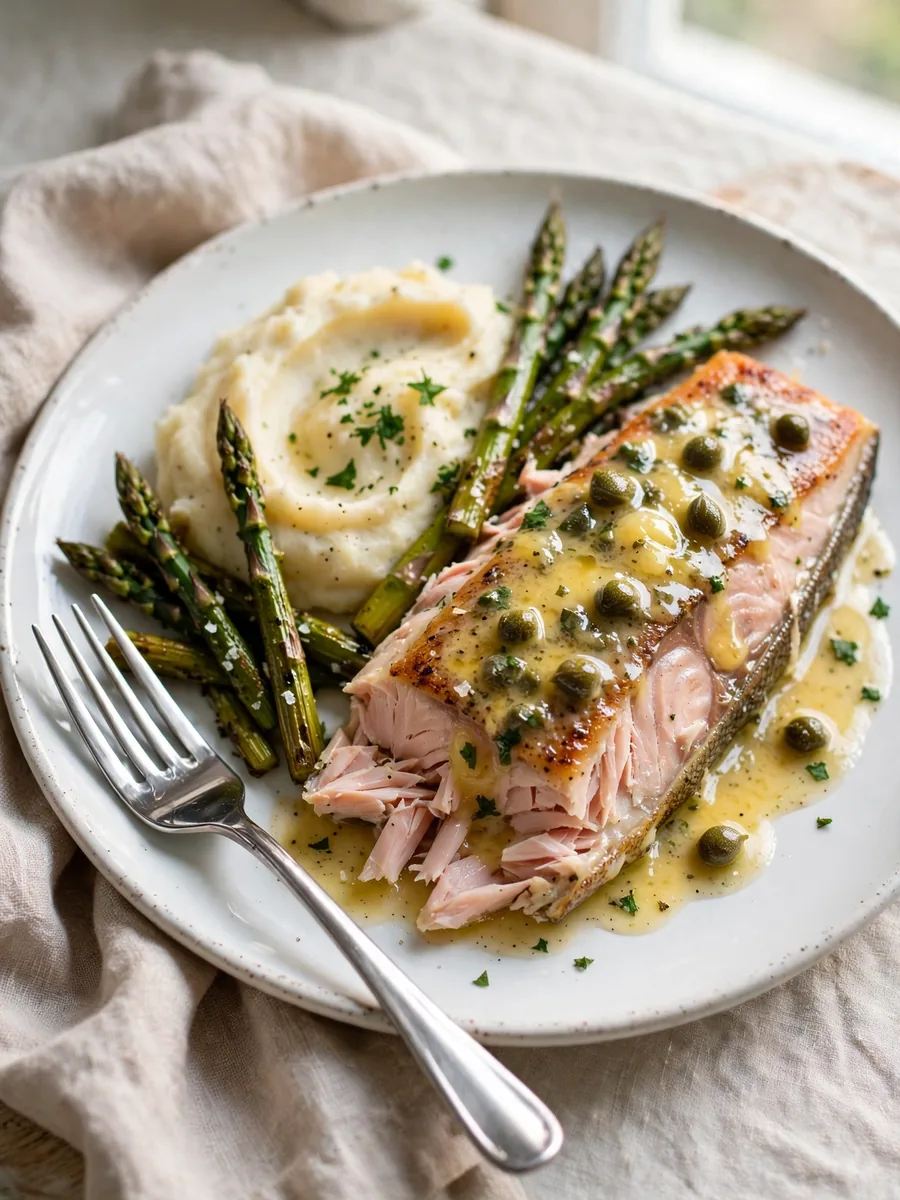
A Fuller Table
For a fuller table, think about what else is cooking that week. Hearty family style dinners like pork and sauerkraut soup suit cold nights, while this trout suits nights when you want something lighter but still filling.
Storing and Reheating Leftovers
Leftovers keep for 2 to 3 days in the fridge in an airtight container. Flake the cold fish into salads, grain bowls, or pasta, or spread it on a bagel with cream cheese.
Reheat gently in a covered dish at 275 degrees F for 10 to 15 minutes with a splash of water or a small pat of butter. The microwave works in a pinch, but it turns the flesh rubbery fast, so use short bursts and stop as soon as the fish is warm.
Cooked steelhead also freezes well. Diethood freezes cooked fillets for up to 1 month, and The Big Man’s World keeps portions frozen for about 2 months. Thaw overnight in the fridge, then reheat gently the same way.
Steelhead Trout Recipe FAQ
What temperature should steelhead trout be cooked to?
The FDA recommends 145 degrees F. Pull the fish at 140 to 145 degrees F in the thickest part and let it rest for 5 minutes; carryover heat finishes the job.
Should I cook steelhead trout skin side down?
Yes. Start skin side down in a hot, oiled skillet and leave it alone for about 3 minutes so the skin crisps and releases on its own before you flip.
Can I use frozen steelhead trout?
Yes. Thaw it overnight in the fridge, never on the counter, and pat it very dry before cooking. A wet fillet steams instead of searing, and the skin never crisps.
Cook It Once, Then Trust the Thermometer
The first time you cook steelhead, watch the clock and the thermometer more than the recipe. The second time, you will know how your pan behaves and how thick your usual fillets run. After that, the whole meal takes 25 minutes without thinking about it.
Start with skin-on fillets, a hot pan, and fresh lemon. Pull the fish at 140 degrees F and let it rest while the sauce comes together. That is the entire method, and it works every time the fish is fresh and the pan is hot.