Skip to content


This recipe for dumplings and chicken is a complete one pot dinner of tender chicken stewed with carrots, celery, and onion, then topped with soft dumplings made from scratch. You can drop the dough in spoonfuls or roll it into strips, and the whole pot takes about 1 hour 30 minutes.
Chicken and dumplings is the kind of dinner that fills the house with smell before it fills the table. One pot holds the stew, the chicken, and the dumplings, so there is nothing else to cook unless you want a side. It suits a cold evening, a Sunday dinner, and a family table where everyone wants seconds.
This page gives you the full dish, not just the dumpling part. You get a chicken stew built from scratch, a dough that works two ways, and the timing for each step. It is one of our comforting one pot meals, and it cooks in a Dutch oven from start to finish.
What dumplings and chicken is
Chicken and dumplings is a Southern American dish of chicken simmered in broth with dumplings cooked right in the pot. The dumplings are pieces of soft dough, not filled wrappers, and they steam or simmer in the broth until they turn fluffy or slick. The broth thickens as they cook, so the finished dish sits between a soup and a stew.
The chicken does two jobs here. It gives you the meat for the bowl, and it flavors the broth while it simmers. Bone-in thighs work well because they stay juicy through a long simmer and shred easily once they are done. The vegetables are simple on purpose: onion, carrot, and celery, plus garlic, thyme, and poultry seasoning.
Dumplings show up in many food traditions, from filled and steamed wrappers to boiled dough in soup. This dish uses the American Southern version, a plain dough dropped or rolled into simmering broth. If you enjoy dumplings folded and steamed too, our easy Asian inspired cooking collection has more ways to cook with them.
Drop dumplings vs rolled dumplings
Every cook who grew up with this dish has a firm opinion about which dumpling is right, and both sides are worth hearing. The dough in this recipe works for either style, so you can pick the one you like and change your mind next time. The stew stays the same either way.
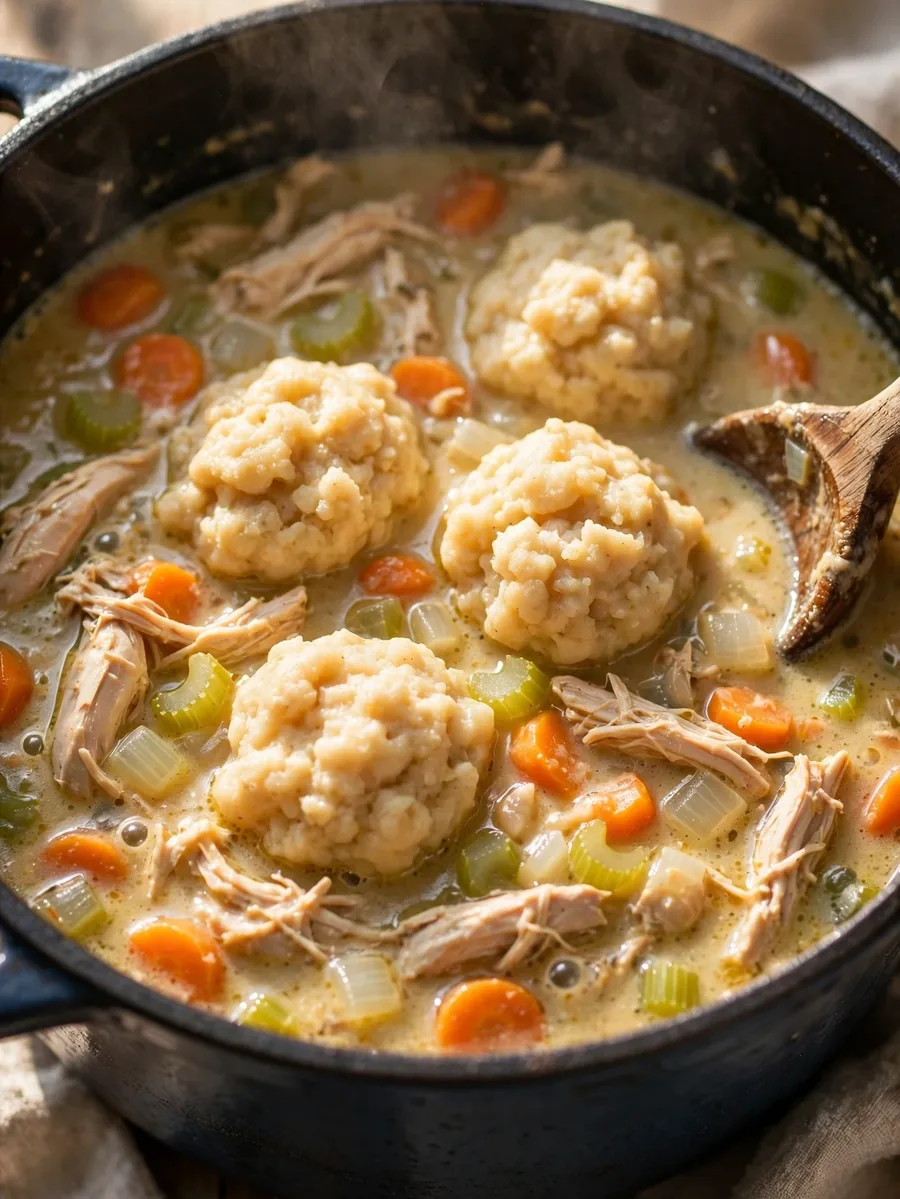
Drop dumplings are spoonfuls of soft dough set on top of simmering broth. They puff up under the lid into light, pillowy mounds, a bit like soft biscuits. They keep the broth a little looser and they need no rolling pin, no floured counter, and no cutting.
Rolled dumplings are the same dough rolled thin, about 1/8 inch, then cut into strips or squares and slipped into the broth. They cook into flat, chewy pieces that thicken the broth into a rich stew. Southern cooks sometimes call them slicks, and they are the classic choice in many Southern kitchens.
| Dumpling style | How it is made | Texture | Cook time |
|---|---|---|---|
| Drop | Spooned onto simmering broth | Light and fluffy, like a soft biscuit | 12 to 15 minutes |
| Rolled | Rolled 1/8 inch thick, cut into strips | Chewy and slick, like a thick noodle | 15 to 20 minutes |
Which style to pick
Pick drop dumplings when you want a fast finish and a lighter bowl. Pick rolled dumplings when you want a thicker stew and a chewier bite. If you are cooking for a mixed table, make the drop version first. It is the easier one to get right on a first try.
The featured recipe: Chicken and dumplings from scratch
Prep time: 15 minutes
Cook time: 1 hour 15 minutes
Serves: 4 to 6 servings
Why this recipe leads the guide
This recipe leads the guide because it is the whole dish in one pot, built from scratch. The chicken browns first, so the broth starts with real flavor instead of plain stock. The vegetables cook in the same pot, the chicken simmers until it shreds, and the dumplings cook in the broth they helped thicken.
The amounts below come from My Forking Life, where Tanya builds the same dish from bone-in thighs and a from-scratch dough, with a published nutrition figure of 490 calories per serving. The rolled option uses the same dough, rolled thin and cut into strips, following the method South Your Mouth and Southern Bite use for rolled dumplings.
My Forking Life publishes 490 calories per serving for this recipe, so the figure on this page matches the dish you are actually making. Southern Bite lists 647 calories per serving for its whole chicken version with cream of chicken soup, and Dish and Crumb lists 420 calories per serving for its whole chicken version with no cream, so 490 sits in the normal range for a from-scratch pot like this one.
Ingredients
Chicken and broth:
- 3 pounds bone-in skin-on chicken thighs, about 6 to 8 thighs
- 1 teaspoon kosher salt, plus more to taste
- 1/2 teaspoon black pepper, plus more to taste
- 2 tablespoons neutral oil
- 1 cup yellow onion, finely diced, about 1 medium onion
- 1/2 cup celery, finely diced, about 2 medium ribs
- 1/2 cup carrots, finely diced, about 1 medium carrot
- 4 cloves garlic, minced
- 2 tablespoons all-purpose flour
- 6 cups low sodium chicken broth
- 1 teaspoon poultry seasoning
- 1 teaspoon dried thyme
- 1/2 cup heavy cream
Dumplings:
- 1 1/2 cups all-purpose flour
- 2 teaspoons baking powder
- 1 teaspoon kosher salt
- 4 tablespoons cold unsalted butter
- 1/2 cup heavy cream
Steps
- Pat the chicken thighs dry and season both sides with the kosher salt and black pepper.
- Heat the oil in a large Dutch oven over medium-high heat. Lay the thighs skin side down and brown for 5 to 7 minutes, until they release from the pot on their own. Flip and brown for 3 to 4 minutes more. They do not need to be cooked through yet. Move them to a plate.
- Drain off the fat until about 2 tablespoons remain in the pot. Lower the heat to medium. Add the onion, celery, and carrots and cook for 5 to 6 minutes, until softened.
- Add the garlic and cook for 30 seconds. Sprinkle in the flour and cook for 1 minute, stirring, so the broth does not taste floury later.
- Pour in the broth and scrape the browned bits from the bottom of the pot. Add the poultry seasoning and dried thyme, then return the thighs and any juices to the pot.
- Bring the broth to a gentle simmer, cover, and cook for 35 to 45 minutes, until the chicken pulls apart with a fork. The chicken is safe at 165 degrees F, and after this long in the broth the thighs will be well past it.
- Move the thighs to a plate. When they are cool enough to handle, remove and discard the skin and bones. Shred the meat into bite-size pieces.
- Return the shredded chicken to the pot, add the heavy cream, and bring the broth back to a gentle simmer. Taste and season with more salt and black pepper if needed.
- Make the dumpling dough. In a medium bowl, whisk the flour, baking powder, and salt. Cut in the cold butter with a pastry cutter, a fork, or your fingertips until the mixture looks like coarse crumbs with pea-size pieces of butter left. Stir in the heavy cream just until a soft dough forms. If the dough looks dry, add more cream one teaspoon at a time.
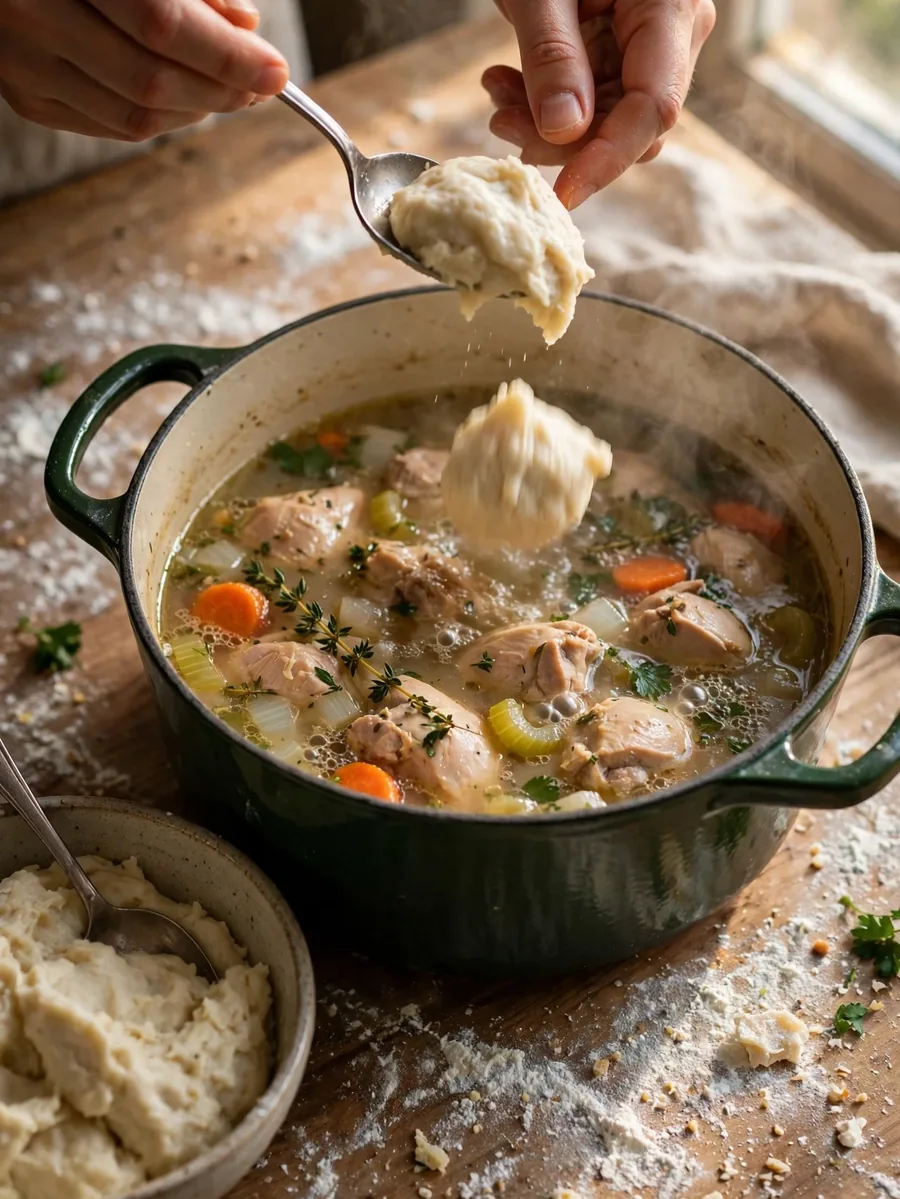
- For drop dumplings, break the dough into 10 to 12 golf ball size rounds and drop them into the gently simmering broth, leaving space between each one. They swell as they cook, so a crowded pot gives you one big raft. Cover and cook for 12 to 15 minutes without stirring and without lifting the lid. They are done when they are puffed and dry in the center.
- For rolled dumplings, turn the dough onto a well floured surface and roll it about 1/8 inch thick, like pie crust. Cut it into 1 inch strips, then cut each strip into about 2 inch lengths. Drop the pieces into gently boiling broth one at a time, then lower the heat, cover, and simmer for 15 to 20 minutes, until cooked through. Stir gently once or twice so they do not stick together.
- Remove the pot from the heat and let it stand, covered, for 5 minutes. Serve hot.
How to cook the stew
The stew carries the whole dish, so it deserves the most attention. Browning the thighs first is the step that pays off the most. Those ten minutes build the color and the flavor that the broth will carry for the rest of the cook. Pale chicken gives you a pale broth, and no amount of seasoning fixes that later.
Once the chicken is browned, the vegetables cook in the fat left in the pot. Onion, celery, and carrot need only five or six minutes to soften. The garlic goes in last and cooks for 30 seconds, then the flour cooks for a minute. That short cook keeps the broth from tasting floury, and it thickens the pot a little before the dumplings go in.
Simmer, never boil
Keep the broth at a gentle simmer while the chicken cooks. Small bubbles should break across the surface, not a hard rolling boil. A hard boil knocks the chicken around, clouds the broth, and later breaks the dumplings apart. Low and slow is the whole method, and it is why this dish tastes like it cooked all day.
After 35 to 45 minutes the thighs should pull apart with a fork. Take them out, shred the meat, and return it to the pot with the cream. Taste the broth now, before the dumplings go in, because seasoning is hard to fix once the dough is cooking. Add salt a little at a time until the broth tastes full.
How to tell the dumplings are done
For drop dumplings, the test is the center. Pull out the largest dumpling and cut it open. The middle should look dry and cooked through, like the center of a fresh biscuit. If it looks wet and shiny, cover the pot and give the batch a few more minutes. A toothpick pushed into the center should also come out clean.
For rolled dumplings, the test is the bite. A finished strip is tender all the way through with no raw flour taste, and it floats near the surface. Both styles need the lid on while they cook, since trapped steam does much of the work. Lifting the lid drops the temperature and leaves the tops wet.
Make the dumpling dough
The dough is five ingredients and one habit: stop stirring early. Whisk the flour, baking powder, and salt, then cut in the cold butter until the mixture looks like coarse crumbs with pea-size pieces left. Those cold bits of butter steam inside the dumplings as they cook, and that is what keeps them light.
Stir in the cream just until a soft dough forms. If you keep stirring after the flour disappears, you work the gluten and the dumplings turn dense and chewy. A few dry streaks are fine at this stage. They disappear as the dough rests and steams.
Shaping drop dumplings
Break the dough into rounds about the size of a golf ball, ten to twelve of them, and set them on a plate while the broth comes back to a simmer. They do not need to look perfect. Uneven edges catch more broth, and that is a good thing in this dish.
Drop each round onto the surface of the stew with space between them, and set them on meat or vegetables where you can rather than on bare liquid. A piece set on a thick part of the pot has something to rest on while it steams. Leave the lid closed for the full 12 to 15 minutes.
Shaping rolled dumplings
For the rolled version, flour the counter well and roll half the dough at a time, about 1/8 inch thick. Cut it into strips about 1 inch wide, then cut each strip into pieces about 2 inches long. Expect the pieces to at least double in thickness as they cook, so roll them thinner than you think they should be.
Drop the pieces into the broth one at a time, away from the pieces that just went in, since fresh dough sticks to fresh dough. Stir gently once or twice so they do not clump. Rolled dumplings release more flour into the broth than drop dumplings, so the finished pot will be thicker and more stew-like.
Shortcuts and swaps
Not every night is a from-scratch night, and this dish still works when you shorten it. The rule is to shorten one part at a time, not all of them at once. A shortcut chicken with a from-scratch dough still tastes like this dish. A shortcut dough on a shortcut stew starts to taste like something else.
The Bisquick shortcut
When time is short, our Bisquick dumplings recipe is the fastest way to the same bowl. It turns two pantry staples into soft drop dumplings in about 25 minutes, with the dough mixed from Bisquick and milk and dropped onto a simmering stew. Use it when you want the dumpling part done fast and still want a proper pot of chicken and dumplings.
That guide also covers the details this page does not repeat, including the exact Bisquick to milk ratio, how to read the dough, and how to fix a batch that turns gummy. If your dumplings come out heavy, read that page before you change anything in this recipe, since the fix is usually in the dough handling, not the stew.
Rotisserie chicken and other swaps
Rotisserie chicken or leftover cooked chicken works when you skip the browning step. Cook the vegetables in butter or oil, pour in the broth, and stir the shredded chicken into the broth before the dumplings go in. You lose some of the browned flavor, so taste the broth and add a little more salt and thyme to make up for it.
Bone-in, skin-on chicken breasts can replace the thighs. Simmer them in the broth until tender, about an hour, then shred them the same way. Boneless breasts cook faster but give the broth less flavor, so add a few chicken legs or wings to the pot if you go that route.
For a slow cooker version, cook the chicken and vegetables in the slow cooker, then finish the dumplings on the stove. The dumplings need a simmering pot and a tight lid, and most slow cookers do not hold that heat evenly. Our chicken crockpot recipes collection has more slow cooker chicken dinners built for that method.
Make it thicker or thinner
If the broth is thinner than you like, simmer it uncovered for a few minutes before the dumplings go in. If it is too thick, stir in a splash of warm broth and let it come back to a simmer. The dumplings keep drinking broth as the pot sits, so a pot that looks right at serving time will be thicker an hour later. A splash of broth fixes it at the table.
What to serve with chicken and dumplings
This is already a full meal, so a side should add contrast, not more starch. A crisp green vegetable or a bright salad cuts through the creamy broth better than another heavy dish. Green beans, roasted broccoli, or a simple slaw all work, and they take almost no extra effort while the pot simmers.
A crisp cucumber salad is a good match, and our restaurant style dumpling recipes include the Din Tai Fung style cucumber salad, which is cool, crunchy, and lightly dressed. It sits well next to a rich stew and gives the plate something fresh.
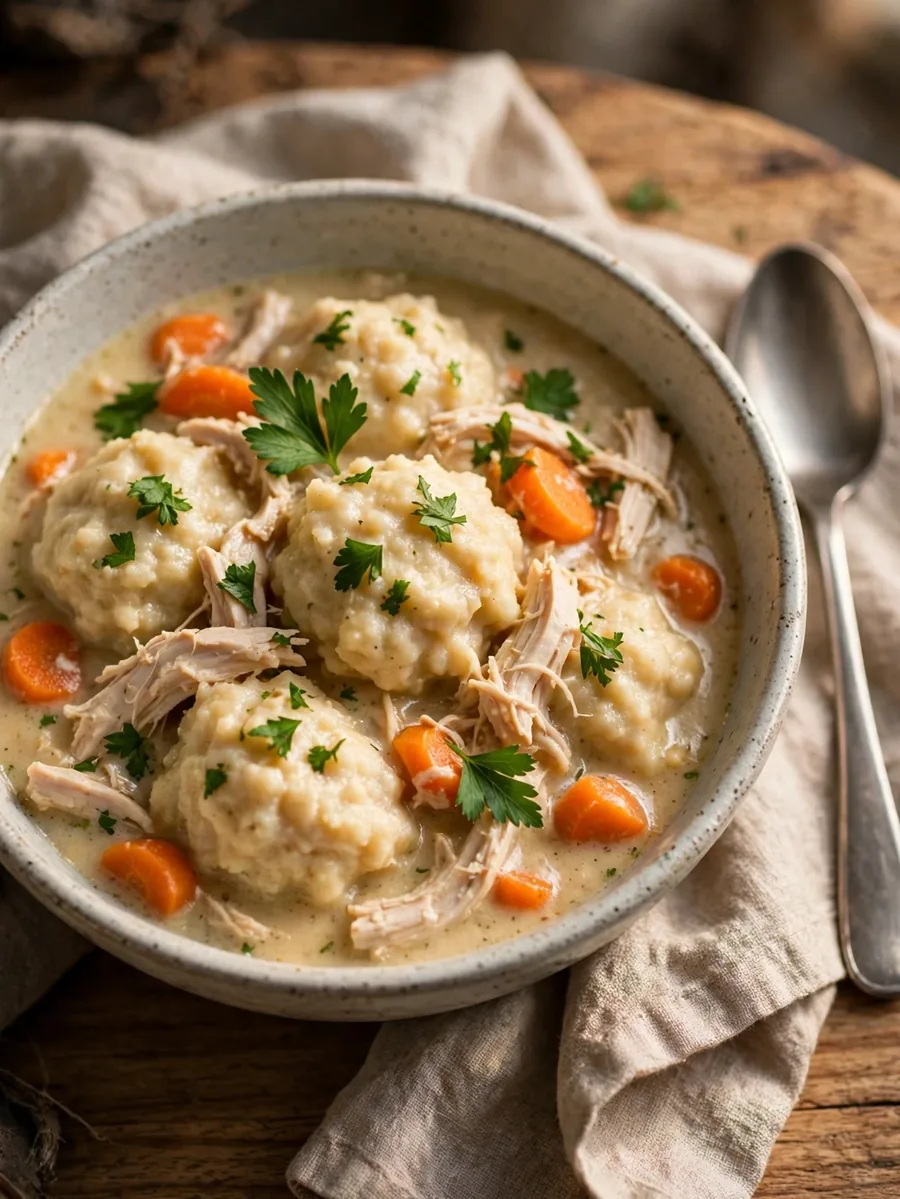
Bread is optional here. The dumplings already fill the bread role in this meal, so skip the biscuits unless the table expects them. If you want a second hot dish for a larger crowd, our casserole recipes collection has one dish bakes that feed a crowd from one pan. Cornbread is the classic pick if you do serve bread, and it is good for scooping up the last of the broth.
Storage, reheating, and freezing
Leftovers keep well for a few days, but the dumplings change as they sit. They keep drinking broth, so what you put away as soup often comes back as stew. Plan for that when you pack it up, and save a little extra broth on the side if you have it.
Refrigerator and reheating
Cool the pot, then pack leftovers into shallow covered containers and refrigerate within two hours. They keep for up to 3 days. Reheat gently on the stove over low heat with a splash of broth stirred in, covered so the dumplings warm through by steam. Skip a hard boil, since it breaks the dumplings down.
Heat leftovers until they reach 165 degrees F all the way through. A microwave works for a single bowl, but stir halfway and cover the bowl so the dumplings steam instead of drying out. Add a spoonful of broth if the bowl looks dry.
Freezing
Freeze the chicken and broth on their own, and make a fresh batch of dough when you thaw it. Flour, butter, and cream all come back grainy from the freezer, and the dumplings turn soft and heavy. Cool the stew completely, pack it into airtight freezer containers, and keep it for up to 2 months.
Thaw the stew overnight in the fridge, warm it gently on the stove, and drop in fresh dumplings once it simmers. That gives you a second dinner that tastes close to the first one, with dumplings that are light instead of soggy.
Troubleshooting
Dumplings sank to the bottom
Dumplings sink when they go into broth that is not hot enough, or when they land on bare liquid with nothing under them. Bring the pot to a gentle simmer first, and set each dumpling on meat, vegetables, or a thick part of the stew. If a few sink anyway, leave them alone. They usually rise as they cook.
Dumplings broke apart
Broken dumplings usually mean the pot boiled too hard or the cook stirred too much while they were still soft. Keep the heat at a gentle simmer and stir only once or twice, gently, while the dumplings are cooking. If the broth was already thick with flour, thin it with a splash of warm broth before the dumplings go in.
Broth is too thin or too thick
A thin broth is usually a short simmer or too much liquid for the dumplings in the pot. Simmer the stew uncovered for a few minutes before the dumplings go in, and hold back a cup of broth next time. A thick broth is usually too much flour in the dough or a pot that sat too long. Stir in warm broth a little at a time until it loosens.
Frequently asked questions
How long do dumplings take to cook?
Drop dumplings take 12 to 15 minutes covered, without stirring and without lifting the lid. Rolled dumplings take 15 to 20 minutes covered at a gentle simmer. Both are done when the center is dry and cooked through, not wet and shiny, so cut the largest dumpling open to check.
Can I use chicken breasts instead of chicken thighs?
Yes. Bone-in, skin-on chicken breasts work if you simmer them in the broth until tender, about an hour, then shred them the same way. Boneless breasts cook faster but give the broth less flavor, so add a few chicken legs or wings to the pot if you go that route.
Can I make chicken and dumplings ahead of time?
Yes, cook the chicken and broth ahead and refrigerate them, then reheat the base and make fresh dumplings just before serving. Dumplings go soft if they sit in the fridge in the broth, so the base keeps better on its own than the finished pot does.
Can I freeze chicken and dumplings?
Freeze the chicken and broth on their own for up to 2 months, and make a fresh batch of dough when you thaw it. Dumplings turn soft and heavy in the freezer, and cream broths can separate, so freezing the finished pot is not recommended.