
Casserole recipes turn one baking dish into dinner. A casserole is protein, starch, and vegetables bound with a sauce, baked until hot and bubbling in a 9 by 13 inch dish at 350 degrees. This guide covers the main types, a build-it-yourself method, and a chicken and rice casserole that takes 45 minutes.
Most casserole recipes online are just lists of fifty dishes. This one explains what a casserole is, how the parts fit together, and how to fix one when it goes wrong, then ends with a full recipe to start with.
That recipe is a creamy chicken and rice casserole, the dish that shows up at more potlucks than any other. It takes 45 minutes, feeds eight, and freezes well. If you can stir and bake, you can make it.
What is a casserole, really?
The word casserole means two things at once: the dish you bake in and the food that comes out of it. It comes from the French word for a saucepan, and the method is just as simple. Ingredients go into one oven-safe dish, bake together, and come to the table in that same dish.
A casserole can be a full meal or a side. A main-dish casserole usually has a protein, a starch, and a vegetable, held together by a sauce. A side casserole is simpler, like scalloped potatoes or a cheesy vegetable bake, and it sits next to something else on the plate.
A short history
Casseroles became an American staple in the twentieth century, when canned soups and other convenience foods made one-dish meals fast to assemble. The best-known example arrived in 1955, when Campbell home economist Dorcas Reilly created Green Bean Bake, the dish that became green bean casserole.
Oven-safe glass and ceramic dishes helped too. A cook could assemble, bake, and serve from the same dish. That convenience is why casseroles still work for busy nights, potlucks, and holidays.
The five parts of a good casserole
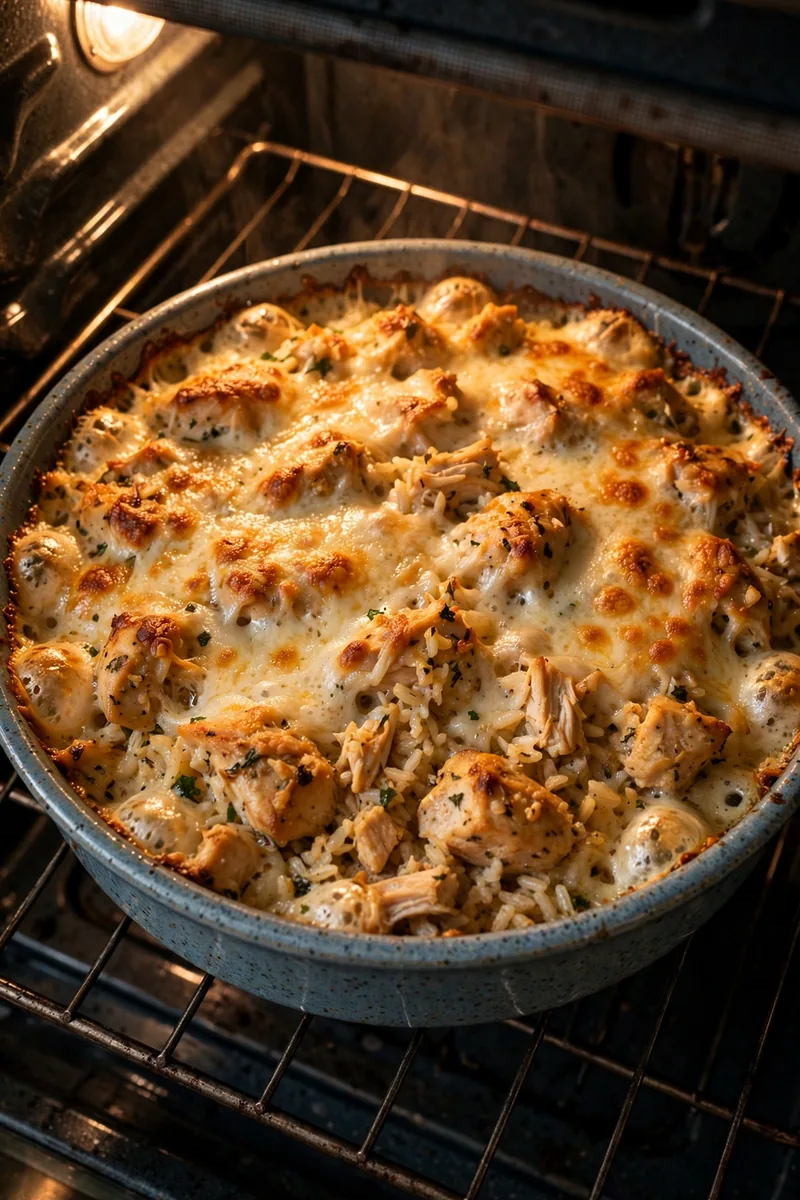
Almost every casserole follows the same five parts: protein, starch, vegetables, binder, and topping. Learn them and you can build one from whatever is in the fridge, without a recipe at all.
Protein
Chicken is the most forgiving choice. It stays moist, reheats well, and takes on the flavor of the sauce. Ground beef, sausage, ham, tuna, and turkey all work. For a meatless version, use beans or lentils, and add a little extra seasoning, because the binder has to carry more of the flavor.
Starch
Rice, pasta, and potatoes each change the dish. Rice drinks up sauce and turns creamy. Pasta holds its shape and gives the casserole structure.
Potatoes, sliced thin or mashed, make the richest version. Bread works too, in breakfast bakes where cubes soak up an egg custard.
Vegetables
Broccoli, green beans, peas, carrots, mushrooms, and corn are the workhorses. Frozen vegetables are fine and often better, because they are picked and frozen at their best, and they do not release as much water as fresh ones. Salt high-moisture vegetables like zucchini first and let them drain, or the casserole turns watery.
Binder
The sauce holds everything together and keeps it from drying out. Condensed cream soups are the classic choice, and whole cookbooks of Campbell soup recipes were built around these cans. A white sauce, cheese sauce, tomato sauce, or gravy works just as well. The mixture should look a little too wet before it goes in the oven, because the starch drinks up liquid as it bakes.
Topping
Shredded cheese, buttered breadcrumbs, crushed crackers, fried onions, or tater tots add crunch and contrast. Add the topping near the end of baking if it browns fast, or cover the dish with foil for the first part and uncover it to finish. A soggy topping is the most common casserole complaint, and it is also the easiest to avoid.
The main types of casserole recipes
Once you know which family a recipe belongs to, you know how it behaves in the oven, how it stores, and what to serve with it.
Chicken casseroles
Of all the families, chicken has the most recipes, and chicken and rice is the classic. Cooked chicken, cooked rice, two cans of soup, sour cream, and cheddar, baked under a cracker topping, is the version that shows up at potlucks across the country. If you want a head start, baked chicken hindquarters give you juicy meat that shreds well. For a hands-off version, chicken crockpot recipes turn the same idea into a slow cooker dinner.
Pasta bakes and tuna noodle
After chicken, pasta is the next biggest group. Baked ziti, lasagna, mac and cheese, and tuna noodle casserole all work the same way: cooked pasta, a sauce, and cheese, layered or mixed and baked until bubbling. The trick is to cook the pasta two minutes shy of the package time, because it keeps cooking in the oven. A small tube pasta like ditali pasta holds sauce inside each piece and works well in baked dishes too.
Breakfast casseroles
They are built on eggs, bread, and cheese, with sausage or bacon for the savory versions and fruit for the sweet ones. Most are assembled the night before and baked in the morning, which is why they show up at Christmas morning and brunch. If you are feeding a crowd, breakfast items for a potluck travel well and bake in the same dish they are served in.
Vegetable and potato casseroles
Vegetable casseroles run from green bean casserole at Thanksgiving to broccoli cheddar rice on a weeknight. Potato casseroles are the richest of the group. A twice baked potato casserole turns the stuffed potato into a scoopable side, and a bowl of Cajun potato soup makes a good starter before a lighter main, though soup and casserole are different tools for the same cold night.
Beef and pork casseroles
Beef casseroles lean on ground beef, sausage, or slow-cooked cuts, often with a Tex-Mex or Italian accent. Shepherd pie, with its mashed potato top, is the best-known example. A venison burger recipe is not a casserole, but the same seasoning ideas carry over when ground venison replaces beef. For a cobbler-style finish, drop biscuit dough on top instead of crumbs; the dough in Bisquick dumplings shows how it cooks through in a hot, steamy pan.
How to build a casserole from what you have
Start with the dish. A 9 by 13 inch pan is the standard, and it holds about 3 quarts. Butter or spray it, because a stuck casserole tears when you serve it.
Cook the parts that need cooking first. Brown ground meat, saute mushrooms and onions, and cook rice or pasta until just shy of done. Then mix the binder with the seasonings, fold everything together, and spread it in an even layer. The mixture should look a little wet.
Cover with foil for the first part of the bake if the recipe calls for it, then uncover to brown the top. Bake at 350 degrees until the center is hot and the edges bubble, usually 25 to 45 minutes. Rest the dish 10 minutes before serving, so it slices cleanly instead of sliding apart.
Creamy chicken and rice casserole
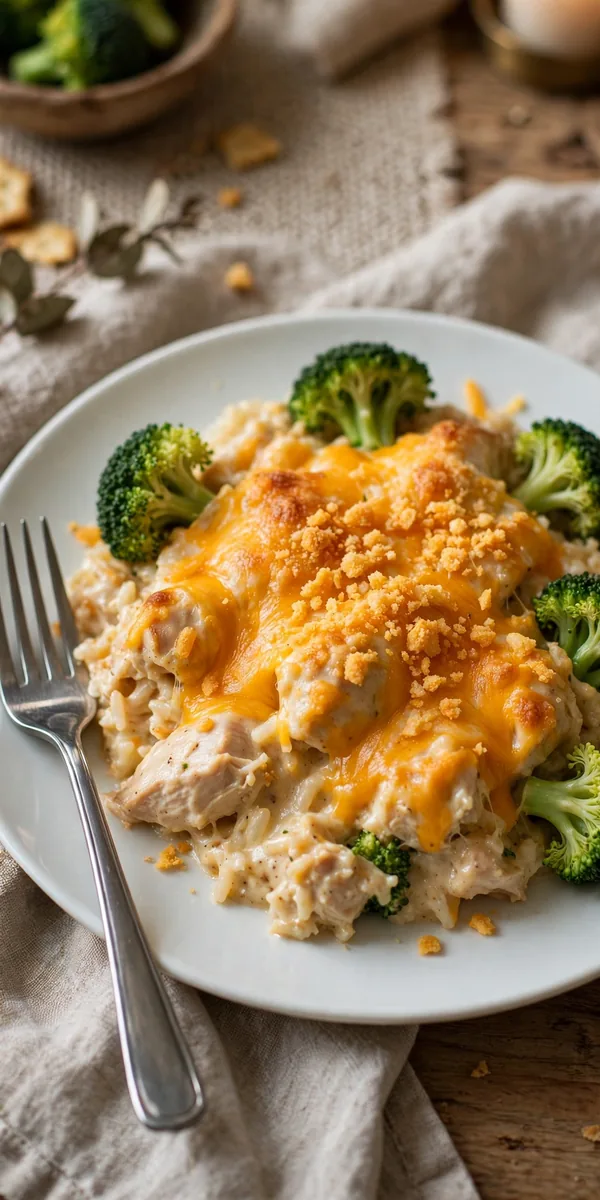
This is the recipe to make first. It is the potluck chicken and rice casserole: cooked chicken, white rice, two condensed soups, sour cream, and cheddar, baked under a cheese and cracker top. It takes 45 minutes, feeds eight, and people ask for the recipe after they taste it.
Two choices make this version work. The rice and the chicken go in already cooked, so nothing comes out underdone. And the broccoli goes in steamed for just 3 minutes, so it stays green and firm instead of turning soft in the oven.
Prep time: 15 minutes
Cook time: 30 minutes
Serves: 8
Ingredients
- 3 cups cooked chicken, chopped (about 420 g, one rotisserie chicken)
- 3 cups cooked long-grain white rice (from 1 cup dry)
- 1 can (10.5 ounces) condensed cream of mushroom soup
- 1 can (10.5 ounces) condensed cream of chicken soup
- 1 cup sour cream
- 1/2 cup whole milk
- 1 1/2 cups shredded sharp cheddar cheese, divided
- 2 cups broccoli florets, cut small and steamed 3 minutes
- 1 small onion, finely diced
- 2 garlic cloves, minced
- 1 teaspoon garlic powder
- 1/2 teaspoon onion powder
- Salt and black pepper, to taste
- 1 cup crushed buttery crackers (about 25 crackers)
- 2 tablespoons butter, melted
Steps
- Heat the oven to 350 degrees F. Butter a 9 by 13 inch baking dish.
- In a large bowl, whisk the soups, sour cream, milk, garlic powder, onion powder, salt, and pepper until smooth.
- Fold in the chicken, rice, broccoli, onion, garlic, and 1 cup of the cheddar until everything is coated.
- Spread the mixture in the baking dish in an even layer and smooth the top.
- Mix the cracker crumbs with the melted butter. Scatter the crumbs over the top with the remaining 1/2 cup of cheddar.
- Bake uncovered for 30 minutes, until the edges bubble and the top is golden.
- Rest 10 minutes before serving so the slices hold together.
One serving has about 460 calories. That number comes from adding up USDA FoodData Central values for the chicken, the rice, the soups, the sour cream, the milk, the cheddar, the broccoli, the crackers, and the butter. It is an estimate, not a lab result, and it moves a little with the brands you buy.
If the casserole looks dry at the edges when it comes out of the oven, it needed a little more liquid. Next time, add an extra half cup of milk. If it looks wet in the middle, it needed five more minutes, or a looser cover of foil instead of a tight one.

Scaling a casserole up or down
Casseroles scale well if the dish fits the amount. Halve a 9 by 13 recipe and bake it in an 8 inch square dish, and the depth stays about the same, so the bake time barely changes. Pour a half recipe into the same 9 by 13 and it bakes thin and dries out.
Doubling works the same way in reverse: bake two pans instead of one deep one, because a single pan that is too full cooks unevenly. A smaller batch is also the right time to try small batch baked comforts in a mini cocotte or a small Dutch oven, which is how baked one dish oven meals work for one or two people.
| Servings | Dish | Bake time at 350 F |
|---|---|---|
| 4 | 8 inch square | 20 to 25 minutes |
| 8 | 9 by 13 inch | 30 minutes |
| 12 | 9 by 13 deep, or two pans | 35 to 40 minutes |
| 16 | Two 9 by 13 pans | 30 to 35 minutes each |
Make ahead and freezer rules
Most casseroles can be assembled a day ahead, covered, and refrigerated. Add 5 to 10 minutes to the bake time when it goes in cold. That head start is why casseroles show up on so many holiday tables.
What freezes well
Lasagna, baked ziti, shepherd pie, and chicken and rice casserole keep for up to 3 months in the freezer. Assemble them unbaked, wrap tightly in foil and then in plastic, and label the pan with the name and the date. Thaw overnight in the fridge before baking.
What does not freeze well
Dairy-heavy sauces can split when they thaw, and potatoes can turn grainy, so freeze those dishes after baking rather than before, or skip the freezer for them. Toppings go soft in the freezer, so add crumbs, crackers, or fried onions on baking day. Egg-based breakfast casseroles freeze better baked and sliced than raw.
How to freeze and thaw
Cool the casserole completely before it goes in the freezer, or ice crystals will form and water it down. Freeze it in the dish it will bake in, with foil pressed right against the surface. Thaw overnight in the fridge, never on the counter, and bake until the center reaches 165 degrees.
Reheating a casserole without drying it out
Cover the dish tightly with foil before it goes back in the oven. The foil traps steam and keeps the top from drying out while the center heats. Reheat at 350 degrees for 20 to 40 minutes, depending on the size of the dish, until the center is hot.
For a single portion, the microwave is faster and gentler. Cover the plate with a damp paper towel, heat in short bursts, and stir halfway through if the portion allows it. Add a spoonful of broth or milk before reheating if the casserole looks dry, because a little liquid goes further than a longer bake.
Do not reheat a casserole more than once. Each round through the oven dries it out further, and the texture never comes back. Portion leftovers into single servings before they go in the fridge, so you only reheat what you will eat.
Troubleshooting
Most casserole problems come down to moisture. Too much liquid and the dish turns soupy. Too little and it dries out.
| Problem | Likely cause | Fix |
|---|---|---|
| Soggy or soupy | Too much liquid, wet vegetables | Bake uncovered 10 more minutes. Salt and drain vegetables next time. |
| Dry | Too little sauce, baked too long | Stir in warm broth or milk. Cover with foil next time. |
| Bland | Under-seasoned binder | Season the sauce before assembling, not after. |
| Rice undercooked | Rice went in dry | Use cooked rice, or add liquid and cover tightly. |
| Topping soggy | Topping went on too early | Add crumbs or cheese in the last 10 minutes. |
| Sauce curdled | Dairy heated too fast | Keep the oven at 350, and add dairy off the heat. |
What to serve with a casserole
A casserole is already a full meal, so the sides should stay simple. A green salad with a sharp vinaigrette cuts through the richness, and crusty bread catches the sauce. A light soup works as a starter on a cold night, and both hearty make ahead soups and cozy family soups fit that role.
For a holiday table, cranberry brie bites make an easy starter while the casserole bakes. And when the oven is already full, warming slow cooked dinners are the backup plan that keeps everyone fed.
Frequently asked questions
How long do you bake a casserole?
Most bake at 350 degrees for 25 to 45 minutes, until the center is hot and the edges bubble. A refrigerated casserole needs 5 to 10 extra minutes, and a frozen one needs to thaw overnight first.
Can you freeze a casserole?
Yes, most freeze well for up to 3 months. Assemble unbaked, wrap tightly, and thaw overnight in the fridge. Dairy-heavy sauces can split, and toppings go soft, so add toppings on baking day.
Can you make a casserole ahead of time?
Yes. Assemble it up to 24 hours ahead, cover, and refrigerate. Add 5 to 10 minutes to the bake time when it goes in cold.
How do you reheat a casserole without drying it out?
Cover it tightly with foil and reheat at 350 degrees for 20 to 40 minutes. For one portion, use the microwave with a damp paper towel over the plate, and add a spoonful of broth if it looks dry.
How many calories are in chicken and rice casserole?
About 460 calories per serving for the recipe above, from adding up USDA FoodData Central values for each ingredient. It also gives you about 28 grams of protein from the chicken and cheddar.