Skip to content

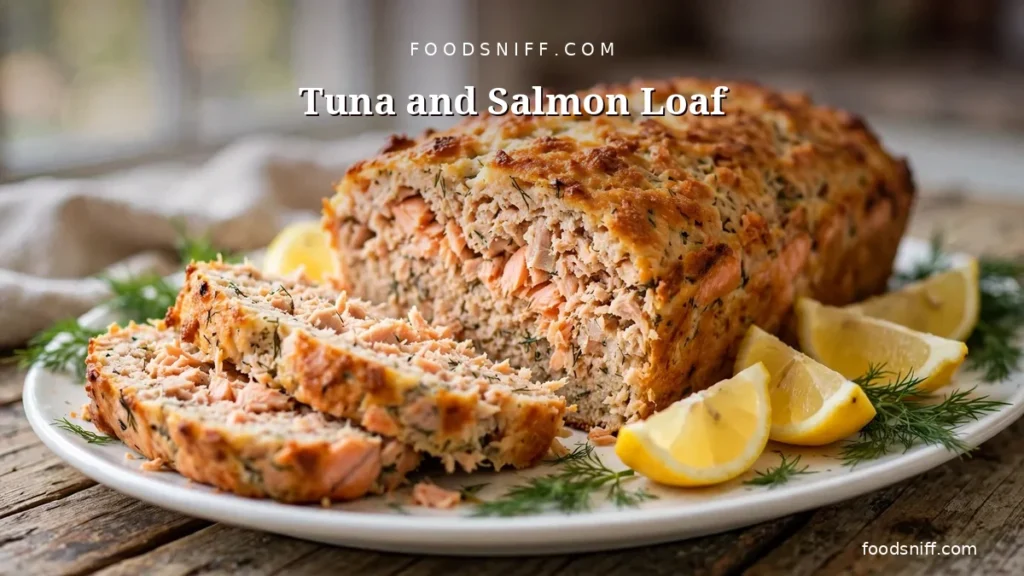
Moist Tuna and Salmon Loaf That Slices Clean Every Time
Yes, you can mix tuna and salmon together in one loaf recipe, and the result is better than either fish on its own. Canned tuna keeps the flavor mild and the price low, while canned salmon adds a richer, buttery bite and a deeper color. Together they bake into a combo loaf that tastes balanced, stays moist, and slices clean without crumbling.
This tuna and salmon loaf recipe is built for real weeknights. It uses pantry cans, one bowl, and a standard loaf pan. You mix, bake, rest, and slice. If you have ever ended up with a dry fish loaf or one that falls apart on the cutting board, the method below fixes both problems. The two rules that matter most are simple: drain the fish well, and stop baking the moment the center hits 145°F (63°C).
Quick Answer and What a Fish Loaf Is
Mixing tuna and salmon in the same loaf works because the two fish complement each other. Tuna brings lean, savory firmness. Salmon brings moisture, fat, and richness. A fish loaf is simply a baked mixture of fish plus binders and seasoning, formed into a loaf and sliced like meatloaf. It is a main dish that is easy to make, versatile, and nutritious, and it works hot for dinner or cold in packed lunches.
What Changes When You Combine Them (Taste and Texture)
The first bite tastes mild and savory from the tuna, then the richer salmon flavor rounds it out. That is why the combination never tastes one-note. The texture lands in the middle too: moist and flaky like salmon, but firm enough to hold a clean slice like tuna. You will also notice the color. The loaf bakes up with a warmer pink tone than a tuna-only version, which makes the slices look as good as they taste.
Tuna Loaf vs Salmon Loaf vs Combo Loaf (Comparison Table)
If you want to pick a version fast, compare them side by side. The biggest differences show up in omega-3 content, vitamin D, protein, and cost. All three use simple pantry ingredients and the same easy bake-and-slice method.
| Loaf type | Taste | Texture | Omega-3 | Vitamin D | Protein | Cost |
|---|---|---|---|---|---|---|
| Tuna loaf | Mild, savory | Firm, less flaky | Moderate | Lower | High | Budget friendly |
| Salmon loaf | Rich, buttery | Moist, flaky | Higher | Higher | High | Pricier |
| Combo tuna and salmon loaf | Balanced, never flat | Moist but still firm | High to moderate | Moderate to high | High | Mid-range |
The short read: tuna versions are leaner and simpler, salmon versions taste richer and deliver more omega-3 and vitamin D, and the combo gives you the middle ground most families actually prefer.
When to Choose Which Version
Pick tuna when you want something quick and budget friendly. It cuts cleanly and stacks well, which makes it ideal for packed lunches, sandwiches, and wraps. Pick salmon when you want a richer, more dinner-like loaf that stands up to bolder sides and sauces. Pick the mix when you want balance. It is the best choice for meal prep because it tastes good hot or cold, and it keeps that not too lean, not too rich middle ground all week.
Safety and Trust: Mercury, Allergens, and Safe Doneness
Do not guess at doneness. Use a food thermometer and cook the loaf to a safe internal temperature of 145°F (63°C), measured at the thickest part. At that temperature the fish turns opaque and flakes easily with a fork, so you can stop baking before the loaf dries out. Overcooking is the fastest way to ruin a fish loaf, even when the ingredient ratios are right. The FDA safe minimum internal temperature chart lists 145°F for fish, which is the number to cook to every time.
Allergens are straightforward here. Fish is the allergen, so anyone with a fish allergy should skip this recipe. If you are feeding someone new to seafood, keep the ingredient list plain and tell them exactly what is inside.
Mercury and Who Should Limit Tuna
Mercury is not equal across tuna. Canned light tuna is generally the lower-mercury choice, while albacore (white tuna) typically contains more. If you are pregnant, might become pregnant, breastfeeding, or feeding young children, follow the FDA and EPA advice: favor lower-mercury fish, and limit albacore to fewer servings per week. A practical approach is to build this loaf with canned light tuna most of the time and treat albacore versions as an occasional meal.
Storage, Leftovers, and Reheating
Handle leftovers with care. Refrigerate the loaf in a sealed container and eat it within 3 to 4 days. If you will not finish it in time, freeze individual slices wrapped tightly, then place them in a freezer bag with the date. Use frozen slices within 2 to 3 months for the best texture. To reheat, warm slices in a covered dish in the oven or in the microwave in short bursts until hot all the way through. Do not keep cycling the loaf in and out of the fridge, and reheat only what you plan to eat.
The Ultimate Moist Tuna and Salmon Loaf Recipe (Fail-Proof)
This is the go-to loaf for clean slices and zero drama. It is built around breadcrumbs (plain or seasoned), beaten eggs, finely chopped onion, minced garlic, salt and pepper, and milk or a plant-based alternative. Four tips make the difference. First, drain the tuna and salmon until they stop dripping so the mix is never watery. Second, mix the base until uniform, then fold in the fish gently so you keep some texture. Third, bake about 45 minutes and check for 145°F instead of baking by the clock. Fourth, cool before slicing so the loaf sets and stays moist instead of crumbling.
Ingredients and What Each One Does
The loaf holds together because the binder and eggs create structure, while the milk and aromatics add moisture so it never eats like cardboard. Start with the fish: one 12-ounce can of tuna and one 14.75-ounce can of salmon, both drained well. Remove any skin and bones from the salmon, then flake both with a fork so every bite feels even.

Binder (choose one): 1 cup breadcrumbs, plain or seasoned, works for most people. Quick oats, crushed crackers, or gluten-free breadcrumbs all work as exchanges, as long as the substitute absorbs liquid well.
Base mix: 2 large eggs (beaten), 1/2 cup milk or plant-based alternative, 1 small onion (finely chopped), 2 cloves garlic (minced), 1 teaspoon salt, 1/2 teaspoon black pepper.
Flavor upgrades (choose 2 to 3): This is where a plain loaf turns into a good one. Paprika for warmth, thyme for a savory edge, dill for a clean seafood note, parsley for a fresh lift, lemon juice to cut richness, or Worcestershire sauce for a deeper savory hit. If you like seasoned blends, a homemade fish fry seasoning adds warmth without overpowering the fish. Two reliable combos: dill, lemon juice, and parsley; or paprika, thyme, and parsley.
Equipment (Pan Size and Prep)
You only need a loaf pan and a mixing bowl. Grease the pan first so the slices release without tearing. If you have one, a foil lifting strip laid across the pan saves you from a stuck loaf. The classic pan size is 8 1/2 x 4 1/2 x 2 1/2 inches, but any standard pan works. Just watch the bake time if your pan is wider or shallower, since a thinner loaf cooks faster.
Step-by-Step Instructions

Step 1: Preheat the oven to 350°F. Grease a standard loaf pan and lay in a foil lifting strip if you have one.
Step 2: Drain the tuna and salmon until they stop dripping. Remove skin and bones from the salmon, then flake both fish with a fork into small, even pieces.
Step 3: In a large bowl, combine the breadcrumbs, beaten eggs, milk, onion, garlic, salt, pepper, and your chosen flavor add-ins. Mix until uniform.
Step 4: Fold in the flaked fish gently until just combined. Do not overmix or crush the fish into a paste; some texture is what keeps the crumb interesting.
Step 5: Press the mixture firmly and evenly into the prepared pan, smoothing the top and removing air pockets.
Step 6: Bake about 45 minutes, until the top is golden brown and the loaf feels firm.
Step 7: Check the center with a food thermometer and pull the loaf at 145°F. If you do not own a thermometer, a knife inserted in the center should come out clean and the loaf should look opaque and flake easily with a fork.
Step 8: Cool 10 minutes in the pan, then lift the loaf out and slice. Resting lets the loaf set, which is what gives you clean slices.
Troubleshooting (Fix Every Common Problem)
Most loaf problems come from one of two things: the mix ratio or the bake. Here are the fixes that actually work.
If It Is Dry
Dryness almost always means overcooking, even when the ingredients were right. Salmon also cooks a little differently than tuna, which can trick you into leaving the whole loaf in too long. Fix it with moisture, not more heat: check doneness early, stop at 145°F, and next batch add a splash more milk or an extra egg to keep the crumb tender. When reheating slices, cover them so they do not dry out again.
If It Will Not Hold Together
A crumbly loaf is usually a balance problem: too little binder, not enough egg, or slicing too soon. Keep the binder ratio steady, press the mix firmly into the pan to remove air pockets, and always let the loaf cool before slicing. Those three moves solve nearly every falling-apart loaf.
Variations
This loaf is flexible, so you do not have to eat the same slice all week. Swap in seasoned breadcrumbs for more flavor without extra work, or mix in finely chopped carrots, bell peppers, or spinach for color and taste. For a gluten-free version, use gluten-free breadcrumbs or quick oats. For dairy-free, use a plant-based milk and skip any cheese.
Sauce changes everything. Go classic with tartar sauce for a tangy, creamy bite, or lighter with a dill sauce for a fresh, herby finish. If you want an old-school vibe, heat stewed tomatoes in a small pot, season lightly, whisk in a little cornstarch, and bring to a boil while stirring until glossy. Keep it warm on low heat and add a pinch of thyme leaves at the end. It tastes right with fish loaf slices.
Meal-Prep Formats
If you live on leftovers, change the shape. Bake mini loaves for grab-and-go servings, or use a muffin tin for built-in portions that fit packed lunches. Smaller shapes bake faster, so start checking them around 25 minutes.
What to Serve With Tuna and Salmon Loaf
Keep sides simple so the loaf stays the star. Mashed potatoes make it feel like comfort food, steamed vegetables keep the plate light and clean, and a simple salad adds fresh crunch. A squeeze of citrus and a handful of herbs cut the richness and make the fish taste brighter.

A good plate follows a simple pattern: a starch like mashed potatoes, rice, or quinoa; a vegetable like steamed green beans or a simple salad; and a citrus and herb finish. Add nuts to the salad for crunch if you like. If your household loves loaf-style comfort dinners, a salisbury steak recipe makes a natural companion meal for another night, and a bowl of creamy chicken mushroom soup pairs well as a starter before the loaf.
Nutrition Notes
This loaf can be a solid pantry meal. Fish brings protein (roughly 22 to 25 grams per 3.5-ounce serving), omega-3 fats, vitamin D, B vitamins like B6 and B12, and minerals including selenium, potassium, and phosphorus. For your exact numbers, read the Nutrition Facts labels on your canned tuna, canned salmon, and breadcrumbs, then divide by servings. Expect roughly 450 calories per serving, though your number will vary by brand and binder.
If you are watching intake, keep portions steady and choose lighter sides, and this fits many meal plans well. If sodium matters to you, pick lower-sodium cans and drain them carefully. People often ask about wellness claims around omega-3s. Treat those as a bonus, not a promise, and focus on sensible portions and good sides. The American Heart Association includes eating fish at least twice a week as part of a heart-healthy eating pattern, and the FDA and EPA note that albacore tuna has about three times the mercury of canned light tuna, so choose your cans with your household in mind.
Conclusion
You can bake a combo tuna and salmon loaf without overthinking it. Canned tuna and canned salmon balance flavor and bite in one easy loaf recipe, and the method is forgiving as long as you drain the fish, press the mix firmly, and stop at 145°F (63°C). Rest the loaf, cool before slicing, and you will get clean slices every time. Make it fit your week: refrigerate leftovers for 3 to 4 days, freeze slices for longer, and reheat gently so every serving stays moist.
FAQs
What’s the best tuna-to-salmon ratio for flavor and texture?
I like a 50-50 split for balance. It gives you mild savory tuna plus rich buttery salmon in the same bite. If you want it richer, use more salmon. If you want it leaner and firmer, use more tuna.
How do I keep a tuna salmon loaf from falling apart?
Use enough breadcrumbs (plain or seasoned) and eggs (beaten) to lock it in. Keep your binder ratio steady, press gently into the pan, and respect the cooling time before slicing. Those three steps fix most crumble problems.
What internal temperature should a fish loaf reach?
A fish loaf should reach 145°F/63°C at the center. That’s the standard safe internal temperature for cooked fish. At 145°F/63°C, the flesh turns opaque and flakes easily with a fork, so you can stop baking before the loaf dries out.
If you don’t have a thermometer, use the legacy check. The loaf should look opaque and separate easily with a fork, and a knife should come out clean (legacy method).
Can I make it gluten-free (no breadcrumbs) or dairy-free (no milk)?
Yes, you can make it gluten-free. Use gluten-free breadcrumbs, oats, or crushed crackers instead. You can also make it dairy-free by using plant-based milk. Keep the mixture moist but not wet, and bake until 145°F/63°C so it sets without drying.
I keep the swap simple. Change one thing at a time, then adjust only if the mix feels too loose.
Do I need to remove bones from canned salmon?
Most canned salmon has soft bones that are safe to eat, but texture matters. If you want a smoother slice, remove skin and bones (salmon) before mixing. If you don’t mind a more rustic bite, mash them in.
How long does cooked tuna salmon loaf last in the fridge?
Cooked tuna salmon loaf lasts 3 to 4 days in the refrigerator when stored in an airtight container. Keep it chilled, don’t leave it out for long, and reheat only what you’ll eat so you’re not warming the whole batch over and over.
I label the container with the cook date. It saves guesswork later.
Can I freeze tuna salmon loaf and how do I reheat it?
Yes, you can freeze it. I freeze slices so they thaw fast, then I reheat gently so it stays moist. Cover it in the oven, or use short microwave bursts until hot through.
Which tuna is lower in mercury: canned light or albacore?
Canned light tuna is typically lower in mercury than albacore (white tuna). The FDA and EPA say that albacore usually has more mercury. So, it is best to limit it, especially for pregnant women and children.
If mercury is a big concern, rotate fish and don’t rely on tuna every week.
Can I use fresh salmon/tuna instead of canned?
Yes, but you’ll need to cook and flake it first, then manage moisture. Fresh fish can add more water than canned tuna and canned salmon, so your binder matters more. Drain well, keep the mix tight, and bake to 145°F/63°C.