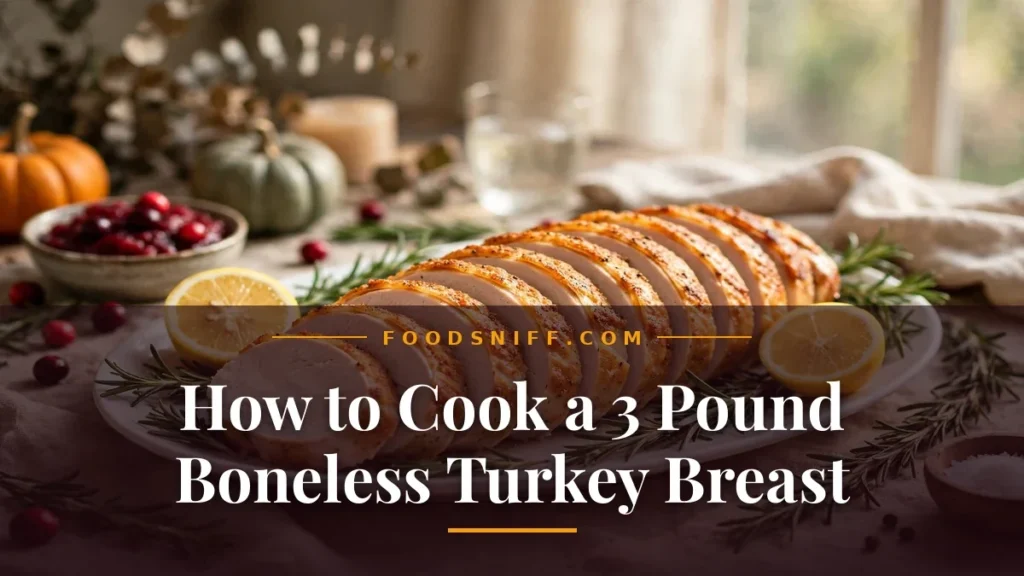
A 3 pound boneless turkey breast roasts at 350 degrees for about 60 to 75 minutes, until a thermometer in the thickest part reads 160 degrees. Rest it 15 minutes so carryover heat brings it to 165. Rubbed with garlic herb butter, it feeds six and slices into neat rounds for a small Thanksgiving or an easy weeknight dinner.
A whole turkey feeds a crowd, but it also takes all day and leaves a fridge full of leftovers. A single boneless breast solves both problems. It roasts in about an hour, it feeds six, and the slices come out just as golden as a whole bird.
The method below pulls together what the best recipes agree on, then fills the gaps they leave. A hot start crisps the skin, a steady 350 finish cooks the meat through, and a thermometer decides when it comes out. The rest is butter, herbs, and a little patience.
Why a 3 pound boneless breast works for a small Thanksgiving
Three pounds is the sweet spot for a small table. At half a pound per person it feeds six, which covers a couple, a small family, or a friendsgiving with room for seconds. A bigger breast needs a bigger pan and more time, and a smaller one dries out before the skin browns.
Boneless also means no carving puzzle. There is no keel bone to work around and no two lobes to separate, so the roast slices straight across into even rounds. That matters when the cook is also the host and the carving happens at the table.
It is also the cheapest way to test a new method. A 3 pound breast costs a fraction of a whole bird, so a dry run in early November is a low risk way to learn your oven before the holiday.
Boneless vs bone-in turkey breast
The cut you buy decides the cooking time, the flavor, and how the slices look. Bone-in stays juicier because the bone slows the heat and keeps the meat from drying out. Boneless cooks faster and slices into neat rounds, but it dries out sooner if you look away.
For a 3 pound breast the gap is roughly 10 to 30 minutes. Bone-in needs about 20 to 25 minutes per pound at 350 degrees, while boneless needs about 15 to 20. The thermometer decides in both cases, so treat the clock as a guide, not a rule.
Rolled roast or flat breast
A boneless breast comes in two shapes, and the shape changes the time more than the bone does. A netted rolled roast is a breast rolled into a log and tied, and it cooks like a roast, about 20 to 23 minutes per pound at 400 degrees. A flat split breast is one half of the chest laid open, and it cooks in about 12 minutes per pound at the same heat.
Most stores sell the rolled roast, tied in netting or twine, because it holds its shape and looks like a centerpiece. This recipe is written for that rolled roast. If yours is flat, start checking the temperature 20 minutes earlier.
How much turkey per person
Plan on half a pound of boneless breast per person. The bone and skin make up about a quarter of a bone-in breast, so boneless gives you more meat per pound and the math is simple: 3 pounds feeds six, 2 pounds feeds four, and 4 pounds feeds eight.
If you are feeding a crowd, a single small breast is the wrong tool. Our turkey breast recipe uses a 6 pound bone-in breast instead, which feeds eight with the bone-in method and its own longer times.
Ingredients for a 3 pound boneless turkey breast
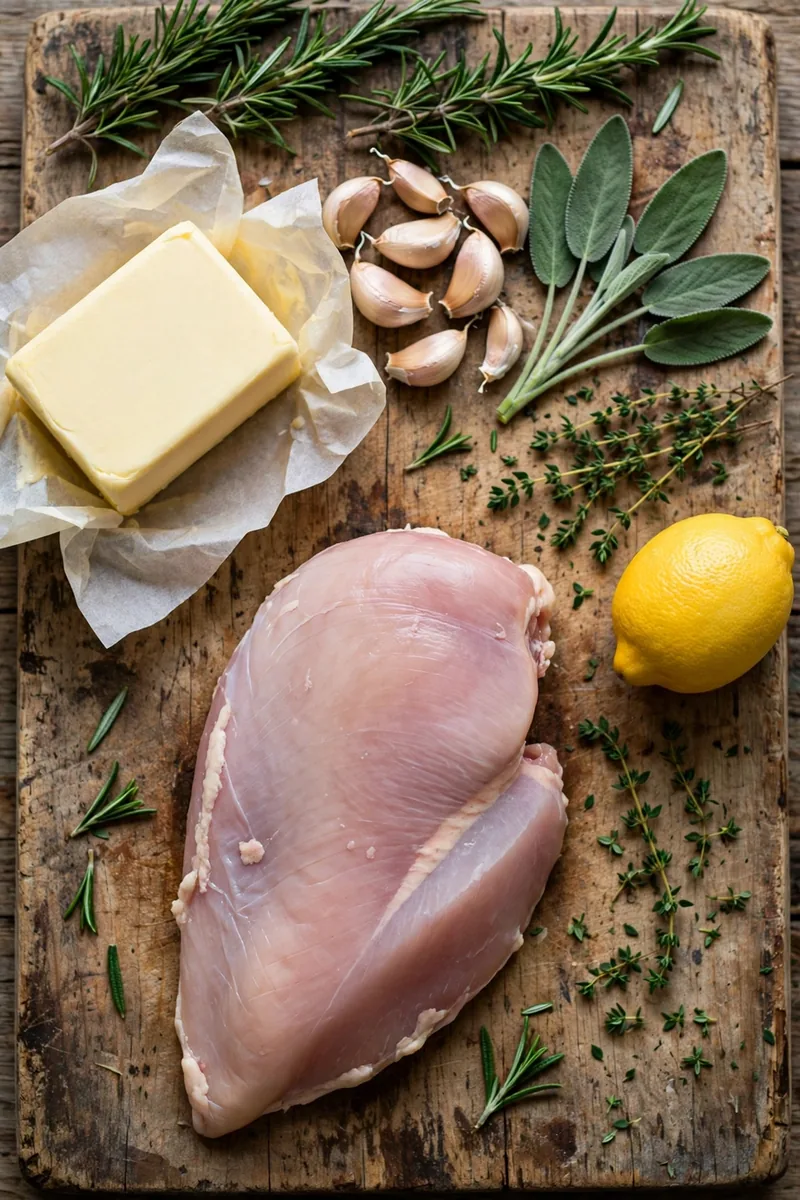
The list is short: a breast, butter, herbs, and a lemon. Everything else is pantry seasoning. The butter does most of the work, carrying flavor into the meat and crisping the skin.
The herb butter
Softened butter mixes with garlic, rosemary, thyme, sage, lemon zest, salt, and pepper into a spread. Half goes under the skin, where it melts straight into the meat, and the rest goes on the outside, where it browns the skin.
Use unsalted butter so you control the salt, especially if the breast was brined. Dried herbs work in a pinch, one teaspoon of each in place of a tablespoon fresh, but fresh rosemary and thyme give the stronger flavor.
What to buy
Buy a boneless, skin-on breast, about 3 pounds, netted or tied. Skin-on matters: the skin protects the meat and turns crisp, while skinless dries out fast in a hot oven. If the store only has skinless, cook it covered and add butter on top.
Check the label for a solution percentage. A breast labeled as containing a salt solution is already lightly brined, so skip any extra brining and cut the salt in the herb butter by half.
How to cook a 3 pound boneless turkey breast
The method has four moves: dry, butter, roast, rest. The oven does the long work in the middle, and the thermometer tells you when it is done. Heat the oven to 350 degrees and keep the rack in the lower third.
Thaw and prep
Thaw a frozen breast in the fridge, about 24 hours for every 4 to 5 pounds, so a 3 pound breast needs about a day. Never thaw it on the counter, and do not leave it at room temperature for more than 2 hours.
Take the breast out of the fridge 30 minutes before cooking so it roasts evenly instead of starting cold. Pat it very dry with paper towels, inside and out. Dry skin is what turns crisp and golden, and wet skin steams instead.
Make the herb butter
Stir the softened butter, olive oil, garlic, rosemary, thyme, sage, lemon zest, salt, and pepper into a spread. Taste a little on your finger: it should be salty and fragrant, since the butter seasons the whole roast.
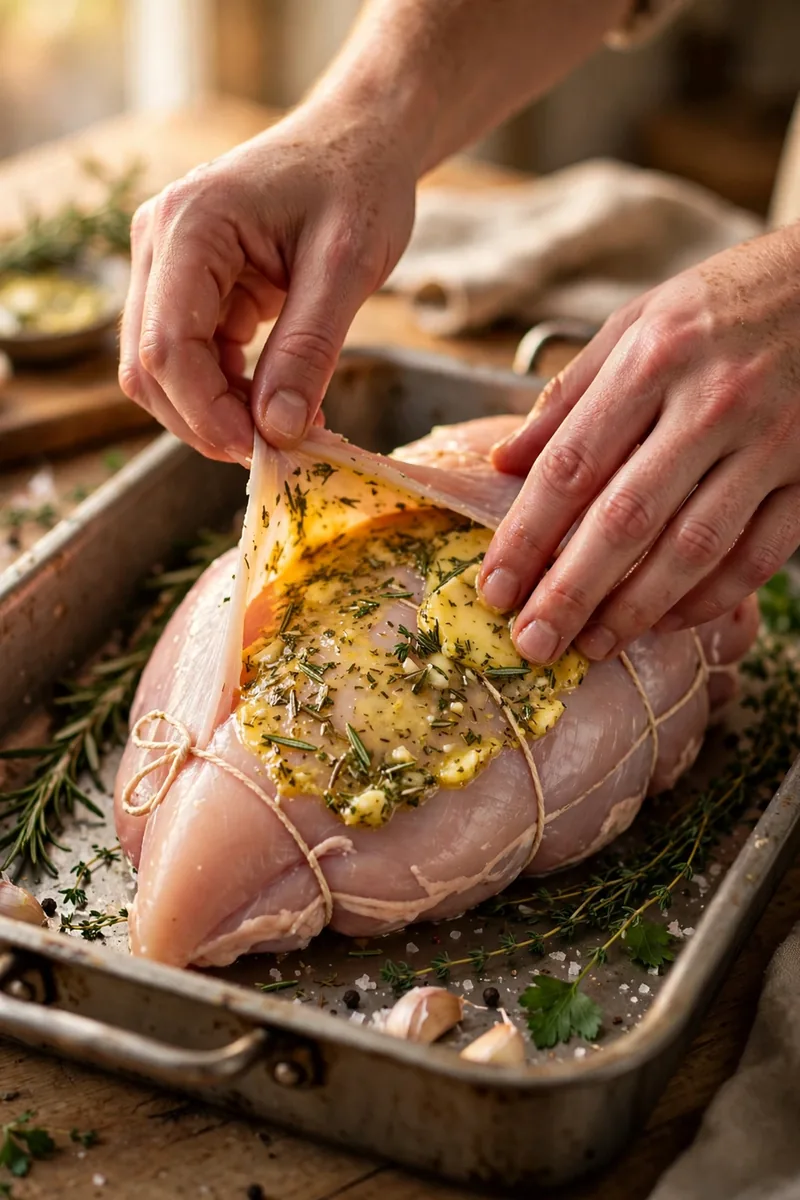
Slide your fingers gently under the skin to loosen it from the meat, working from one end toward the center. Do not tear it, since torn skin shrinks back and leaves bare meat that dries out.
Roll, tie, and butter
If the breast is netted, leave the netting on for cooking and take it off before slicing. If it is untied and loose, roll it into an even log and tie it with kitchen twine at 2 inch intervals so it cooks evenly.
Spread half the butter under the skin and rub the rest over the outside. Set the breast skin side up on a rack in a roasting pan, and pour a cup of water or low sodium chicken broth into the pan to keep the meat moist.
Roast and rest
Roast uncovered at 350 degrees for 60 to 75 minutes, until a thermometer in the thickest part reads 160 degrees. Start checking at 55 minutes, since ovens vary and a flat breast cooks faster than a rolled one.
Tent the breast loosely with foil and rest it 15 minutes. The temperature climbs to 165 during the rest, the juices settle back into the meat, and the slices hold together instead of falling apart.
Prep time: 15 minutes
Cook time: 1 hour 15 minutes
Serves: 6
Ingredients
- 1 boneless, skin-on turkey breast, about 3 pounds
- 4 tablespoons unsalted butter, softened
- 1 tablespoon olive oil
- 4 cloves garlic, minced
- 1 tablespoon chopped fresh rosemary
- 1 tablespoon chopped fresh thyme
- 1 teaspoon chopped fresh sage
- 1 teaspoon lemon zest
- 1 1/2 teaspoons kosher salt
- 1 teaspoon black pepper
- 1 lemon, halved
- 1 cup water or low-sodium chicken broth
Steps
- Heat the oven to 350 degrees. Set the rack in the lower third of the oven.
- Pat the turkey breast dry with paper towels. If it is untied, roll it into an even log and tie with kitchen twine at 2 inch intervals.
- Stir the butter, olive oil, garlic, rosemary, thyme, sage, lemon zest, salt, and pepper into a spread.
- Loosen the skin with your fingers. Spread half the butter under the skin and rub the rest over the outside.
- Set the breast skin side up on a rack in a roasting pan. Tuck the lemon halves into the pan and pour the water or broth into the bottom.
- Roast uncovered for 60 to 75 minutes, until a thermometer in the thickest part reads 160 degrees.
- Tent loosely with foil and rest 15 minutes, until the temperature reaches 165 degrees.
- Remove the netting or twine, slice crosswise against the grain, and serve with the pan juices or gravy.
One serving works out to about 340 calories, counted from USDA FoodData Central values for the turkey, butter, and oil, with the drippings turned into gravy. If you skip the gravy, the true figure runs a little lower, since some butter stays in the pan.
Cooking time and temperature chart
Boneless breasts cook faster than bone-in, and a flat breast cooks faster than a rolled one. The table below is for a rolled, netted boneless breast at each temperature. Start checking 10 minutes before the low end of the range.
| Breast weight | At 325 degrees | At 350 degrees | At 375 degrees | Servings |
|---|---|---|---|---|
| 2 pound boneless | 50 to 60 minutes | 40 to 50 minutes | 35 to 45 minutes | 4 |
| 3 pound boneless | 75 to 90 minutes | 60 to 75 minutes | 50 to 65 minutes | 6 |
| 4 pound boneless | 1 hour 40 minutes to 2 hours | 1 hour 20 minutes to 1 hour 40 minutes | 1 hour 5 minutes to 1 hour 25 minutes | 8 |
For a high heat start, roast at 450 degrees for 20 minutes, then cover loosely with foil and finish at 350 until the thermometer reads 160. A 3 pound breast takes about 65 to 80 minutes this way, with darker skin and a juicier center.
What temperature is turkey breast done
Turkey breast is done at 165 degrees in the thickest part, measured with a food thermometer. That is the USDA safe minimum, and it applies to the breast whether it is boneless or bone-in, rolled or flat.
This recipe pulls the breast at 160 degrees and lets carryover heat finish the job during the 15 minute rest. The temperature climbs 3 to 5 degrees while it rests, so it reaches 165 without drying out in the oven. If you prefer a single number, leave it in until the thermometer reads 165 and rest it the same way.
Place the probe in the thickest part of the meat, away from the skin and away from any bone. Pink meat at 165 degrees is safe, and it usually means the bird was young or the meat was brined, not that it is undercooked.
How to slice a boneless turkey breast
Rest the breast first, then take off the netting or twine before you cut. Cut the strings with kitchen scissors and peel the net away gently so the skin stays on the meat.
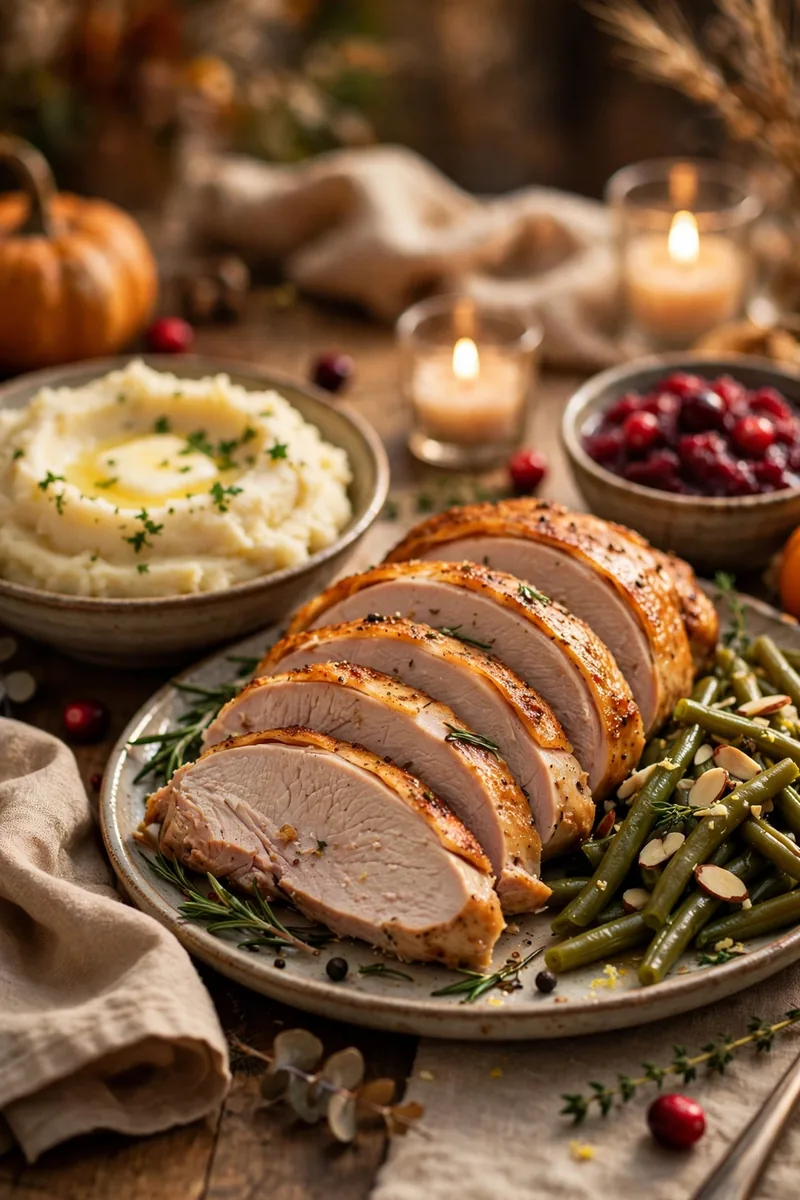
Slice crosswise against the grain into half inch to 1 inch slices, skin side up, so each piece keeps a strip of crisp skin. Arrange the slices overlapping on a platter and spoon a little pan juice over them so they stay moist on the table.
Gravy from the drippings
While the breast rests, make gravy from the pan. Pour the drippings through a strainer into a measuring cup, skim off the fat, and add stock to make 2 cups of liquid.
Melt 2 tablespoons of butter in a saucepan, whisk in 2 tablespoons of flour, and cook for a minute until it smells nutty. Pour in the liquid a little at a time, whisking as it thickens, then simmer 3 to 4 minutes and season with salt and pepper. It takes about 10 minutes, and it uses drippings that would otherwise go to waste.
Dry brine option
A dry brine is the one extra step worth taking when you have a day to spare. Rub 1 tablespoon of kosher salt over the breast, set it uncovered on a rack in the fridge, and leave it 12 to 24 hours. The salt seasons the meat all the way through and dries the skin, which crisps better in the oven.
If you dry brine, skip the salt in the herb butter and season with pepper only. A wet brine works too, but it needs a full day and a pot big enough to hold the breast, which is more work than most cooks want for a small roast.
Flavor variations
The herb butter is a base, and four swaps change the character of the roast without changing the method. Keep the butter, salt, and time the same, and swap only the flavorings.
Classic herb
Rosemary, thyme, sage, and lemon zest, as written in the recipe. This is the safest pick for a holiday table, since it tastes like Thanksgiving and pairs with every side.
Maple mustard
Swap the lemon zest for 2 tablespoons of maple syrup and 1 tablespoon of Dijon mustard in the butter. The outside caramelizes a little darker, so check the skin at 45 minutes and tent with foil if it browns too fast.
Citrus and pepper
Swap the sage for orange zest and add 1 teaspoon of cracked black pepper and a pinch of red pepper flakes. The pepper gives the skin a little bite, and the orange keeps it bright.
Smoky paprika
Swap the herbs for 2 teaspoons of smoked paprika, 1 teaspoon of garlic powder, and 1 teaspoon of onion powder. For a deeper flavor, try a turkey injection of butter and spice before roasting, which seasons the inside of the meat instead of just the surface.
Troubleshooting
Most turkey problems show up in the last 20 minutes, and most of them are fixable without starting over. The thermometer is the tool that tells you which problem you actually have.
| Problem | What happened | Fix |
|---|---|---|
| Skin browns too fast | Oven runs hot or the rack is too high | Tent loosely with foil and move the rack down |
| Meat dries out | Overcooked past 165 or sliced too soon | Pull at 160, rest 15 minutes, serve with gravy |
| Temperature stalls around 150 | Normal plateau as moisture evaporates | Leave it in, the temperature climbs again in 10 minutes |
| Pink meat at 165 | Young bird or brined meat | Safe to eat at 165, the color is not a doneness test |
| Netting marks on the skin | Net pressed into soft skin | Remove the net after resting, the marks fade as it cools |
| Rub slides off | Skin was wet when buttered | Pat dry first, and spread butter under the skin |
| Uneven thickness | One end is thinner than the other | Tuck the thin end under and tie it so the log is even |
Thawing, make ahead, and cooking from frozen
Thaw in the fridge, about 24 hours for every 4 to 5 pounds, so a 3 pound breast needs about a day. A thawed breast can stay in the fridge 1 to 2 days before cooking, which makes it easy to buy ahead.
For a faster thaw, put the sealed breast in cold water and change the water every 30 minutes. That takes about 30 minutes per pound, so a 3 pound breast thaws in about 90 minutes, and it must go straight into the oven after.
Season the breast up to 24 hours ahead and keep it uncovered in the fridge, which also dries the skin. Roast it a day ahead if you need to, then reheat slices covered at 300 degrees with a splash of broth until they reach 165.
Cooking from frozen
A frozen breast can go straight into the oven, but it takes at least 50 percent longer, so plan on about 2 hours at 350 degrees. Season it after the first 30 minutes, once the outside has softened enough for butter to stick. The skin will not crisp as well, and the drippings make a thinner gravy, so thawing first is the better plan when you have the time.
Storing and reheating leftovers
Cooked turkey keeps in the fridge for 3 to 4 days in an airtight container. Slice it before storing, since slices reheat faster and more evenly than a whole breast, and keep a little pan juice in the container.
Reheat slices in a baking dish with a splash of broth or pan juices, covered with foil, at 300 degrees until they reach 165. The microwave works for one portion, but it dries the edges, so cover the plate and heat in short bursts.
Leftover ideas
Leftover turkey is the easiest part of the week. Slice it cold for sandwiches with cranberry sauce, dice it into a pot pie or a turkey salad, or shred it into soup and tacos. One roast covers three or four meals, and the meat stays good for days.
What to serve with it
A small roast still deserves a full table. Our Thanksgiving sides cover the classics, from mashed potatoes to cranberry sauce, and Thanksgiving casseroles give you a one dish option when the oven is busy.
For another turkey main later in the week, a turkey meatloaf uses ground turkey and pantry spices. If you would rather set dinner and forget it, slow cooker turkey and chicken recipes use the same herb butter flavors with a different method. And for a weeknight roast when turkey feels like too much, baked chicken hindquarters cook in about the same time.
Frequently asked questions
What temperature should a turkey breast be cooked to?
Turkey breast is done at 165 degrees in the thickest part, the USDA safe minimum. This recipe pulls the breast at 160 degrees, and carryover heat brings it to 165 during the 15 minute rest.
Do I need to remove the net from a boneless turkey breast?
Leave the netting on during cooking, since it holds the roast together and helps it cook evenly. Take it off after the rest, before slicing, so the skin stays on the meat.
How many people does a 3 pound turkey breast feed?
Six people at half a pound per person. A 2 pound breast feeds four and a 4 pound breast feeds eight, using the same half pound per person math.
Should I brine a boneless turkey breast?
No, brining is optional. The herb butter and the rest after roasting keep the meat juicy without it. A dry brine of 1 tablespoon of kosher salt, left uncovered in the fridge for 12 to 24 hours, adds flavor and helps the skin crisp, so use it when you have the time.