

Baked Chicken Hindquarters Recipes That Stay Juicy
Baked chicken hindquarters recipes have one job: crisp skin outside and juicy dark meat inside, with dinner on the table in about an hour. This version does that with a hot oven, a dry surface, and a spice rub built from pantry staples.
The method is short. Heat the oven to 400°F, pat the skin dry, rub on the seasoning, and roast for 45 to 55 minutes. A thermometer tells you when it is done, and a short rest finishes the job.
You need one pan and one bowl, plus a thermometer. Nothing here asks for a marinade overnight or a sauce made in a second pan.
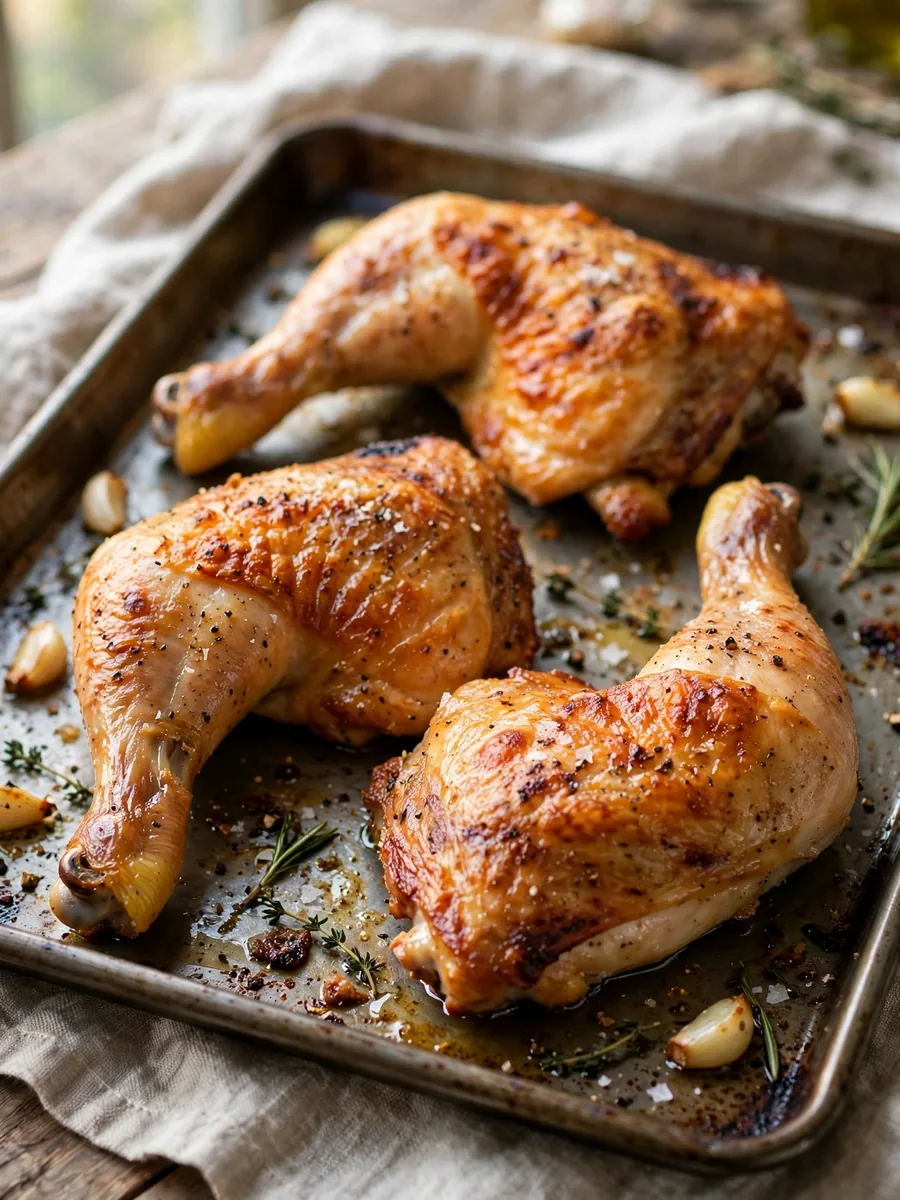
What Are Chicken Hindquarters, Exactly?
A hindquarter is a whole chicken leg: thigh and drumstick still attached, with a piece of the back left on. Butchers cut the bird into four quarters, so a hindquarter is the back half of one side. Some stores label them leg quarters, which is the same cut under a different name.
The bone and skin do most of the work in the oven. The bone slows the cooking in the thickest part, so the outside browns before the inside dries out, while the skin renders its fat as it roasts, basting the meat from above and turning crisp and golden. Boneless cuts cannot do either of those things, which is why they dry out faster.
Dark meat also forgives mistakes. A few extra minutes in the oven will not ruin it the way they ruin a breast. The connective tissue in thighs and drumsticks softens with heat instead of seizing up, so the meat gets more tender as it cooks past the safe temperature. That is the whole reason this cut suits baking.
The Temperature and Timing That Actually Matter
Set the oven to 400°F (200°C). That heat is high enough to crisp the skin and render the fat, but low enough that the spice rub browns instead of burning. Most baked chicken leg quarters need 45 to 55 minutes at this temperature, depending on size. Bigger pieces from a large bird can take close to an hour.
Time is only a guide. The number that counts is the internal temperature, taken with a thermometer in the thickest part of the thigh, away from the bone.
The USDA safe minimum internal temperature chart lists 165°F (74°C) for all poultry, which covers everything from a whole bird to a single drumstick, and that is the line for safety. For dark meat, though, 175°F to 180°F tastes better. The extra heat breaks down connective tissue, so the meat turns tender instead of chewy.
Check early if your pieces are small. Start testing at 40 minutes, and pull the pan when the thickest thigh reads 175°F. If one piece lags behind the others, move it to the hottest corner of the pan and give it five more minutes.
Rest the chicken for 5 to 10 minutes before you cut into it. The juices settle back into the meat during that pause, and the skin stays crisp while the temperature evens out. Cut too soon and the juices run onto the board instead of staying in the meat.
On a slow weekend, hands off dutch oven cooking gives this same cut a braised, fall apart texture instead of crisp skin.
Picking Good Pieces and Seasoning Ahead
Look for pieces that are close in size so they finish at the same time. Skin should be intact, with no tears, and the meat should smell fresh and clean. A little extra fat around the edges is fine. Trim only the loose flaps that would burn before the chicken is done.
You can season the chicken up to 24 hours ahead. Salt the pieces and leave them in the fridge uncovered overnight if you want the driest skin. The salt works into the meat like a dry brine, and the cold air dries the surface. Add the oil and the rest of the spices just before baking.
The Recipe: Garlic Herb Baked Chicken Hindquarters
This is the base recipe. Everything after it is a change to the seasoning or the finish, so learn this one first and the variations take care of themselves.
Prep time: 15 minutes | Cook time: 50 minutes | Total time: 1 hour 5 minutes | Serves: 4
Ingredients
- 4 chicken hindquarters (leg quarters), about 3 to 3.5 lbs total
- 2 tablespoons olive oil
- 1.5 teaspoons kosher salt
- 1 teaspoon black pepper, freshly ground
- 2 teaspoons garlic powder
- 2 teaspoons onion powder
- 2 teaspoons smoked paprika
- 1 teaspoon dried thyme
- 0.5 teaspoon dried rosemary, crushed
- 1 lemon, cut into wedges, for serving
- 2 tablespoons chopped fresh parsley, for serving
Steps
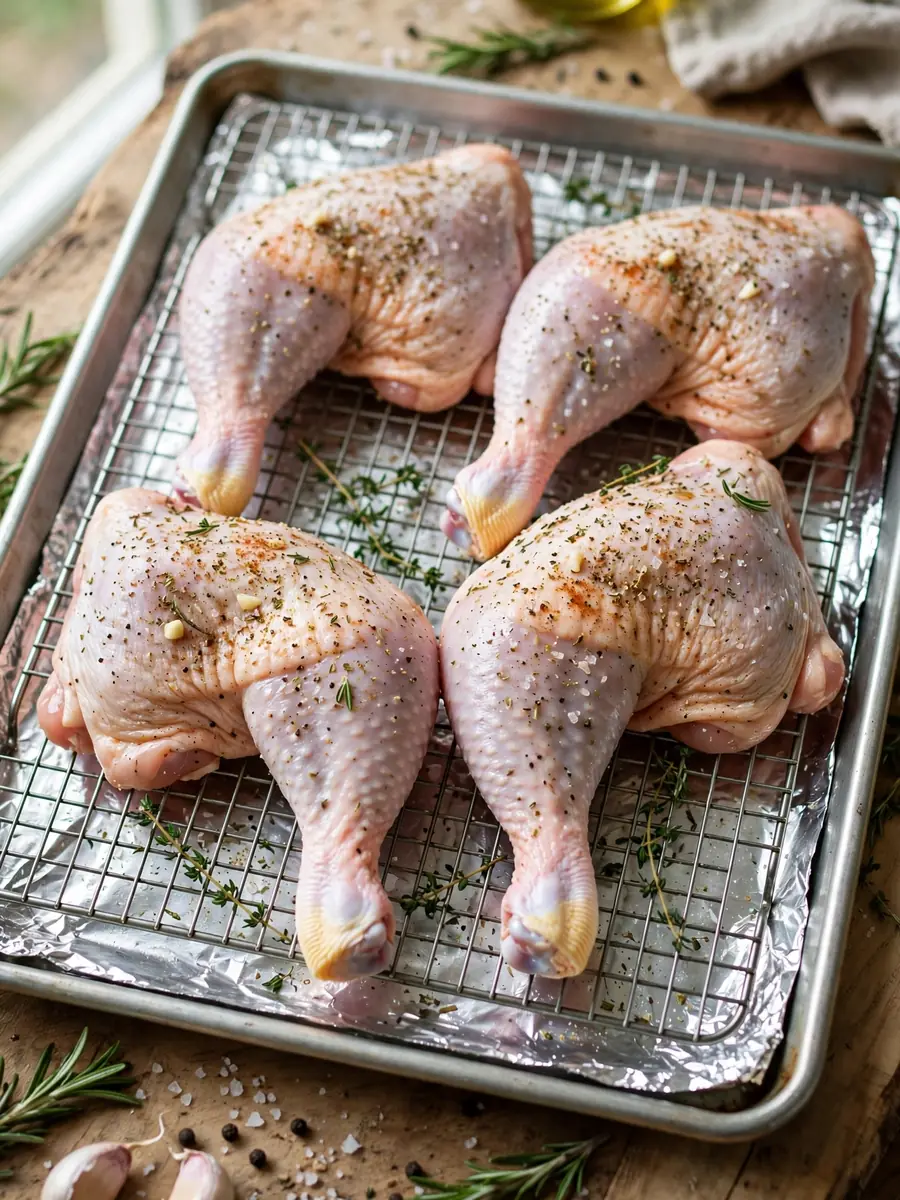
- Heat the oven to 400°F (200°C). Line a large rimmed baking sheet with foil and set a wire rack on top if you have one. The rack lifts the chicken out of its own drippings, which keeps the underside from steaming.
- Pat each hindquarter dry on all sides with paper towels. Wet skin steams instead of crisping, so this step matters more than any other in the recipe.
- Mix the dry seasoning in a small bowl. The full mix is in the ingredient list above, so measure it once and stir.
- Rub the olive oil over the chicken, then sprinkle the seasoning mix over every side and press it in with your fingers. Work a little of the mix under any loose skin.
- Set the hindquarters skin side up on the rack, with space between them. Crowded pieces steam each other, and the skin never crisps.
- Roast for 45 to 55 minutes, until the thickest part of the thigh reads 175°F on a thermometer and the skin is deep gold. Start checking at 40 minutes if your pieces are on the small side.
- Rest the chicken on the pan for 5 to 10 minutes. Squeeze lemon over the top, scatter the parsley, and serve.
The pan drippings are worth keeping. Spoon a little over the meat before serving, or save them for rice, potatoes, or a quick gravy.
Three Ways to Change It Up
Once the base recipe works, the seasoning is the easy part to change, because each of these three versions uses the same oven temperature and the same timing, with only the rub and the finish changing. The thermometer check stays the same too.
Lemon Herb
Swap the smoked paprika for lemon zest and dried oregano. Season with olive oil and lemon zest, then garlic powder, salt, pepper, oregano, and thyme. Finish with a squeeze of fresh lemon and a scatter of chopped parsley.
Garlic Butter
Melt 3 tablespoons of butter with 3 minced garlic cloves and a pinch of chili flakes. Brush it over the chicken during the last 10 minutes of roasting, when the skin is already set. The butter browns in the heat and gives the skin a rich, glossy finish. A spoonful of the pan drippings over the top at the table does the same job.
BBQ
Season the chicken with salt, pepper, garlic powder, and smoked paprika only. Roast it plain for 35 minutes, then brush on your favorite BBQ sauce and return the pan to the oven for the last 10 to 15 minutes. The sauce thickens into a sticky glaze instead of burning. Serve with extra sauce on the side and plenty of napkins.
The Two Mistakes That Ruin the Skin
Wet skin is the first mistake. Water on the surface has to steam off before browning can start, and by the time it does, the meat underneath is already past its best. Paper towels cost nothing and fix the problem in thirty seconds. Dry the skin, then dry it once more.
Crowding the pan is the second. Pieces that touch each other trap steam between them, so the skin facing a neighbor stays pale and soft. Give every piece an inch of space on all sides. If the pan is too small, use two pans instead of squeezing everything onto one.
A wire rack helps with both problems, but it is not required. Foil on the sheet pan catches the drippings either way, and the cleanup stays easy.
What to Serve With It
Roasted potatoes and a green vegetable are the easy answer. The potatoes cook in the same hot oven, and something green cuts through the richness of the skin. Mashed potatoes work too, especially with the pan drippings spooned over the top.
Rice and a simple salad round out the plate when you want something lighter. Buttered rice soaks up the juices, and a salad with a sharp vinaigrette keeps the meal from feeling heavy, which matters when the chicken itself is already rich from the skin and the drippings.
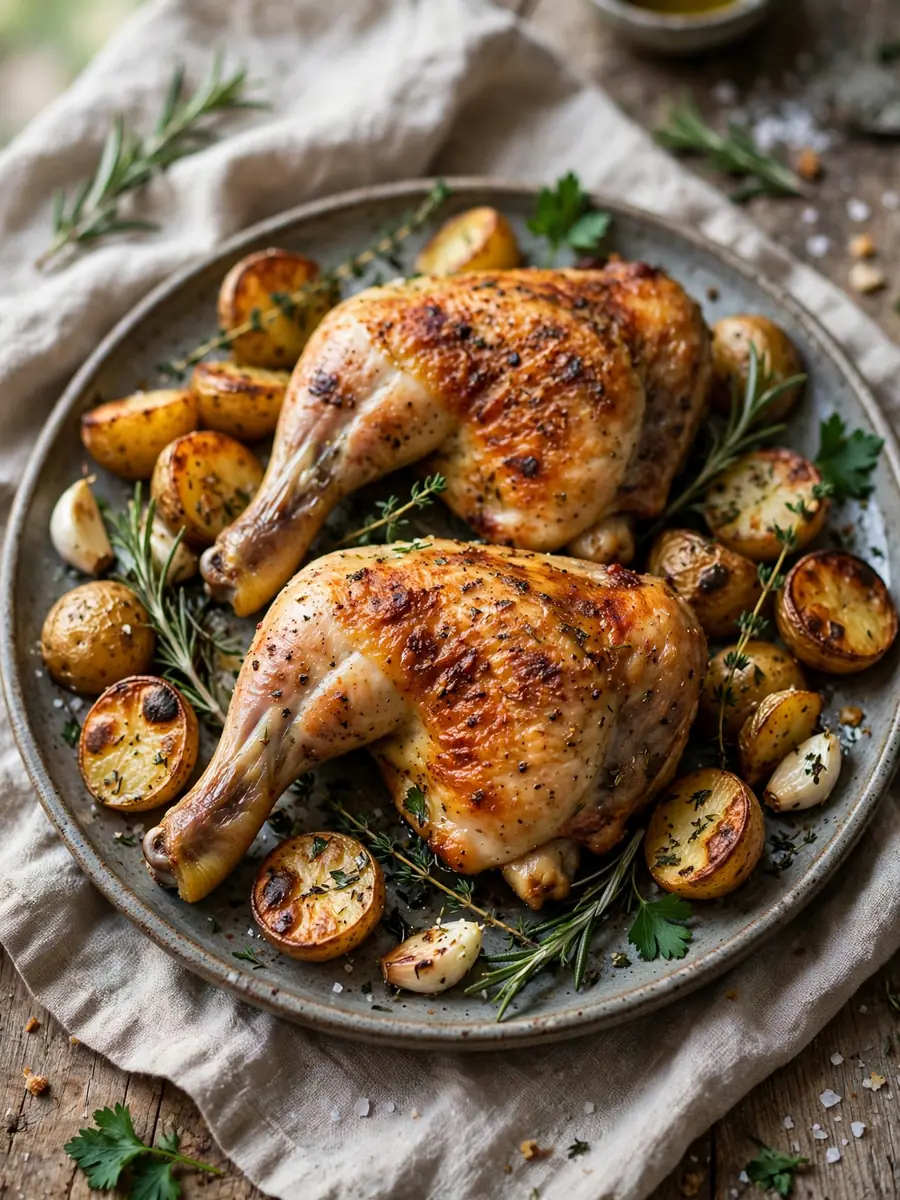
Leftovers have a second life too. Shred the cold meat into flavor packed chicken bowls for a fast lunch, or tuck it into wraps with slaw. And if you like chicken dinners built on this same idea, these juicy copycat chicken recipes are worth a look.
Storing and Reheating Leftovers
Cool the chicken before it goes into the fridge, and get it in there within two hours of cooking. Store it in an airtight container, where it keeps for 3 to 4 days. For longer storage, wrap each piece tightly in foil, slide the pieces into a freezer bag, and freeze for up to 3 months.
The oven reheats leftovers best. Heat the oven to 350°F and set the chicken on a baking sheet. Warm it for 15 to 20 minutes until the skin crisps again.
An air fryer at 360°F does the same job in 8 to 10 minutes. The microwave works in a pinch, but the skin goes soft.
Thaw frozen pieces overnight in the fridge, never on the counter. Reheat them the same way, straight from the fridge, and check that the center is hot all the way through.
Common Questions
How long does it take to bake chicken hindquarters?
At 400°F, baked chicken leg quarters need 45 to 55 minutes. Size is the deciding factor, so start checking at 40 minutes and trust the thermometer over the clock.
What temperature should chicken hindquarters reach?
The safe minimum is 165°F (74°C) in the thickest part of the thigh. For the best texture, cook dark meat to 175°F to 180°F, where the connective tissue softens and the meat turns tender.
Can I bake chicken hindquarters from frozen?
You can, but the skin will not crisp the same way, and the timing gets hard to predict. Thawing overnight in the fridge gives a far better result for the same effort.
Why is my chicken skin not crispy?
Wet skin, a crowded pan, or an oven that runs cool are the usual causes. Pat the skin dry and leave space between the pieces. If the skin still comes out pale, check your oven temperature with a thermometer.
One Last Thing Before You Bake
Dry the skin and trust the thermometer. That is the whole recipe in one sentence, and it is the part worth getting right. Make the garlic herb version first, then change the seasoning next time and see which one your table asks for again, because the fastest way to learn a cut like this is to cook it the same way twice and change only one thing.