

Bisquick Dumplings in 25 Minutes
This bisquick dumplings recipe turns two pantry staples into soft, steamy dumplings in about 25 minutes. You stir Bisquick and milk into a shaggy dough, drop spoonfuls onto a simmering stew, and let the lid do the rest. No rolling, no cutting, no second pot to wash.
The method is simple, but the texture is not automatic. Dumplings go gummy when the dough is overmixed, the pot boils too hard, or the lid comes off early. This guide fixes all three, with a scaling table, a doneness test, and the raft trick that keeps dumplings floating instead of sinking.
Betty Crocker puts the classic version at two ingredients and five minutes of mixing, and that is the version this recipe starts from. The rest of the page covers what most recipes skip: reading the dough, timing each stage, and fixing a batch that goes wrong.
What Bisquick Dumplings Actually Are
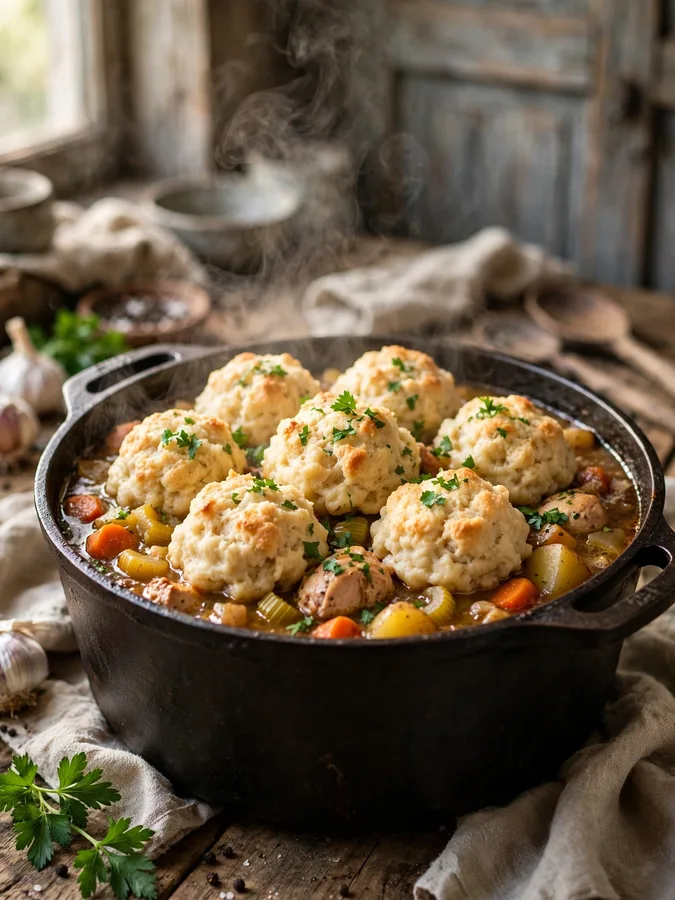
A Bisquick dumpling is a biscuit dough steamed on top of a soup or stew. The mix already holds flour, leavening, fat, and salt, so milk is the only thing you add. Heat and trapped steam cook the dough from the outside in, which is why the lid matters as much as the recipe.
They land somewhere between a biscuit and a noodle, soft and a little slick from the broth on the outside, while the inside should look like the middle of a fresh biscuit, full of small air pockets. If the center looks wet and shiny, the dumpling needs more time under the lid.
Betty Crocker’s official Bisquick dumplings recipe uses the same two ingredient base and a 10 minute uncovered cook followed by 10 minutes covered. That timing is the standard every other version on page one of Google builds on, including the ones from The Kitchen Magpie and The Recipe Rebel.
Drop Dumplings vs Rolled Dumplings
Drop dumplings are spoonfuls of soft dough. They come out round, craggy, and uneven, which gives them more surface to catch broth. Rolled dumplings are flattened, cut into strips, and closer to a thick noodle. Longbourn Farm rolls its dough and cuts 2 to 3 inch strips, while The Kitchen Magpie and The Recipe Rebel both drop.
Drop dumplings suit this recipe better. The dough is too soft and sticky to roll without extra flour, and extra flour makes the dumplings dense. If you want strips, add a spoonful of mix at a time until the dough holds together, then roll it on a floured board and cut it. Expect a firmer bite.
The Ratio That Works Every Time
The classic ratio is 2 cups of Bisquick to 2/3 cup of milk, a 3 to 1 ratio by volume. It makes 8 to 10 dumplings, enough to top a pot that serves 4 to 6 people. KitchPrep scales the same ratio from a single dumpling test batch up to 20 dumplings, and the math holds at every size.
Cold milk works best because it keeps the fat in the mix solid until the dough hits the steam. Warm milk softens the dough too fast and makes it harder to scoop, so chill the milk if the kitchen is warm. Whole milk gives the richest result, but low fat milk works, and buttermilk adds a light tang.
| Servings | Bisquick | Milk | Dumplings |
|---|---|---|---|
| 2 | 1 cup | 1/3 cup | 3 to 4 |
| 4 to 6 | 2 cups | 2/3 cup | 8 to 10 |
| 8 | 3 cups | 1 cup | 14 to 16 |
| 10 to 12 | 4 cups | 1 1/3 cups | 18 to 20 |
How to Read the Dough
The dough should look shaggy and soft, not smooth, and a few dry streaks are fine. If the spoon drags and the dough holds a soft peak, it is ready. If it spreads like pancake batter, fold in a spoonful of mix, and if it feels stiff, add milk one tablespoon at a time.
Stop stirring as soon as the dry mix disappears. Every extra turn works the gluten in the flour, and gluten is what turns a fluffy dumpling into a chewy one. The Recipe Rebel puts it plainly: stir until combined, then stop. That one habit matters more than any ingredient swap.
How to Make Bisquick Dumplings
Start with a pot of stew, soup, or broth already at a gentle simmer. The dumplings need hot liquid and steam from the first second, so the pot comes first and the dough comes second.
Prep time: 5 minutes | Cook time: 20 minutes | Total time: 25 minutes | Yield: 8 to 10 dumplings | Category: Main Dishes
Ingredients
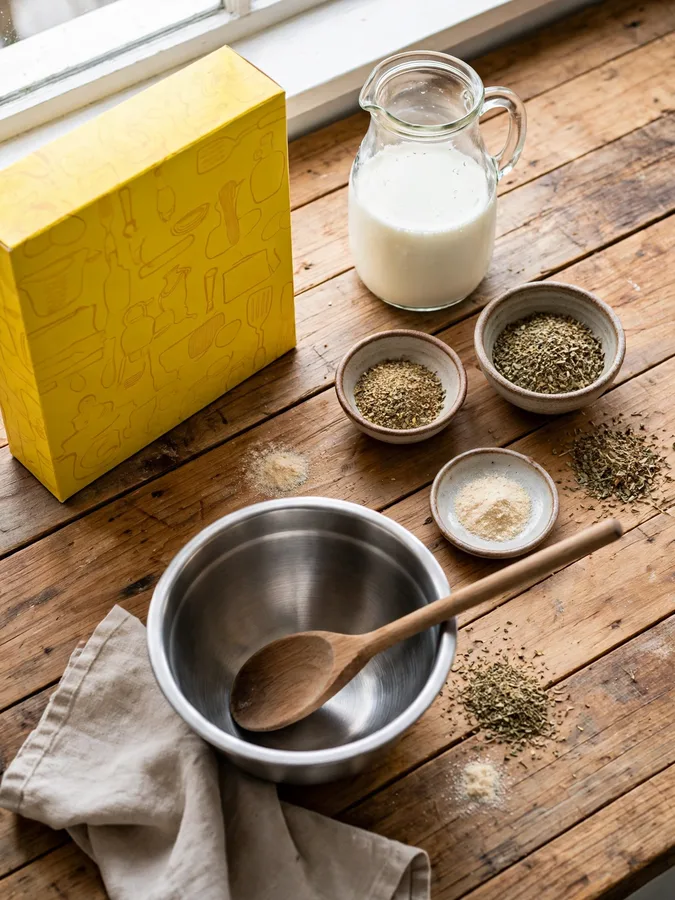
- 2 cups Bisquick baking mix
- 2/3 cup cold whole milk
- 1/2 teaspoon Italian seasoning (optional)
- 1/4 teaspoon garlic powder (optional)
You also need a pot of soup or stew at a gentle simmer, with enough liquid for the dumplings to sit on top without sinking. A Dutch oven or deep pot with a tight lid works best.
Steps
- Bring the stew to a gentle simmer, with small bubbles breaking across the surface. Turn the heat down if the pot is boiling hard.
- Stir the Bisquick, milk, and seasonings together in a medium bowl just until the dry mix disappears. The dough should look shaggy and soft. Stop stirring now.
- Drop the dough by heaping tablespoons onto the surface of the stew. Set each spoonful on meat, vegetables, or a thick part of the pot, not on bare liquid. Leave a little space between them.
- Cook uncovered for 10 minutes. The outside sets during this stage, which is what keeps the dumplings round. Do not stir.
- Put the lid on and cook 10 more minutes. Keep the lid closed the whole time so the trapped steam cooks the centers through.
- Split the largest dumpling with a fork. The inside should look like the middle of a biscuit, with small air pockets and no wet batter. Serve right away, spooning broth over each dumpling.
Serve the dumplings straight from the pot while they are still steaming. They firm up a little as they sit, so bring the pot to the table now, not in twenty minutes.
Why Dumplings Go Gummy
Gummy dumplings have three usual causes, and all three are fixable. The dough was stirred too long, the lid came off during the covered cook, or the dumplings sank into thin broth and boiled instead of steaming. The Seasoned Mom lists the same three in its troubleshooting section, and every other top recipe agrees.
Give Them a Raft
Drop each spoonful onto meat, vegetables, or a thick part of the stew, not onto bare liquid. Solid food holds the dumpling up where the steam can reach it. A dumpling that sinks into thin broth soaks up liquid from below and turns heavy before the top ever cooks.
If the stew looks thin, stir in a spoonful of flour or a splash of cream and let it thicken for a few minutes first. Recipe Fairy makes the same point: a thin soup is the fastest route to a gummy batch.
Keep the Lid On
The covered 10 minutes are when the tops cook. Lifting the lid lets the steam escape, and the centers stay raw while the bottoms overcook. KitchPrep warns against peeking during the first 10 covered minutes, and The Seasoned Mom says the same. Set a timer and walk away.
If a dumpling still looks shiny inside after the full 20 minutes, give it 2 more minutes covered, then check again. A toothpick should come out clean from the center of the largest dumpling.
Simmer, Never Boil
A rolling boil breaks dumplings apart and drives water into them. A gentle simmer, with small bubbles breaking across the surface, is the right heat. If the pot churns like a jacuzzi, turn the burner down. That line comes from The Seasoned Mom, and it is the easiest way to picture the difference.
| Problem | Likely cause | Fix |
|---|---|---|
| Gummy centers | Lid lifted early, or dumplings too big | Cook covered 2 to 3 minutes more |
| Flat, dense dumplings | Dough overmixed, or simmer too hard | Stir just until combined, lower the heat |
| Dumplings fall apart | Rolling boil, or stirred after dropping | Gentle simmer, never stir the pot |
| Dry tops | Too long on the heat | Cut the covered time by 1 to 2 minutes |
Flavor Variations That Still Cook Right
Keep add-ins small and dry so the dough stays light. Two tablespoons of chopped parsley or chives, a quarter cup of finely shredded cheddar, or a quarter teaspoon of garlic powder all work without changing the timing. The Recipe Rebel lists the same limits, and KitchPrep caps total add-ins at about a quarter cup per 2 cups of mix.
Buttermilk instead of milk gives a tangier, slightly more tender dumpling, because the acid in buttermilk reacts with the baking soda in the mix. The Recipe Rebel notes the same effect. For heat, add a pinch of cayenne or a few drops of hot sauce to the milk before mixing.
Cheddar dumplings pair well with beef stew or chili, herb dumplings suit chicken stew and vegetable soup, and garlic dumplings fit a creamy mushroom base. Pick the variation that matches the pot underneath, not the one that sounds fanciest.
What to Serve With Bisquick Dumplings
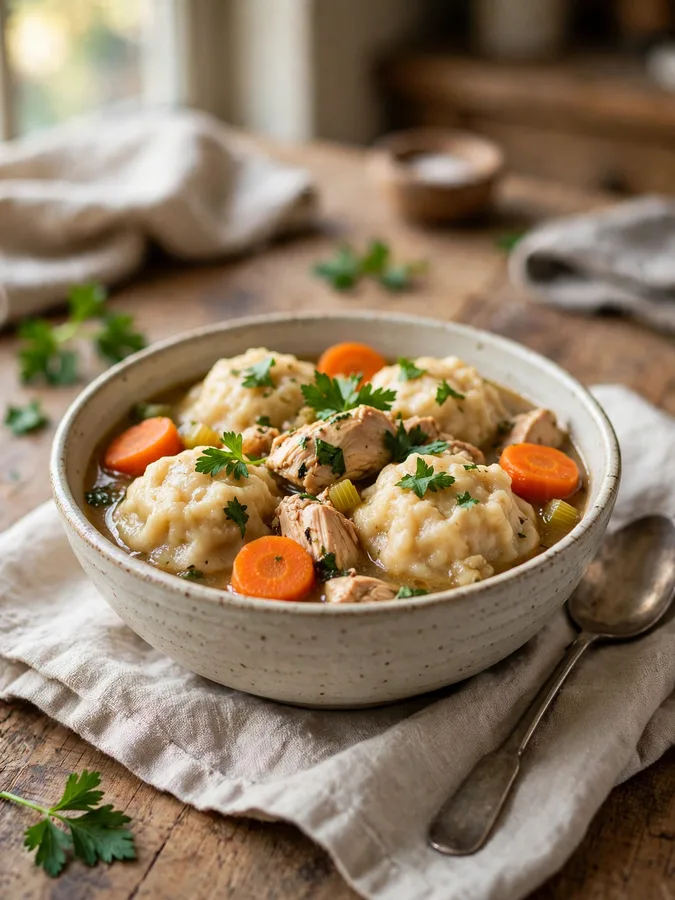
Dumplings are a topping, not a meal on their own, so the pot underneath does the heavy lifting. A chicken stew with carrots and onion is the classic base, and a pot of baked chicken hindquarters recipes gives you the same comfort with less hands-on time.
A crisp side cuts the richness. A cool cucumber salad is the fresh counterpoint to a heavy stew, the same role a light side plays next to delicate restaurant dumplings.
Bread on the side is optional, since the dumplings already cover the starch, but a slice of something simple helps mop up broth. Try easy no fuss breads like Mary Berry soda bread, or lean on quick mix baking shortcuts like Jiffy Mexican cornbread when the oven is already hot.
Make Ahead, Storage, and Freezing
Cooked dumplings are best the day you make them. They keep soaking up liquid as they sit, so leftovers turn softer by the hour. The stew underneath holds up far better than the dumplings on top of it.
Freezing the Stew, Not the Dumplings
Betty Crocker advises against freezing cooked dumplings because they deflate and turn gummy when thawed. Freeze the stew on its own for up to 3 months, then drop a fresh batch of dough onto the reheated pot. The dumplings come out fluffy, and the stew tastes like it was made that day.
Longbourn Farm offers a second option: freeze the raw dough in strips on a parchment lined sheet, then move the frozen pieces to a bag. They go straight from the freezer into simmering broth, with a few extra minutes of covered cooking.
Reheating Leftovers
Warm leftovers gently on the stove over low heat, with a splash of broth if the stew has thickened. The microwave works too, in 60 second bursts with a stir between each, but the dumplings soften faster that way. Eat them the same day when you can.
Fridge storage runs 2 to 3 days in a sealed container, according to The Kitchen Magpie, and up to 5 days for the full soup in Longbourn Farm’s version. Either way, the dumplings are the first thing to go soft, so plan the second serving around them.
Bisquick Dumplings FAQ
How long do Bisquick dumplings take to cook?
Twenty minutes total: 10 minutes uncovered, then 10 minutes covered, on a gentle simmer. The uncovered stage sets the outside so the dumplings hold their shape, and the covered stage steams the centers through. Check the largest dumpling with a toothpick. If it comes out clean, they are done.
Can I make Bisquick dumplings ahead of time?
You can prep the stew ahead, but mix the dough right before cooking. The dough has no resting step that helps it, and it stiffens as it sits. If dinner is early, chop the stew vegetables and measure the milk in the morning, then stir the dough together when the pot is simmering.
Can I freeze Bisquick dumplings?
Cooked dumplings do not freeze well. Betty Crocker notes they deflate and turn gummy after thawing. Freeze the stew without dumplings for up to 3 months, then drop fresh dough onto the reheated pot. You can also freeze raw dough strips on a parchment lined sheet and cook them straight from frozen.
One Pot, Twenty Five Minutes
Two cups of mix, two-thirds of a cup of milk, twenty minutes of steam. That is the whole recipe, and it has stayed the same since the box first printed it. A gummy batch and a fluffy one differ by three small habits: a gentle simmer, a closed lid, and a dough you stop stirring early.
Make it tonight with whatever stew is already on the stove. The dumplings will be ready before the table is set.