Skip to content

Introduction
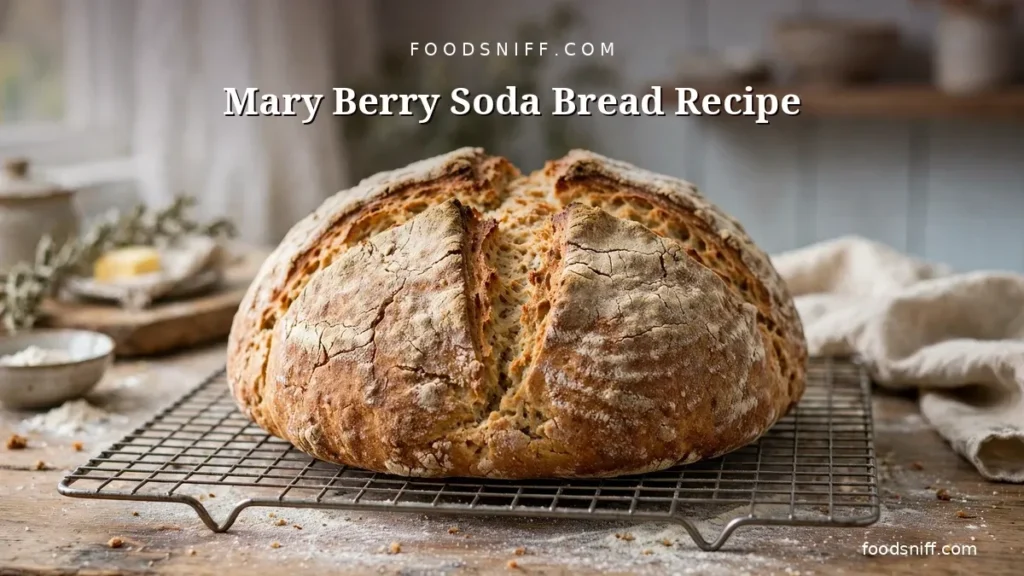
Fresh bread does not have to mean a long afternoon in the kitchen. This mary berry soda bread recipe gives you a warm, crusty loaf in under an hour, with no yeast, no kneading, and no waiting for dough to rise. The crumb is soft and slightly tangy, the crust is crisp and golden, and the whole loaf comes together from four simple ingredients you probably already have.
Soda bread has a long place in Irish home baking, where buttermilk and bicarbonate of soda did the work that yeast does in other breads. That practical history is part of its charm, and you can read more about the tradition in this BBC Food Irish soda bread guide. This version follows the classic Mary Berry style: strong white flour, a level teaspoon each of bicarbonate of soda and salt, and buttermilk to bring the dough together. It is a straightforward loaf, and that is exactly why it works so well for a weekday bake, a soup supper, or a St. Patrick’s Day table.
Why This Loaf Works
The rise comes from chemistry, not yeast. Buttermilk is acidic, and when it meets bicarbonate of soda it produces small bubbles of carbon dioxide that lift the dough in the oven. That is why the dough needs to go into a hot oven soon after mixing, while those bubbles are still active, and why gentle handling matters so much. Stir just until the dough comes together, shape it lightly, and let the oven do the rest.
Prep time: 10 minutes
Cook time: 40 minutes
Total time: 50 minutes
Serves: 6 to 8 slices from 1 loaf
Method: Baking, no yeast
Cuisine: Irish
If you are new to bread baking, this is a forgiving place to start. There is no starter to feed, no proving basket, and no second rise to watch. If you bake often, it is a useful loaf to keep in your back pocket for days when you want fresh bread without planning ahead.
Ingredients
You need only a few things, and measuring them accurately matters more here than in many recipes, because the balance of soda to acid sets the rise and the flavor.
- 450g (1 lb) strong white flour, plus extra for dusting
- 1 level teaspoon bicarbonate of soda (baking soda)
- 1 level teaspoon salt
- 300ml (1/2 pint) buttermilk, or 150ml milk mixed with 150ml natural yoghurt
- About 6 tablespoons tepid water, only as needed to form a very soft dough
- Oil or a little flour, for greasing or dusting the baking tray
Strong white flour gives a lighter loaf with a bit more structure than plain flour, which is why it suits this recipe. If you only have plain flour, the loaf will still bake well, with a slightly softer crumb. Check that your bicarbonate of soda is fresh before you start. Stir a pinch into a splash of vinegar: lively fizzing means it is active, while a weak reaction means it is time for a new box. Too much soda, or stale soda, can leave a soapy or bitter taste, so level teaspoons, not heaped ones, are the right measure.
Steps
- Step 1: Preheat the oven to 200 degrees C (fan 180 degrees C, gas mark 6). Lightly grease a baking tray, or line it with parchment paper and dust it lightly with flour.
- Step 2: Measure the flour, bicarbonate of soda, and salt into a large mixing bowl. Stir or whisk them together so the soda is spread evenly through the flour. Even distribution matters, because a pocket of undissolved soda can taste bitter in the finished loaf.
- Step 3: Pour in the buttermilk, or the milk and yoghurt mixture, and stir with a wooden spoon or a round-bladed knife until a very soft dough forms. Add the tepid water a tablespoon at a time only if the dough feels dry. The dough should be soft and slightly sticky, not firm and smooth like a yeast dough.
- Step 4: Turn the dough out onto a lightly floured surface. With floured hands, shape it gently into a neat round about 18cm (7 inches) across. Do not knead it. A few light pats to round the shape are enough.
- Step 5: Place the round on the prepared baking tray. With a sharp knife, cut a shallow cross across the top. The cross helps heat reach the center so the loaf bakes evenly, and it gives soda bread its familiar look.
- Step 6: Bake for 30 minutes, then turn the loaf upside down and bake for 10 more minutes. This second stage helps the base crisp up and finish baking through.
- Step 7: Check for doneness by tapping the bottom of the loaf. It should sound hollow and feel firm. If it still sounds dull or soft, give it a few more minutes and test again.
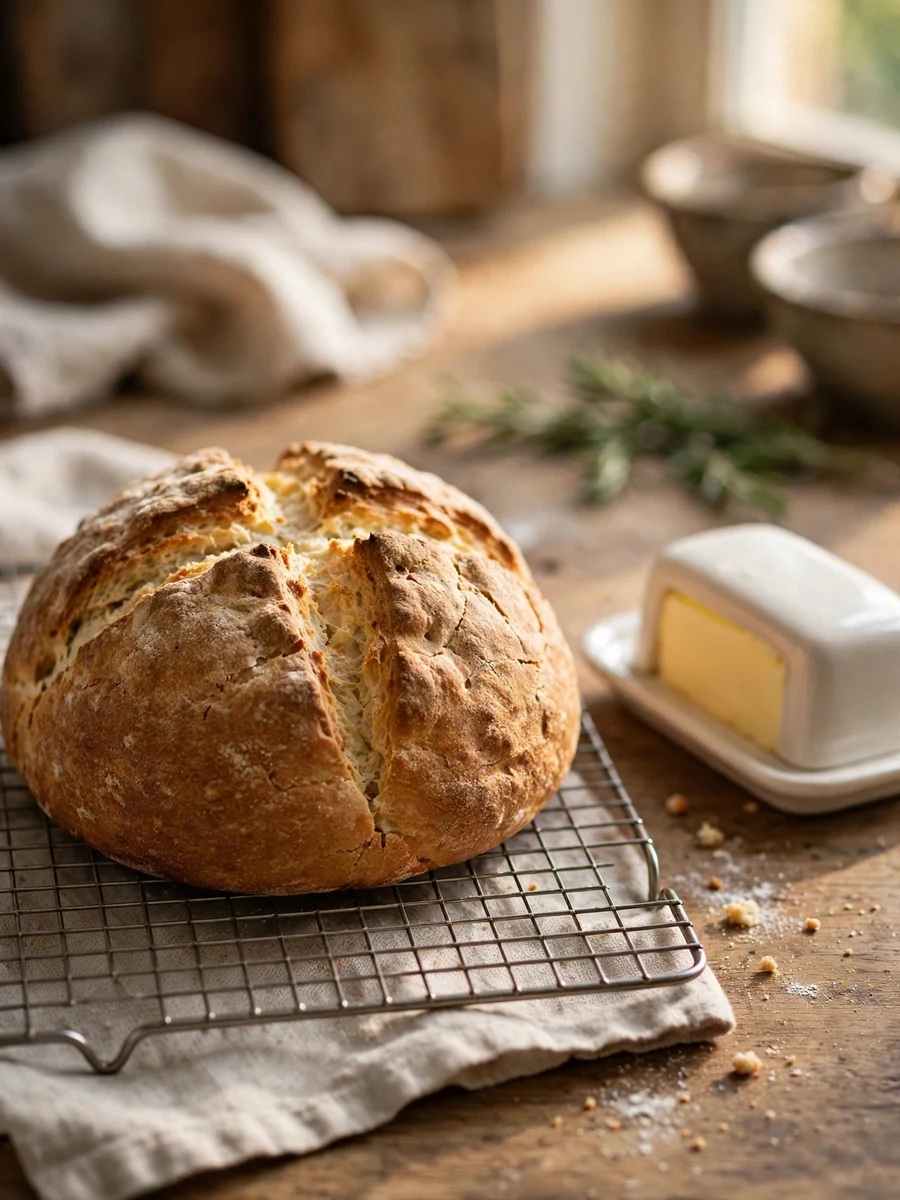
- Step 8: Cool the loaf on a wire rack for at least 15 minutes before slicing. Cutting too soon can make the crumb gummy, because it is still setting as it cools. Serve warm or at room temperature.
Tips for a Light, Even Loaf
Most soda bread problems come down to three things: old soda, overworked dough, or a slow trip to the oven. Mix the dough quickly once the liquid goes in, shape it without kneading, and get it into the preheated oven right away. The longer a mixed soda dough sits, the more lift it loses.
Flour amount can vary a little with humidity and with the brand of flour, so judge the dough by feel rather than by adding all the water at once. A soft, slightly tacky dough bakes into a tender loaf. A stiff, dry dough bakes into a dense one. If the dough sticks badly to your hands, dust them with flour rather than working more flour into the dough itself.
For a softer crust, wrap the warm loaf in a clean tea towel as it cools. The trapped steam softens the crust without making it soggy. For a crisper crust, leave it uncovered on the rack. Both are good, so choose the texture you prefer for the meal you are serving.

Variations
Once the plain loaf feels easy, it is simple to change it without changing the method. Keep the flour, soda, salt, and liquid quantities the same, and treat the additions below as extras folded in with the dry ingredients.
Wholemeal and Oat Loaf
Replace 50g of the flour with porridge oats, or swap half the strong white flour for wholemeal flour, for a nuttier, more rustic loaf. Wholemeal flour drinks up more liquid, so you may need the full amount of tepid water, and the crumb will be a little denser. This version is especially good toasted the next day.
Seeded Soda Bread
Stir a small handful of mixed seeds, such as sunflower, pumpkin, and sesame seeds, into the dry ingredients, and sprinkle a few more over the top before baking. The seeds add crunch and make a plain slice feel more substantial with soup.
Sweet Raisin Loaf
Add a handful of raisins or currants to the dry ingredients for a lightly sweet loaf that suits breakfast and afternoon tea. A little cinnamon in the flour works well here too. Serve it with butter and jam, or with cream cheese and honey.
Cheddar and Herb Loaf
Fold in a handful of grated mature Cheddar and a tablespoon of chopped fresh herbs, such as rosemary or thyme, with the dry ingredients. This savory version pairs well with tomato soup and with a cheese board, and it toasts beautifully.
Serving and Storage
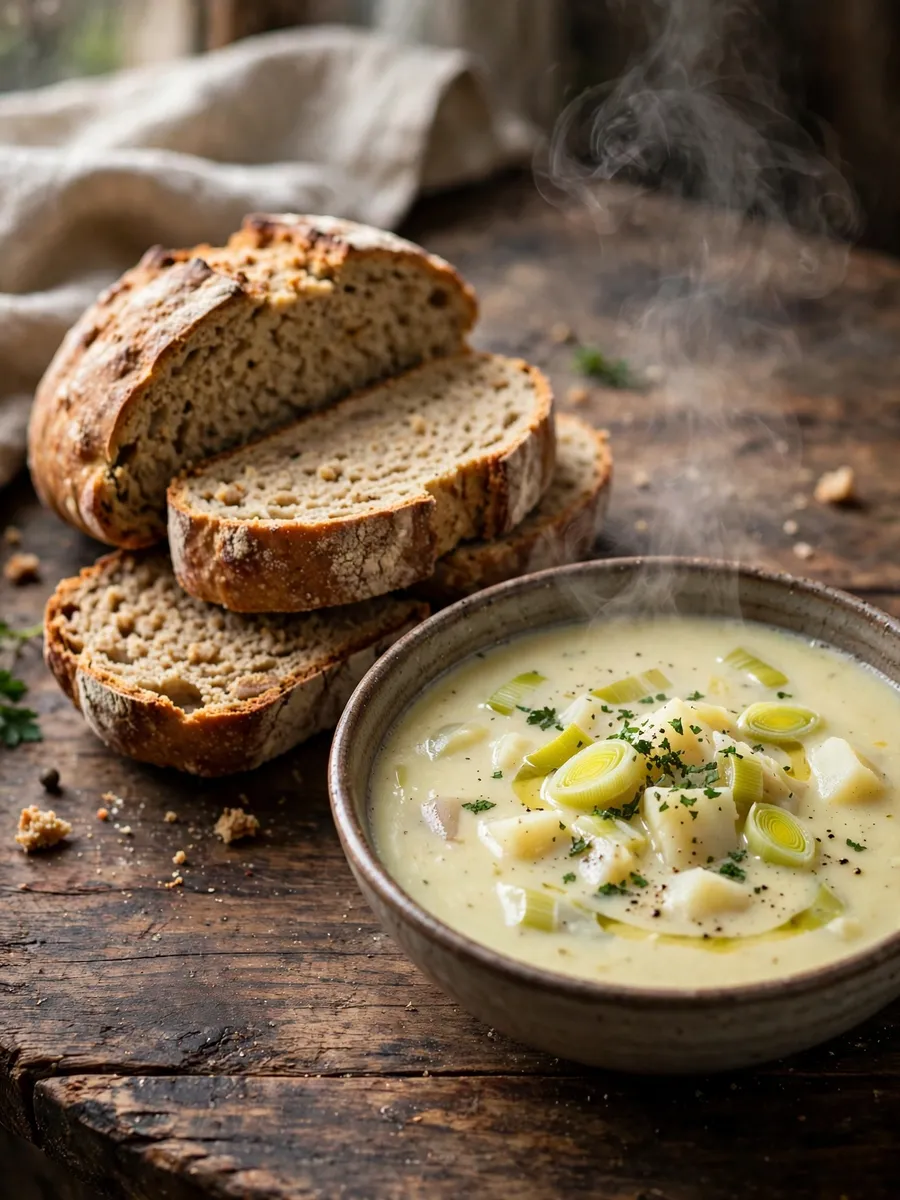
Soda bread is at its best on the day it is baked, warm from the oven or cooled to room temperature. Thick slices with salted butter are hard to beat, and the loaf also works as a side for hearty soups and stews, where its absorbent crumb soaks up broth without falling apart. Try it with Irish stew, creamy potato and leek soup, or a simple tomato and lentil soup.
For breakfast, toast slices and top them with butter and jam, cream cheese and honey, or scrambled eggs. For a light lunch, split a thick slice and fill it with Cheddar and chutney, or serve it beside a salad with a wedge of cheese.
Store leftover bread wrapped in a clean tea towel or in an airtight container at room temperature for up to 2 days. After the first day, toasting brings back much of the fresh texture. For longer storage, slice the cooled loaf, wrap the slices well, and freeze them for up to 2 months. Toast slices straight from frozen, no need to thaw first.
Frequently Asked Questions
These are the questions readers ask most about this loaf. Fuller answers sit in the FAQ section at the end of the article.
Can I make soda bread without buttermilk? Yes. Use 150ml milk mixed with 150ml natural yoghurt, as in the ingredients above, or stir a tablespoon of lemon juice or white vinegar into 300ml milk and leave it for 5 to 10 minutes until it thickens slightly. Either substitute gives the acid the soda needs to work.
Why is my soda bread dense? The usual cause is overworking the dough. Soda dough should be handled as little as possible. Mix just until it comes together, shape it gently, and bake it promptly.
Why does my soda bread taste bitter? Bitter or soapy flavor usually means too much bicarbonate of soda, or soda that was not mixed evenly through the flour. Use level teaspoons and stir the dry ingredients well before adding liquid.
Can I make soda bread ahead of time? It is best the day it is baked, but it keeps well for a day or two and freezes well sliced. If you need bread ahead, bake it, cool it fully, slice it, and freeze it, then toast slices as needed.
Related Recipes
If you enjoy baking quick breads, these are natural next bakes. For a sweet loaf that uses up ripe fruit, try this best banana bread. If you want to compare a no-yeast loaf with a slow fermented one, read this sourdough bread recipe guide. And for a savory bake with a little heat, this cornbread with a kick is a good match for chili and soup nights.
Conclusion
This loaf proves that good bread does not need yeast, kneading, or a long wait. Four ingredients, a hot oven, and a light hand are enough for a golden loaf with a soft crumb and a crisp crust. Bake it plain first, learn how the dough should feel, then try a seeded, wholemeal, or raisin version next time. However you serve it, with butter, with soup, or toasted for breakfast, it is the kind of simple bake that earns a regular place in the kitchen.
Why is buttermilk used in soda bread?
Buttermilk is acidic, and that acid reacts with bicarbonate of soda to produce bubbles that lift the loaf in the oven. Without that acid, the soda cannot raise the bread properly, which is why a milk and yoghurt mixture or soured milk works as a substitute.
Can I make soda bread without buttermilk?
Yes. Use 150ml milk mixed with 150ml natural yoghurt, or stir a tablespoon of lemon juice or white vinegar into 300ml milk and leave it for 5 to 10 minutes until it thickens slightly. Either option gives the acid the soda needs.
How do I make soda bread light and fluffy?
Use fresh bicarbonate of soda, handle the dough as little as possible, and bake it promptly in a preheated oven. Overworking the dough develops gluten and makes the loaf dense, so mix just until it comes together and shape it gently.
Why does my soda bread taste bitter?
Bitter or soapy flavor usually means too much bicarbonate of soda, or soda that was not mixed evenly through the flour. Use level teaspoons, not heaped ones, and stir the dry ingredients well before adding liquid.
How long does soda bread keep?
Soda bread is best on the day it is baked. It keeps wrapped at room temperature for up to 2 days, and toasting revives it after the first day. For longer storage, slice the cooled loaf, freeze the slices for up to 2 months, and toast them straight from frozen.