
The Marinade That Makes Peruvian Ceviche
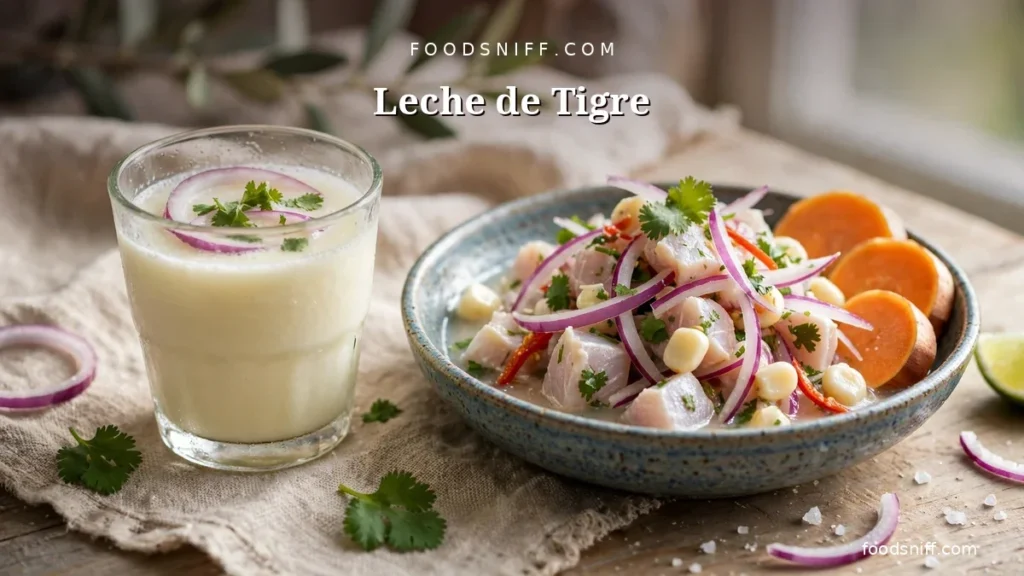
Leche de tigre is the sharp, milky looking citrus marinade that gives Peruvian ceviche its flavor. Lime juice, fish stock, red onion, ají limo chili, ginger, celery, cilantro and salt get blended and strained into a pale liquid that cures raw fish in minutes and doubles as a drink.
The name means tiger’s milk in Spanish, and it comes from the color and the punch, not from any dairy. There is no milk in it at all.
If you have ever eaten ceviche in a Peruvian restaurant and wondered what the cloudy juice at the bottom of the bowl was, that was leche de tigre. Cooks in Lima treat it as the whole point of the dish. The fish matters, but the marinade does the seasoning, the curing and most of the talking. Get the leche right and the ceviche almost makes itself.
This guide covers what it is, how it differs from ceviche, a tested recipe you can make in about 15 minutes, the three best ways to use it, and how long it keeps. It is a pillar of Peruvian cooking, and it is one of the simplest sauces in the world once you know the ratio.
No Milk, No Tiger: What Goes Into It
The base is always fresh lime juice and fish stock. Lime brings the acid that firms the fish and gives the sauce its bite. Stock brings the savory depth that keeps it from tasting like plain citrus. Everything else is seasoning layered on top of those two.
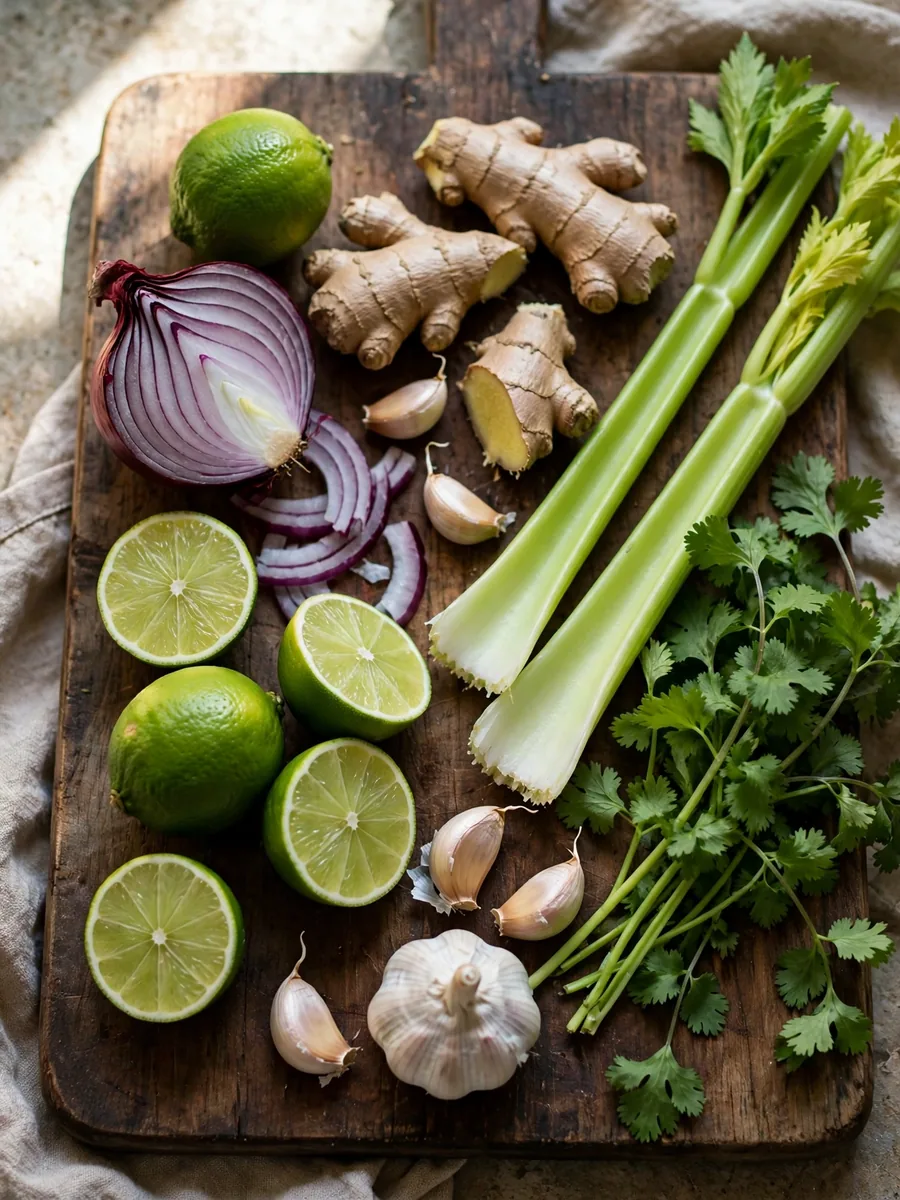
Red onion adds a sharp sweetness. Ají limo, the small hot chili of the Peruvian coast, adds heat with a fruity edge. Ají amarillo paste works too and gives a warmer, fruitier flavor with a golden color. Ginger adds warmth, garlic adds a savory base note, celery adds a fresh vegetal note, and cilantro stems add the herbal lift. Salt ties it together.
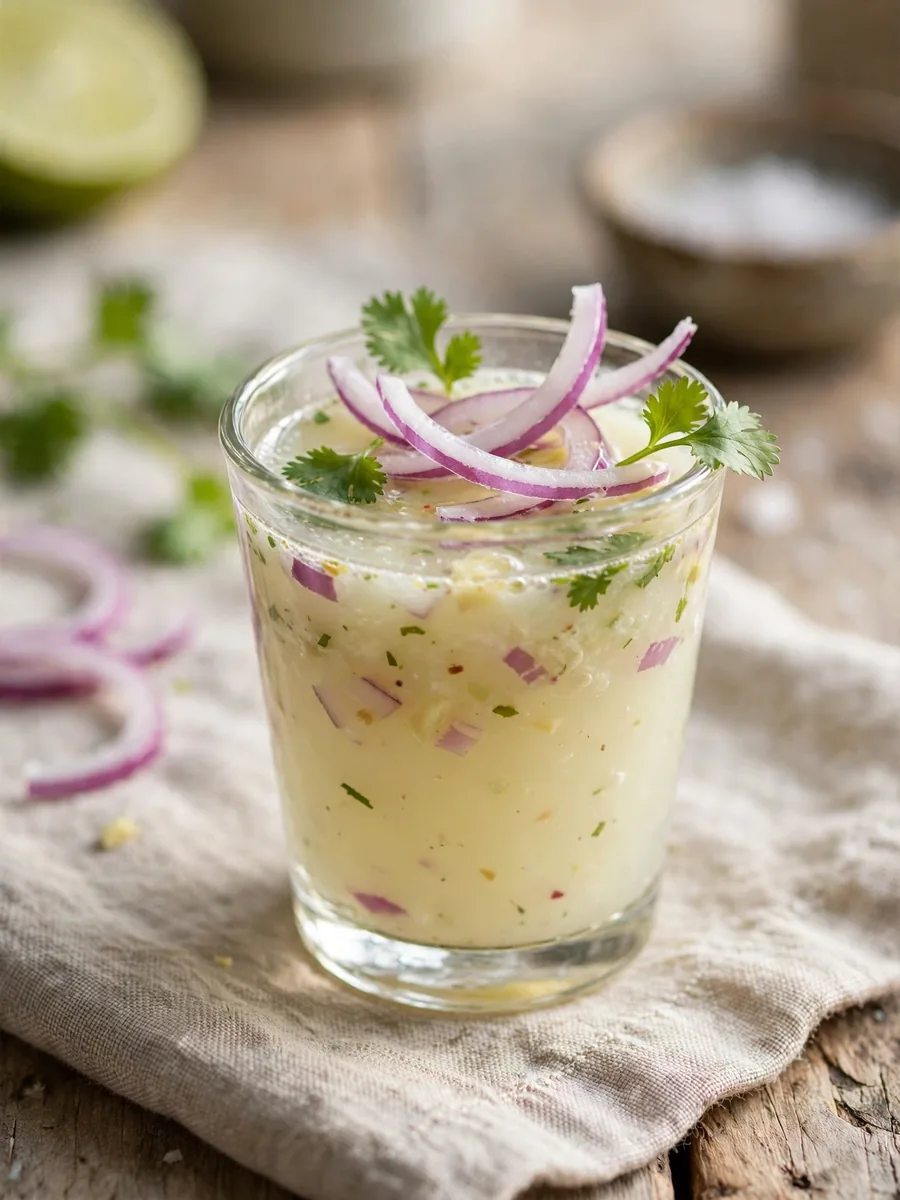
Some versions blend in a small amount of firm white fish, usually trimmings from the same fish destined for the ceviche. The fish is what turns the liquid cloudy and gives it body. That cloudiness is where the tiger’s milk name comes from.
Other versions skip the fish and rely on stock alone, which makes a lighter sauce that works better over cooked seafood. Both are legitimate. The version with fish tastes richer. The version without it keeps longer and suits more people at the table.
Bottled lime juice will not work here. It tastes flat and slightly bitter, and in a sauce this simple there is nowhere for that flavor to hide. Squeeze fresh limes and measure the juice. You will need about 8 to 10 limes for a cup.
Leche de Tigre vs Ceviche: Same Family, Different Job
People mix these two up constantly, and it is easy to see why. They show up together, they share ingredients, and one cannot exist without the other in a classic Peruvian ceviche. But they are not the same thing.
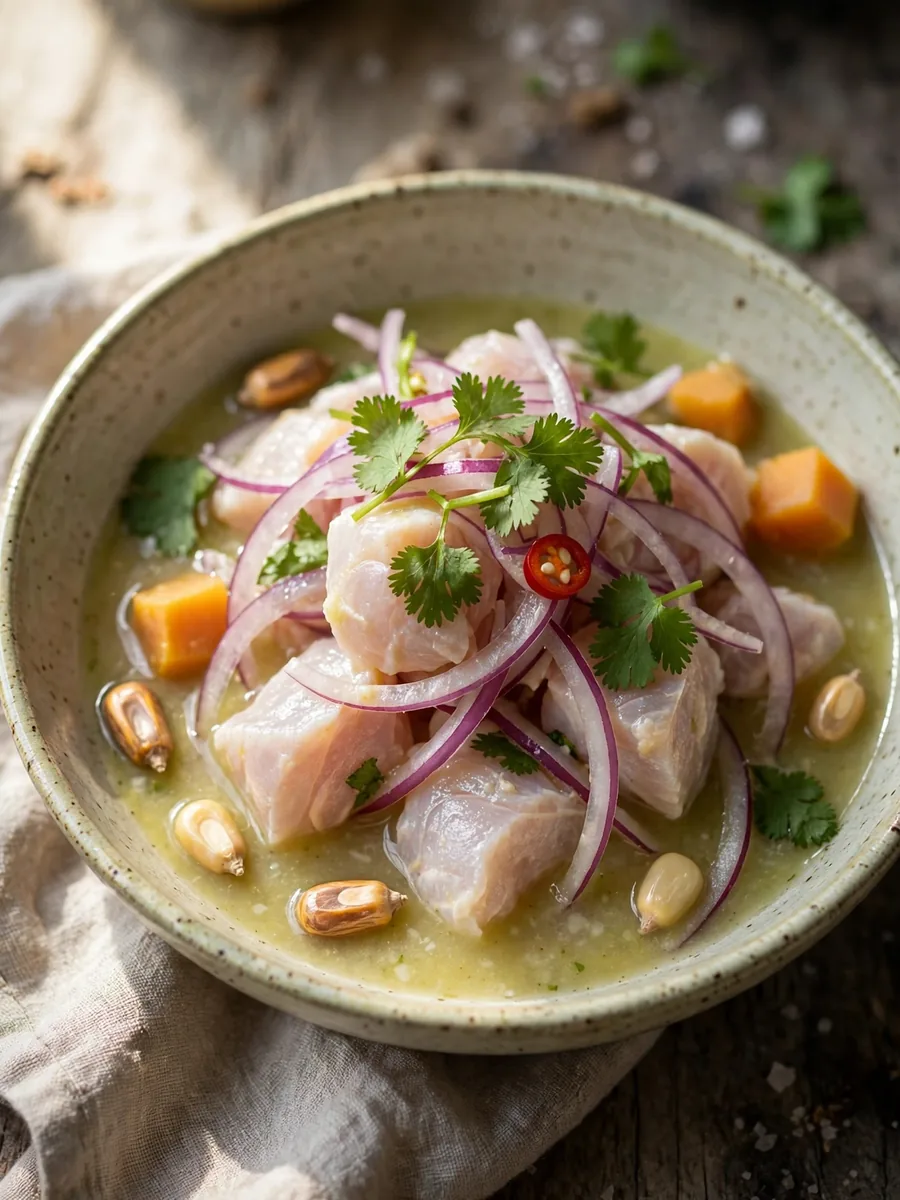
Leche de tigre is a liquid. It is a marinade, a sauce and sometimes a drink. Ceviche is the finished dish: raw fish cured in that liquid, served with sliced red onion, cilantro and sides like sweet potato, choclo corn and crunchy cancha. Think of it the way you would think of a vinaigrette and a salad. One seasons the other.
The distinction matters in the kitchen because it changes how you plan. You can make leche de tigre on its own, taste it, fix the salt or the heat, and only then pour it over fish. That is the whole advantage of preparing it separately instead of squeezing lime straight onto the fish. You control the flavor before it touches anything expensive.
Wikipedia’s ceviche entry notes that many Peruvian cevicherías serve a small glass of the marinade as an appetizer alongside the fish, and that the modern short marinade style was developed in the 1970s by Peruvian-Japanese chefs. Ceviche itself was inscribed by UNESCO as Intangible Cultural Heritage of Humanity in 2023, which tells you how seriously Peru takes this dish.
How to Make Leche de Tigre
This recipe makes about 2 cups, enough for 4 small servings or one batch of ceviche for four people. It takes about 15 minutes, and most of that is squeezing limes. Keep everything cold from the start. Cold ingredients blend into a brighter sauce, and cold fish stays safer.
Prep time: 15 minutes
Cook time: None
Total time: 15 minutes
Yield: About 2 cups, 4 servings
Cuisine: Peruvian
Category: Sauce
Ingredients
- 1 cup (240 ml) fresh lime juice, from about 8 to 10 limes
- 1/2 cup (120 ml) cold fish stock, low sodium if you have it
- 4 ounces (115 g) firm white fish trimmings or fillet, such as sea bass or snapper
- 1/4 small red onion, thinly sliced
- 1 celery stalk, chopped
- 1 inch fresh ginger, peeled
- 2 garlic cloves
- 2 tablespoons cilantro stems, leaves reserved for garnish
- 1 ají limo, stemmed and seeded, or 1 tablespoon ají amarillo paste
- 1/2 teaspoon fine sea salt
- 4 ice cubes
Steps
- Juice the limes. Squeeze the limes and measure out 1 cup of juice. Strain out the seeds. Stop squeezing when the juice stops flowing easily. Pressing harder pulls bitter oils from the peel into the juice.
- Load the blender. Add the lime juice, cold fish stock, fish, red onion, celery, ginger, garlic, cilantro stems, chili, salt and ice to a blender.
- Blend until smooth. Blend on high for 1 to 2 minutes until the mixture looks smooth and pale. Do not blend longer than you need to. A blender warms the sauce as it runs, and warm leche de tigre tastes dull.
- Strain it. Set a fine mesh sieve over a clean bowl and pour the mixture through. Press the solids with a spoon to get every drop out, then discard what is left in the sieve. The strained sauce should pour easily, like thin cream.
- Taste and adjust. Taste a spoonful. Add a pinch more salt if it tastes flat, a squeeze more lime if it tastes soft, or a little more stock if the heat is too much. Adjust in small moves. The flavors are strong and a little goes a long way.
- Chill and use. Refrigerate for 15 minutes if you have the time, or use it right away. It is best the same day you make it.
A note on safety, because this sauce contains raw fish and raw fish needs respect. Lime juice changes the texture of fish and makes it look cooked, but acid does not kill bacteria the way heat does. Buy fish from a source you trust, tell the fishmonger you plan to serve it raw, and keep everything cold.
Pregnant people, young children, older adults and anyone with a weakened immune system should skip raw seafood and use the stock only version below. The FDA’s seafood safety guidance says the same thing in plainer terms: cooking is the safest option, and acid is not a substitute for it.
Three Ways to Use It
Pour it over fish for ceviche. This is the classic use. Cut firm white fish into even cubes, season with salt, and pour the leche over it. Let it sit in the refrigerator for 5 to 20 minutes.
Five minutes leaves the center soft and a little translucent. Closer to 20 gives you firmer, fully opaque fish. Add thinly sliced red onion and chopped cilantro, then serve at once with sweet potato and corn. The short marinade is the modern Peruvian style, and it is the one worth learning first.
Serve it as a shooter. Pour the strained sauce into small glasses, about 2 ounces each, and garnish with a sliver of red onion and a cilantro leaf. In Peru this shows up as an appetizer, and it has a reputation as a pick me up after a long night.
That reputation is folklore, not medicine, but the drink itself is real and refreshing. Use the stock only version for this, made fresh, and never serve liquid that has touched raw fish as a drink.
Spoon it over cooked seafood. This is the most useful version for a home cook who does not want to deal with raw fish. Make the sauce without the blended fish, using stock instead, and spoon it over cooked chilled shrimp, grilled fish or a simple seafood salad.
It works the same way a good salsa verde works: bright acid and heat over something rich. It also makes a strong case for keeping a jar of fish stock in the freezer.
If you enjoy this kind of cooking, the same bold, lime forward flavors run through a lot of world food. For more ideas in that spirit, try our take on bold global fusion cooking, and our guide to restaurant style world dishes. Both lean on the same idea that a sauce can carry a whole plate.
How Long It Keeps
Leche de tigre is at its best within a few hours of making it. The lime stays bright, the onion stays crisp in flavor, and the chili heat sits where you put it. After a day in the refrigerator the citrus starts to dominate and the sauce turns sharper and less balanced. It is still usable the next day, but it is not the same sauce.
Store it in a sealed glass jar in the refrigerator and use it within 24 hours. Glass matters here. Plastic can pick up the onion and garlic and give it back to the next thing you store in the container. Do not freeze it. Freezing dulls the fresh flavors and the texture changes when it thaws.
One rule covers most mistakes: never save sauce that has touched raw fish. Once the marinade has cured fish, it is done. Make a fresh batch for the next round. The ingredients are cheap and the blending takes two minutes, so there is no reason to reuse it.
Variations Worth Trying
Stock only. Leave out the blended fish and use a full cup of cold fish stock instead of half a cup. The sauce comes out lighter and cleaner, and it works better as a drink or over cooked seafood. This is the version to make when guests include people who avoid raw fish.
Ají amarillo instead of ají limo. Swap the small hot chili for a tablespoon of ají amarillo paste. The heat drops a little and the flavor turns fruitier, with a golden color that looks great in a glass. If you can only find jarred paste, start with a teaspoon and add more to taste, since brands vary a lot in salt and heat.
Celery and ginger, or neither. Celery and ginger are optional. Ginger adds warmth that suits cold weather and rich fish like salmon. Celery adds a green, fresh note that suits lean fish like snapper. Leave one or both out and the sauce still works. It just leans harder on lime and chili.
A seafood free adaptation. For a version with no fish at all, use vegetable stock and skip the blended fish. It will taste different, lighter and less savory, but the lime, chili and herbs still carry it. Call it what it is when you serve it: a citrus chili sauce inspired by leche de tigre, not the classic itself.
That last point is worth saying plainly. Most of the recipes ranking for this keyword either hide the fish or pretend it was never there. The fish is what makes the sauce taste like itself. If you leave it out, say so, and adjust your expectations.
A Few Things That Go Wrong
It tastes bitter. You squeezed the limes too hard or blended the pith in. Juice gently, strain the juice before blending, and keep the peel out of the blender.
It tastes flat. It usually needs more salt, not more lime. Add salt a pinch at a time and taste after each one. Salt is what makes the lime and chili read as flavor instead of just sour and hot.
It is too thick. You blended too much fish or too little liquid. Strain it well and stir in cold stock a tablespoon at a time until it pours.
The onion takes over. You used too much, or you skipped the ice water soak. A quarter of a small onion is enough for the whole batch. Soaking sliced onion in ice water for 10 minutes tames the bite without losing the crunch.
For cooks who like building a pantry of sauces from other cuisines, our guide to easy Asian home cooking covers the same habit from a different direction: a few strong sauces, made in minutes, that turn plain ingredients into dinner.
Frequently Asked Questions
Does leche de tigre contain milk?
It contains no milk. The name refers to the pale, cloudy color of the blended sauce. It is made from lime juice, fish stock, aromatics and sometimes blended fish. People with a milk allergy can eat it, but people with a fish allergy should avoid it.
What is the difference between leche de tigre and ceviche?
Leche de tigre is the citrus marinade. Ceviche is the finished dish of raw fish cured in that marinade. One is the sauce, the other is the plate.
Can you drink leche de tigre?
Yes, in small glasses as an appetizer, and only when it is made fresh for that purpose. Never drink marinade that has already touched raw fish. Use the stock only version for drinking.
How long does leche de tigre last in the fridge?
Use it within 24 hours. It tastes best within a few hours. Do not freeze it, and do not save sauce that has cured raw fish.
Pour It Cold, Use It Fast
Leche de tigre rewards speed. Make it fresh, keep it cold, pour it over good fish or into small glasses, and use it the same day. The whole recipe is fifteen minutes of work for a sauce that tastes like it came from a cevichería in Lima. Once you have the ratio in your head, you will stop measuring the aromatics and start adjusting them to your own taste. That is when it becomes yours.