
Introduction
I like making homemade chile powder from Fresno chilies because the flavor stays bright and clean. When you turn chili powder from fresh peppers into a spice blend at home, you control heat, color, and aroma. The result is fresh Fresno chili powder that works as a bold Fresno pepper seasoning for many dishes.
Most store jars taste flat after a few months. Freshly ground homemade chile powder keeps a strong pepper smell and a deep red color. That’s why many cooks prefer making chili powder from fresh peppers instead of relying on old pantry blends.
The process is simple. First, you dry the Fresno chilies for chile powder recipe. Then you grind them into Fresno chili powder using a grinder or blender. In a few steps, you have a jar of bright Fresno pepper seasoning ready for tacos, soups, and marinades.
Fresno chili peppers usually range from 2,500 to 10,000 Scoville heat units. This puts them close to jalapeño peppers in heat
What Are Fresno Chilies?
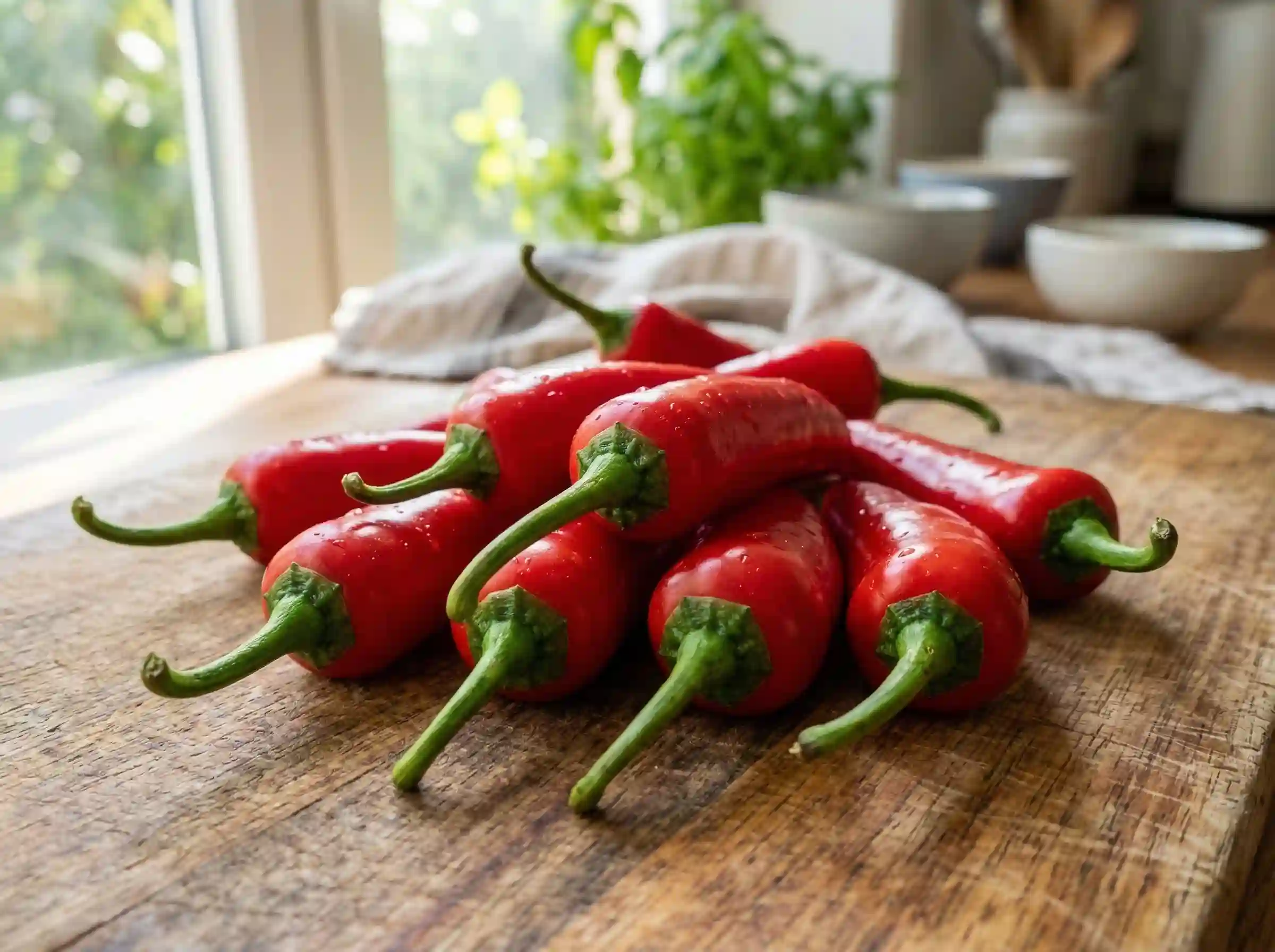
Fresno chili peppers are a type of Capsicum annuum with mild to medium heat and a bright, fruity flavor. They are a jalapeño relative but usually taste slightly sweeter and more tart. Red Fresno and green Fresno peppers differ in ripeness. Red peppers are riper, with deeper color and slightly smoky notes.
I notice Fresno chili peppers at numerous fresh markets. They belong to the Capsicum annuum species, the same family that comprises jalapeños, serranos, and Anaheim peppers.
Their flavor sticks out. A ripe pepper has a fruity flavor, a gentle bite, and a tart pepper flavor that works well in sauces and powders.
Green peppers taste grassy and strong. Red Fresno vs green Fresno issues because red peppers bring a deeper color and a slightly smoky tone when dried.
That ripeness difference counts when you make chili powder from fresh peppers. Red peppers produce a brighter red Fresno chili powder and stronger Fresno pepper seasoning.
Fresno Chili Heat Level Compared to Other Peppers
Fresno peppers measure about 2,500 to 10,000 Scoville heat units, placing them close to jalapeños. The jalapeño vs Fresno comparison shows similar heat, though Fresno peppers often taste fruitier. Their medium spice level sits below serrano pepper heat but above ancho chili mild heat.
Heat allows decide how strong your homemade chile powder will taste. The Scoville heat units scale measures the amount of capsaicin in peppers.
Here is a simple heat comparison.
| Pepper | Typical Heat Level |
| Ancho chili has mild heat | 1,000 – 2,000 SHU |
| Jalapeño vs Fresno | 2,500 – 10,000 SHU |
| Serrano pepper heat | 10,000 – 23,000 SHU |
This range places Fresno chilies in the medium spice level category.
That balance is why I choose them for homemade chile powder. They give warmth without overpowering the meal.
Why Use Fresno Chilies for Homemade Chile Powder?
I select Fresno chilies because they have a fresher flavor than most store jars. When you grind peppers at home, the aroma stays bold, and the color becomes a bright red powder that looks and tastes fresh.
Another reason is control. A homemade seasoning blend lets you adjust the heat and flavor just the way you want. That flexibility means you can create an adjustable spice level for tacos, soups, or marinades.
Store mixes frequently include mixed peppers and fillers. Freshly ground Fresno chili powder generally tastes better than store-bought chili powder because the pepper oils stay robust.
The pepper itself also helps. Fresno chiles have a mellow fruity heat that works nicely in many dishes without overwhelming other ingredients.
Ground chili powder starts to lose aroma and flavor oils after about six months in storage. Freshly ground pepper powder keeps a stronger aroma and color. Spice storage guides from culinary institutes often recommend replacing ground spices every 6–12 months.
Flavor Profile of Fresno Chili Powder
The taste of Fresno chili powder remains balanced and clean. The powder usually tastes fruity, with slightly smoky hints that develop once the peppers dry.
You will also feel earthy undertones as the peppers turn into powder when we grind them. That depth makes the flavor helpful in chili, sauces, and dry rubs.
The heat stays gentle. Most batches create mild heat rather than powerful spice, which makes the seasoning adaptable for everyday cooking.
The last element is fragrance. Fresh powder provides a bright pepper aroma the instant you open the container.
Ingredients for Fresno Chile Powder
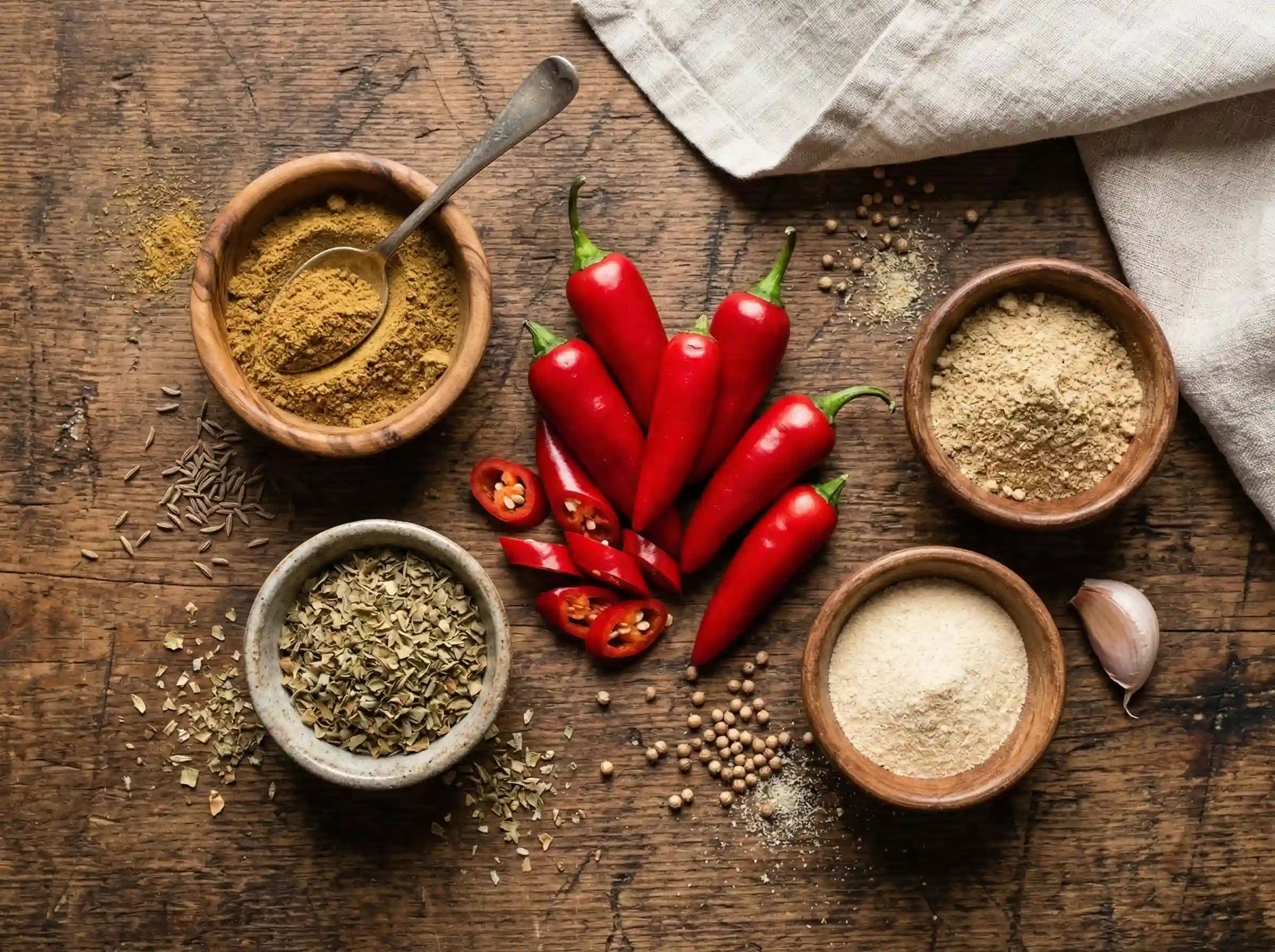
This recipe stays simple. The base ingredient is fresh Fresno peppers, which you dry before grinding.
Once the peppers become dried peppers, they grind easily into homemade chile powder. Some cooks stop here and keep the powder pure.
Others add optional spices to build a deeper seasoning. Common extras include cumin, coriander, garlic powder, and Mexican oregano.
Those spices create a balanced pepper blend without masking the natural taste of Fresno chilies.
Optional Spice Blend Add-Ins
If you want a deeper spice, you may transform the powder into a whole chili powder blend. This sort of spice mix blends dried peppers with toasty spices.
Many chefs use smoked paprika to impart a subtle smoky tone. Whole cumin seeds or ground coriander also blend nicely with the pepper’s inherent taste.
How to Dry Fresno Chilies for Chile Powder
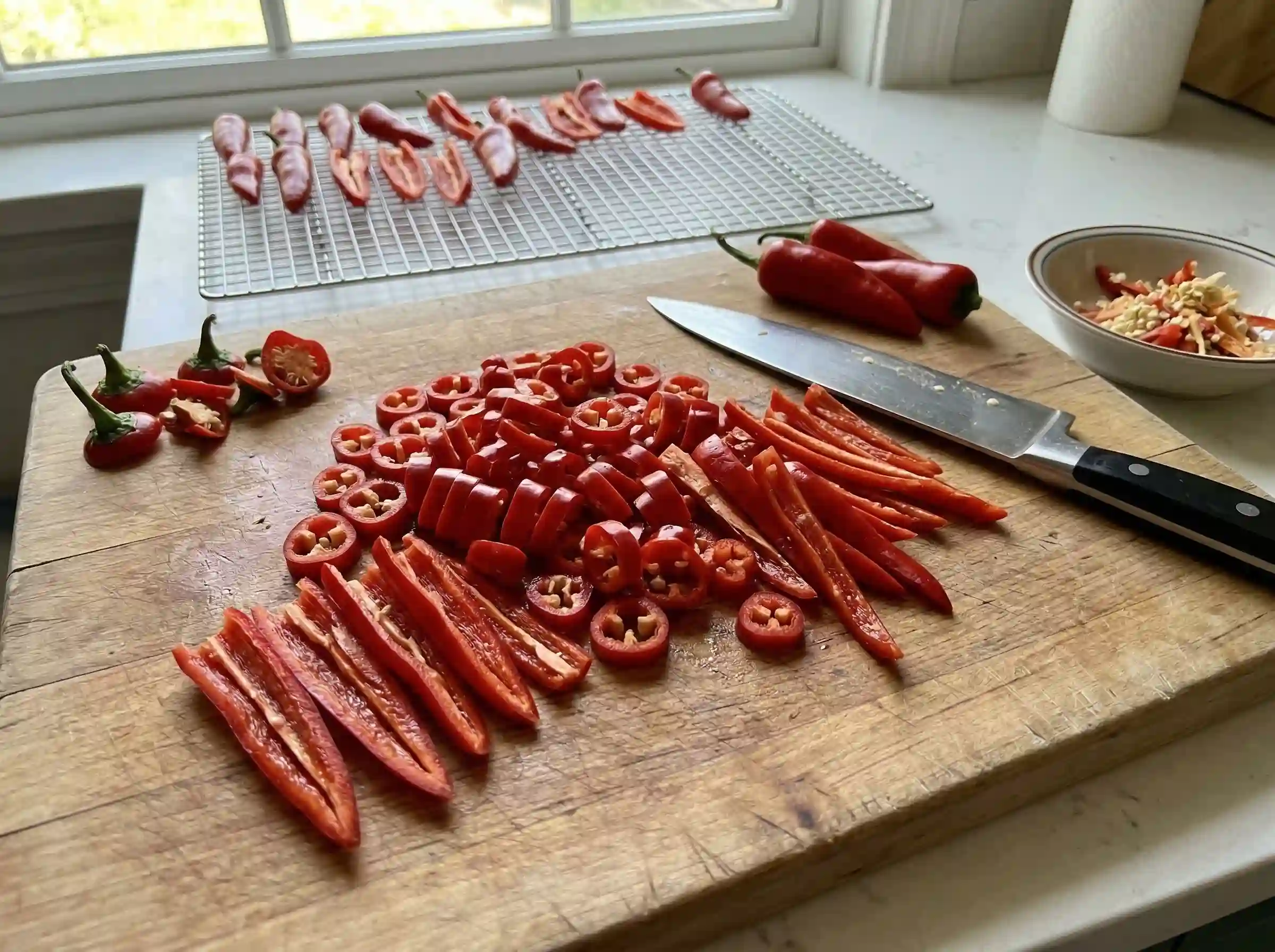
Drying peppers comes first. Proper drying of peppers makes grinding simpler and avoids mold in your homemade chile powder.
Start by cleaning the peppers. Then remove stems and slice the peppers lengthwise. Many chefs additionally remove seeds since seeds may generate bitterness in powder.
At the onset, the pepper flesh feels soft. As the moisture disappears, the surface acquires a leathery texture. Once thoroughly dried, the pieces shatter easily and become brittle peppers perfect for grinding.
Dry peppers carefully. The plan is complete dryness without burning the pepper skin.
Drying peppers typically removes about 80–90 percent of moisture depending on pepper thickness and drying method.
Method 1 – Oven Drying
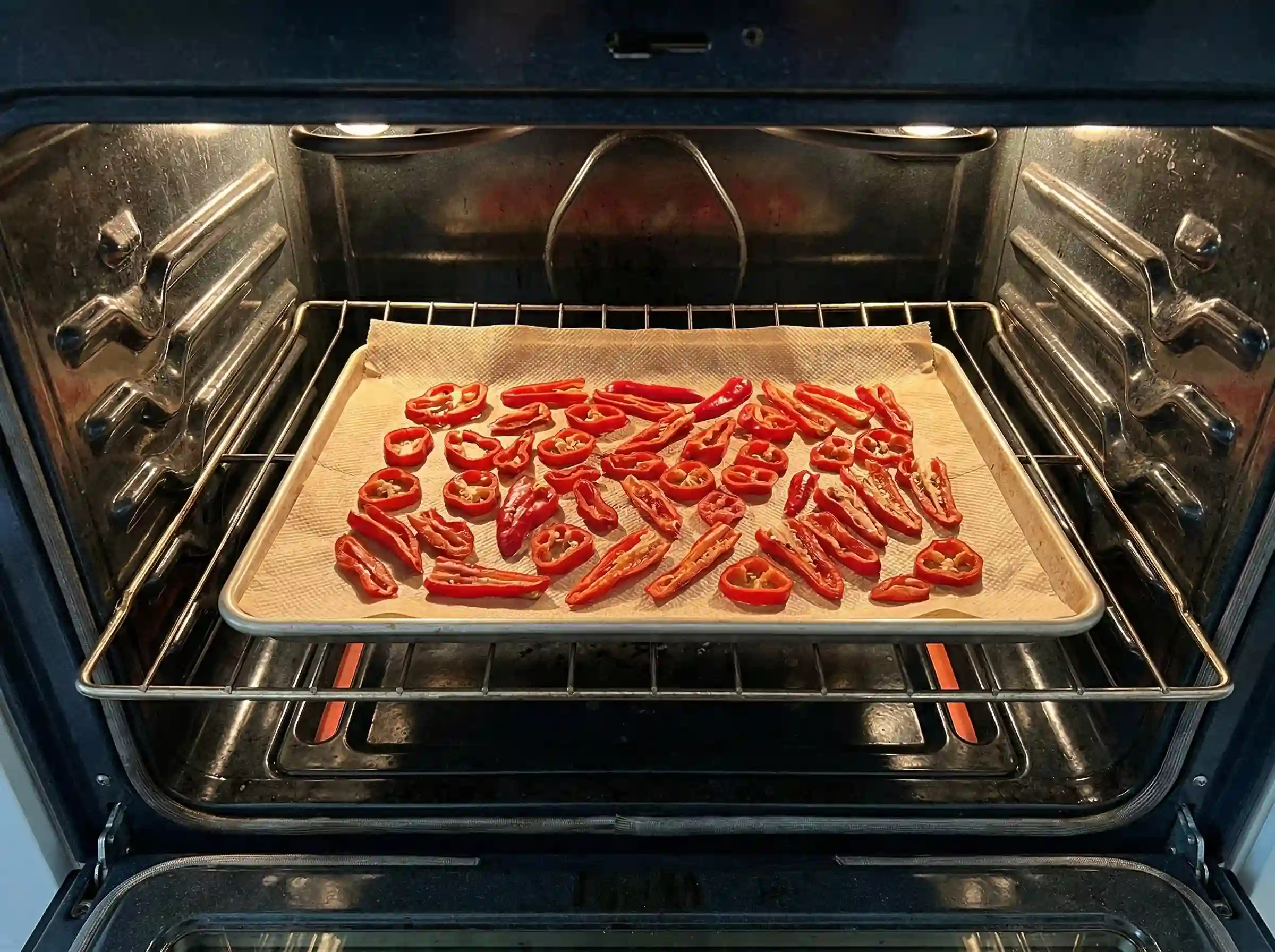
Oven drying works in most kitchens. Set a low oven temperature, about 150–170°F, so the peppers dry gently instead of cooking.
Spread sliced peppers over a baking sheet. Place parchment paper below so the peppers do not cling throughout the procedure.
The peppers require time. Slow drying may take 4 to 8 hours, depending on pepper thickness.
Check them every hour. When the pieces snap cleanly, they are dry enough for grinding.
Method 2 – Food Dehydrator
A dehydrator delivers consistent heat. Place pepper slices on dehydrator trays with room between each piece.
The machine circulates heated air for airflow drying. This technique eliminates moisture uniformly across all slices.
After many hours, the peppers become evenly dried peppers with a crisp texture.
Many cooks like this method because it keeps the color bright and prevents scorching.
Method 3 – Air Drying Peppers
Traditional drying uses air and sunlight. Start by threading peppers to string them together.
Then hang peppers in a warm, dry location with good airflow. Some people place them near a window for sun drying.
This method relies on natural dehydration instead of heat from an appliance.
Air drying can take several days, depending on humidity. Once the peppers feel brittle, they are ready to grind.
Grinding Dried Fresno Peppers into Powder
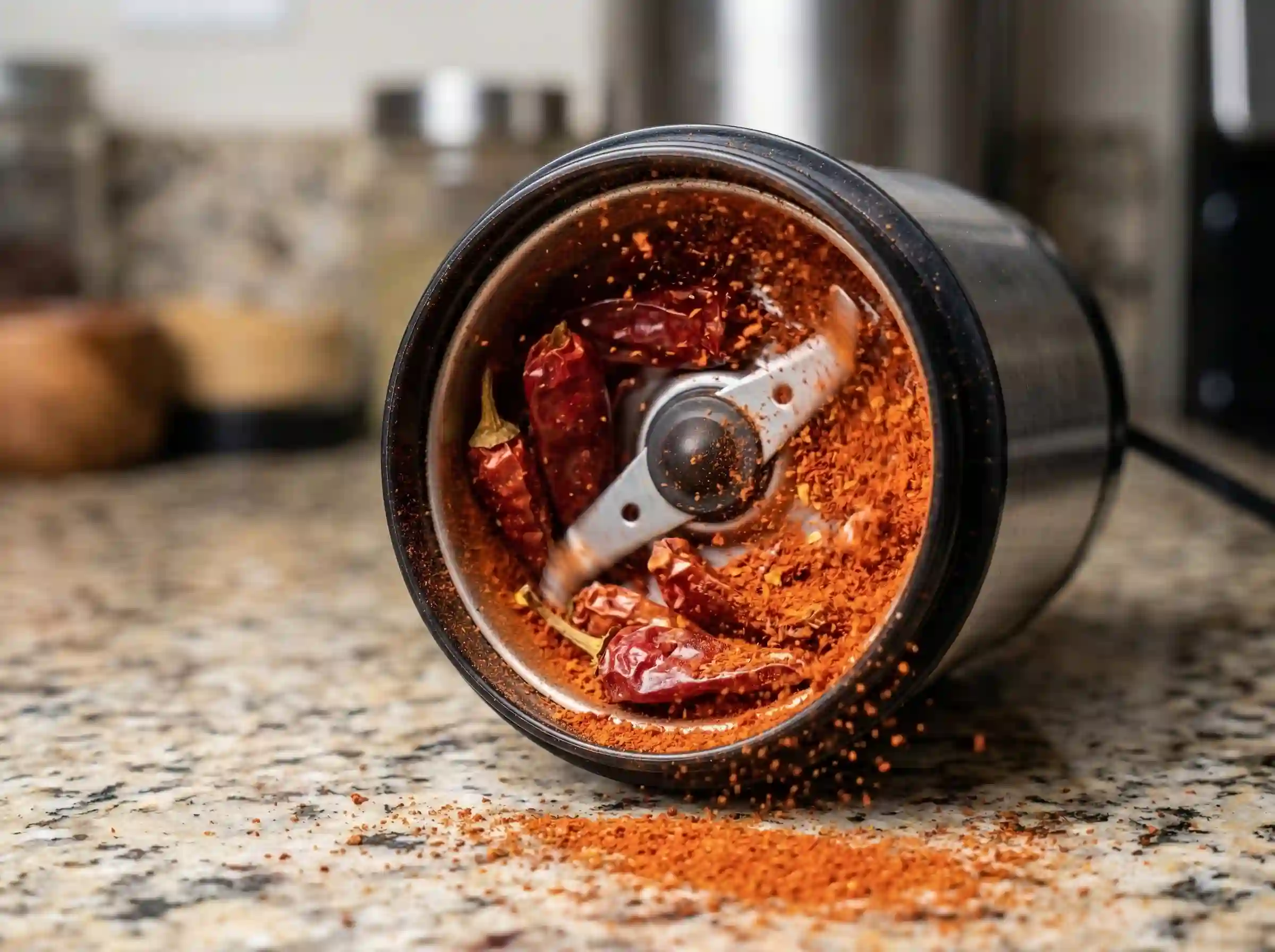
Once the peppers are dried, grinding becomes easier. Several tools work effectively depending on what you have at home.
A spice grinder generates the smoothest powder. Many chefs also use a coffee grinder specialized for spices.
A blender can grind peppers if you process small amounts at a time. Classic cooks sometimes prefer a mortar and pestle for small batches.
Each tool produces fine chili powder suitable for seasoning blends.
Tips for the Best Powder Texture
Grinding technique matters. Always grind in batches so the grinder does not overload.
Fine powder forms best when the peppers are fully dry. If moisture stays, the powder may stick and avoid clumping becomes difficult.
After grinding, sieve the powder through a fine strainer. This step separates larger pieces from smooth powder.
Return larger pieces to the grinder and re-grind flakes until the texture becomes even.
Fresno Chile Powder Recipe (Quick Method)
This homemade chili powder recipe uses only dried Fresno peppers and a grinder. The method is simple. Once the peppers are fully dry, you grind the peppers into powder and store the seasoning in a sealed container for later cooking.
Fresh powder keeps its color and aroma much longer than commercial blends. That’s why many cooks prefer grinding peppers at home instead of buying premade spice jars.
Step-by-Step Instructions
Follow these steps carefully to turn peppers into homemade chile powder.
- Prepare the peppers
Wash the peppers first. Then remove stems and slice the peppers open so they dry faster.
- Dry the peppers
Place the slices in the oven or dehydrator to dry peppers until they become crisp and brittle. Fully dried peppers should snap easily.
- Grind the peppers
Transfer the dried pieces into a grinder and grind the powder until the texture becomes fine and even.
- Store the seasoning
Transfer the finished powder into a sealed container and store airtight to protect the aroma and color.
How to Store Homemade Chili Powder
Good storage keeps flavor strong. Once the powder cools, transfer it into an airtight jar immediately.
Place the container in a cool cabinet and keep it away from light. Direct light slowly breaks down pepper oils and color.
Most people use simple pantry storage for daily cooking. For longer storage, some cooks choose freezer storage to slow flavor loss.
Good storage helps maintain the spice shelf life and keeps the powder tasting fresh.
Ground chili powder stored in a cool pantry keeps its peak flavor for about 4 to 6 months. Freezer storage can extend freshness to about 8 to 12 months. This happens because cold slows the loss of pepper oils and aroma
Shelf Life of Homemade Chili Powder
Fresh powder keeps its best flavor during the first 6 months of its freshness window. During this time, the spice retains strong color and aroma.
Over time, air slowly reduces flavor potency. Even when stored properly, spices gradually lose strength.
Proper storage also helps protect aroma retention, which is one of the key qualities of freshly ground peppers.
Many spice guides suggest replacing ground spices after about six months. Air, light, and heat slowly reduce their flavor and aroma
Common Mistakes When Making Chili Powder
Small mistakes can ruin good peppers. When making homemade chile powder, watch for problems like scorched peppers, excess moisture, or uneven grinding.
The first issue is heat. If peppers burn during drying, scorched peppers create a sharp, bitter taste that spreads through the whole batch.
Moisture causes another problem. Any leftover water in the peppers creates moisture in the powder, which can lead to clumping or mold during storage.
Grinding also matters. If the peppers are not fully dry, the powder may develop a gritty texture instead of smooth seasoning.
To avoid these issues:
- Dry peppers slowly at low heat
- Make sure peppers become brittle before grinding
- Grind in small batches
- Store powder immediately in a sealed container
Best Ways to Use Fresno Chili Powder
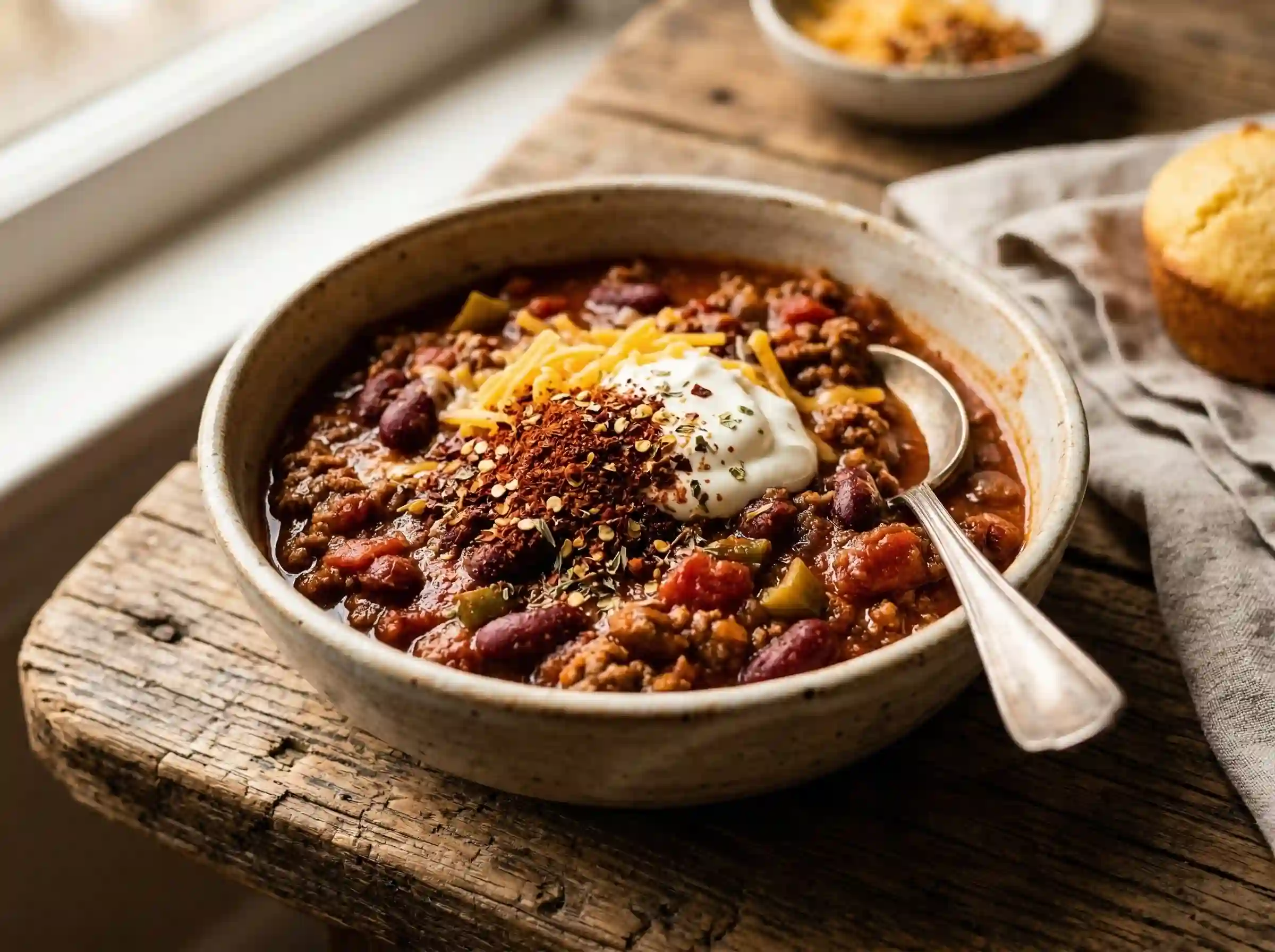
Fresh Fresno chili powder works in many everyday recipes. Its mild warmth and bright pepper flavor make it flexible in the kitchen.
Classic dishes like chili con carne benefit from the pepper’s fruity heat. The seasoning also works well in tacos and enchiladas, where the powder blends easily with sauces.
You can also use it as a dry rub for meat or vegetables. A small amount adds flavor to marinades, especially for grilled foods.
Another easy use is adding the powder to soups and stews. The spice dissolves smoothly and adds color without overpowering the dish.
| Dish | Typical Amount of Chili Powder | How It Is Used |
| Chili con carne | 1–2 tbsp | Mixed into the sauce during simmering to build a deep pepper flavor |
| Tacos | 1–2 tsp | Added to taco meat seasoning or sprinkled over fillings |
| Enchiladas | 1–2 tsp | Blended into the enchilada sauce for color and mild heat |
| Dry rub | 1–2 tsp per lb of meat | Combined with salt, garlic powder, and spices for grilling |
| Marinades | 1 tsp | Mixed with oil, garlic, and citrus for meat or vegetables |
| Soups and stews | 1–2 tsp | Stirred into the broth to add warmth and pepper aroma |
Fresno Chili Powder vs Regular Chili Powder
Fresno chili powder is usually a single-pepper powder made from dried Fresno chilies. Regular chili powder is typically a blend that includes multiple spices. This means Fresno powder tastes cleaner and more pepper-forward. Standard chili powder works as a mixed seasoning with added spices.
The difference starts with ingredients. Fresno chili powder often works as a single pepper powder with no additional spices.
Regular chili powder often is a chili powder blend. Several peppers and spices, like cumin, garlic powder, and oregano, make it.
That contrast creates a clear comparison between spice mix vs pure pepper powder.
Use pure Fresno powder when you want a clean pepper flavor. Use blended chili powder when you want a ready-made seasoning mix.
FAQ’s
How many Fresno peppers equal one tablespoon of chili powder?
About three to four medium Fresno chilies usually produce roughly one tablespoon of chili powder after drying and grinding. The exact amount depends on pepper size and moisture content. Drying reduces pepper weight significantly, so several fresh peppers are needed to produce a small amount of concentrated powder.
Smaller peppers may require five or more pods. The final amount depends on how finely you grind peppers and whether seeds remain in the powder.
Are Fresno chilies hotter than jalapeños?
Fresno chilies have a heat level close to jalapeños and typically measure between 2,500 and 10,000 Scoville heat units. This places them in the mild to medium heat range. Jalapeño vs Fresno comparisons show similar spice levels, although Fresno peppers often taste slightly fruitier and brighter.
Compared with other peppers, serrano peppers are usually hotter. Ancho chiles have mild heat and rank lower on the scale.
Can you dry Fresno peppers in the oven?
Yes, Fresno peppers can be dried in the oven using low heat. Set a low oven temperature around 150–170°F and spread sliced peppers on a baking sheet lined with parchment paper. Slow drying removes moisture gradually until the peppers become brittle enough for grinding into powder.
Oven drying works well when you do not have a dehydrator. Just check the peppers occasionally so they do not burn.
How long does homemade chili powder last?
Homemade chili powder usually keeps its best flavor for about six months when stored properly in an airtight container. During this time, the powder retains a strong aroma and color. Over time, exposure to air, heat, and light gradually reduces flavor potency and spice strength.
Proper storage helps maintain spice shelf life, especially when the powder stays in an airtight jar and away from light.
Do you remove seeds when making chili powder?
Yes, many cooks remove seeds before drying peppers because seeds can add bitterness and uneven texture to chili powder. Removing seeds also creates a smoother powder when the dried peppers are ground. However, some people keep the seeds to increase heat and flavor intensity.
When making homemade chile powder, removing seeds usually helps prevent a gritty texture in the final powder.
Why does homemade chili powder taste bitter?
Homemade chili powder usually tastes bitter when peppers become scorched during drying or roasting. Excess heat can burn the pepper skins and create harsh flavors. Bitterness may also occur if seeds burn or if peppers dry at temperatures that are too high.
To avoid this problem, dry peppers slowly and avoid scorched peppers.
Can Fresno chili powder replace regular chili powder in recipes?
Yes, Fresno chili powder can replace regular chili powder in most recipes, but the flavor will be different. Fresno powder is made from one type of pepper. Regular chili powder is usually a blend of chilies and other spices. This means Fresno powder provides a cleaner pepper flavor.
When using it in recipes like tacos, chili con carne, or enchiladas, you may add extra spices if you want a full spice mix.
What is the best way to grind dried peppers into powder?
The best way to grind dried peppers into powder is with a spice grinder or coffee grinder. These tools create fine chili powder quickly and evenly. A blender can also work for larger batches, while a mortar and pestle can grind small amounts by hand.
Grinding in small batches helps produce smoother fine chili powder and prevents uneven pieces.
Can you freeze chili powder to keep it fresh?
Yes, freezing chili powder can help preserve freshness by slowing the loss of flavor oils and aroma. Store the powder in an airtight container or sealed freezer bag before placing it in the freezer. Cold storage reduces oxidation and helps the spice keep its flavor longer.
Many cooks use freezer storage when they make large batches of homemade chili powder.