 Skip to content

What Is PCOS and Why Does Diet Matter?
PCOS friendly recipes work best when you understand the pattern behind them. Food does not cure PCOS, but steady, balanced meals can support blood sugar control and everyday energy.
What Is PCOS (Polycystic Ovary Syndrome)?
PCOS is a hormonal condition that can affect insulin response and reproductive hormones. It can lead to higher androgen levels and irregular periods for some people.
Symptoms vary a lot from person to person. Some people notice weight changes, acne, extra hair growth, or irregular cycles. Others have milder symptoms that still affect daily life.
Insulin resistance is common with PCOS. It means the body needs more insulin to move glucose from the blood into cells. That link is why meal balance matters so much here.
How Food Impacts Hormones, Insulin, and Inflammation
Food choices shape how quickly blood sugar rises after a meal. A meal with protein, fiber, and healthy fat usually digests more slowly than a meal built on refined carbs alone.
When blood sugar rises fast, insulin rises fast too. Over time, repeated sharp rises can make symptom management harder. Balanced meals help avoid that sharp rise and fall.
Anti-inflammatory foods also fit well in this pattern. Vegetables, fatty fish, olive oil, nuts, and seeds add flavor and nutrients without relying on highly processed ingredients.
This guide is general information, not medical advice. If you have PCOS, talk with your clinician or a registered dietitian before changing your diet in a major way.
The PCOS Plate: How to Build a Balanced Meal
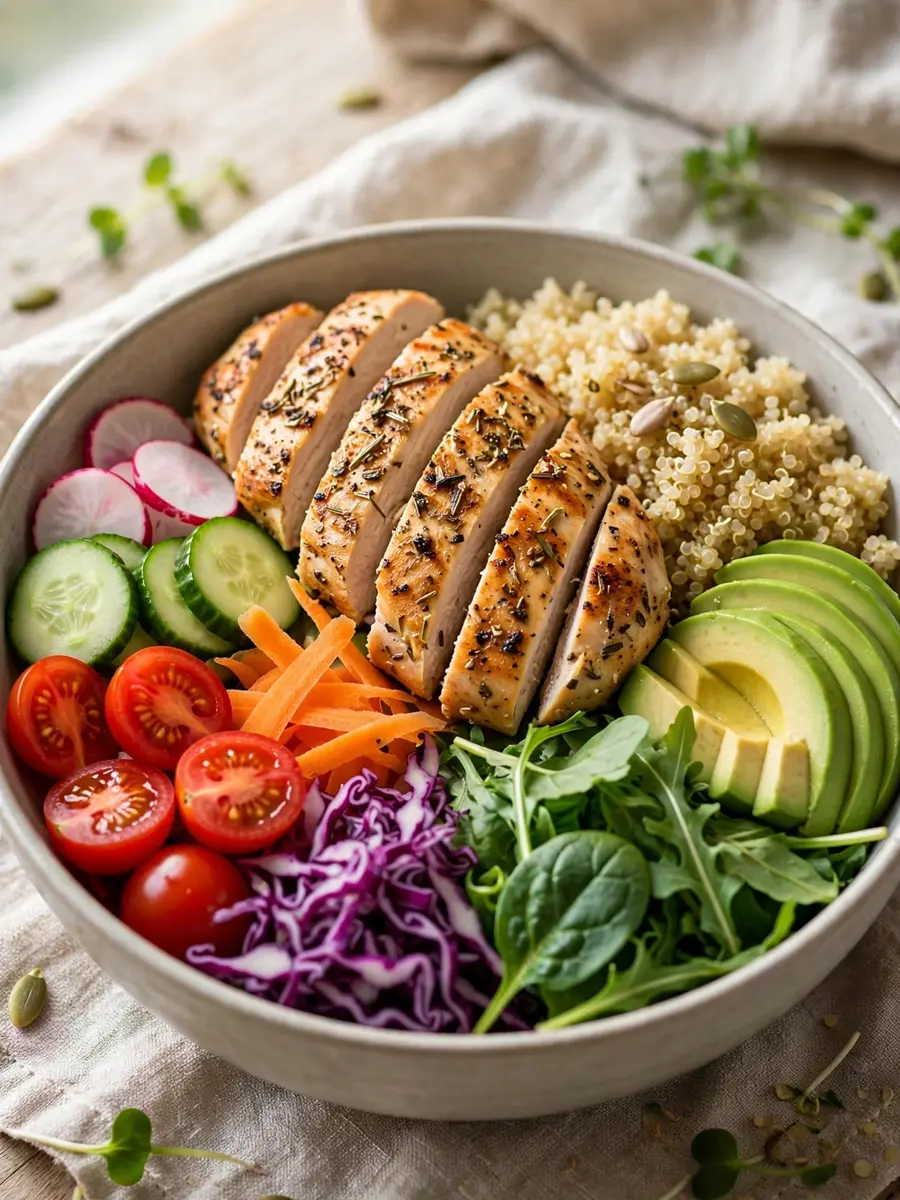
The simplest way to build a PCOS friendly meal is the plate method. Fill half the plate with non-starchy vegetables, one quarter with protein, and one quarter with fiber-rich carbs.
Add a small amount of healthy fat, such as olive oil, avocado, or nuts. That combination gives the meal staying power without making it complicated.
The Harvard Healthy Eating Plate uses the same idea. It puts vegetables and fruits first, then whole grains and healthy protein, with healthy oils on the side.
Balanced Macronutrients for PCOS
Protein slows digestion and helps you feel full longer. Fiber-rich carbs release glucose more gradually than refined carbs. Healthy fats round out the meal and support hormone function.
Missing one part of the plate often shows up as hunger soon after eating. A meal with only carbs, for example, may leave you hungry again within an hour.
Best Carbs for PCOS (Low-GI and High-Fiber)
Carbs are not the problem on their own. The type and the company they keep matter most. Whole grains, beans, lentils, and vegetables digest more slowly than white bread or pastries.
Good options include oats, quinoa, brown rice, barley, beans, and lentils. Pair them with protein and vegetables, and they fit easily into a balanced plate.
Protein Sources That Support Hormones
Eggs, fish, chicken, tofu, tempeh, lentils, beans, and Greek yogurt all work well. Plant and animal proteins can both fit, so choose what you enjoy and can cook often.
Aim for a clear protein source at each main meal. That one habit does more for steady energy than any single superfood.
Healthy Fats That Reduce Inflammation
Avocado, olive oil, nuts, seeds, and fatty fish are practical sources of healthy fat. Small amounts go a long way, so measure oil when you cook if portions tend to creep up.
For more meal ideas built around the same plate, see the ketovore food list and meal ideas and the sugar free recipe collection.
4 PCOS-Friendly Recipes With Full Ingredients and Steps
The recipes below are complete, so you can cook them tonight without guessing amounts. Each one follows the plate method: protein first, fiber-rich carbs second, vegetables throughout.
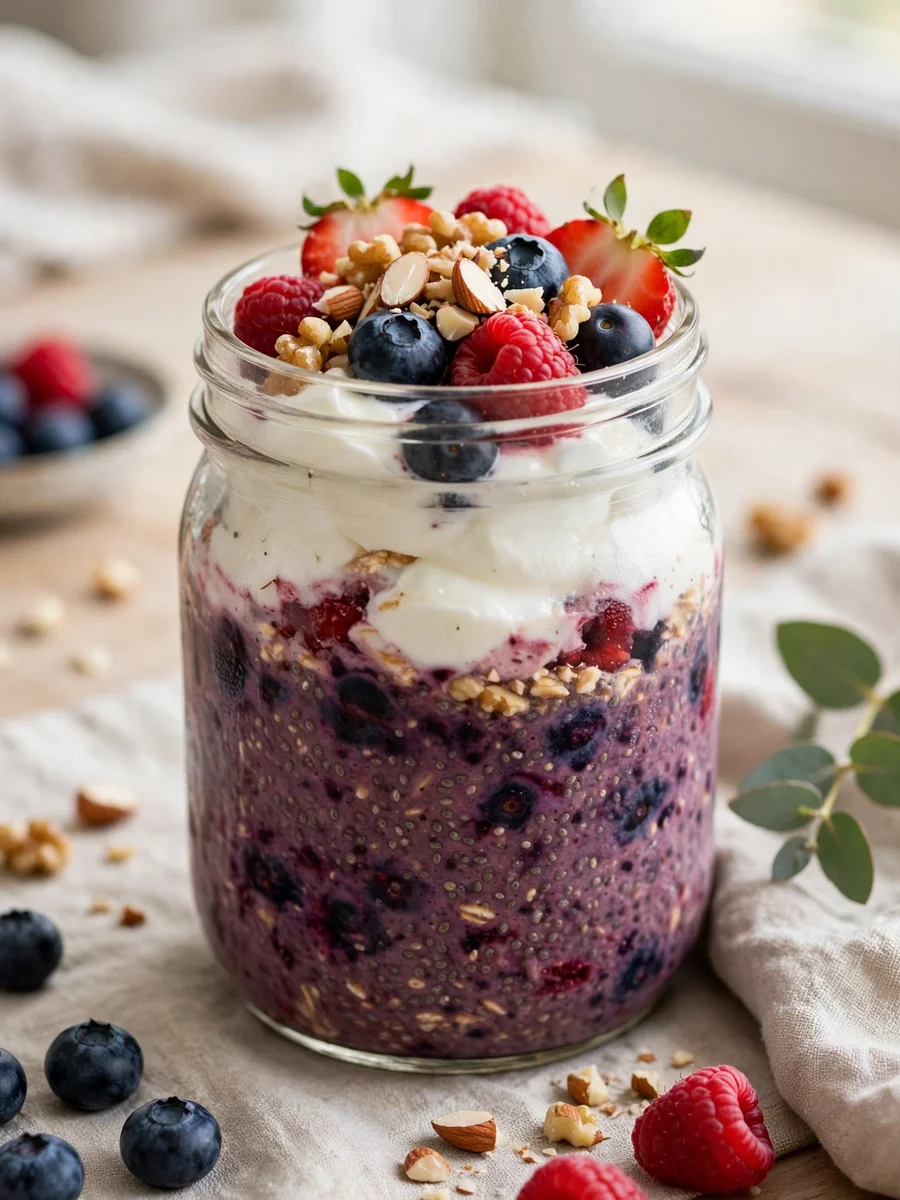
1. Berry Protein Overnight Oats
This is a make-ahead breakfast that keeps well in the fridge for busy mornings. It pairs slow-digesting oats with protein and healthy fat.
Prep time: 10 minutes, plus overnight chilling | Cook time: 0 minutes | Serves: 2
Ingredients:
- 1 cup rolled oats
- 1 cup plain Greek yogurt
- 1 cup milk or unsweetened plant milk
- 2 tablespoons chia seeds
- 1 tablespoon ground flaxseed
- 1 cup mixed berries, fresh or frozen
- 2 tablespoons chopped walnuts
- 1 teaspoon vanilla extract
- 1 teaspoon honey, optional
Steps:
- Stir the oats, yogurt, milk, chia seeds, flaxseed, and vanilla together in a bowl or two jars.
- Fold in half the berries and the honey, if using.
- Cover and chill in the fridge overnight, or for at least 4 hours.
- Top with the remaining berries and the chopped walnuts before serving.
Swap the berries for diced apple and cinnamon in cooler months. The oats, seeds, and yogurt stay the same, so the balance of the meal does not change.
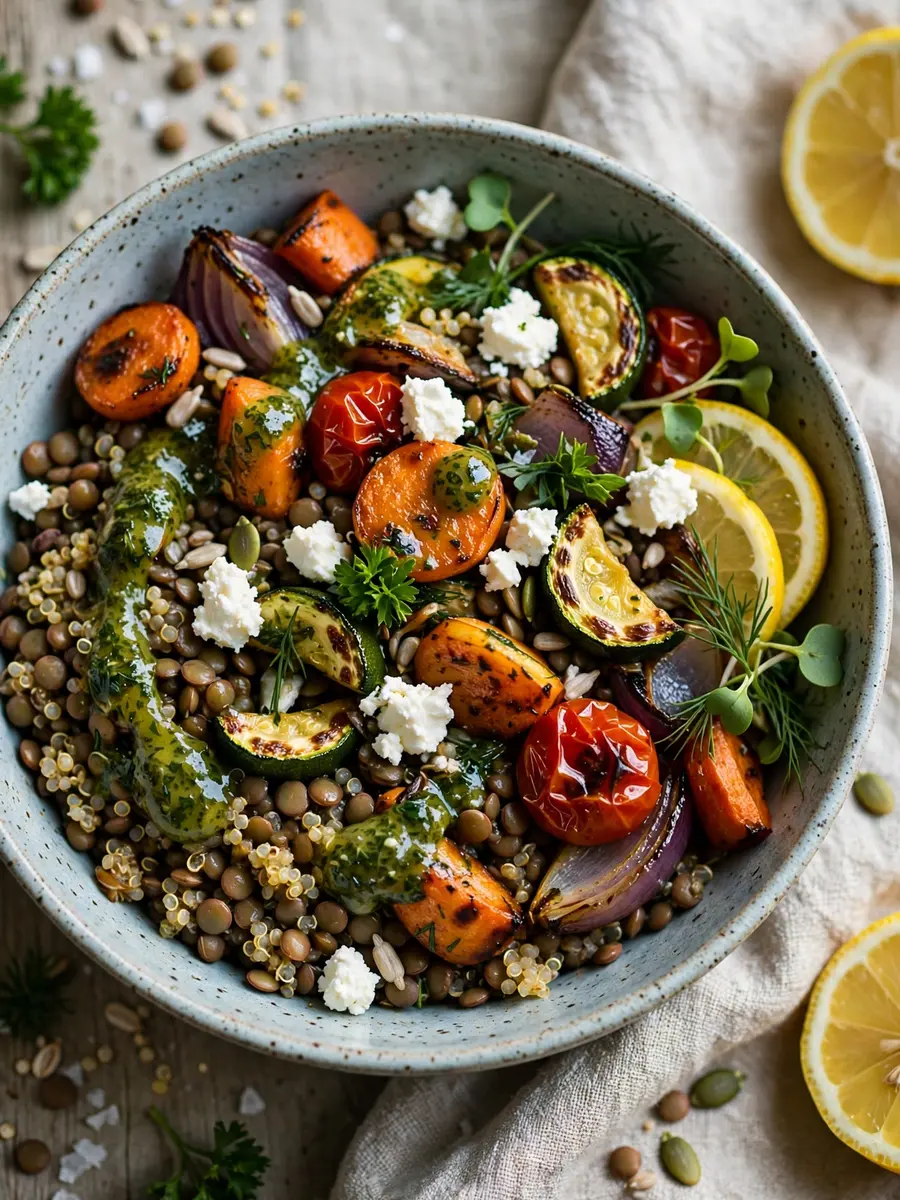
2. Lentil and Quinoa Power Bowl
This lunch bowl is filling without feeling heavy. Lentils and quinoa supply fiber and plant protein, while roasted vegetables add color and crunch.
Prep time: 10 minutes | Cook time: 25 minutes | Serves: 4
Ingredients:
- 1 cup dry brown or green lentils, rinsed
- 1 cup quinoa, rinsed
- 2 cups chopped sweet potato
- 2 cups broccoli florets
- 3 tablespoons olive oil, divided
- 1 teaspoon ground cumin
- 1 teaspoon smoked paprika
- Juice of 1 lemon
- 1/2 cup crumbled feta, optional
- Salt and black pepper, to taste
Steps:
- Heat the oven to 200C (400F). Toss the sweet potato and broccoli with 2 tablespoons of olive oil, cumin, paprika, salt, and pepper.
- Roast the vegetables for 20 to 25 minutes, until tender and lightly browned at the edges.
- While they roast, simmer the lentils in water for 20 to 25 minutes, until tender but not mushy. Drain well.
- Cook the quinoa according to the packet directions, then fluff it with a fork.
- Whisk the remaining olive oil with the lemon juice, salt, and pepper.
- Build each bowl with quinoa, lentils, and roasted vegetables, then drizzle with the dressing and add feta, if using.
Pack leftovers in separate containers for work lunches. The dressing keeps best in a small jar on the side until serving time.
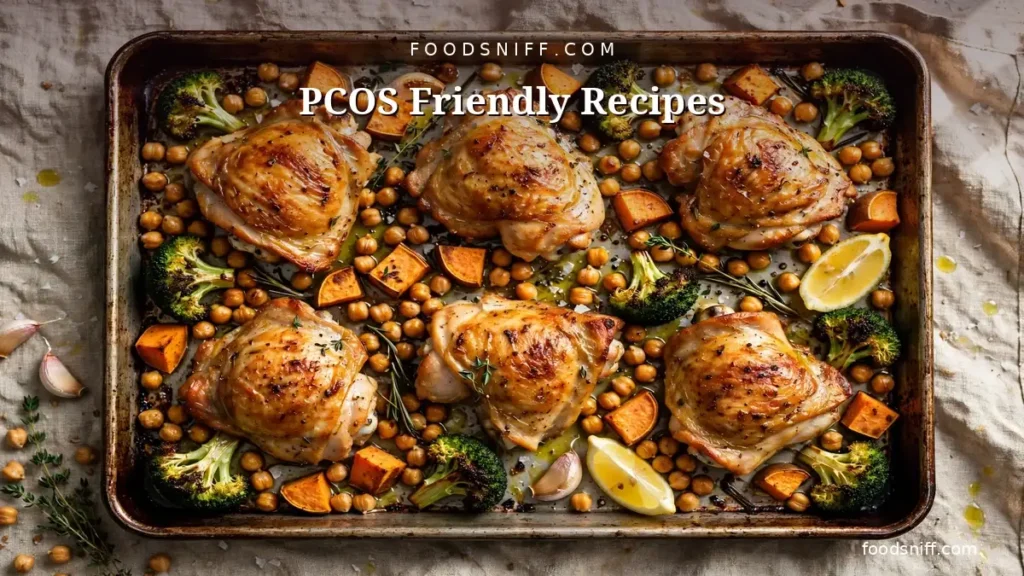
3. Sheet-Pan Lemon Chicken, Chickpeas, and Vegetables
This is the easiest dinner in the collection, and the one to start with if you are new to PCOS friendly cooking. Everything cooks on one pan, so cleanup stays simple.
Prep time: 15 minutes | Cook time: 25 minutes | Serves: 4
Ingredients:
- 4 boneless, skinless chicken breasts or thighs
- 1 can (400g) chickpeas, drained and rinsed
- 2 cups chopped sweet potato
- 2 cups broccoli florets
- 3 tablespoons olive oil
- Juice and zest of 1 lemon
- 3 garlic cloves, minced
- 1 teaspoon dried oregano
- 1 teaspoon paprika
- Salt and black pepper, to taste
- Fresh parsley, to serve
Steps:
- Heat the oven to 200C (400F) and line a large sheet pan with baking paper.
- Whisk the olive oil, lemon juice and zest, garlic, oregano, paprika, salt, and pepper in a large bowl.
- Add the chicken, chickpeas, sweet potato, and broccoli, and toss until evenly coated.
- Spread everything in a single layer on the sheet pan, with space between the pieces.
- Roast for 25 minutes, until the chicken reaches 74C (165F) in the thickest part and the vegetables are tender.
- Rest for 5 minutes, scatter parsley on top, and serve with a simple green salad.
For a meat-free version, swap the chicken for an extra can of chickpeas and a block of cubed firm tofu. Keep the same vegetables, oil, and seasonings.
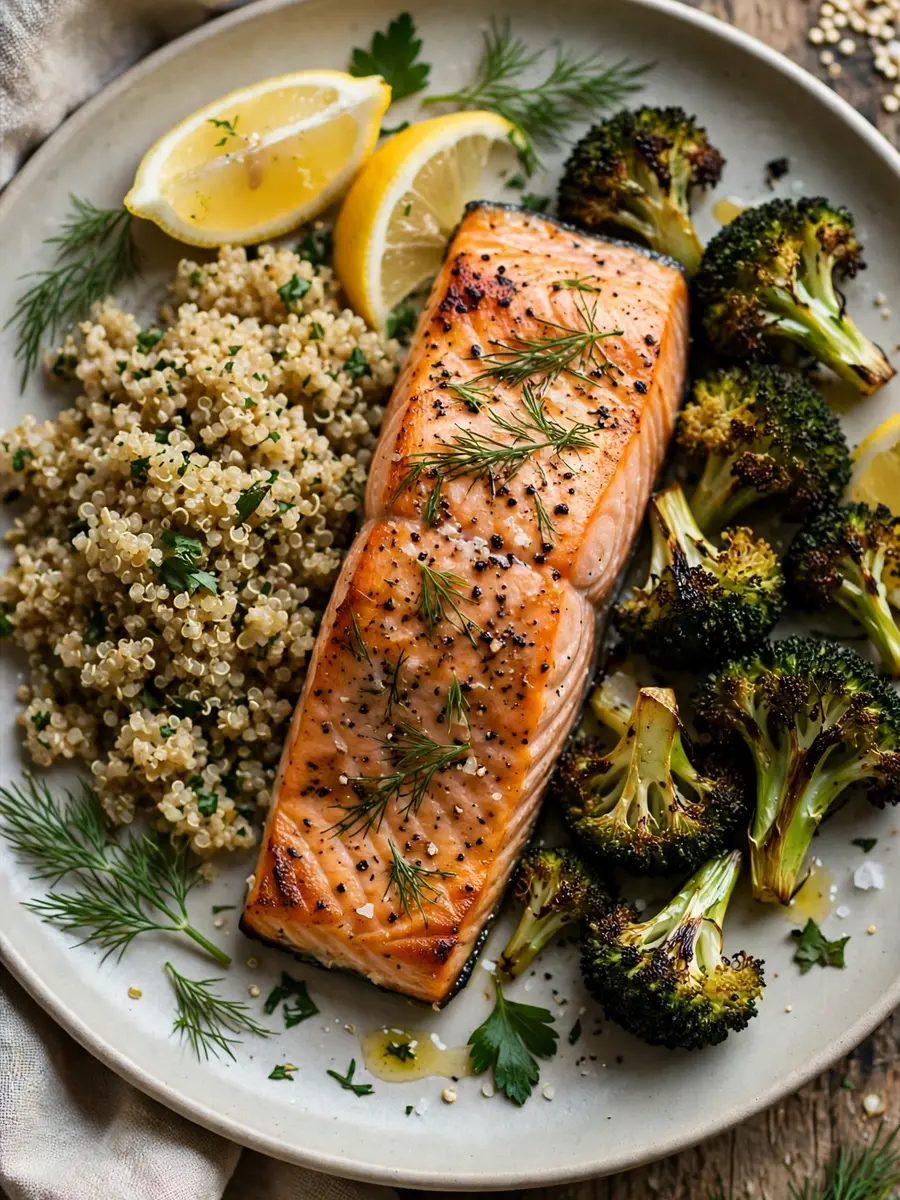
4. Baked Salmon With Quinoa and Broccoli
Fatty fish, whole grains, and green vegetables make this a classic anti-inflammatory dinner. It also reheats well, so it works as a planned leftover lunch.
Prep time: 10 minutes | Cook time: 20 minutes | Serves: 4
Ingredients:
- 4 salmon fillets
- 1 cup quinoa, rinsed
- 4 cups broccoli florets
- 2 tablespoons olive oil, divided
- 2 garlic cloves, minced
- Juice of 1 lemon
- 1 teaspoon dried dill or 1 tablespoon fresh dill
- Salt and black pepper, to taste
Steps:
- Heat the oven to 200C (400F) and line a baking tray with baking paper.
- Cook the quinoa according to the packet directions and keep it warm.
- Toss the broccoli with 1 tablespoon of olive oil, salt, and pepper, and spread it on the tray.
- Place the salmon on the same tray. Brush it with the remaining olive oil, garlic, lemon juice, and dill.
- Bake for 12 to 15 minutes, until the salmon flakes easily with a fork.
- Serve each fillet with quinoa and broccoli, and spoon any pan juices over the top.
If salmon is out of budget, use the same method with chicken thighs or firm tofu. The quinoa, broccoli, and lemon dressing stay the same.
5. Quick Vegetable and Bean Soup
This soup is a useful backup dinner when the fridge is nearly empty. It uses pantry staples and one pot, and it freezes well for later weeks.
Prep time: 10 minutes | Cook time: 30 minutes | Serves: 4
Ingredients:
- 2 tablespoons olive oil
- 1 onion, diced
- 2 carrots, diced
- 2 celery stalks, diced
- 3 garlic cloves, minced
- 2 cans (400g each) white beans, drained and rinsed
- 1 can (400g) chopped tomatoes
- 4 cups vegetable stock
- 2 cups chopped kale or spinach
- 1 teaspoon dried thyme
- Salt and black pepper, to taste
Steps:
- Heat the olive oil in a large pot over medium heat and cook the onion, carrots, and celery for 5 minutes.
- Add the garlic and thyme, and cook for 1 minute more, until fragrant.
- Stir in the beans, tomatoes, and stock, and bring the soup to a gentle simmer.
- Cook for 20 minutes, until the vegetables are tender.
- Stir in the kale or spinach and cook for 3 minutes, until wilted.
- Season with salt and pepper, and serve with whole-grain bread or a side salad.
Freeze half the batch in single portions before adding extra salt. That gives you a ready lunch for a day when cooking feels like too much.
PCOS-Friendly Snack Ideas
Snacks work best when they follow the same plate logic in miniature. Pair a protein with fiber or healthy fat, instead of eating carbs on their own.
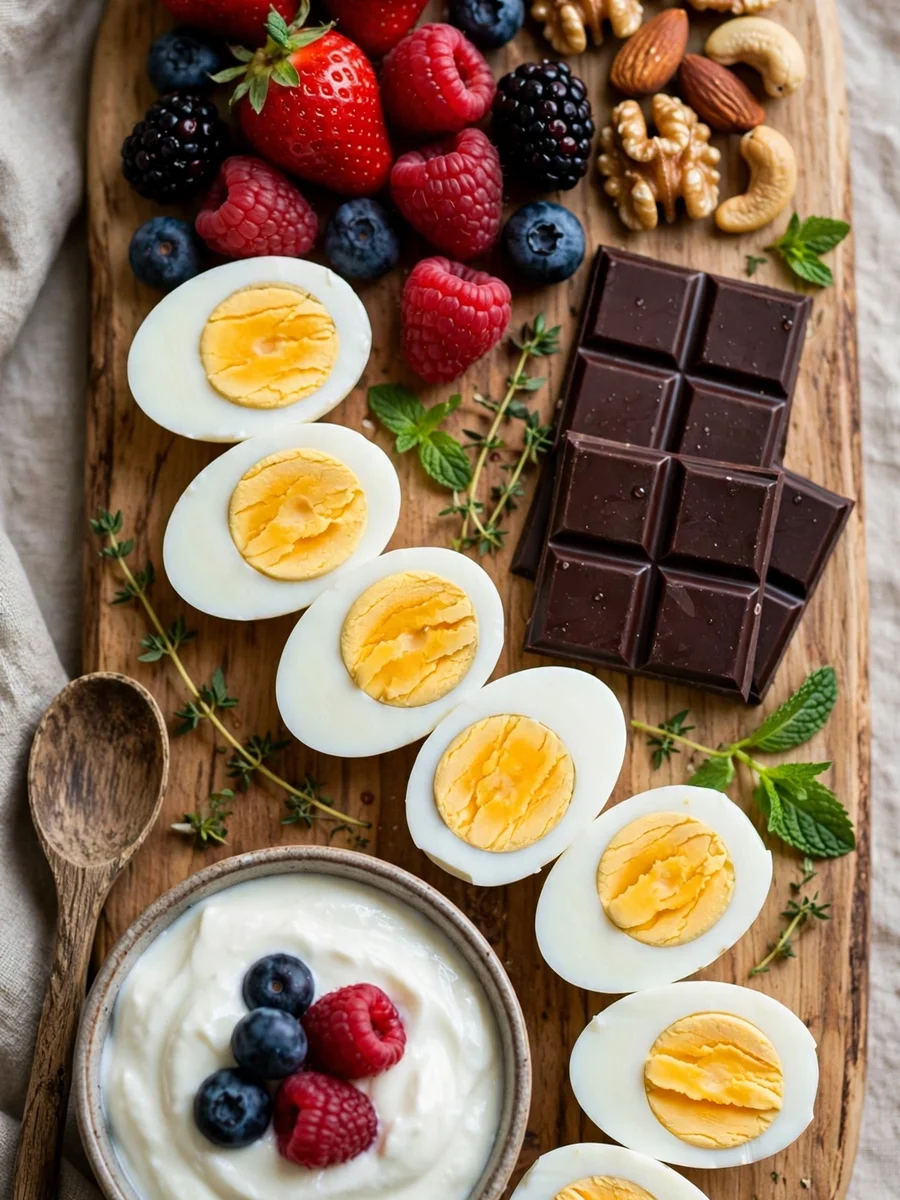
Greek yogurt with berries and nuts, boiled eggs with cucumber, hummus with vegetables, and cottage cheese with apple slices all fit that pattern. Keep portions modest and eat when you are actually hungry.
Sweet snacks do not need to disappear. Berries with yogurt, nut butter with apple slices, or a small square of dark chocolate with almonds can satisfy a sweet craving without a sharp blood sugar rise.
For softer, protein-led meal ideas, the high-protein meals collection uses a similar protein-first approach.
PCOS-Friendly Meal Planning (Weekly Guide)
A weekly plan works best when it repeats patterns, not exact meals. Rotate proteins and vegetables through the week, and keep the plate structure the same at each meal.
| Meal | Simple pattern | Example from this guide |
|---|---|---|
| Breakfast | Protein plus fiber-rich carbs | Berry protein overnight oats |
| Lunch | Grain bowl or salad with protein | Lentil and quinoa power bowl |
| Dinner | Protein, vegetables, and one carb | Sheet-pan lemon chicken or baked salmon |
| Snack | Protein plus fiber or fat | Greek yogurt with berries and nuts |
Build your week by picking one breakfast, two lunches, and three dinners to repeat. That limits decision fatigue and keeps shopping simple.
Cook grains and roast vegetables in a larger batch on one day, then reuse them across bowls and salads. Leftovers become the next day’s lunch with a fresh protein on top.
Shopping List for the Recipes in This Guide
One shopping trip covers most of the recipes above. Stock the pantry first, then add fresh items for the week.
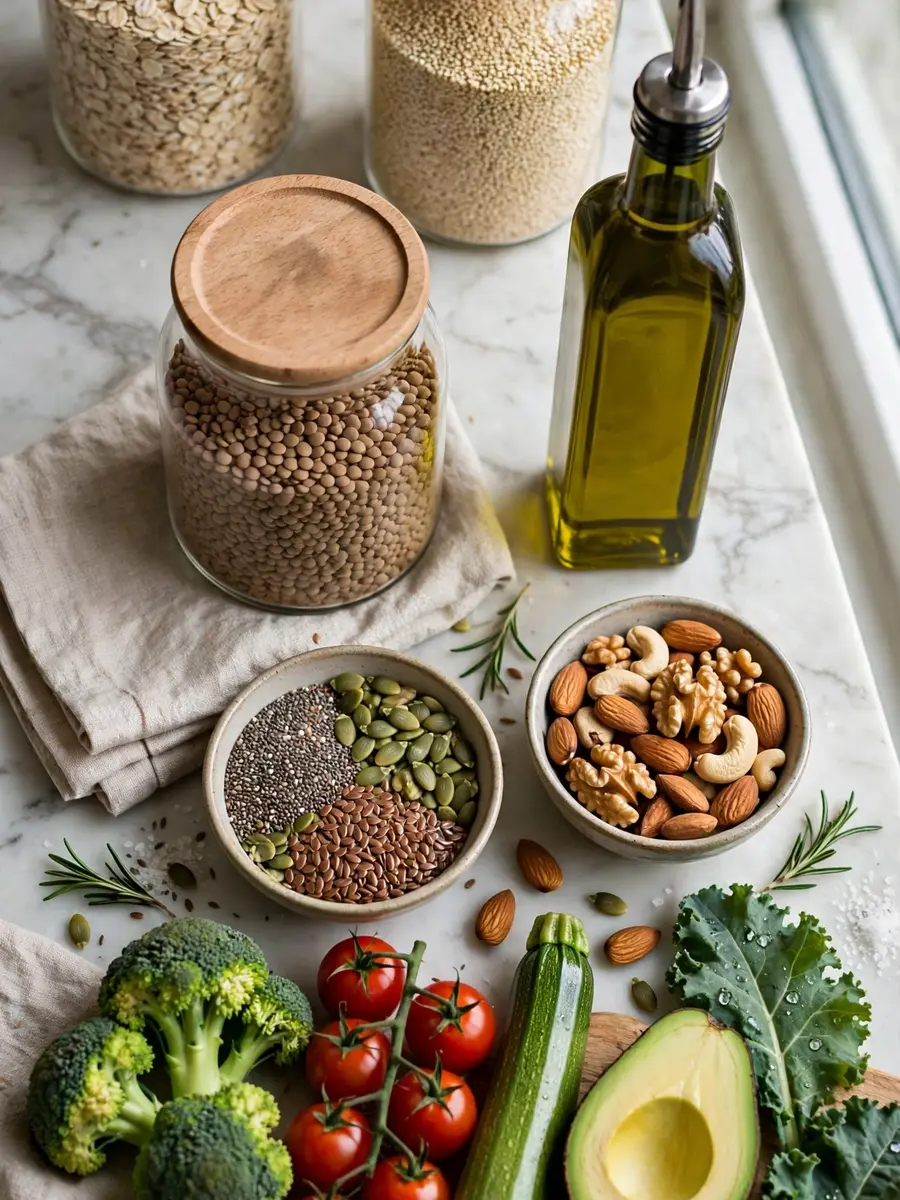
- Pantry: rolled oats, quinoa, lentils, chickpeas, white beans, olive oil, canned tomatoes, vegetable stock, chia seeds, flaxseed, nuts.
- Protein: eggs, Greek yogurt, chicken, salmon, feta.
- Fresh: berries, lemons, sweet potato, broccoli, kale or spinach, onion, carrots, celery, garlic, herbs.
Buy frozen berries and vegetables when fresh prices are high. They work just as well in oats, bowls, and soups, and they reduce waste.
For more structured eating plans, see the meals that support GLP-1 diets, the AIP diet recipes, and the zucchini recipes for extra vegetable-led dishes.
Foods to Limit or Avoid With PCOS
This section is about trends to watch, not rules to stress over. Meals that spike blood sugar fastest tend to combine refined carbs with little protein or fiber.
White bread, pastries, sweet drinks, and sweets fall in that group. They digest quickly, and they often leave you hungry again soon after.
You do not need to ban them forever to eat well with PCOS. Notice how often they appear, and pair them with protein or fiber when you do choose them.
Do You Need to Avoid Dairy or Gluten?
Most people with PCOS do not need to avoid dairy or gluten unless they have a diagnosed sensitivity or intolerance. There is no universal benefit to removing these foods for PCOS alone.
Some people find dairy worsens digestion or skin, while others tolerate yogurt and cheese well. The same variation applies to gluten. Watch your own response, and discuss persistent symptoms with your clinician.
Personal response guides better choices than blanket restriction. A balanced, varied diet usually serves you better than a long list of banned foods.
PCOS-Friendly Cooking Tips and Ingredient Swaps
Small swaps change how a meal behaves without changing how it tastes. Replace refined grains with whole grains, and build sauces around olive oil, lemon, and herbs.
| Instead of | Try | Why it helps |
|---|---|---|
| White rice | Quinoa or brown rice | More fiber, slower digestion |
| Refined cereal | Rolled oats with nuts and seeds | More fiber and staying power |
| Sugary dressing | Olive oil, lemon, and herbs | Healthy fat without added sugar |
| Fried snacks | Roasted chickpeas or nuts | Protein and fiber in the snack |
Gentle cooking methods also help. Baking, roasting, steaming, and sauteing keep nutrients intact and avoid the heavy breading and frying that can dominate a meal.
Choose stable oils for everyday cooking, such as olive oil and avocado oil. Use them at moderate heat, and save delicate oils for dressings.
Final Thoughts: Building a Sustainable PCOS-Friendly Lifestyle
This only works if it lasts. A relaxed, repeatable pattern beats a strict plan that falls apart after two weeks.
Consistency matters more than perfection. Repeated meals, flexible options, and a simple plate structure keep eating manageable in real life.
Keep your relationship with food steady too. Meals are tools for energy and health, not tests to pass or fail. When pressure drops, progress usually follows.
FAQs About PCOS-Friendly Recipes
Can PCOS Be Managed With Diet Alone?
PCOS may be helped with food adjustments; diet alone can not treat the illness. Nutrition can improve insulin response, reduce inflammation, and ease symptoms. Medical treatment, exercise, sleep, and stress management usually help when managing PCOS naturally.
Food functions as a basis, not a substitute for care.
Are Low-Carb or Keto Diets Good for PCOS?
Low-carb or keto diets may reduce insulin levels for some persons with PCOS, but they are not essential for symptom control. Evidence shows that balanced diets often work as well as keto or low-carb diets for PCOS. This is true when meals are regular and full of nutrients.
Sustainability and symptom response matter more than carb level alone.
How Many Meals Should I Eat With PCOS?
There is no single meal plan for PCOS. However, most studies suggest eating smaller meals throughout the day. Consistent meal time helps normalize blood sugar and insulin levels better than missing meals or erratic eating behaviors.
Three meals with one to two snacks works nicely for many.

Your blog is a breath of fresh air in the crowded online space. I appreciate the unique perspective you bring to every topic you cover. Keep up the fantastic work!