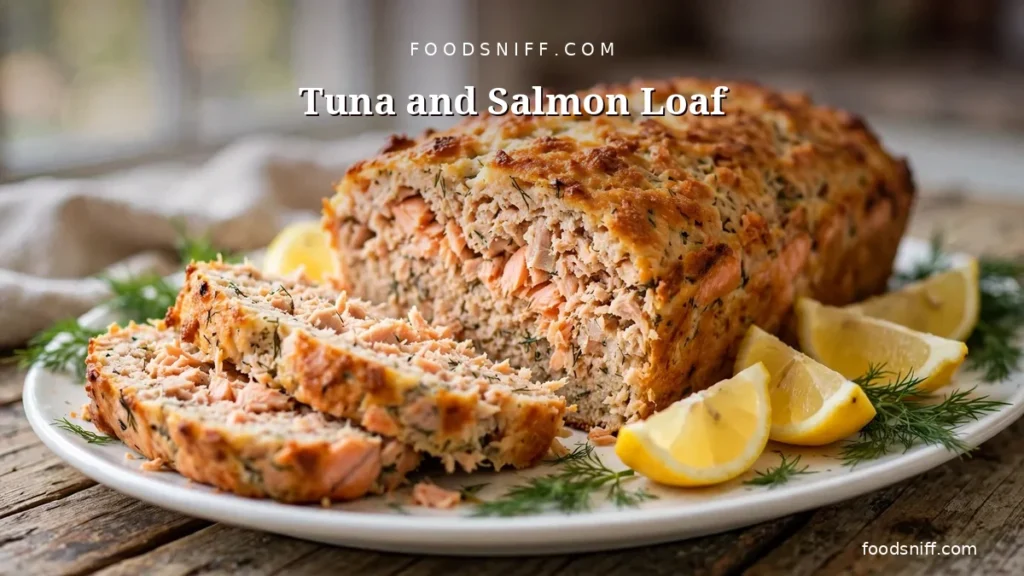

Chicken and parmesan cheese recipes cover four styles: classic chicken parmesan with marinara and mozzarella, baked parmesan crusted chicken, one pan skillet chicken parmesan, and parmesan chicken pasta. The lead recipe below is a baked crusted version that serves four in 20 minutes. Pick a style from the table, then cook it tonight.
Most recipes online give you one version and stop there, which is fine when you already know which one you want. This guide starts one step earlier. It lays out all four styles side by side, so you can match the cooking method to the night you are having, then it gives you one full recipe and shorter methods for the other three.
The lead recipe is the baked crusted chicken, because it is the fastest route to a crisp parmesan coating with the least cleanup. It needs one skillet, one shallow dish for the coating, and about 20 minutes. If you want the restaurant version with sauce and melted cheese, the classic section below is the one to cook, and our restaurant inspired chicken guide has another take on the same idea for a different night.
What parmesan chicken actually means
Chicken parmesan, also called chicken parmigiana, is chicken coated in breadcrumbs and Parmesan cheese, then topped with tomato sauce and melted cheese. In the United States it is usually called chicken parm, and it is served over pasta or in a sandwich. The name comes from parmigiana, the Italian word for the style of layering with cheese, not from the city of Parma.
The confusion starts because the same two ingredients, chicken and Parmesan, show up in four different dishes. A crusted chicken has the coating and nothing on top.
The classic has sauce and mozzarella over the coating. The skillet version cooks the whole thing in one pan. The pasta version folds the chicken and cheese into a sauce. They share a shopping list, but they cook differently and they eat differently, so it helps to pick the style before you start.
The four styles at a glance
Start by picking a style, not a recipe. Each style below uses the same chicken and Parmesan base, so the only real choice is how the cheese is used and whether sauce joins the plate. The table shows what each one needs and how long it takes.
| Style | Cheese role | Sauce | Time |
|---|---|---|---|
| Classic chicken parmesan | Parmesan in the crust, mozzarella on top | Marinara, baked over the chicken | 40 minutes |
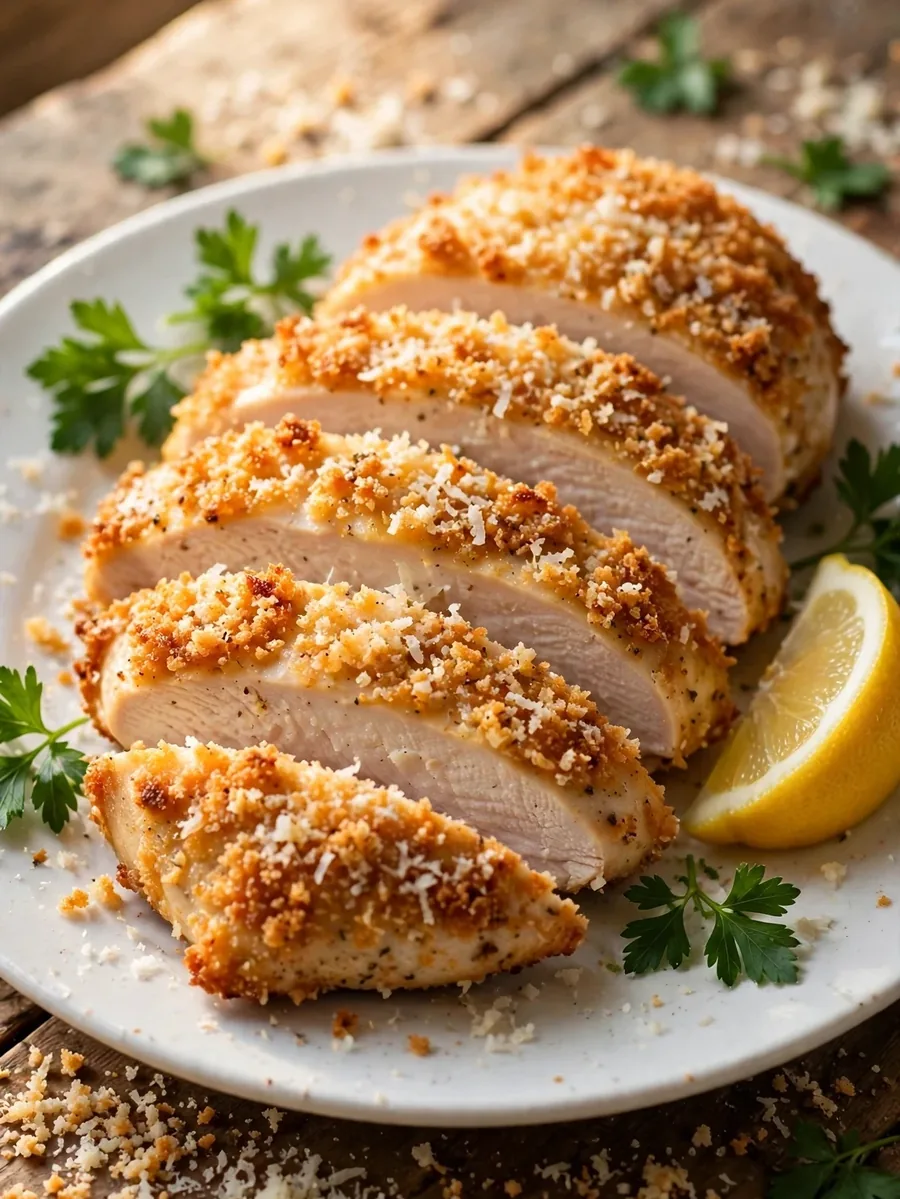
| Baked parmesan crusted chicken | Parmesan in the crust only | None, lemon and herbs instead | 20 minutes |
| Skillet chicken parmesan | Parmesan in the crust, mozzarella on top | Marinara, finished in the same skillet | 30 minutes |
| Parmesan chicken pasta | Parmesan melted into the sauce | Cream, tomato, pesto, or broth | 25 to 30 minutes |
If the night is busy, cook the baked crusted version. If you want the restaurant plate, cook the classic. If you want one pan and no baking dish, cook the skillet version. If the family wants pasta, cook the pasta version, which has its own guide linked below.
The featured recipe: Baked parmesan crusted chicken
Prep time: 10 minutes
Cook time: 10 minutes
Serves: 4 servings
Calories: 559 per serving
Why this recipe leads the guide
This recipe leads the guide because it is the clearest version of what Parmesan does for chicken. The cheese goes into the crust, where it browns and turns crisp, and the lemon at the end is the only topping it needs.
It is also the fastest full recipe in the guide. Ten minutes of prep, ten minutes in the skillet, and dinner is on the table. The coating uses ingredients most kitchens already hold, and the method works with chicken breasts, cutlets, or tenders, so you do not need a special shopping trip to cook it.
The numbers check out
The amounts below come from TwoSleevers, where Ashley Thompson builds the same dish from four chicken breasts, a cup of Parmesan, a cup of breadcrumbs, and two eggs, with a published nutrition figure of 559 calories per serving. The protein is high at 63 grams per serving, which is why one breast with a side is a full dinner.
The same kind of dish from other publishers lands in the same range. Natasha’s Kitchen lists 502 calories per serving for its classic chicken parmesan, which carries sauce and mozzarella on top, so 559 sits in the normal range for a crusted version with a full cup of Parmesan and breadcrumbs and no sauce.
One note on the source times: the TwoSleevers recipe card lists a 6 minute cook time, but its own steps say 4 to 5 minutes per side, so this guide uses 10 minutes of cook time from the steps.
Ingredients
- 4 boneless, skinless chicken breasts
- 1 cup grated Parmesan cheese
- 1 cup breadcrumbs
- 1 teaspoon garlic powder
- 1 teaspoon paprika
- 2 eggs, beaten
- 2 tablespoons olive oil
- 1/2 teaspoon salt
- 1/4 teaspoon black pepper
- Lemon wedges and chopped parsley, for serving
Steps
- Pat the chicken breasts dry with paper towels and season them with salt and pepper. Dry chicken takes the coating better, so do not skip this step.
- Beat the eggs in a shallow dish. In a second shallow dish, stir together the breadcrumbs, grated Parmesan, garlic powder, and paprika.
- Dip each chicken breast in the beaten eggs, letting the extra drip off, then press it into the breadcrumb and Parmesan mixture so the coating sticks on all sides.
- Heat the olive oil in a large skillet over medium heat. Add the chicken and cook 4 to 5 minutes per side, until the coating is golden brown and the chicken is cooked through.
- Check the thickest piece with a thermometer before serving. Chicken is done at 165 degrees F, and the USDA safe temperature chart lists that number for all poultry.
- Move the chicken to a plate and let it rest for 2 minutes. Serve with lemon wedges and chopped parsley, plus extra grated Parmesan if you like.
Why the crust stays crisp
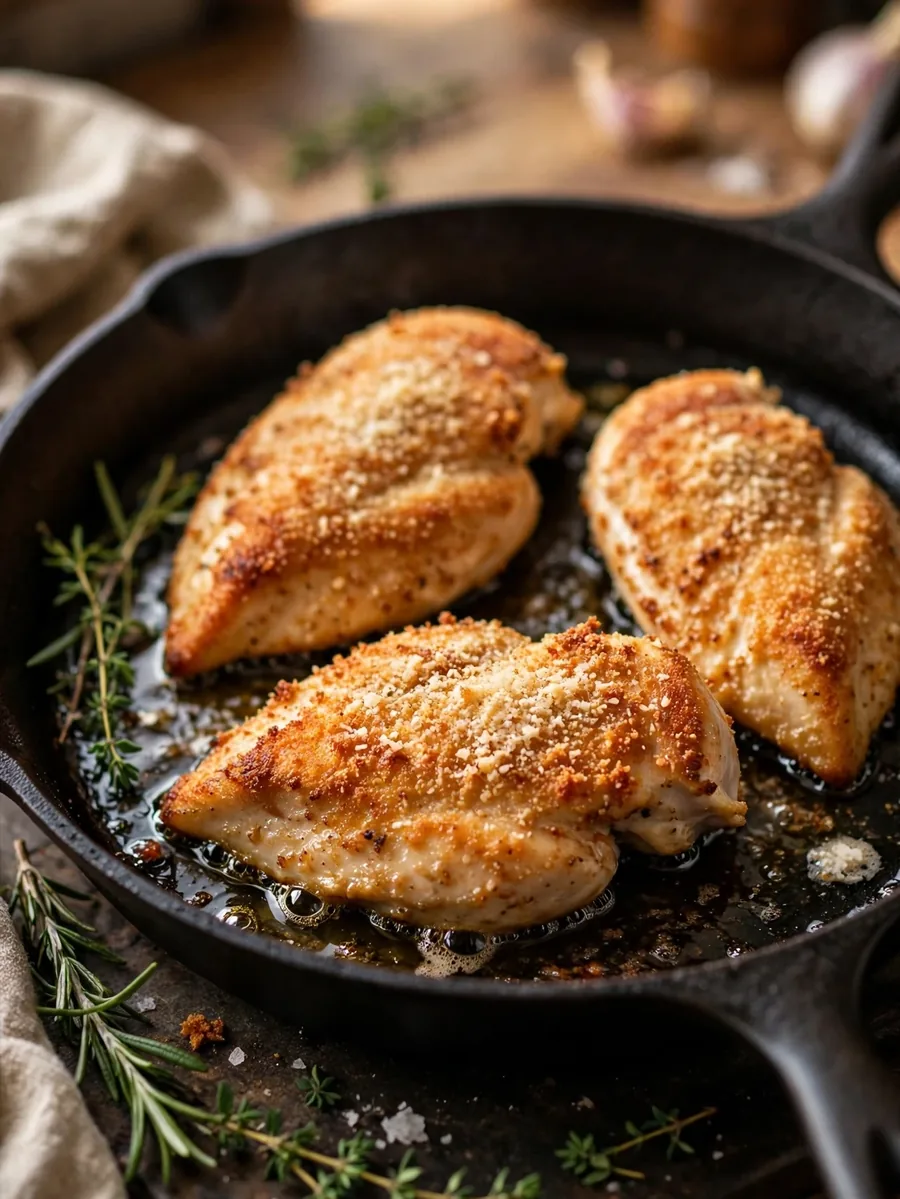
Three details decide whether the crust turns out crisp or soggy. First, the chicken must be dry before it meets the egg, or the coating slides off in the pan. Second, the oil must be hot enough to sizzle when the chicken goes in, so the crust sets on contact instead of soaking up oil.
Third, the chicken should rest on a plate, not under a lid, so steam does not soften the coating while it rests.
Press the coating on firmly after the egg dip. A light dusting falls off in the pan, while a pressed coating forms a shell that holds through the flip. If you want an even thicker crust, dip the chicken in flour first, then egg, then the Parmesan mixture, which is the double dredge method TwoSleevers recommends for extra crunch.
Classic chicken parmesan
The classic is the restaurant dish: breaded chicken, marinara sauce, and melted mozzarella, baked in a casserole dish and served over spaghetti. It takes about 40 minutes, which is twice as long as the crusted version, because the chicken is pan-fried first and then baked with the sauce and cheese.
Natasha’s Kitchen makes it this way, with the cutlets pounded to an even third of an inch, pan-fried 3 to 4 minutes per side, then baked at 425 degrees F for 15 minutes with the sauce and cheese.
The sauce goes under the chicken as well as over it, which keeps the chicken moist but softens the bottom of the crust. For a crisper result, leave the sauce out of the bottom and bake on a wire rack, spooning sauce over the top only. The cheese goes on last, and the dish comes out when the mozzarella melts and browns in spots.
When to choose the classic over the crusted version
Choose the classic when the meal is the main event, like a Sunday dinner or a birthday, and you want the full restaurant plate with pasta. Choose the crusted version when the night is busy and you want the same flavors in half the time with one pan to wash. The chicken is the same either way, so the choice comes down to the sauce and the time.
Bake it in a casserole dish, the same way our casserole recipes come together, and serve it over buttered pasta with a green salad. For a second Italian style main on another night, our cheesy Italian style mains cover the pizza side of the same craving.
Skillet chicken parmesan
The skillet version is the classic cooked in one pan instead of two dishes. The chicken is breaded and seared in a cast iron skillet, then the sauce and cheese go straight into the same skillet and the whole pan finishes in the oven. Amee’s Savory Dish makes it this way with six small chicken breasts, and the method works with any oven safe skillet, cast iron or not.
Set the oven to 350 degrees F before you start, and sear the breaded chicken 3 to 4 minutes per side until it is lightly golden. Pour the marinara around the chicken, not over it, so the crust on top stays dry, then scatter the mozzarella and Parmesan over the chicken and bake for about 20 minutes, until the chicken reaches 165 degrees F and the cheese bubbles.
The advantage is cleanup: one skillet, one cutting board, and no casserole dish. The trade-off is space, since the chicken must sit in a single layer with room around each piece, or the coating steams instead of browning. Cook in two batches if the skillet is crowded, and keep the first batch warm on a plate while the second sears.
Skillet tips that matter
Use an oven safe skillet, and remember the handle stays hot after baking, so keep a towel on it as a reminder.
A well seasoned cast iron skillet needs less oil than a stainless one, and it holds heat well enough to keep the sauce simmering while the cheese melts. If the sauce looks thick after baking, stir in a spoonful of water before serving, since the oven reduces it faster than a covered pot would.
Parmesan chicken pasta
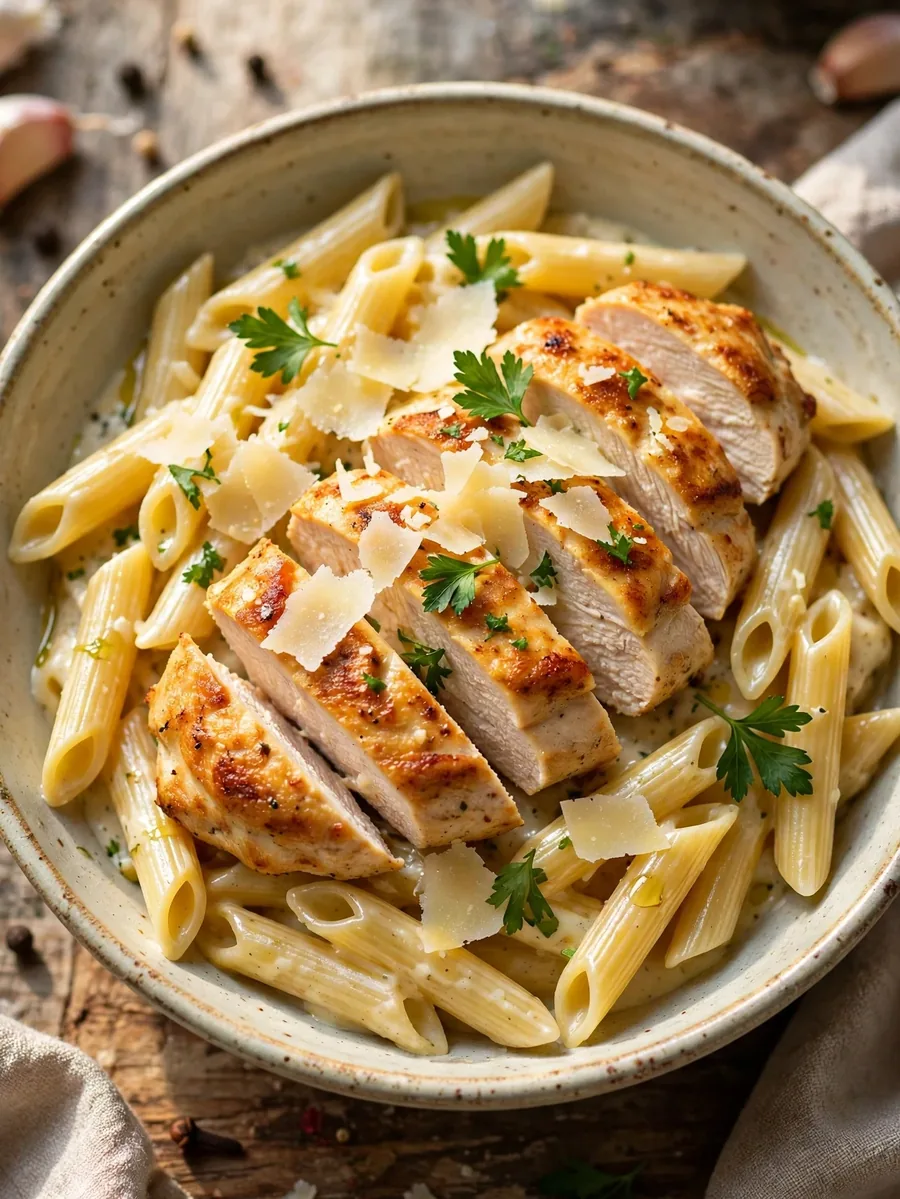
Parmesan chicken pasta is the fourth style, and it is the one where the cheese melts into the sauce instead of coating the chicken. The chicken is sliced and browned first, then the sauce builds in the same pan from cream, broth, and Parmesan, and the pasta goes in last.
Our chicken pasta recipes guide covers this style in full, with four sauces, a lead recipe, and the ratios that keep each one from turning mushy or dry.
Do not cook the pasta version from this page. The guide linked above is the pasta page, and it already has the lead recipe, a creamy garlic parmesan version that serves four in 30 minutes at 620 calories a serving. This page keeps the pasta section short on purpose, so the two pages do not compete with each other, and so each one owns its own style.
Which pasta shapes work
Short shapes with ridges or curves trap the sauce best, so penne and fusilli are the usual picks for parmesan chicken pasta. Wide flat strands like fettuccine suit the creamy version, because the sauce coats each strand. Tiny shapes belong in soups, and our ditali pasta guide explains where those small tubes fit and what to cook with them.
Cook the pasta one minute short of the package time when it will finish in the sauce, since it keeps cooking in the pan. Save half a cup of pasta water before draining, and use it a spoonful at a time to loosen the sauce, since the starch in the water helps the sauce cling instead of sliding off.
Which cheese and crumbs to buy
Freshly grated Parmesan makes the biggest difference in this dish, because pre-grated cheese carries anti-caking powder that keeps it from melting smoothly and browning evenly. Buy a wedge and grate it yourself, or buy a tub of freshly grated Parmesan from the refrigerated section, and skip the shelf stable shaker can for the crust.
Parmigiano Reggiano is the real name for the aged Italian cheese, and it works the same way, with a sharper, nuttier flavor than domestic Parmesan.
Panko breadcrumbs give a lighter, crunchier crust than fine breadcrumbs, because the flakes are larger and they brown in separate crisp pieces. Fine breadcrumbs give a tighter, more even coating that holds sauce better, which suits the classic version. Italian seasoned breadcrumbs add dried basil and oregano to the coating, so skip the extra Italian seasoning if you use them, or the herbs will double up.
What to skip
Skip low fat mozzarella for the topping, since it releases water as it melts and softens the crust underneath. Whole milk mozzarella or low moisture part-skim melts cleanly and browns in spots. Skip pre-shredded Parmesan in the crust for the same reason as the shaker can: the coating powder stops it from binding to the chicken.
How to keep the crust crisp
Crisp crust comes down to method, and five rules cover it. Follow them in order and the coating holds through the flip, the bake, and the plate.
- Dry the chicken with paper towels before breading, so the egg has something to grip.
- Let the breaded chicken rest for 5 minutes before it hits the pan, so the coating sets and sticks.
- Heat the oil until it shimmers, then cook in a single layer, since crowding drops the temperature and the coating steams.
- Flip each piece only once, and move it to a wire rack, not a flat plate, so the bottom stays crisp.
- Put sauce on top of the chicken, never under it, and add it at the end, so the crust meets the sauce for minutes, not for the whole bake.
Leftovers lose their crispness in the fridge no matter what you do, so reheat them in the oven, not the microwave. A hot oven at 375 degrees F for 10 minutes brings most of the crunch back, while a microwave turns the coating soft in under a minute.
What to serve with parmesan chicken
The chicken is rich and salty, so the sides should be fresh and simple. A green salad with a sharp vinaigrette cuts through the cheese, roasted vegetables add color and fiber, and garlic mashed potatoes suit the nights when you want the full comfort plate. TwoSleevers lists the same three kinds of sides, and they work because none of them competes with the chicken for attention.
| Side | Why it works | Best with |
|---|---|---|
| Green salad, balsamic vinaigrette | Acid cuts the richness of the cheese | Crusted and classic versions |
| Roasted broccoli or asparagus | Char and fiber balance the plate | Crusted and skillet versions |
| Garlic mashed potatoes | Comfort pairing, soaks up the sauce | Classic version |
| Buttered spaghetti | Classic base, catches the marinara | Classic version |
| Crusty bread | For the sauce left on the plate | Skillet version |
For a bowl style dinner on another night, our savory chicken bowl dinners build the same kind of meal in a bowl, with rice and vegetables instead of pasta. The chicken in those bowls is seasoned, not breaded, so the two dinners feel different even though the protein is the same.
Storage, reheating, and freezing
Cool leftovers within 2 hours and store them in a sealed container in the fridge for 3 to 4 days. The breading softens as it sits, which is normal, and the chicken is still good sliced cold over a salad, where the softer coating does not matter. Keep the sauce in a separate container when you can, so the chicken stays drier.
Reheat in the oven at 375 degrees F for 10 to 15 minutes, until the chicken is hot through and the crust crisps again. The microwave is faster, but it turns the coating soft and rubbery, so save it for the pasta version, where there is no crust to protect.
To freeze, wrap each cooked breast on its own in plastic wrap, then put the wrapped pieces in a freezer-safe bag for up to 2 months, and thaw overnight in the fridge before reheating.
Scaling parmesan chicken for a crowd
Doubling the recipe works, but only if the pan keeps up. A doubled batch needs a second skillet or a large baking sheet, since the chicken must cook in a single layer to brown. Crowding the pan drops the oil temperature, and the coating steams instead of crisping, so cook in batches and keep the finished pieces warm on a wire rack in a low oven.
Scale the breading station the same way as the chicken, and set up a second shallow dish of the Parmesan mixture when the first runs low, instead of topping it up with a different ratio. Season in stages and taste before adding more salt, since doubling the salt by the book often overshoots when the cheese already brings plenty.
Frequently asked questions
What is the difference between chicken parmesan and chicken parmigiana?
They are the same dish. Parmigiana is the Italian name for the style of layering with cheese, and parmesan is the American spelling that stuck to the chicken version. In the United States the dish is usually called chicken parm, short for chicken parmesan.
Can I make baked chicken parmesan instead of frying it?
Yes. Bread the chicken the same way, spray or brush the coating lightly with oil, and bake on a wire rack set over a baking sheet at 400 degrees F for 15 minutes, until the chicken reaches 165 degrees F. Add the sauce and cheese, then bake 3 to 5 minutes more, until the cheese melts. The baked version is lighter and the crust stays crisper, since the chicken never sits in oil.
How do you keep chicken parmesan crispy?
Dry the chicken before breading, let the breaded chicken rest for 5 minutes so the coating sets, and cook it in hot oil in a single layer. Flip each piece only once, move it to a wire rack instead of a flat plate, and put the sauce on top of the chicken at the end, never under it. Sauce on the bottom softens the crust while it bakes.
What do you serve with parmesan crusted chicken?
A green salad with a sharp vinaigrette, roasted broccoli or asparagus, garlic mashed potatoes, or buttered spaghetti. The salad and vegetables cut through the richness of the cheese, while the potatoes and pasta suit the classic version with sauce. TwoSleevers lists the same three kinds of sides for its crusted chicken.
Can you freeze parmesan crusted chicken?
Yes, for up to 2 months. Wrap each cooked breast on its own in plastic wrap, then put the wrapped pieces in a freezer-safe bag. Thaw overnight in the fridge, then reheat in the oven at 375 degrees F for 10 to 15 minutes, until hot through. The microwave is faster but turns the coating soft.