

Pickled herring is salted herring fillets cured in a sweet vinegar brine with onion, bay leaf, and warm spices. This recipe uses store-bought salted fillets, a short soak, and a spiced vinegar brine, then chills the jar for at least 24 hours. Active work takes about 30 minutes, and the jar keeps for weeks in the fridge.
Herring spoils fast. That is why Northern Europe has salted, smoked, and pickled it for centuries, and the pickled version is the one that shows up at Christmas, Easter, and Midsummer tables from Stockholm to Gdansk. The fish turns tangy, firm, and sweet-sour, and a jar of it can sit in the fridge for weeks.
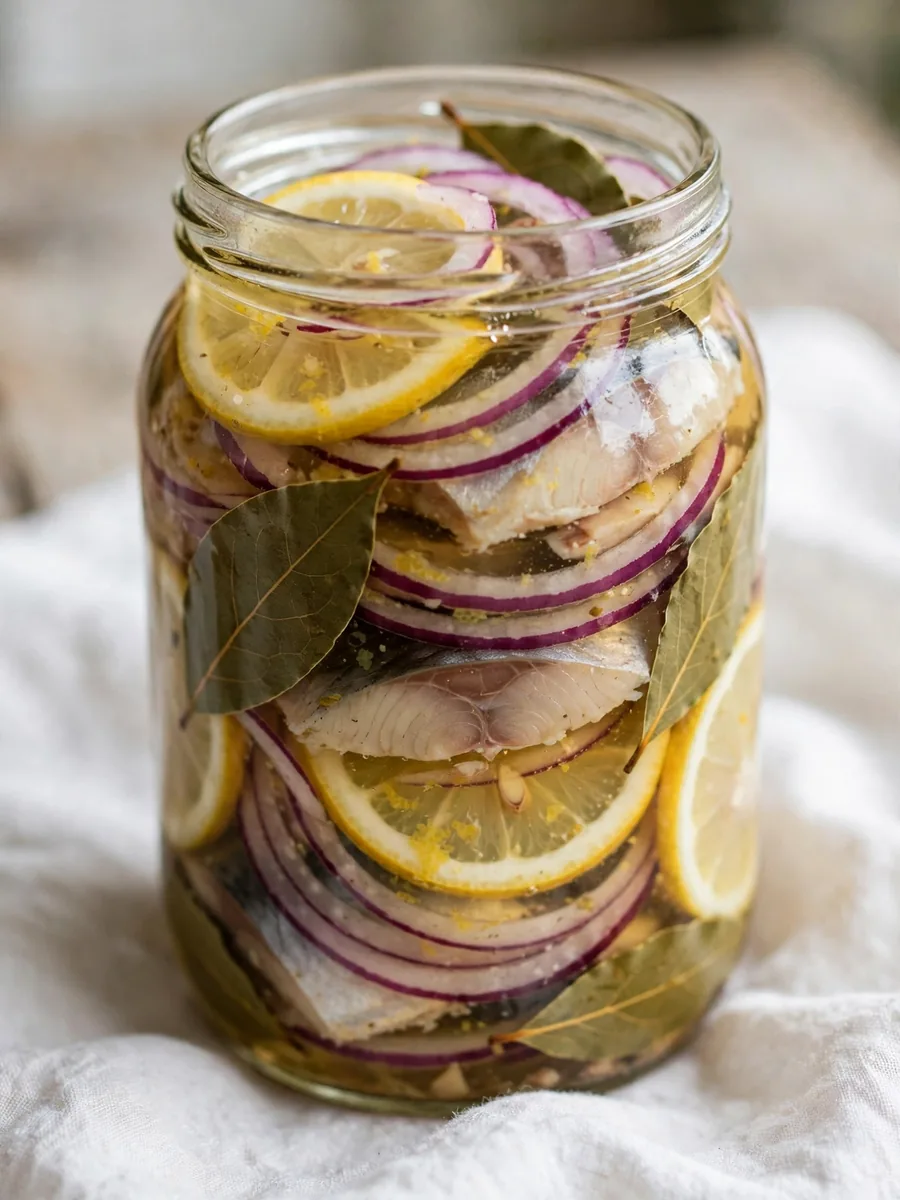
This recipe follows the Swedish glassblower style, glasmastarsill, with the silvery skin facing out in a clear jar. It starts with salted fillets, not fresh fish, which keeps the method simple and the texture firm. The brine is vinegar, water, sugar, and a small set of spices, and the whole job is mostly waiting.
What Is Pickled Herring?
Pickled herring is herring fillets cured first in salt, then in a vinegar solution with sugar and spices. The salt pulls water out of the fish and firms the flesh. The vinegar then preserves it and gives the sharp, tangy bite that defines the dish.
It is served cold, straight from the jar, and it is closer to citrus-cured fish like leche de tigre than to a cooked dish, even though the method is different. The fish never sees heat in this recipe, apart from the brine, which cools before it touches the fillets.
Curing vs Pickling: What Is the Difference?
Curing and pickling are two steps, not two names for the same thing. Curing is the salt stage. It draws out moisture, firms the fish, and slows spoilage.
Pickling is the vinegar stage. It drops the acidity, adds flavor, and keeps the fish safe in the fridge.
Skip the salt stage with fresh herring and the fillets can turn soft within two weeks. That is the single most common failure in homemade pickled herring, and it comes from treating the vinegar as a shortcut.
The Main Styles You Will See in Stores
Swedish inlagd sill is the clear vinegar version in this recipe, usually with onion, carrot, bay leaf, and dill. German matjes uses young, mildly salted herring with apple and onion. Polish sledzie often comes in sour cream with egg and apple. Jewish deli herring leans on wine and onion, and rollmops are fillets rolled around onion or pickle.
The brine below is the Swedish base. Once you have it down, the variations section shows how to turn the same jar into mustard, curry, or beet herring with a few swaps.
Which Herring to Buy
Buy salted herring fillets. They come in vacuum packs or jars at Scandinavian, Eastern European, and Jewish delis, and at well-stocked fish counters. One pound of salted fillets makes four generous servings, or eight small ones as part of a buffet spread.
If you can only find fresh herring, freeze it first. University guidance on home pickling of fish says to freeze the fish for four days before pickling to kill parasites, and to keep pickled fish refrigerated at all times. Fresh fillets also need the full salt cure in the steps below, not a shortcut soak.
Check the fillets before you buy. They should smell clean and briny, not sour or ammonia-like. Avoid fillets sitting in cloudy brine or with torn, ragged edges, which usually means they were handled roughly or stored too long.
A Shortcut Worth Knowing: Matjes
Matjes fillets are a useful shortcut if you find them. They are young herring, lightly salted and already mild, so they need only a brief rinse instead of the overnight soak. The result is softer and less salty than the classic version, which suits a first jar. Ask the fish counter whether the fillets are matjes or fully salted, because the two need different handling, and the label does not always say.
Pickled Herring Recipe
This is the Swedish glassblower version, clear brine, red onion, lemon, and a short spice list. Active work is about 30 minutes, spread across two days. The fish needs an overnight soak and at least 24 hours in the brine before it tastes right.
Prep time: 30 minutes
Cook time: 5 minutes
Chill time: 24 hours
Serves: 4
Ingredients
- 1 pound salted herring fillets
- 1/4 cup kosher salt
- 4 cups cold water, for soaking
- 2 cups distilled white vinegar (5% acidity)
- 1 cup water
- 1/4 cup granulated sugar
- 1 teaspoon mustard seeds
- 2 teaspoons whole allspice berries
- 2 teaspoons black peppercorns
- 3 bay leaves
- 3 whole cloves
- 1 lemon, thinly sliced
- 1 medium red onion, thinly sliced
- 2 tablespoons chopped fresh dill, optional
Steps
- Dissolve the kosher salt in 4 cups of cold water in a large bowl. Rinse the salted fillets under cold water, then submerge them in the salt water. Cover and refrigerate overnight, or up to 24 hours.
- While the fish soaks, make the pickling liquid. Combine the vinegar, 1 cup of water, sugar, mustard seeds, allspice, peppercorns, bay leaves, and cloves in a saucepan. Bring to a boil, simmer for 5 minutes, then set aside to cool completely.
- Drain the herring and rinse it briefly. Pat the fillets dry and cut them into pieces about 2 cm (3/4 inch) wide.
- Layer the herring pieces in a clean glass jar with the lemon slices, red onion, and dill. Tuck the bay leaves and spices from the brine between the layers.
- Pour the cooled pickling liquid over the fish until every piece is covered. Press down gently so no piece sits above the brine.
- Seal the jar and refrigerate for at least 24 hours before eating. The flavor is better after 2 to 3 days, once the onion and spices have worked into the fish.
Use a glass jar, not metal or plastic. The vinegar reacts with metal and can pick up off flavors, and a clear jar lets you check that the fish stays covered. If a piece floats up, push it down or add a little extra brine.
Three Variations Worth Trying
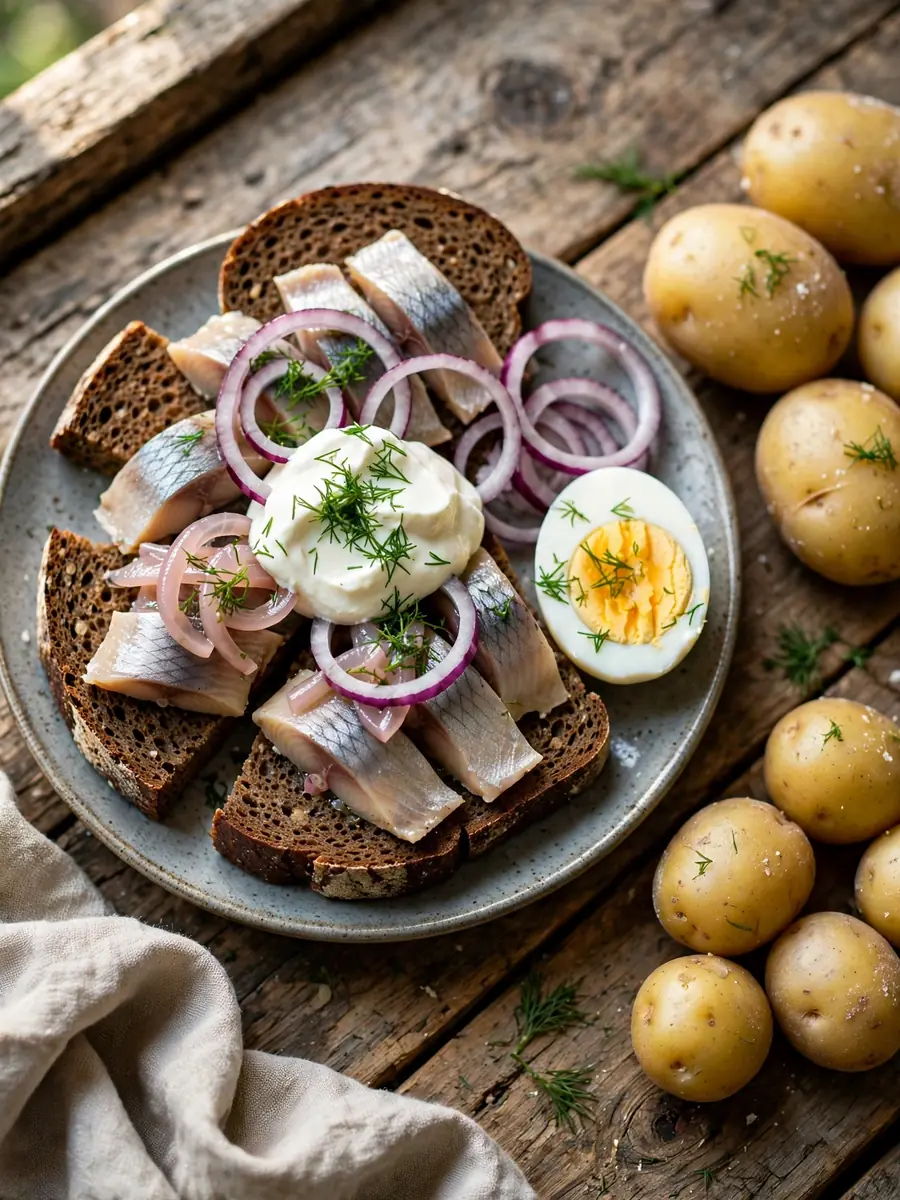
The same brine carries three classic variations. Make the base recipe first, then try one of these on the next jar.
Mustard Herring (Senapssill)
Stir 3 tablespoons of Dijon mustard and 1 tablespoon of honey into the cooled brine before pouring it over the fish. Add a pinch of dill. The mustard softens the vinegar edge and gives the jar a pale gold color.
Curry and Apple Herring
Add 1 teaspoon of curry powder and a thinly sliced small apple to the jar, and cut the sugar back to 2 tablespoons. The apple adds sweetness and crunch, and the curry gives the brine a warm color. This is the version to make if plain pickled herring tastes too sharp for you.
Beet and Horseradish Herring
Add a few slices of cooked beet and 1 tablespoon of prepared horseradish to the jar. The beet turns the brine pink and adds earthy sweetness, while the horseradish adds a clean heat. Serve this one with dark rye and hard-boiled egg.
These three cover the most common Swedish variations, and they are a good starting point if you want more adventurous global recipes from other food traditions.
How to Serve Pickled Herring
Serve it cold, straight from the jar, with boiled new potatoes, dark rye bread, and a spoonful of sour cream. Add raw red onion, chopped dill, and a hard-boiled egg on the side. That plate is the classic Swedish serving, and it needs nothing else.
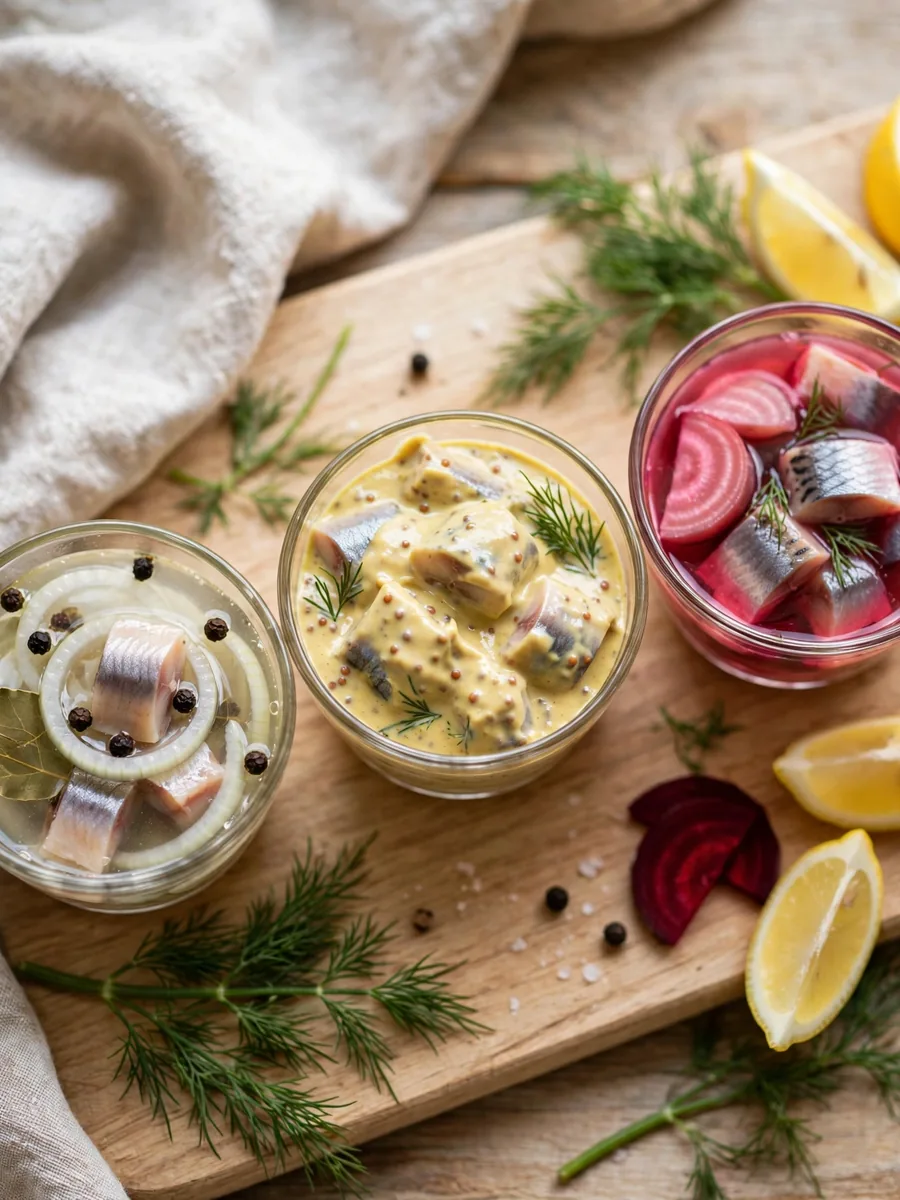
On a smorgasbord, herring goes first, before the cured salmon and the hot dishes. Put out two or three kinds in small bowls, with crispbread, butter, and aquavit or a cold lager nearby. For a lighter lunch, lay the herring on buttered rye as an open sandwich with onion rings and dill.
A Quick Appetizer From the Same Jar
A jar also works as a quick appetizer on its own. Set out toothpicks, rye crackers, and a small bowl of chopped onion, and let people build their own bites. It is the kind of starter that needs no cooking on the day, which is why it keeps showing up on holiday tables year after year.
Pickled herring belongs on a table with other traditional world cuisine dishes, and the same cold, keep-it-in-the-fridge logic shows up in other simple preserved fish dishes on this site. A small plate of herring, potatoes, and rye makes a full light meal on its own.
How Long Does Pickled Herring Last?
Homemade pickled herring keeps for up to 1 month in the fridge, kept cold and fully covered in brine. That is the conservative window for a home jar in a clear vinegar brine. Herring in a cream or mustard sauce keeps for less time, so eat sauce versions within 1 to 2 weeks.
USDA FoodKeeper gives glass-packed pickled herring in wine sauce 4 to 6 months in the fridge, but that figure covers sealed commercial packs, not an opened home jar. Use the shorter window for yours, and trust the date you made it over the date on any label.
Storage Times at a Glance
| Storage | Time |
|---|---|
| Unopened commercial jar | Use by the printed date, or within 4 to 6 months of purchase |
| Homemade, in clear brine | Up to 1 month, refrigerated |
| Homemade, in cream or mustard sauce | 1 to 2 weeks, refrigerated |
| Left at room temperature | No more than 2 hours, then discard |
| Freezer | Not recommended, texture turns soft |
Keep the jar at or below 40 degrees Fahrenheit, and always use a clean fork to take fish out. If the brine turns cloudy, the fish smells off, or the flesh feels slimy, throw the jar out. Smell alone is not a reliable test, so the calendar matters more than your nose.
The home pickling of fish guide from University of Minnesota Extension and Wisconsin Sea Grant covers freezing, brining, and storage in more detail.
Troubleshooting
Too Salty
Soak the fillets longer. An extra 12 hours in fresh cold water, changed once, takes the edge off. Do not skip the rinse before jarring, and do not add salt to the pickling liquid. The brine already has enough from the cure.
Mushy or Soft Fillets
Mushy herring almost always means the salt cure was skipped or cut short. The salt firms the flesh by pulling out water, and vinegar alone will not do that job. Next time, give the fillets the full overnight cure. For the current jar, there is no fix, so use it in a chopped herring salad where texture matters less.
Too Sour or Too Sweet
Taste the brine before you pour it. If it bites too hard, add a tablespoon of sugar and a splash of water. If it tastes flat and sweet, add a tablespoon of vinegar. Adjust the brine, not the fish, and write down what you changed so the next jar lands where you want it.
Frequently Asked Questions
How long before I can eat pickled herring?
Wait at least 24 hours after jarring. The flavor is better after 2 to 3 days, once the onion and spices have had time to work into the fish.
How long does homemade pickled herring last?
Up to 1 month in the fridge in a clear vinegar brine, kept cold and covered. Cream or mustard sauce versions last 1 to 2 weeks. Do not freeze it.
Can I reuse the pickling brine?
No. The used brine has fish juices and a lower acid level than the fresh mix. Make a new batch for each jar.
Is pickled herring healthy?
It is rich in omega-3 fatty acids, vitamin D, and vitamin B12, and a 100 gram serving has about 262 calories per USDA FoodData Central. It is also high in sodium, so treat it as a small plate rather than a main course.
What do you eat with pickled herring?
Boiled new potatoes, dark rye bread, sour cream, raw onion, dill, and hard-boiled egg are the classic partners. It also opens a smorgasbord as the first course.