Skip to content


A French 75 is a sparkling gin cocktail made with gin, fresh lemon juice, simple syrup, and Champagne, served in a flute with a lemon twist. Shake the gin, lemon, and syrup with ice, strain, and top with cold Champagne. It takes five minutes, makes one drink, and works for New Year’s Eve, weddings, and brunch.
The drink looks fancy and tastes bright, but the work is small: four ingredients, one shaker, one flute. Chill everything, shake the base hard, and pour the Champagne last so the bubbles survive.
This guide gives you one complete recipe, then the choices around it: which gin to buy, which bubbles to pour, the cognac version, five variations, a pitcher plan, and fixes for the four ways the drink goes wrong.
What a French 75 is
A French 75 is a gin cocktail topped with Champagne. The base is gin, fresh lemon juice, and simple syrup, shaken with ice and strained into a Champagne flute. Cold Champagne goes on top, and a lemon twist finishes the glass. The result is tart, lightly sweet, botanical, and full of bubbles.
The drink is named after the French 75mm field gun used in World War I, because it was said to have a kick as powerful as the artillery. The recipe was first published in 1922 by Harry MacElhone of Harry’s New York Bar in Paris, and Robert Vermeire published a version around the same time. Wikipedia traces that history, and notes the gin version as the modern standard.
It is a strong drink in a light glass. Cocktail-Recipes.com puts it at about 12 percent alcohol by volume after dilution, or roughly 1.1 standard drinks per serve. One flute is enough for a toast.
French 75 recipe at a glance
Five well-known versions of this drink use nearly the same ingredients, so the differences are small but they matter. The table compares them, so you can see why the lead recipe below uses half an ounce of syrup instead of three quarters.
| Version | Gin | Lemon juice | Simple syrup | Champagne | Calories |
|---|---|---|---|---|---|
| Lead recipe, This Silly Girl’s Kitchen | 1 1/2 oz | 3/4 oz | 1/2 oz | To top | 155 kcal |
| Cookie and Kate | 1 1/2 oz | 3/4 oz | 3/4 oz | 2 to 3 oz | Not stated |
| The Kitchn | 1 1/2 oz | 3/4 oz | 3/4 oz | 2 oz | Not stated |
| Wine Enthusiast | 1 1/2 oz | 3/4 oz | 3/4 oz | 2 oz | Not stated |
| VinePair | 1 oz | 3/4 oz | 1 oz | 3 oz | Not stated |
| Feast and West | 2 oz | 1/2 oz | 1/2 oz | 3 oz | 217 kcal |
The syrup is where the versions disagree most. The lead recipe uses half an ounce, the Kitchn and Wine Enthusiast use three quarters, and VinePair uses a full ounce. A quarter ounce of syrup is about 2 grams of sugar. Start with half an ounce, taste, and add more only if the lemon still bites.
The gin amount moves too, from 1 ounce at VinePair to 2 ounces at Feast and West, while most versions settle on 1 1/2 ounces. The lead recipe sits in the middle, so the gin shows up without drowning the lemon.
Classic French 75 recipe
Prep time: 5 minutes
Cook time: 0 minutes
Serves: 1 cocktail
Why this recipe leads the guide
This recipe leads because it is the simplest version that still tastes like a classic French 75, and its nutrition figure matches its own amounts. This Silly Girl’s Kitchen publishes 155 calories per cocktail for this exact recipe, so the number on this page belongs to the drink you are actually making.
The amounts are the ones most sources agree on: 1 1/2 ounces of gin, 3/4 ounce of fresh lemon juice, and Champagne to top. The only difference from the Kitchn and Wine Enthusiast versions is the syrup: half an ounce instead of three quarters, which keeps the drink crisp rather than sweet.
Ingredients
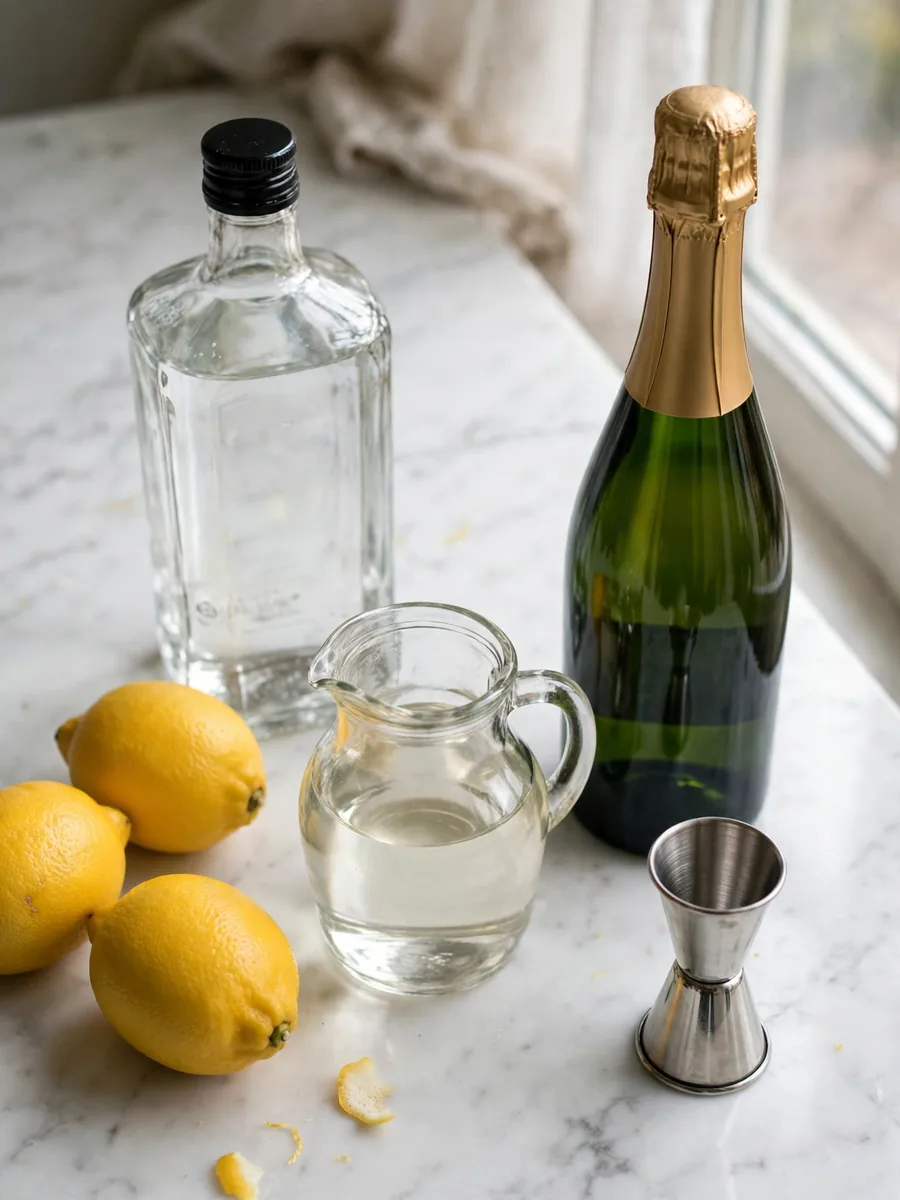
- 1 1/2 ounces gin
- 3/4 ounce fresh lemon juice, about 3/4 medium lemon
- 1/2 ounce simple syrup
- 2 to 3 ounces chilled Champagne, enough to top the glass
- Ice, for shaking
- Lemon twist, for garnish
Steps
- Chill a Champagne flute in the freezer for a few minutes, or fill it with ice water while you work. Chill the Champagne too.
- Cut a long strip of lemon peel with a vegetable peeler before you juice the lemon. Set the peel aside for the garnish.
- Juice the lemon until you have 3/4 ounce. Roll the lemon on the counter first to loosen the juice.
- Fill a cocktail shaker halfway with ice. Pour in the gin, lemon juice, and simple syrup.
- Shake hard for 15 to 20 seconds, until the outside of the shaker turns frosty.
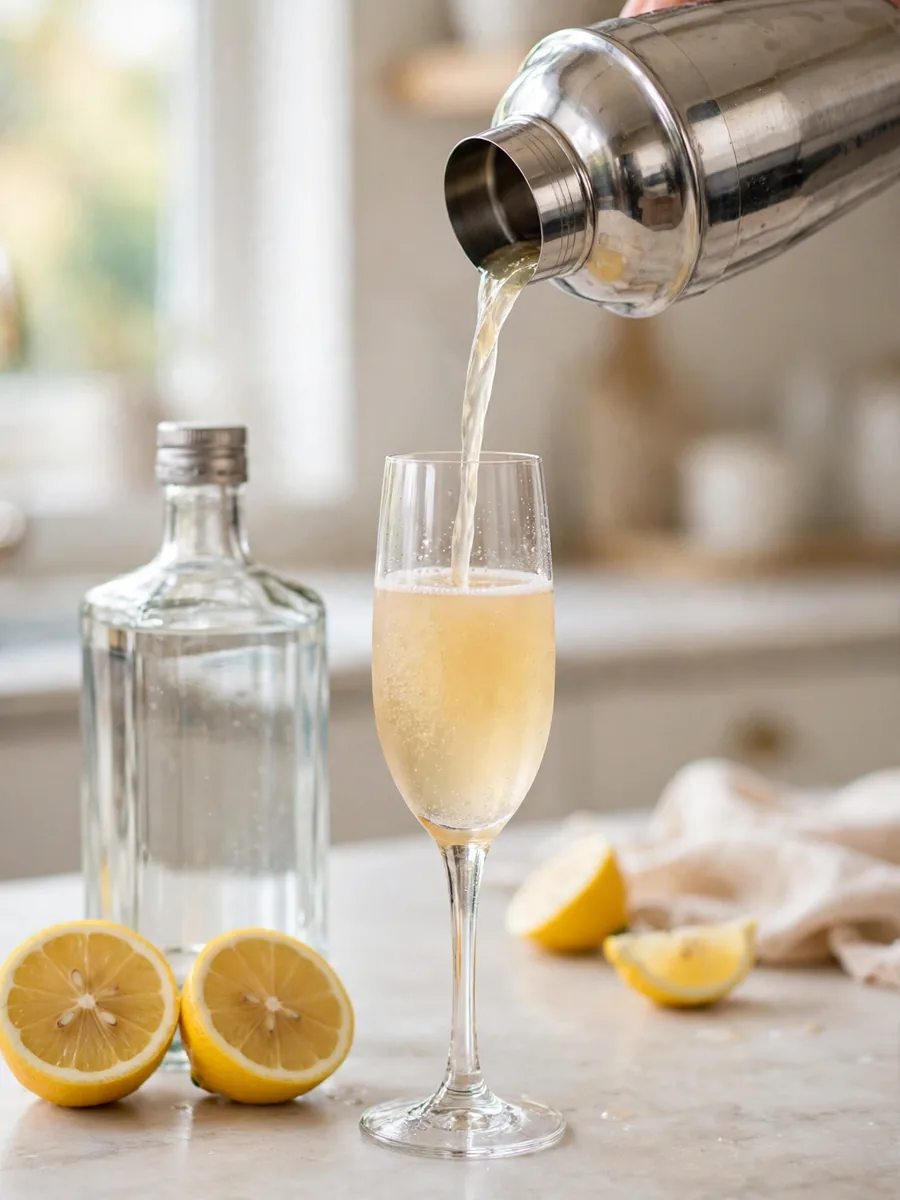
- Strain into the chilled flute. Pour the Champagne in slowly, down the inside of the glass, to keep the bubbles alive.
- Hold the lemon peel over the drink and twist it to release the oils onto the surface. Rub the outside of the peel around the rim, then drop it in. Serve right away.
One cocktail works out to about 155 calories, using the This Silly Girl’s Kitchen nutrition figure for this exact recipe. The figure covers the drink as written, with half an ounce of syrup. Feast and West lists 217 calories for its own version, which uses 2 ounces of gin, so do not reuse that number here.
How to make a French 75
The recipe card above gives the short version. This section covers the three moves that decide whether the drink comes out bright and bubbly or flat and dull.
Chill the glass and the Champagne
Cold glassware matters here, because the drink has no ice in the glass to keep it cold. Put the flutes in the freezer for a few minutes, or fill them with ice water while you mix. Keep the Champagne in the fridge until the moment you pour it.
A warm flute warms the drink and kills the bubbles faster. This Silly Girl’s Kitchen lists chilling the flute as its first tip, and the Kitchn and Long Island Wine and Spirits give the same advice. It costs nothing and it shows in the first sip.
Shake the base, never the bubbles
Shake only the gin, lemon juice, and simple syrup, with ice. Shake hard for 15 to 20 seconds, until the shaker feels frosty in your hands. That chill and the small amount of melt from the ice are what smooth the drink out.
Never shake the Champagne. It loses its fizz and can spray when you open the tin. Strain the shaken base into the flute first, then add the Champagne.
Top slowly and garnish last
Pour the Champagne slowly down the inside of the glass, not straight into the middle. A slow pour keeps the bubbles in the drink instead of in a foam head that fades in seconds. Two to three ounces tops a standard flute after the shaken base goes in.
Make the lemon twist before you juice the lemon, while the peel is still firm. Preppy Kitchen gives that tip, and it works: a flat lemon is hard to peel cleanly. Twist the peel over the drink, rub it around the rim, and drop it in.
Which gin to use
Any gin works in a French 75, but the bottle you pick changes the drink. London dry gin is the default. It brings juniper and citrus notes that stand up to the Champagne without fighting the lemon.
London dry gin
VinePair names Tanqueray and Bombay Sapphire as the London dry gins to reach for, and Cookie and Kate uses Beefeater as its standard dry gin example. These are the safe picks. They taste clean, herbal, and juniper forward, the classic French 75 flavor. If you already own a London dry gin, use it.
Other gins that work
Cookie and Kate mixes its French 75 with Hendrick’s, which carries cucumber and rose notes instead of heavy juniper. The Kitchn likes Gray Whale gin for its citrus and juniper character. Both are good choices if you find straight juniper too sharp.
Preppy Kitchen notes that a London or Irish dry gin, or a botanical infused gin such as cucumber, lavender, or citrus, all work in this recipe. Pick the gin for the flavor you want, and avoid navy strength gins, which can overpower the lemon and the bubbles.
Champagne or sparkling wine
The bubbles are half the drink, so the bottle matters. Use a dry sparkling wine. Brut Champagne is the classic choice, and a dry Prosecco or Cava works when Champagne is not on hand.
Real Champagne
Real Champagne comes from the Champagne region of France, and it is the classic topper for this drink. Feast and West calls it the most French choice, because its grapes come from that region. A brut Champagne is dry, crisp, and not too sweet, which keeps the cocktail balanced against the syrup.
Save the expensive bottle for sipping on its own. A decent brut at a fair price mixes just as well in a French 75, because the lemon and gin carry the flavor and the Champagne carries the bubbles. Chill it well before you open it.
Prosecco and Cava
A dry Prosecco or Cava is a fair swap. The Kitchn calls for a dry sparkling wine such as brut Champagne, and Armchair Sommelier lists a traditional method Cava beside brut Champagne in its IBA spec.
Check the label before you buy. Prosecco ranges from dry to sweet, so look for brut or extra dry rather than a sweet bottle. A sweet sparkling wine makes the drink cloying, because the syrup already adds sweetness. Keep it dry and the lemon stays bright.
The cognac version
The gin version is the modern standard, but the early Paris version used cognac. If you like a rounder, warmer drink, the cognac French 75 is worth making. It tastes softer and a little richer, with the same lemon and bubbles on top.
Courvoisier version
Courvoisier publishes a cognac French 75 with 1 1/2 parts VS cognac, 1/2 part simple syrup, 1/2 part lemon juice, and 4 parts brut Champagne. Build it in a shaker without the Champagne, shake, and strain into a Double Old Fashioned or Collins glass over fresh ice. Top with Champagne and stir lightly.
Arnaud’s version
Arnaud’s in New Orleans, home of the French 75 Bar, uses a lighter hand: 1 1/2 ounces of Courvoisier VS cognac, 1 teaspoon of freshly squeezed lemon juice, 1/4 teaspoon of simple syrup, and 2 3/4 ounces of Champagne. Shake only long enough to chill, pour into a frosted tulip glass, and top with Champagne.
The two versions disagree on the lemon and syrup, so treat the Courvoisier ratio as the standard and the Arnaud’s ratio as the drier, more spirit forward pour. Either way, use a VS cognac, not a VSOP, so the lemon still shows. Ina Garten makes the same drink with VSOP cognac on her show, but the VS keeps the balance closer to the gin version.
French 75 variations
Change one thing at a time, and keep the gin, lemon, and syrup ratio the same. One swap is enough to make a new version.
Vodka French 76
Swap the gin for vodka in the same amounts. The drink turns smoother and more neutral, and some bars call it a French 76. This Silly Girl’s Kitchen gives the swap as its first variation. Use it when a guest does not like gin.
Berry French 75
Muddle 3 or 4 raspberries or strawberries in the shaker before you add the gin, lemon, and syrup. Shake as usual, double strain into the flute, and top with Champagne. The drink turns a soft blush color and picks up a berry note behind the lemon. This Silly Girl’s Kitchen lists it as a favorite variation.
Grapefruit French 75
Swap half the lemon juice for fresh grapefruit juice, so the base uses 3/8 ounce of each. The grapefruit softens the sharp edge of the lemon without changing the method. This Silly Girl’s Kitchen names grapefruit as its citrus swap.
Elderflower French 75
Replace the simple syrup with 1/2 ounce of St-Germain elderflower liqueur. Cookie and Kate suggests the swap, which adds sweetness and a floral note in one pour. Keep the lemon as it is, since the elderflower needs the tartness to stay balanced.
Non-alcoholic French 75
Use a zero proof gin and a non-alcoholic sparkling wine in the same amounts. Shake the base with ice, strain into a flute, and top with the sparkling wine. This Silly Girl’s Kitchen lists the mocktail version among its variations. Make it when some guests are not drinking. The lemon twist still matters, since it carries most of the aroma.
How to scale it for a party
A French 75 is a fast drink for one person and a slow drink for twelve, because each glass gets shaken on its own. Armchair Sommelier flags the same problem for the midnight toast. The fix is to mix the base ahead and shake it in batches.
Multiply the gin, lemon juice, and simple syrup by the number of drinks, and stir the base together in a pitcher. Chill it in the fridge for up to a few hours. When guests are ready, shake the base in batches of four drinks, strain into flutes, and let each guest top their own glass with Champagne.
| Drinks | Gin | Lemon juice | Simple syrup | Champagne |
|---|---|---|---|---|
| 1 | 1 1/2 oz | 3/4 oz | 1/2 oz | 2 to 3 oz |
| 4 | 6 oz | 3 oz | 2 oz | About 10 oz |
| 8 | 12 oz | 6 oz | 4 oz | About 20 oz, one 750 ml bottle |
| 12 | 18 oz | 9 oz | 6 oz | About 30 oz, two 750 ml bottles |
Do not add the Champagne to the pitcher. Bubbles go flat in a pitcher within minutes, and a flat French 75 is the most common party failure. This Silly Girl’s Kitchen gives the same rule for its batch version: mix the base ahead, shake in batches, and top each glass at serving time.
Set up the bar
Set the bottles, flutes, and a small bowl of lemon twists on the bar, and let guests finish their own drinks. That keeps every glass bubbly, and it frees you from shaking all night. For a bigger spread, our guide to Christmas cocktails covers twenty holiday drinks, and our party cocktails include frozen machine drinks for guests who want something cold and sweet.
Troubleshooting
Five problems cover almost every failed French 75. The table gives the quick fix for each, and the sections below explain the four most common ones.
| Problem | Likely cause | Fix |
|---|---|---|
| Flat, no bubbles | Champagne added too early, or shaken with the base | Pour Champagne last, slowly down the side of the glass |
| Too sour | Lemon heavy, or syrup light | Add 1/4 oz more syrup, or use 3/4 oz syrup next time |
| Too sweet | Syrup heavy, or sweet sparkling wine | Cut syrup to 1/4 oz and switch to a brut Champagne |
| Tastes weak or watery | Shaken too long, or old ice | Shake 15 to 20 seconds only, with fresh ice |
| Cloudy or pulpy | Lemon pulp in the base | Double strain through a fine mesh strainer |
Flat, no bubbles
The Champagne went in too early, or it went into a warm glass. Pour it last, slowly, into a chilled flute, and serve the drink right away. A French 75 left standing for ten minutes loses its fizz no matter how well you made it.
Too sour
Lemons vary, and a sharp lemon can push the drink past tart. Add a quarter ounce more simple syrup and stir gently, or use three quarters of an ounce of syrup the next time you make it. That is the Kitchn ratio.
Too sweet
Too much syrup, or a sweet sparkling wine, makes the drink cloying. Cut the syrup to a quarter ounce and check the bottle label for brut or extra dry. If the drink is already made, a squeeze of extra lemon juice can pull it back.
Tastes weak or watery
Shaking past twenty seconds melts too much ice into the base, and old ice from a freezer tray melts faster than fresh cubes. Shake for 15 to 20 seconds only, with fresh ice, and strain as soon as the shaker turns frosty.

What to serve with a French 75
A French 75 suits salty snacks and light bites, because the bubbles and lemon cut through richness. Set out marinated olives, salted nuts, cheese, and fruit. This Silly Girl’s Kitchen serves its French 75 beside candied grapes, which give a sweet bite against the tart drink.
For a New Year table, plan one lead drink and two backups. This French 75 leads, and our buttery nipple shot gives guests a small layered shot. Our holiday cocktails cover the creamy peppermint side, and our classic cocktails include the Montague drink.
For guests who prefer brown spirits, our guide to how do you make the drink old-fashioned covers the whiskey classic. Serve the French 75 first, while the Champagne is cold and the glasses are chilled.
Storage and make ahead
You cannot store a finished French 75, because the Champagne goes flat within minutes. Store the parts instead. Simple syrup keeps in a sealed jar in the fridge for up to two weeks, so make it several days before a party.
Mix the gin, lemon juice, and simple syrup base a few hours ahead and keep it chilled in the fridge. This Silly Girl’s Kitchen gives the same make-ahead rule in its FAQ. Wait to add the Champagne until you are ready to serve.
Lemons keep best whole, so juice them the day you serve the drinks. A cut lemon dries out in the fridge, and bottled lemon juice tastes flat in this cocktail. Fresh juice is the single biggest difference between a bright French 75 and a dull one.
Frequently asked questions
Why is it called a French 75?
It is named after the French 75mm field gun used in World War I, because the drink was said to have a kick as powerful as the artillery. The recipe was first published in 1922 by Harry MacElhone of Harry's New York Bar in Paris.
Can I use Prosecco instead of Champagne?
Yes. A dry Prosecco or Cava works in place of Champagne, and several sources name both as options. Keep it dry: look for brut or extra dry on the label, because a sweet sparkling wine makes the drink cloying.
What is the difference between a French 75 and a Tom Collins?
Both are gin and lemon drinks, but a French 75 is topped with Champagne and served in a flute, while a Tom Collins is topped with soda water and served over ice in a tall glass. The French 75 is stronger and more celebratory.
Can I make French 75 cocktails ahead of time?
Yes. Shake the gin, lemon juice, and simple syrup a few hours ahead and keep the base chilled in the fridge. Wait to add the Champagne until you are ready to serve, so the bubbles stay fresh.