
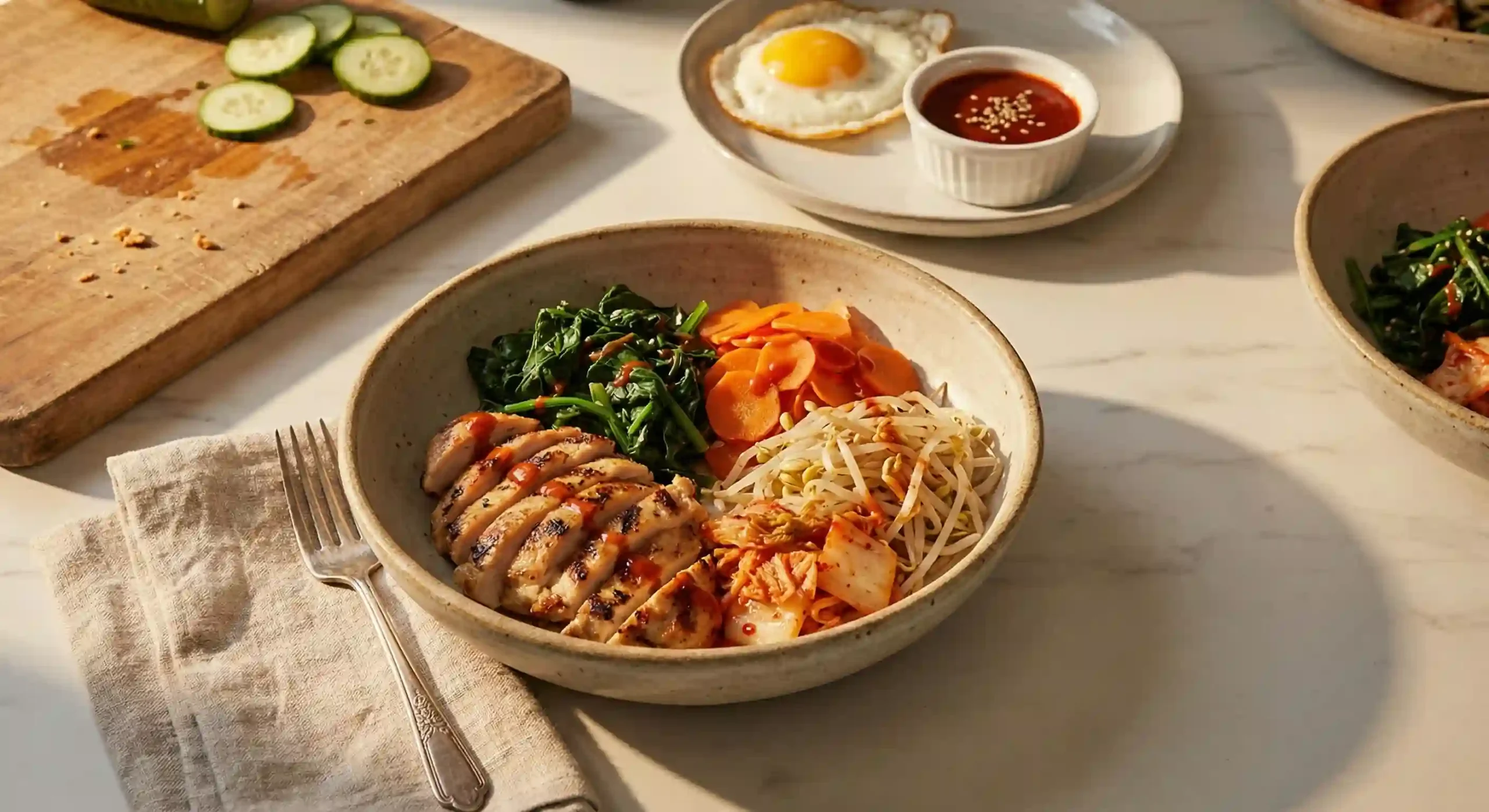
Introduction
If you typed bibbop chicken recipes, you’re likely craving a fast bowl that hits salty, sweet, and spicy in one bite. I’ve got you. I’m going to show you a Bibibop copycat chicken bowl and a chicken bibimbap version. Both are like a Korean rice bowl you can make on a regular weeknight. This is also a build-your-own-bowl setup. You pick the base, pick the toppings, then finish with the sauce. It’s dinner that bends to your mood, not the other way around.Quick Start – Are You Looking for Bibibop or Bibimbap?
If you see “bibbop,” it’s usually a misspelling of “Bibibop,” which points to a build-your-own restaurant bowl. “Bibimbap” is a classic Korean rice bowl with separate toppings and a spicy sauce. The main clue is the sauce. Sesame ginger teriyaki and yum yum sauce point to a copycat bowl. Meanwhile, gochujang suggests bibimbap.Flavor profiles at a glance
Here’s the taste map. This is how you know you’re on the right recipe.- Copycat bowl vibe: sweet and savory with a creamy finish from yum yum sauce. It also has the glossy pull of sesame ginger teriyaki.
- Bibimbap vibe: spicy-sweet-tangy heat from gochujang, a fermented chile paste. It is balanced with sesame oil, soy sauce, garlic, and ginger.
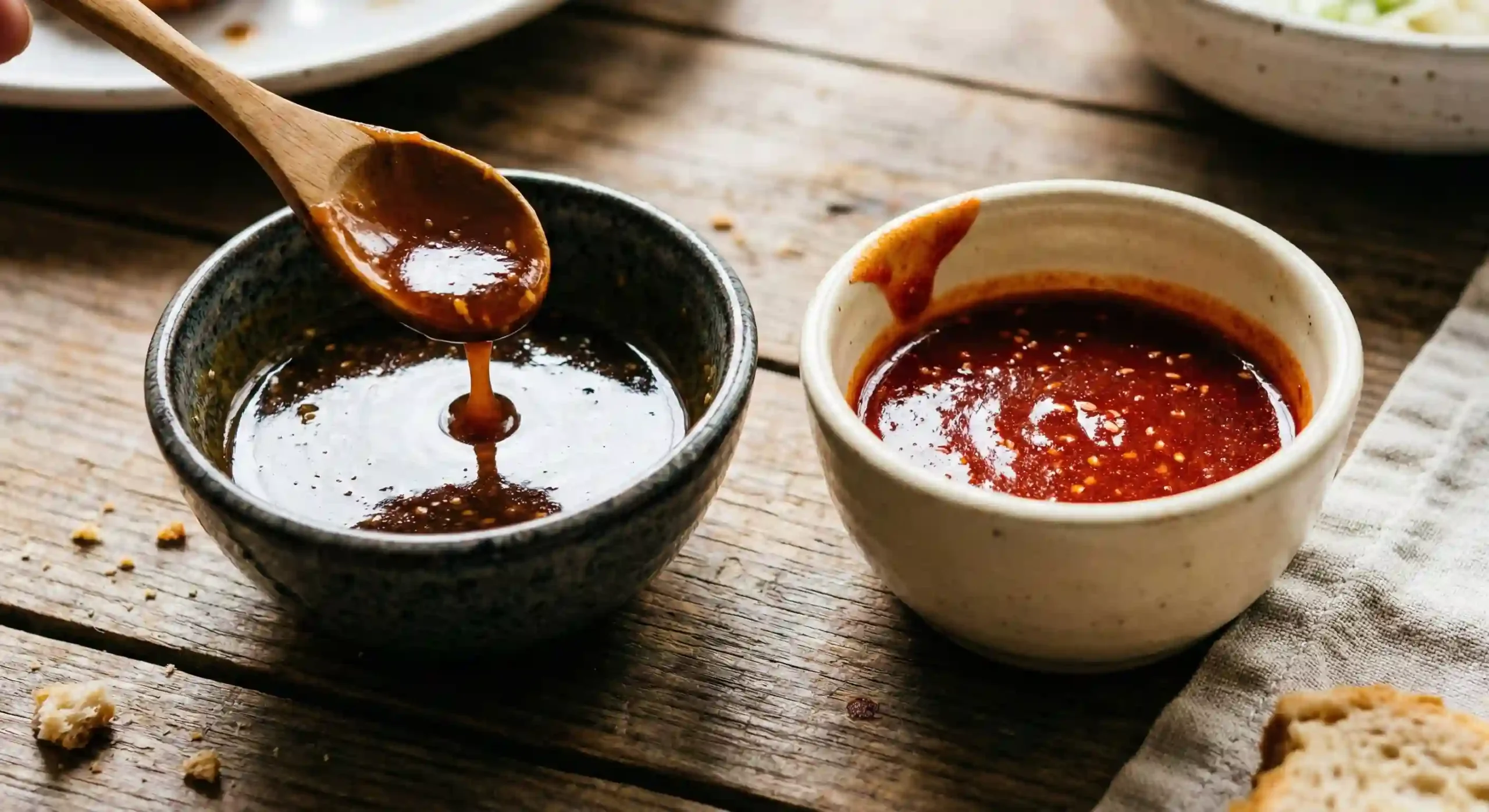
Heat scale (1-5) for your bibimbap sauce tweaks
| What you change | Heat level after change (1-5) | What it tastes like | Quick fix if it’s too hot |
| Add gochujang (fermented chile paste) | 3 → 5 | hotter, deeper Chile flavor, thicker sauce | add a little sugar + a splash of vinegar + a spoon of water |
| Add soy sauce | stays 2 → 3 | saltier, more savory, more umami | Add vinegar or water to soften the salt |
| Add sesame oil | stays 2 → 3 | more nutty aroma, richer finish | Add vinegar to keep it bright |
| Add more garlic + ginger | stays 2 → 3 | sharper bite, more aroma | Add a bit more sugar to smooth it |
How I’d use it in the article:
Start your sauce at “3” (medium) with gochujang, then modify one thing at a time. If you want “1-2,” use less gochujang and lean on soy sauce, sesame oil, garlic, and ginger for flavor.
The Bowl Blueprint (Works for All Bibbop-Style Chicken Bowls)
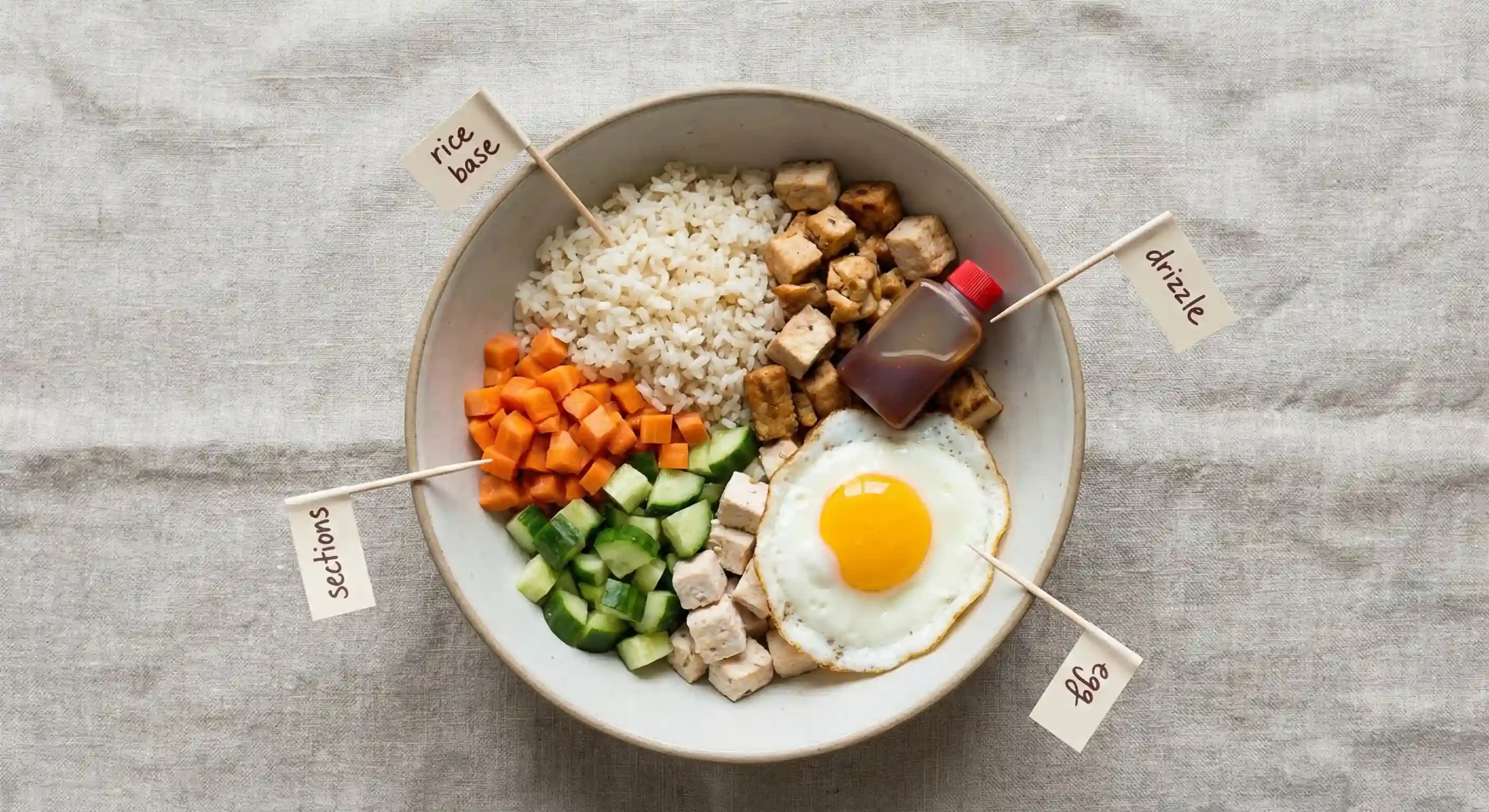 Start with a rice base. Add toppings in clean sections so every mouthful tastes distinct. Finish with a drizzle, add an egg, then mix before eating once you’re ready.
Base options
Choose the base that fits your day. Each one alters the bowl’s texture and how the sauce hits.- white rice for a soft, neutral base
- short-grain rice if you want a stickier, bowl-style bite
- Purple rice, if you want a nuttier base and a darker look
- cauliflower rice (variation) when you want a lighter bowl
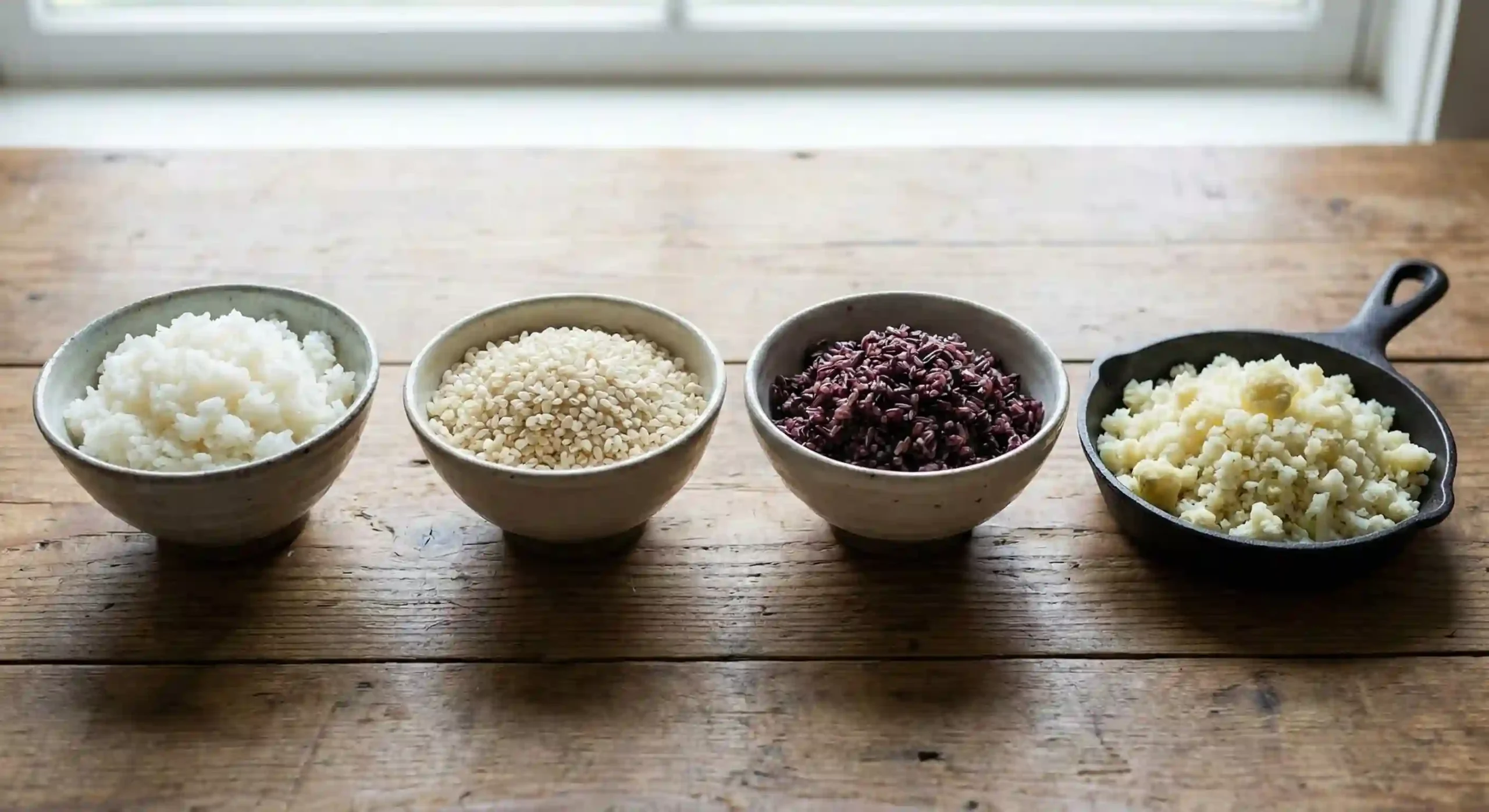
Cook time comparison (typical)
| rice base | Typical active cook time | Rest/steam time | Notes |
| white rice | ~20 minutes | 5-10 minutes (covered) | Standard stovetop simmer method. |
| short-grain rice | ~15-20 minutes + 20-30 minutes soaking | 10 minutes (covered) | Soaking helps texture and even cooking. |
| purple rice | ~25 minutes | 5-10 minutes (covered) | Often made by mixing white rice with black rice. |
| cauliflower rice (variation) | ~3-5 minutes sauté | none | Cook just until hot, so it doesn’t go soft. |
Times vary by pot, burner intensity, and rice brand. Use the texture test: delicate grains, no pooled water.
Toppings (hot vs cold)
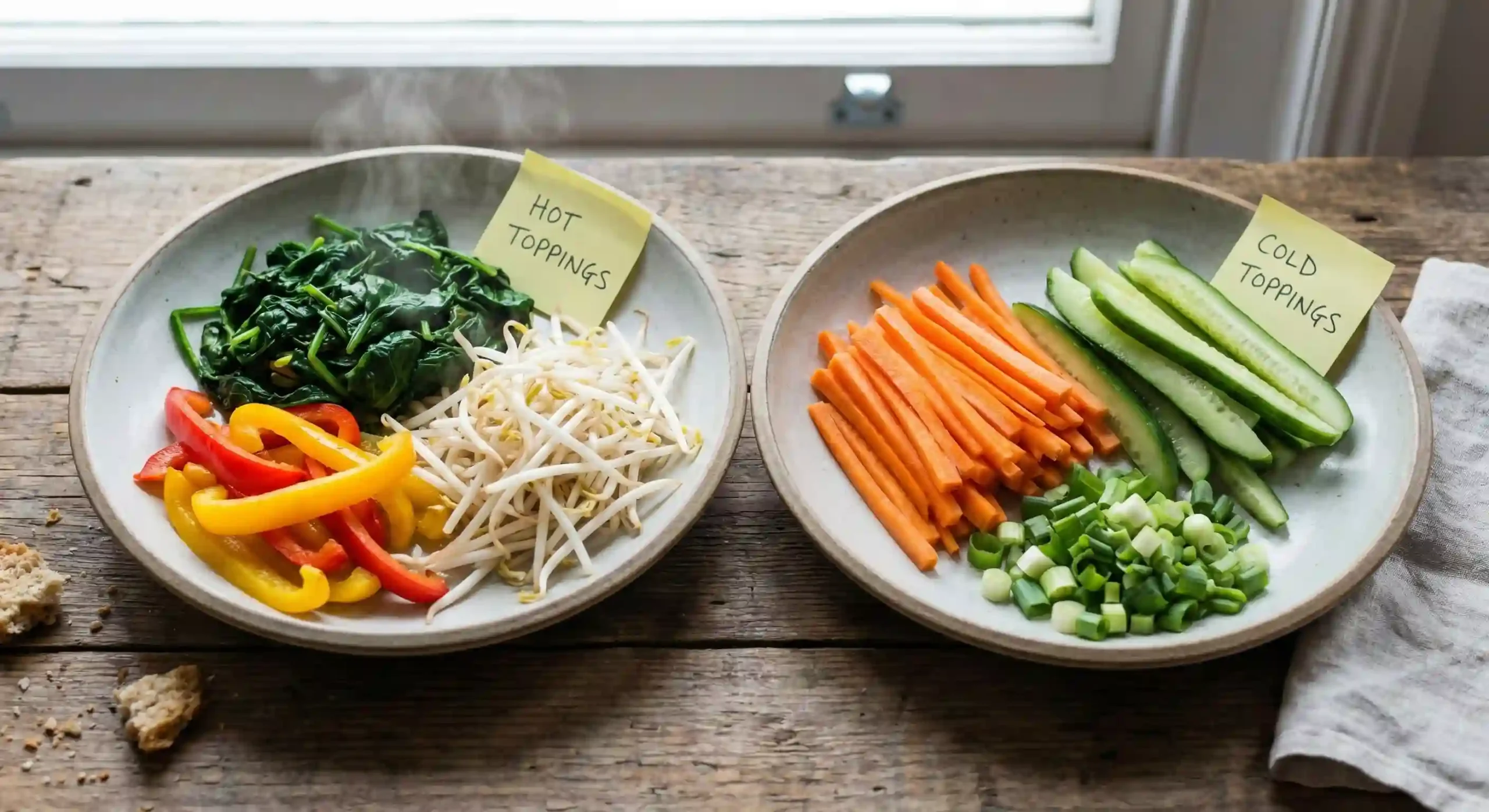 Think of toppings like a playlist. You need contrast, not noise.
- Hot toppings you can quick-cook: spinach, bell pepper, and lightly warmed bean sprouts.
- Cold toppings for crunch: matchstick carrots, cucumber, and green onion.
Texture checklist (so it tastes like a restaurant bowl)
You want crunchy plus toasty. Keep warm toppings on one side and chilled toppings on the other. Nail the sauce timing by sprinkling shortly before you eat, so you keep crisp textures instead of making everything soft.Recipe 1 – Copycat Bibibop Chicken Bowl (Restaurant-Style)
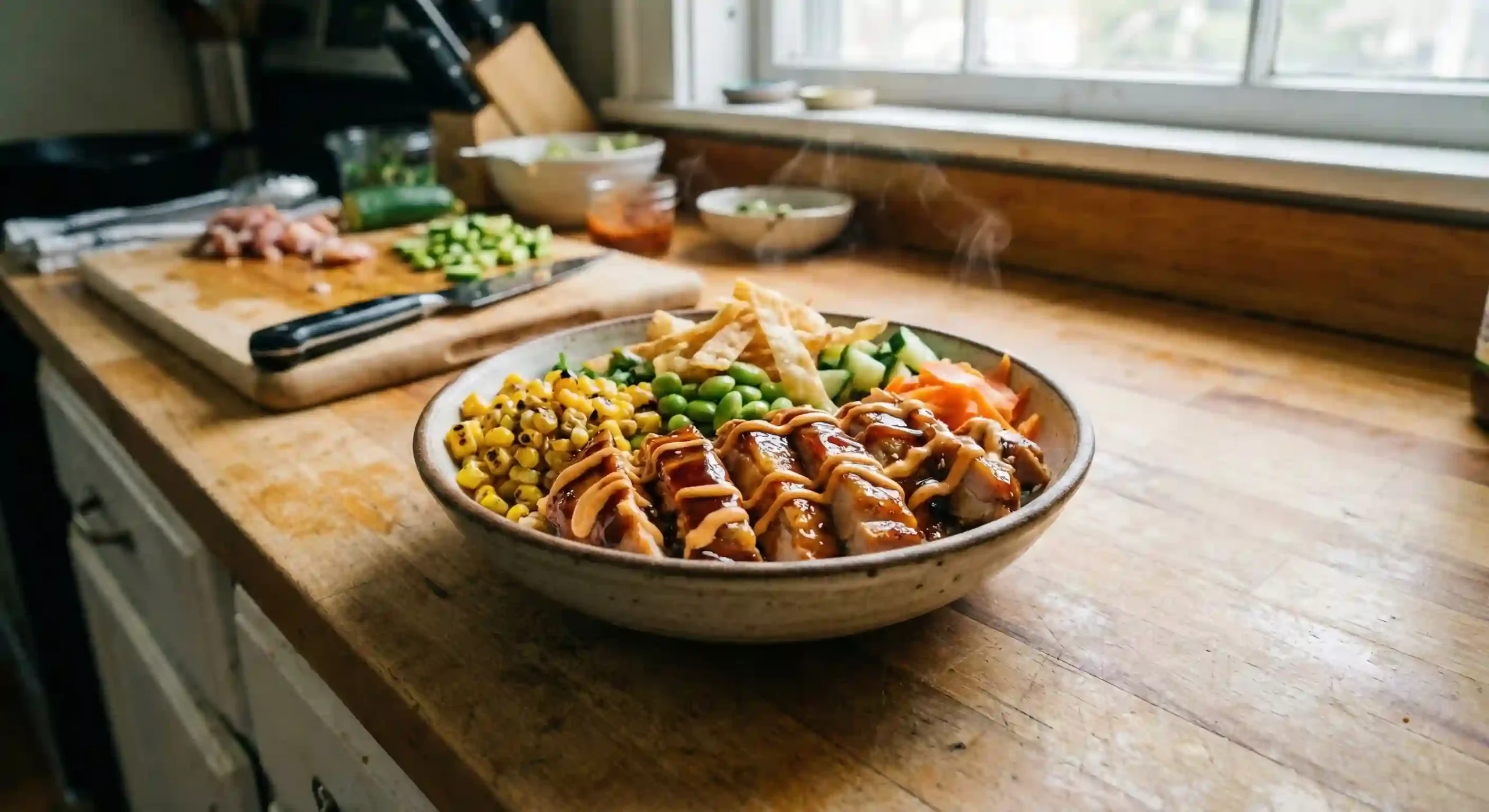 This is the “weeknight win” variation. You’ll get that sticky-sweet taste from sesame ginger teriyaki sauce, then chill it down with yum yum sauce. Give the chicken time to marinate for 30 minutes, then grill or bake it until it reaches 165°F.
Chicken is done when a food thermometer shows 165°F (74°C) in the thickest part of the meat. This applies to whole chicken, breasts, thighs, wings, and ground poultry. Pull it off the heat once it hits 165°F.
Chicken (copycat method)
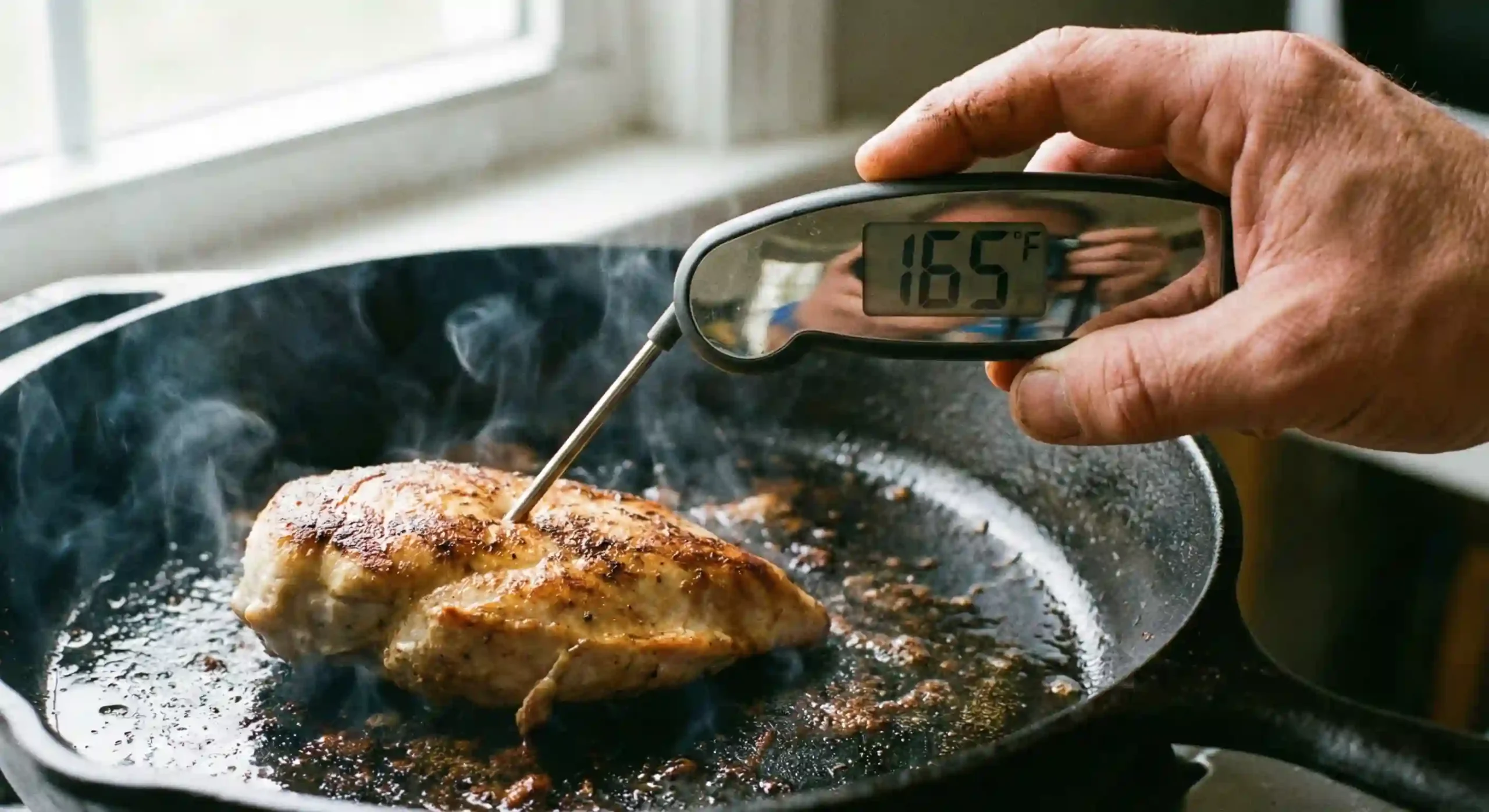 Start simply. Season the chicken with salt and pepper, then pour your marinade. Cook it with grill marks or bake at 400°F till the internal temperature is 165°F.
Quick method
Start simply. Season the chicken with salt and pepper, then pour your marinade. Cook it with grill marks or bake at 400°F till the internal temperature is 165°F.
Quick method
- Season with salt and pepper.
- Coat in marinade and rest marinate 30 minutes.
- Grill for color and grill marks, or bake at 400°F on a sheet pan.
- Check the internal temperature to 165°F before slicing.
Homemade Sesame Ginger Teriyaki (Copycat option)
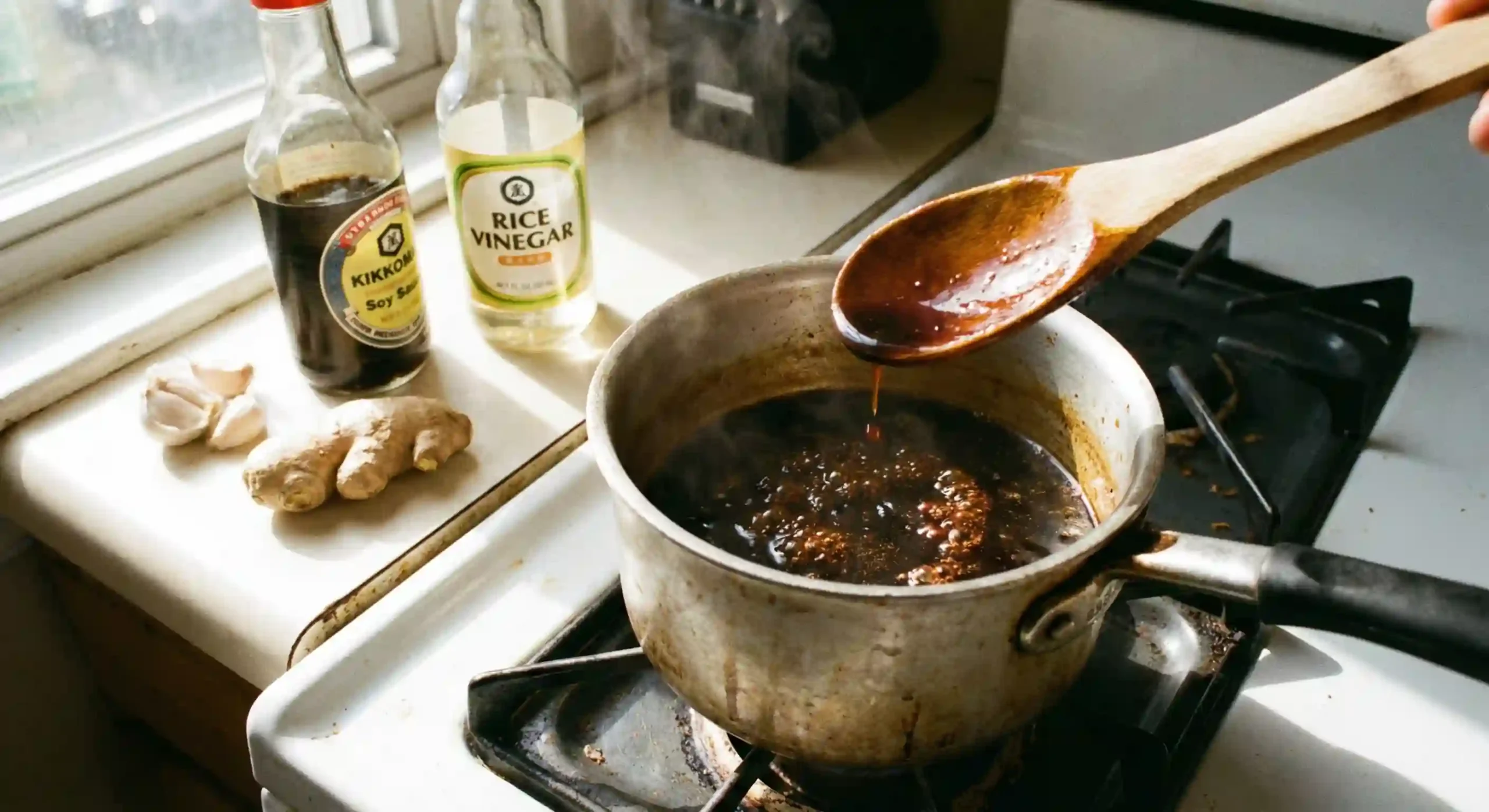 If you want the “closest at home” version, make this sauce. It’s quick, and you can handle the sweet and salty balance.
What you need
If you want the “closest at home” version, make this sauce. It’s quick, and you can handle the sweet and salty balance.
What you need
- soy sauce
- rice vinegar
- fresh ginger
- fresh garlic
- sugar
- thickening (cornstarch/xanthan alternative)
- Warm soy sauce + rice vinegar + sugar until the sugar melts.
- Add grated ginger and garlic.
- Thicken with cornstarch slurry, or use a xanthan alternative if you want a low-carb option.
- Adjust to taste-match: more sugar for sweeter, more rice vinegar for brighter, more soy sauce for deeper savory.
Homemade Yum Yum Sauce (Copycat option)
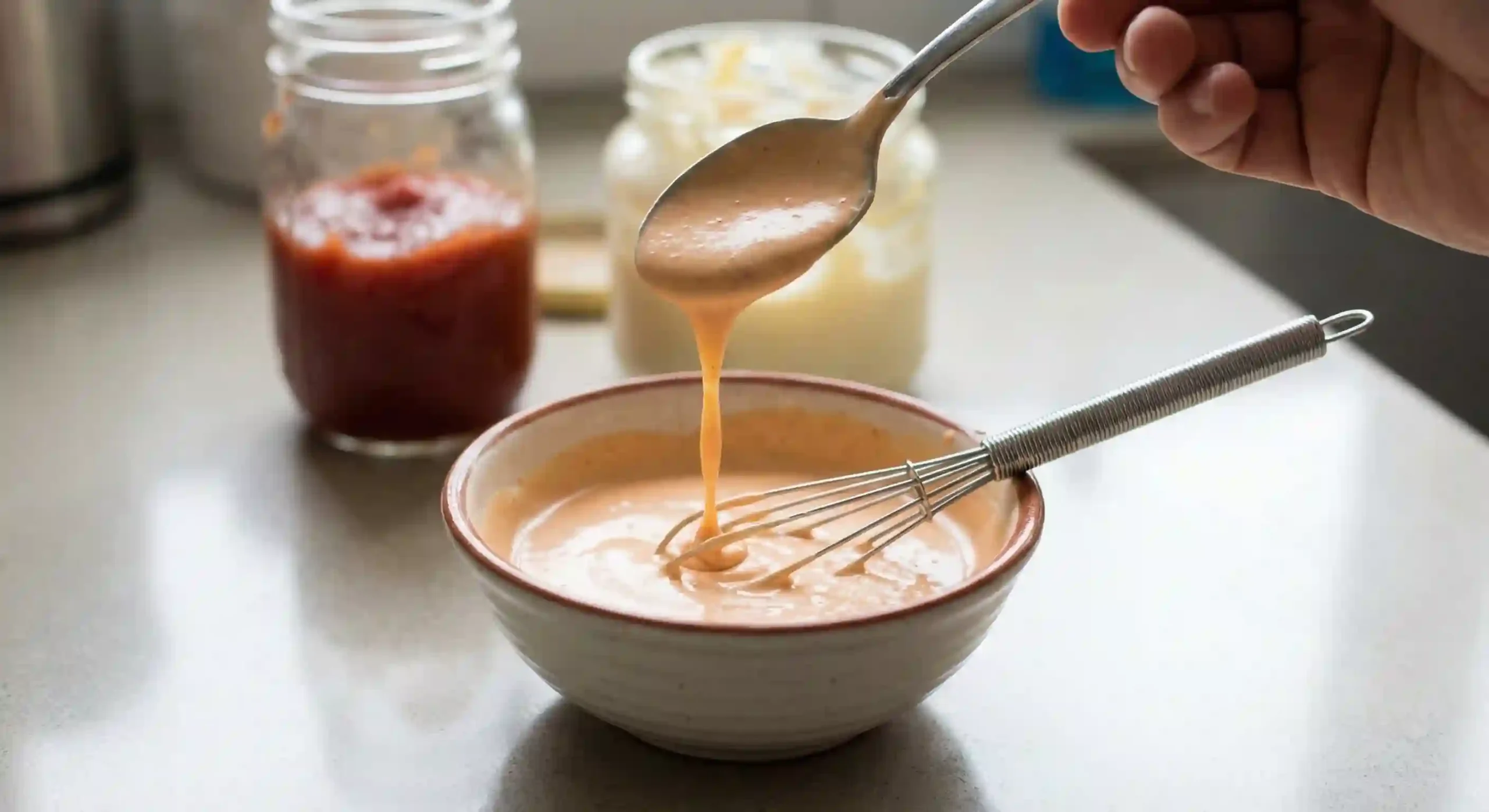 This one selects the “too sweet” problem. It makes the bowl taste like takeout, without being rich.
What you need
This one selects the “too sweet” problem. It makes the bowl taste like takeout, without being rich.
What you need
- mayo
- ketchup
- rice vinegar/mirin
- garlic powder
- onion powder
- water to thin (consistency)
- Stir mayo + ketchup until smooth.
- Add rice vinegar/mirin for tang.
- Season with garlic powder and onion powder.
- Add water to thin (consistency) until it drizzles, not blobs.
Assembly (Bibibop-style)
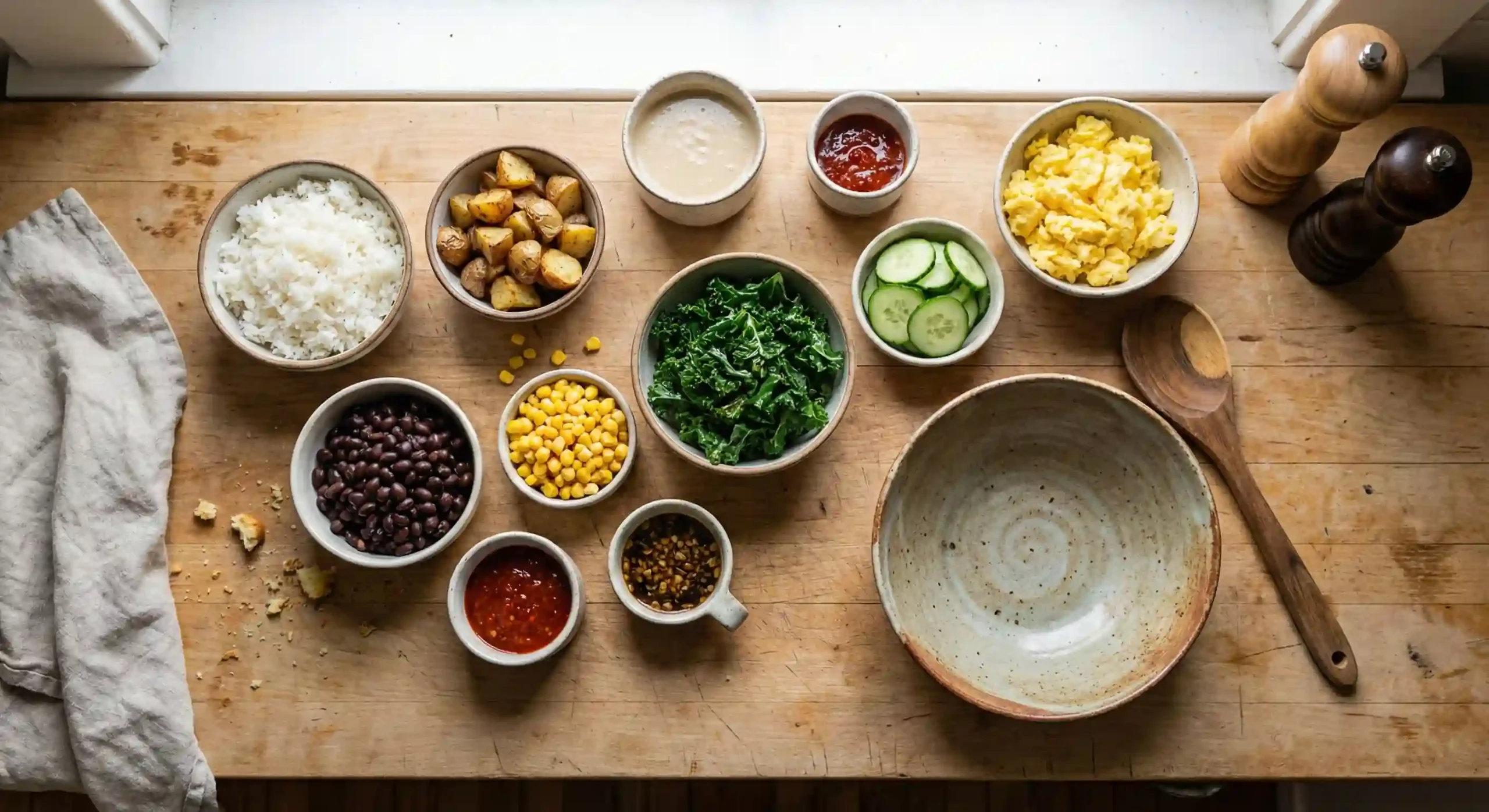 This is where it clicks. You’re not simply throwing a salad. You’re making a bowl that eats like a meal.
- Start with rice.
- Add potatoes, black beans, and corn for that Bibibop-style comfort base.
- Add kale and cucumber for contrast and crunch.
- Top with scrambled eggs.
- Finish and drizzle sauce with sesame ginger teriyaki sauce and yum yum sauce.
Recipe 2 – Chicken Bibimbap (Classic Skillet Method)
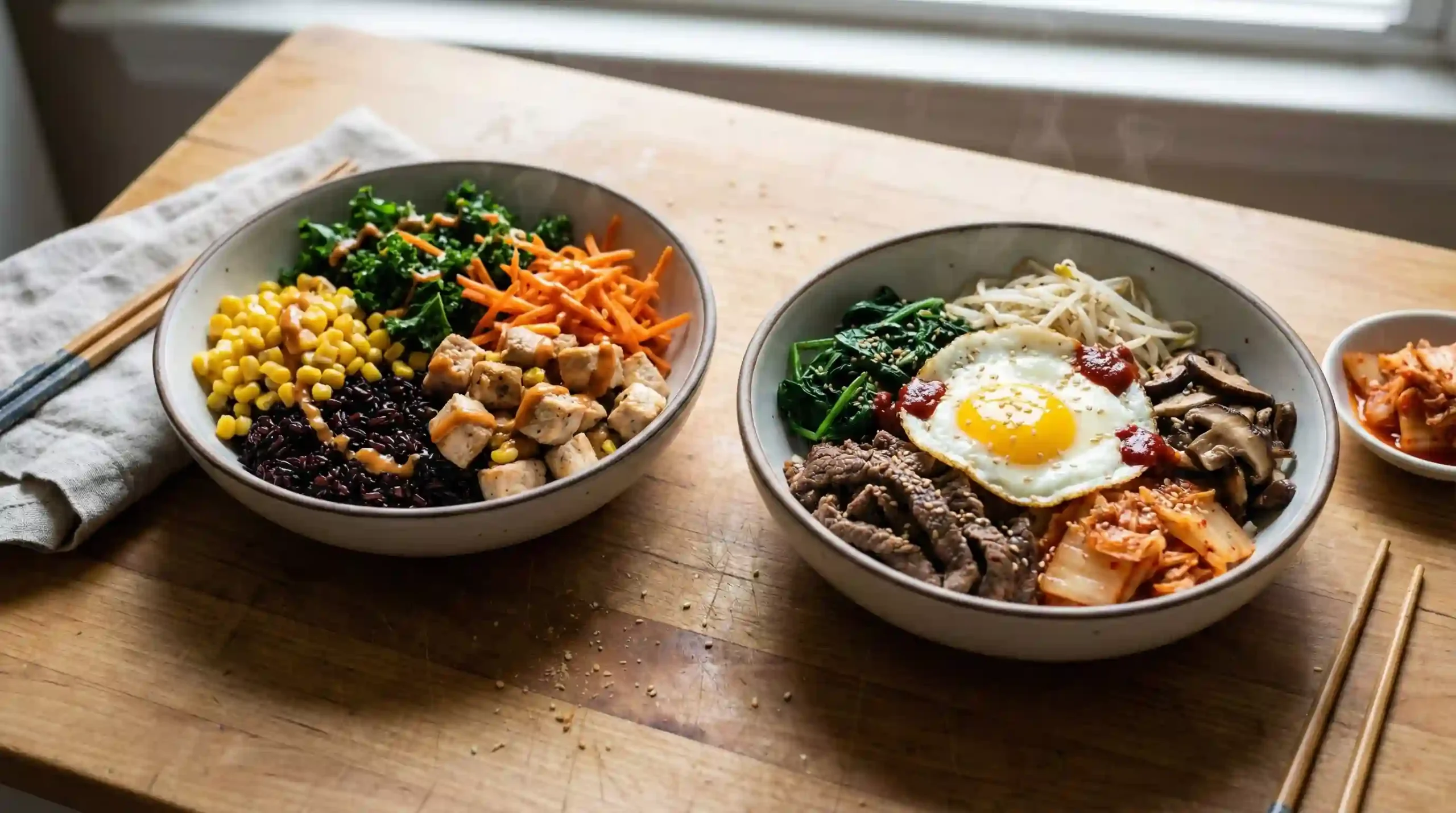 This one is the masterpiece. You make a bowl in tidy piles, then sauce it and mix it. The key is gochujang sauce with sesame seeds and rice wine vinegar. Use a quick method to cook vegetables briefly and top them with a fried egg.
Different brands of gochujang can taste different. Some may be milder, while others are hotter. Check the package for a heat indicator, if it has one. Start with a small amount, then add more if needed
Bibimbap sauce (gochujang-based)
This sauce is the engine. Make it once, and the whole bowl tastes right. What goes in- Gochujang
- Soy sauce
- Sesame oil
- Garlic
- Vinegar
- Sugar
- Sesame seeds (ratio/tuning)
- Want it hotter? Add more gochujang.
- Want it brighter? Add more vinegar or rice wine vinegar.
- Want it smoother? Add a small splash of water, then finish with sesame oil.
- Want it rounder? Add a pinch more sugar, then stir in sesame seeds.
Quick-cook toppings workflow (one pan, fast)
This is the trick that keeps the bowl fresh. You cook fast, then stop. That’s how the colors stay sharp.- heat skillet with a small slick of oil.
- Add one vegetable at a time and toss for 1 minute.
- For greens, wilt spinach fast and don’t overwork it.
- Remove to a dish after each topping.
- Keep everything in separate sections so you can build the bowl clean.
Egg options
You’ve got options. Pick the one that fits your mood.- fried egg: if you want a rich yolk that turns into sauce
- sunny-side: if you want a soft yolk and gentle set whites
- scrambled (swap): if you want a mild, kid-friendly topping
Recipe 3 – Korean-Style Spicy Gochujang Chicken (Oven Roast + Broil Finish)
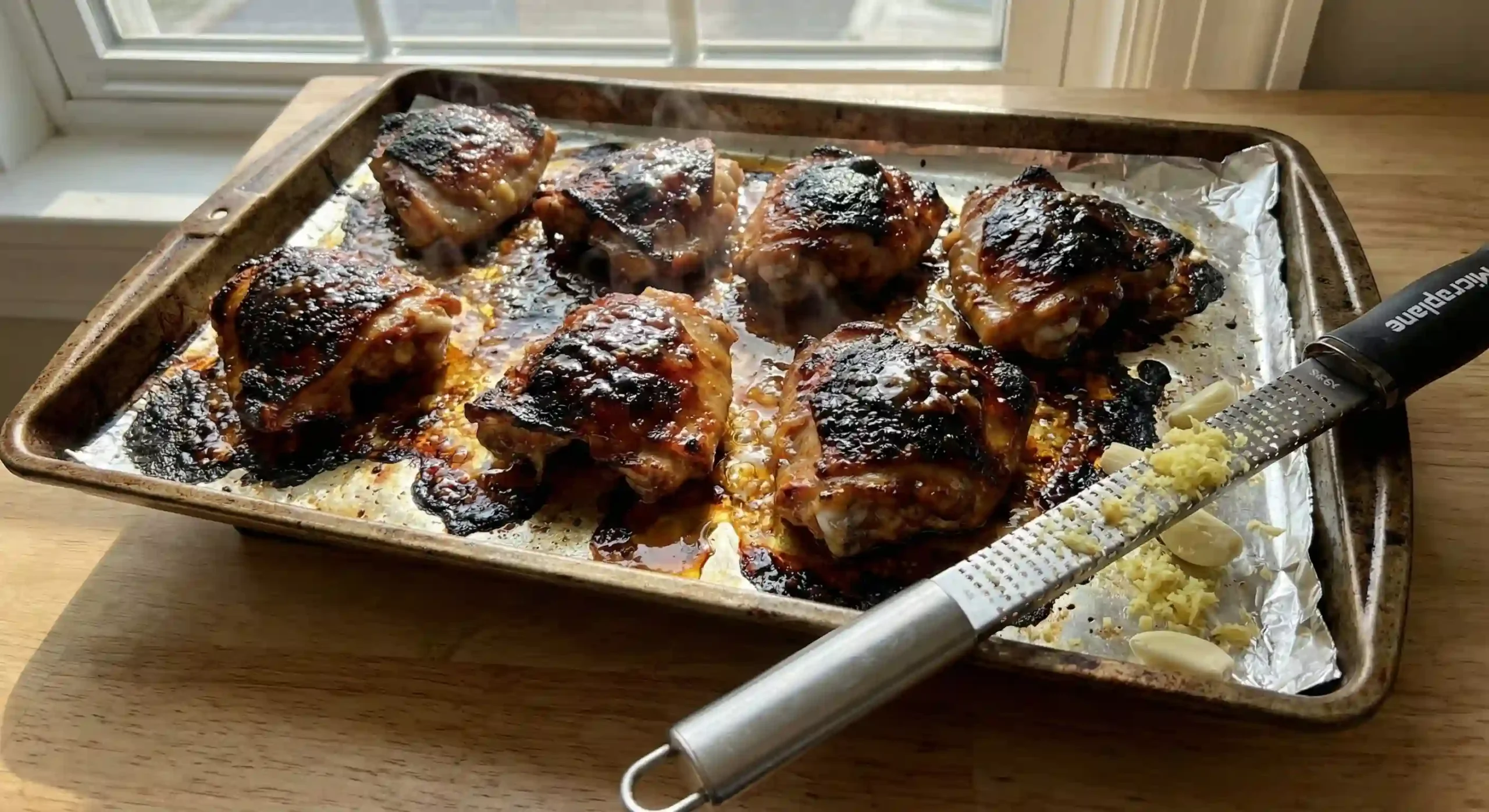 This one is all about bold chicken. I like chicken thighs here because they stay juicy under high heat. You will mix a gochujang marinade. Then, grate aromatics using a Microplane. Next, roast or bake the dish. Finish by broiling to get sticky edges. Finally, adjust to taste.
Why I use chicken thighs: Cooked roasted chicken breast is leaner. It has about 3.57 grams of fat per 100 grams. In contrast, roasted chicken thighs are fattier. They contain about 9.73 grams of fat per 100 grams. That extra fat helps the meat stay juicy and more forgiving in the oven.
Marinade and spice slider (mild → hot)
This marinade is your dial. Turn it slowly, and you won’t blow past your heat level. Start with fermented chile paste, then adjust it:- Want hotter? Add more gochujang.
- Want deeper savory? Add more soy sauce.
- Want it smoother? balance sweet/salty with a little sugar and a pinch of salt, then taste again.
Cooking specs (precision)
Set your oven first. Then let heat do its job.- Use convection roast at 350°F if your oven has it.
- If not, bake at 350°F on a lined sheet pan.
- Finish with broil 5–10 minutes to caramelize the top.
- Pull it when it’s fully cooked, and the surface looks glossy.
Meal Prep Blueprint (4 Bowls in 60-90 Minutes)
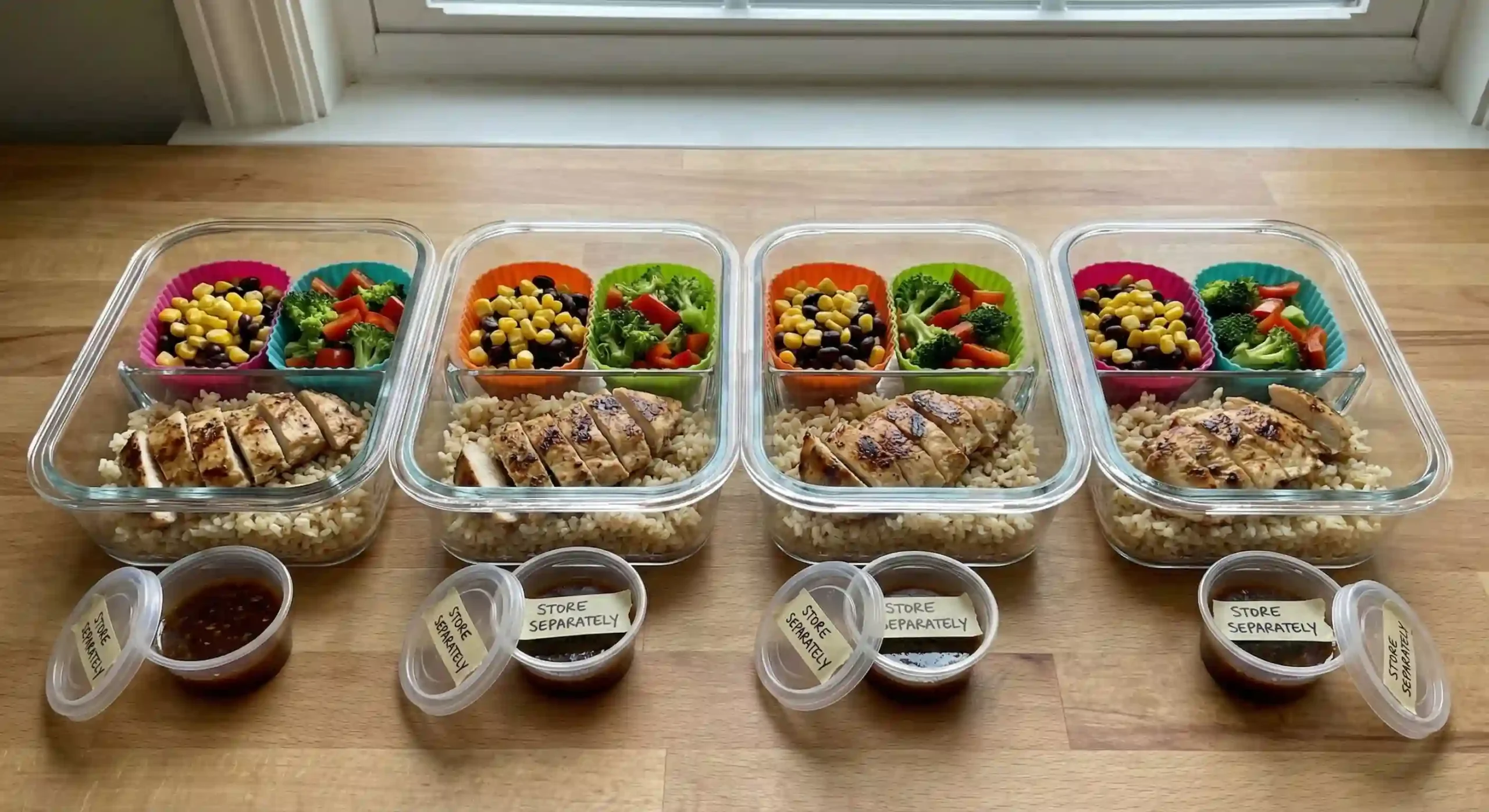 If you want lunches that don’t fall apart, this is the move. Make your make-ahead sauce once, then store it separately so you keep crisp toppings. You can reheat rice/chicken fast, and everything holds well for 3–5 days.
Storage timeline (Day 1 to Day 5)
If you want lunches that don’t fall apart, this is the move. Make your make-ahead sauce once, then store it separately so you keep crisp toppings. You can reheat rice/chicken fast, and everything holds well for 3–5 days.
Storage timeline (Day 1 to Day 5)
| Day | Best for | What stays best | What to refresh | Quick note |
| Day 1 | Peak texture | keep crisp toppings, fresh drizzle | none | Eat a bowl today if you want max crunch. |
| Day 2 | Best flavor | Chicken tastes more “set” after the fridge | green onion, cucumber | Add fresh green onions right before serving. |
| Day 3 | Meal prep sweet spot | Sauces still taste bright | matchstick carrots, spinach | Swap in a fresh handful of greens if yours look tired. |
| Day 4 | Still solid | Rice + chicken still holds up | bean sprouts | Use fresher bean sprouts for crunch. |
| Day 5 | Last call | Sauce + protein is still usable | most cold toppings | Use leftover chicken over fresh salad greens if the toppings have gone soft. |
Storage & food safety
Don’t trust vibes. Use a system.- Use airtight containers for rice and chicken.
- refrigerate within 2 hours of cooking.
- Reheat until hot before eating.
- Check chicken doneness with a doneness thermometer at 165°F when you cook it for the first time.
| Day | Quality note | Best crunch | Best flavor | Refresh this before eating |
| Day 1 | Peak texture day | Yes | Good | Nothing needed |
| Day 2 | Best overall balance | Good | Best | green onion, cucumber |
| Day 3 | Still meal-prep friendly | Medium | Great | matchstick carrots, spinach |
| Day 4 | Texture drops a bit | Low-medium | Good | bean sprouts (swap fresh if you can) |
| Day 5 | Eat or repurpose | Low | Medium | Most cold toppings keep the sauce separate |
One rule that saves it: store separately and add sauce after reheating, so you keep crisp toppings for as long as possible.
Best reheating method
Keep the dish fresh by reheating the hot bits only. Cold toppings remain cold for a reason.- Microwave rice with a splash of water to soften it fast.
- Skillet reheat chicken so the edges stay a bit crisp.
- Add sauce after reheating so the bowl doesn’t go soggy.
Substitutions (Diet + Allergen-Friendly)
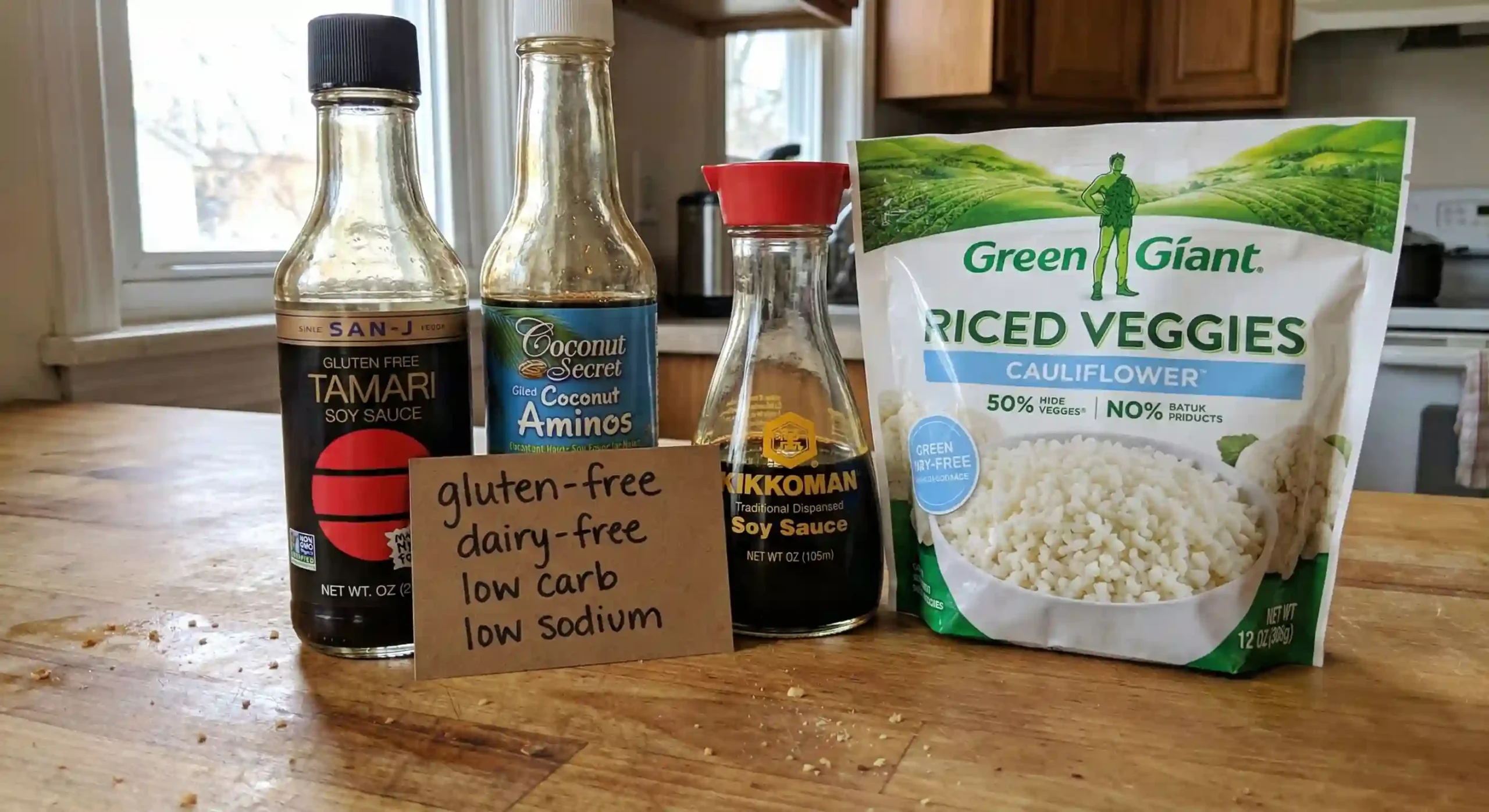
You don’t need a different recipe. You just need smarter swaps. This section helps you go gluten-free, dairy-free, low-carb, or low-sodium. You can keep the bowl vibe, especially with cauliflower rice.
Ingredient swap table
Here’s the table I’d use while cooking. It keeps your shopping list simple.
| If you need | Swap this | To this | Notes |
| gluten-free | soy sauce | soy sauce → tamari | Use tamari for the same salty depth. |
| gluten-free | soy sauce | tamari/coconut aminos | Coconut aminos are sweeter, so reduce the added sweetener. |
| Lower sugar | sugar | sugar → honey/maple (option) | Start small. Honey and maple both sweeten fast. |
| dairy-free | creamy sauces | mayo alternatives | Use vegan mayo or a dairy-free mayo-style spread. |
| low carb | rice | cauliflower rice | Keep the cook time short so it doesn’t turn soft. |
| low sodium | salty sauces | reduced-sodium sauce + more acid | Add more rice vinegar or lemon for a punch without extra salt. |
Regular soy sauce usually contains wheat, so it isn’t gluten-free unless the label says gluten-free. Tamari/coconut aminos are common swaps, but still check the label. Gochujang can contain wheat, so buy one labeled gluten-free. Teriyaki often uses soy sauce, so choose a gluten-free teriyaki or make it with gluten-free tamari.
If you’re going low-sodium, do one thing first. Cut salty sauces, then add flavor back with acid and aroma. That means extra rice vinegar, a bit more garlic, and a small finish of sesame oil.
Troubleshooting (Make It Taste Like the Restaurant)
Small fixes matter. One wrong turn and the bowl feels off. Use this section when you hit too salty, too sweet, not spicy enough, bland chicken, watery sauce, or thick sauce.Common fixes
Here’s my rule. Fix one problem at a time. Then taste again.- Too salty: add vinegar for balance, or thin with water a spoon at a time.
- Too sweet: add vinegar for balance and a pinch of salt if needed.
- Not spicy enough: add more gochujang in small steps, then add sugar to round heat if it gets sharp.
- Bland chicken: finish with sesame oil for aroma, plus a small pinch of salt.
- Watery sauce: simmer briefly, or add a tiny bit of thickener until it coats a spoon.
- Thick sauce: thin with water until it drizzles and doesn’t clump.
Conclusion
Now you’ve got two clear options for bibbop chicken recipes. You can try a Bibibop copycat with sesame ginger teriyaki sauce and yum yum sauce. Or, you can stick to the classic chicken bibimbap with gochujang sauce in a Korean rice bowl.
If you’re meal-prepping, stick to the system. Store separately, reheat rice/chicken, then add sauce after so you keep crisp texture, and always cook chicken to 165°F.
FAQ’s
What sauce does Bibibop use (and how do I make it at home)?
Bibibop-style bowls often have a sweet and savory sauce. This sauce is usually sesame ginger teriyaki. It also has a creamy finish, like yum yum sauce. At home, you can make a similar flavor. Use soy sauce, rice vinegar, ginger, garlic, and sugar. Then, thicken the sauce and drizzle it over the chicken and rice.
Keep the sauce thin enough to drizzle. If it blobs, add a splash of water.
Can I make a Bibibop chicken bowl without gochujang?
Yes, you can make a Bibibop copycat bowl without gochujang. Many Bibibop-style bowls use sesame ginger teriyaki sauce and yum yum sauce instead. For a spicy note, use chili flakes or hot sauce, then balance with sugar and rice vinegar if needed.
If you’re serving kids, skipping gochujang is the easy win.
Is gochujang very spicy, and how do I control the heat?
Gochujang is a fermented chili paste that can range from mild to hot depending on the brand. You control heat by using less gochujang, then building flavor with soy sauce, sesame oil, garlic, and ginger. If it gets sharp, add sugar and a splash of vinegar.
Start small. Add more only after you taste.
What chicken cut is best: breast or thighs?
Both work, but chicken thighs stay juicier because they’re fattier, while chicken breast is leaner and can dry out faster in the oven. If you want forgiving results for a gochujang marinade and a broil finish, I use thighs. If you want lean, use breast and watch time.
If you bake, set a timer and don’t guess.
How long should I marinate Bibibop-style chicken?
To make a Bibibop copycat bowl, marinate for 30 minutes. This is enough time to add flavor, especially with sesame ginger teriyaki sauce. If you’ve got time, a longer rest in the fridge can deepen the taste, but short marinades still work if you cook hot and finish with sauce.
If you’re rushed, marinate while the rice cooks.
How do I meal-prep these bowls so toppings don’t get soggy?
To keep bowls fresh for 3–5 days, store items separately. Keep hot items together. Place cold toppings in their own container. Store make-ahead sauce in small cups. Reheat rice and chicken first, then add chilled toppings and a final drizzle. This setup helps you keep a crisp texture.
Your bowl lives or dies by sauce timing. Add it at the end.
What’s the safe internal temperature for chicken in bowls like this?
Chicken is safe to eat when the thickest part reaches an internal temperature of 165°F on a food thermometer. This applies whether you grill or bake, roast, or broil. Check the center of the thickest piece, then rest it briefly before slicing so juices settle, not spill out.
If you don’t have a thermometer, get one. It removes the guesswork.
What can I use instead of purple rice?
If you can’t find purple rice, use white rice or short-grain rice as your base. Short-grain rice gives a stickier bowl texture that’s closer to many Korean rice bowl styles. For a lighter option, use cauliflower rice (variation) and keep cook time short so it stays fluffy, not wet.
If you want the darker look, mix a little black rice into white rice.
Can I make it gluten-free and dairy-free?
Yes. To make it gluten-free, use tamari instead of soy sauce. You can also use tamari or coconut aminos. Be sure to check the labels on gochujang and teriyaki sauces. For dairy-free, use mayo alternatives in yum yum sauce. You can also go low-carb with cauliflower rice and go low-sodium with reduced-sodium sauces.

Pingback: Delicious Bibibop Copycat Chicken Recipe easy in 2024