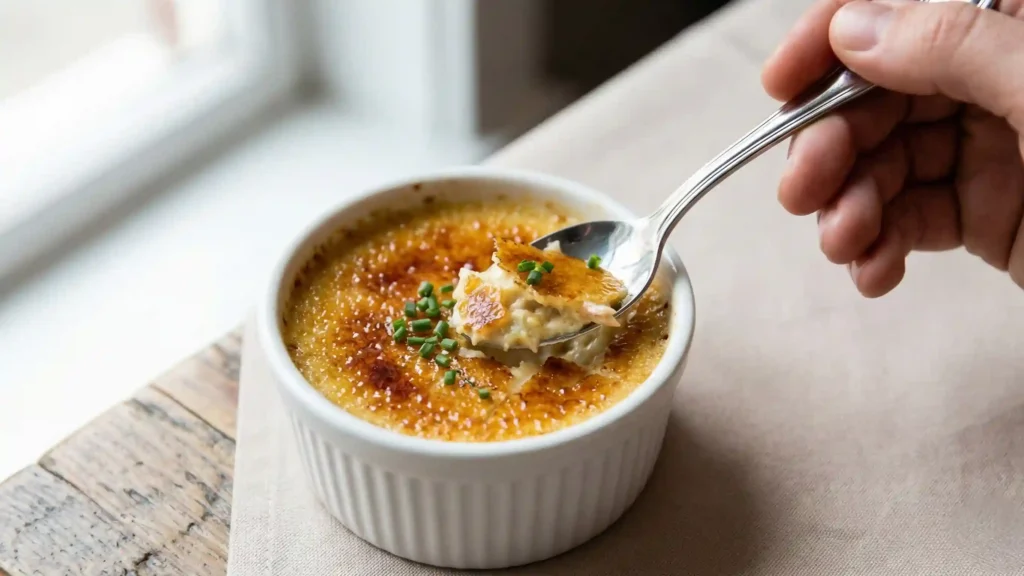
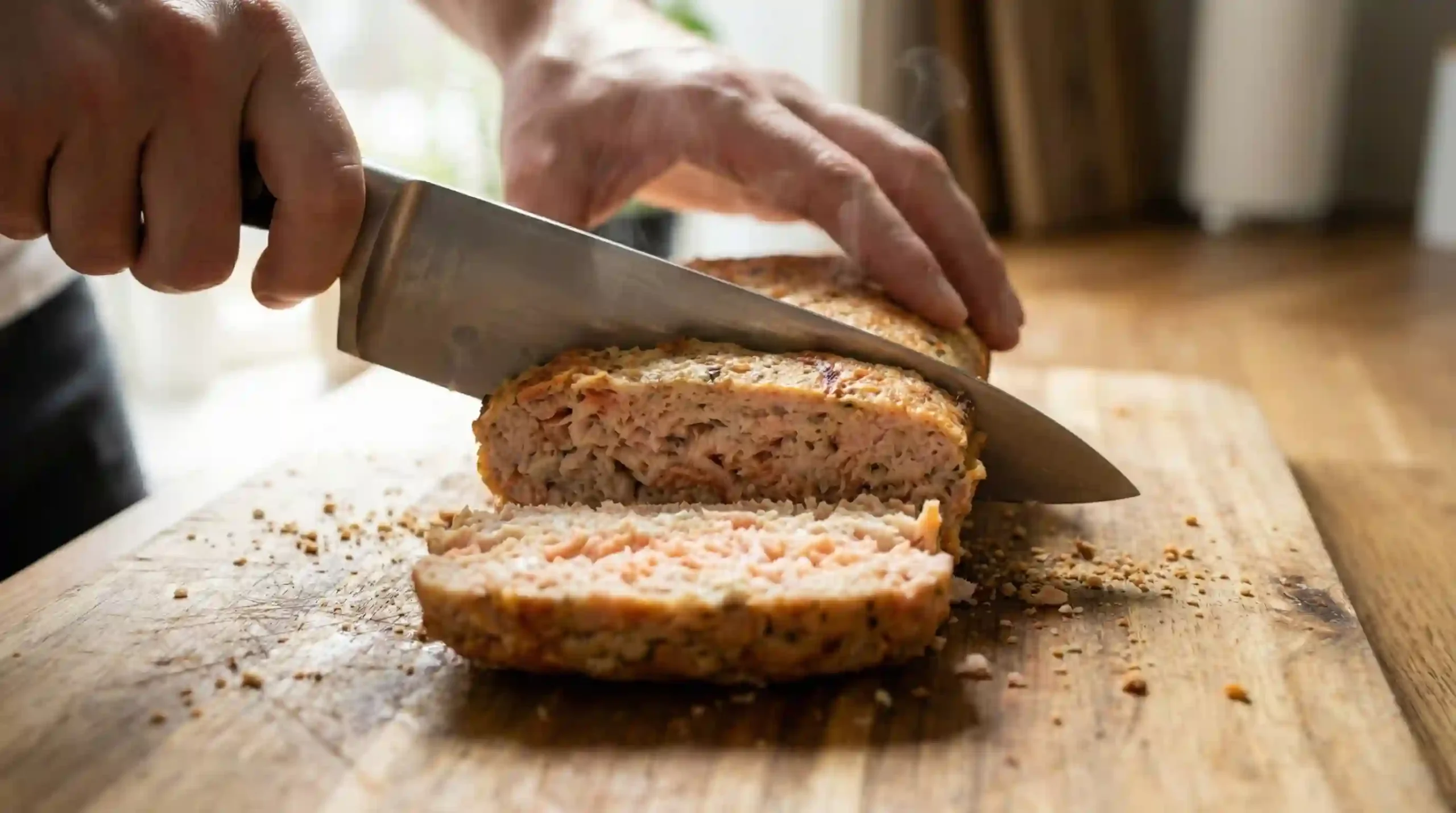
Moist Tuna and Salmon Loaf That Slices Clean Every Time
Yes, can you mix tuna and salmon together in one loaf recipe? I do it when I want a single fish loaf that tastes balanced and still slices clean. You’ll end up with a combo tuna and salmon loaf that’s normal, but not boring. Canned tuna keeps the flavor mild, and canned salmon adds a richer bite.Cook fish until it reaches 145°F (63°C). Check the thickest part with a food thermometer. At 145°F/63°C, the flesh turns opaque and flakes easily with a fork, so you can stop baking before overcooking dries the loaf.
Quick Answer and What a Fish Loaf Is
Yes, you can mix the two and still get a loaf that slices clean. A fish loaf definition is simple: it’s a baked mixture of fish plus binders and seasoning formed into a loaf. It’s a main dish that’s easy to make, versatile, and nutritious. Think of it like a seafood cousin of meatloaf. You mix, bake, cool, then slice. It’s simple food that does its job.Protein (22-25g per 3.5 oz), omega-3, and vitamin D are important. Salmon usually has more omega-3 and vitamin D than other fish. Tuna is often a cheaper option. Then match the exact calories and protein to your final recipe card and the labels on your canned tuna and canned salmon.
What changes when you combine them (taste + texture)
You’ll taste mild, savory tuna initially. Then rich buttery salmon comes up and rounds everything off. That’s why the combination doesn’t seem one-note. The texture lands precisely in the center. It remains moist and flaky, but it may still feel firm enough to support a piece. If you choose, you’ll also see color variations, with a warmer pink tone compared to tuna alone.Tuna Loaf vs Salmon Loaf vs Combo Loaf (Comparison Table)
If you want a sensible selection quickly, compare them side by side. The largest variations show up in omega-3, vitamin D, protein, and cost (salmon costly / tuna economical). You will find American food vibes in all three. They use simple pantry ingredients and an easy bake-and-slice method.| Loaf type | Taste | Texture | omega-3 | vitamin D | protein | cost (salmon expensive / tuna affordable) | calories (optional) |
| Tuna loaf | Mild, savory | More firm, less flaky | Moderate | Lower | High | More affordable | Usually lower to moderate |
| Salmon loaf | Rich, buttery | More moist, more flaky | Higher | Higher | High | More expensive | Moderate |
| Combo tuna and salmon loaf | Balanced, not one-note | moist but still firm | High to moderate | Moderate to high | High | Mid-range | Moderate |
When to choose which version
I prefer tuna when I want something quick and budget-friendly. It’s perfect for packed lunches since it cuts cleanly and stacks beautifully. I’ll transform leftovers into sandwiches and wraps without trouble. I prefer salmon when I want a richer bite. It seems a little more dinner-like for family gatherings. The flavor stands up to bolder sides and sauces. I chose the mix when I desire peace. It’s my go-to for meal prep since it tastes wonderful hot or cold. It also preserves that “not too lean, not too rich” middle ground.calories, protein, total fat, saturated fat, carbs, fiber, sodium. Pull numbers from the Nutrition Facts on your canned tuna and canned salmon, plus your binder (like breadcrumbs), and divide by servings.
Safety and Trust – Mercury, Allergens, and Safe Doneness
Don’t guess doneness. Use a food thermometer and cook your bread to a safe internal temperature 145°F/63°C. At that time, the fish becomes opaque and flakes easily with a fork, and you don’t have to keep roasting until it’s dry. That’s important because overcooking dries the loaf rapidly. Allergens are simple here. If you’re allergic to fish, don’t eat it. If you’re feeding someone new to seafood, keep ingredients plain and label what’s inside.Cook to a safe internal temperature of 145°F/63°C. The center should look opaque, and the fish should flake easily with a fork. Don’t keep baking past doneness because overcooking dries the loaf. Source: FDA food safety guidance (cook fish to 145°F/63°C).
Mercury and who should limit tuna
Mercury isn’t equal across tuna. Canned light tuna is usually the lower choice, while albacore (white tuna) typically has more mercury. If you are pregnant, might become pregnant, breastfeeding, or feeding young kids, follow the FDA/EPA advice. Limit albacore to fewer servings. If you want the safest habit, rotate fish. Mix in lower-mercury selections more regularly, then treat tuna like an occasional meal when required.Storage, leftovers, and reheating
Handle leftovers like you mean it. Keep the loaf in the refrigerator 3 to 4 days, or freeze it if you won’t complete it in time. When you reheat, warm it until it’s hot all the way through, and don’t keep cycling it in and out of the fridge.Refrigerator 3 to 4 days: Keep leftovers in a sealed container in the fridge. Eat them within 3 to 4 days. Freeze: If you won’t finish it in time, freeze individual slices wrapped tightly, then place them in a freezer bag with the date. For the best texture, use within 2 to 3 months. Reheat: To reheat, warm slices in the oven (covered) or microwave in short bursts until hot all the way through.
The Ultimate Moist Tuna + Salmon Loaf Recipe (Fail-Proof)
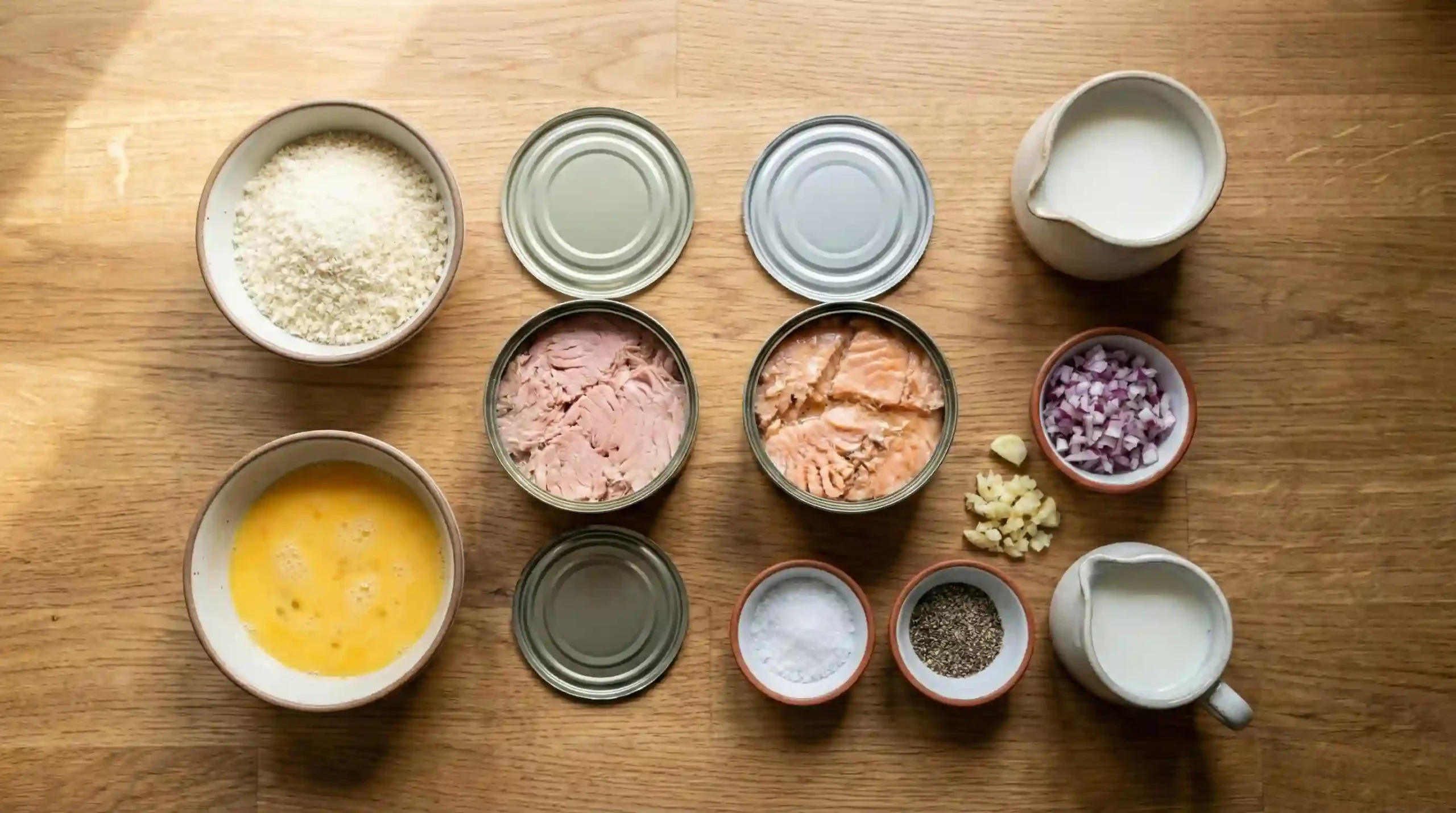 This is my go-to loaf when you want clean slices and zero drama. I build it around breadcrumbs (plain or seasoned), eggs (beaten), onion (finely chopped), garlic (minced), salt and pepper, and milk (or plant-based). The result stays tender, not crumbly.
Tip 1: Drain tuna and drain salmon until they stop dripping so the mix isn’t watery. Tip 2: Mix thoroughly only until combined, then fold in the fish so you don’t break it down too much. Tip 3: Bake 45 minutes, then check for 145°F so you don’t keep baking until overcooking dries the loaf. Tip 4: Cool before slicing so the loaf sets and stays moist instead of crumbling.
Ingredients and what each one does (Why this works)
The loaf holds together because the binder and eggs create structure. The liquids and aromatics add moisture, so it doesn’t eat like cardboard. This is simple kitchen math.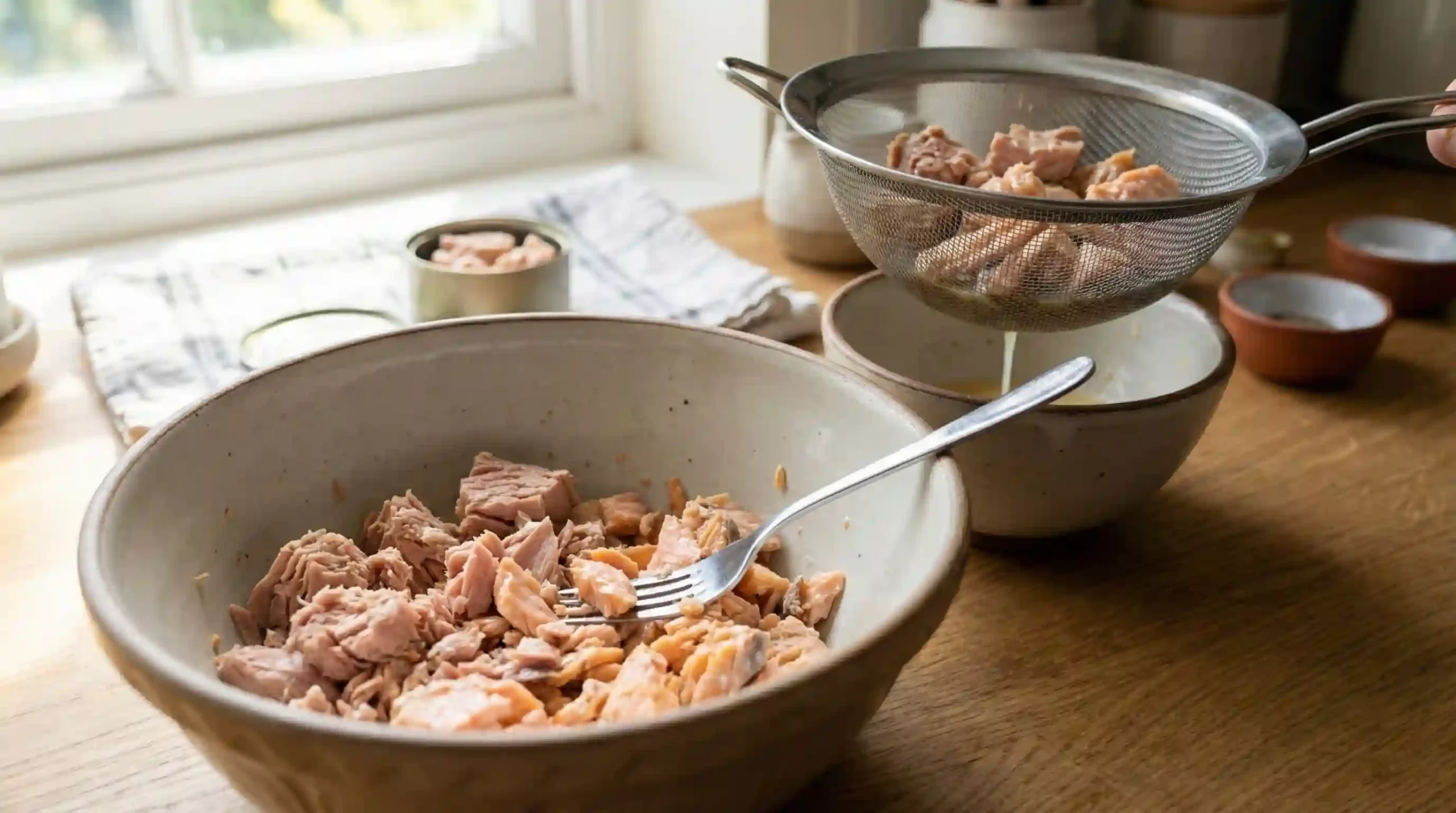 Start with the fish. Drain tuna and drain salmon so you don’t add extra water to the mix. Remove the skin and bones from the salmon if you can. Then, break the fish into small pieces with a fork. This way, every bite will feel even.
Binder options (choose one)
Pick one binder and stick with it. Breadcrumbs (plain or seasoned) work best for most people, but you’ve got choices. If you want exchanges, these are my favorite breadcrumb substitutes.- Oats (quick oats are easiest)
- Crushed crackers (adds a salty crunch)
- Gluten-free breadcrumbs (best for a classic texture without wheat)
- Other breadcrumb substitutes only if you know they absorb liquid well
Flavor upgrades (choose 2–3)
This is when the bread stops tasting flat. Pick two or three and keep it basic. You’ll still taste the fish, only in a better manner.- Paprika for warmth
- Thyme for a savory edge
- Dill for that clean seafood note
- Parsley for a fresh lift
- Lemon juice to cut richness
- Worcestershire sauce for a deeper savory hit
Combo 1: dill + lemon juice + parsley Combo 2: paprika + thyme + parsley Combo 3: Worcestershire sauce + thyme + lemon juice
Equipment (pan size + prep)
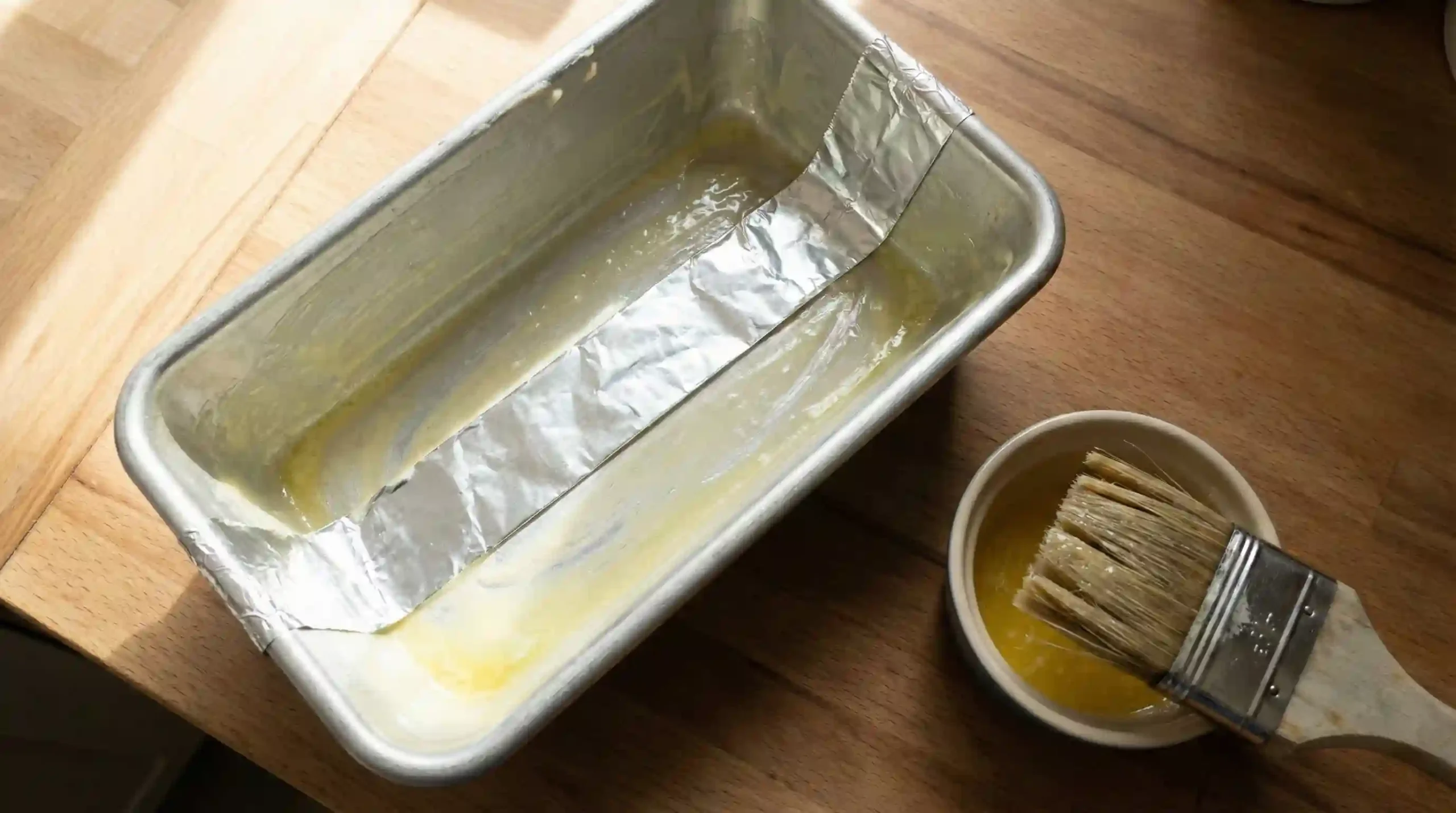 You only need a loaf pan and a bowl. I always grease the loaf pan first, so the slices don’t tear as they come out. If you have it, the foil strip (lifting aid) scheme saves your loaf from sticking.
If you like accuracy, the classic size is 8 1/2 x 4 1/2 x 2 1/2 inches, but any standard pan works. Just watch the bake time if it’s wider.
You only need a loaf pan and a bowl. I always grease the loaf pan first, so the slices don’t tear as they come out. If you have it, the foil strip (lifting aid) scheme saves your loaf from sticking.
If you like accuracy, the classic size is 8 1/2 x 4 1/2 x 2 1/2 inches, but any standard pan works. Just watch the bake time if it’s wider.
Step-by-step instructions
First, I preheat the oven (350°F/375°F). Then I add the basic mix and mix thoroughly until it appears consistent. After that, I fold in the fish so I don’t crush it into paste.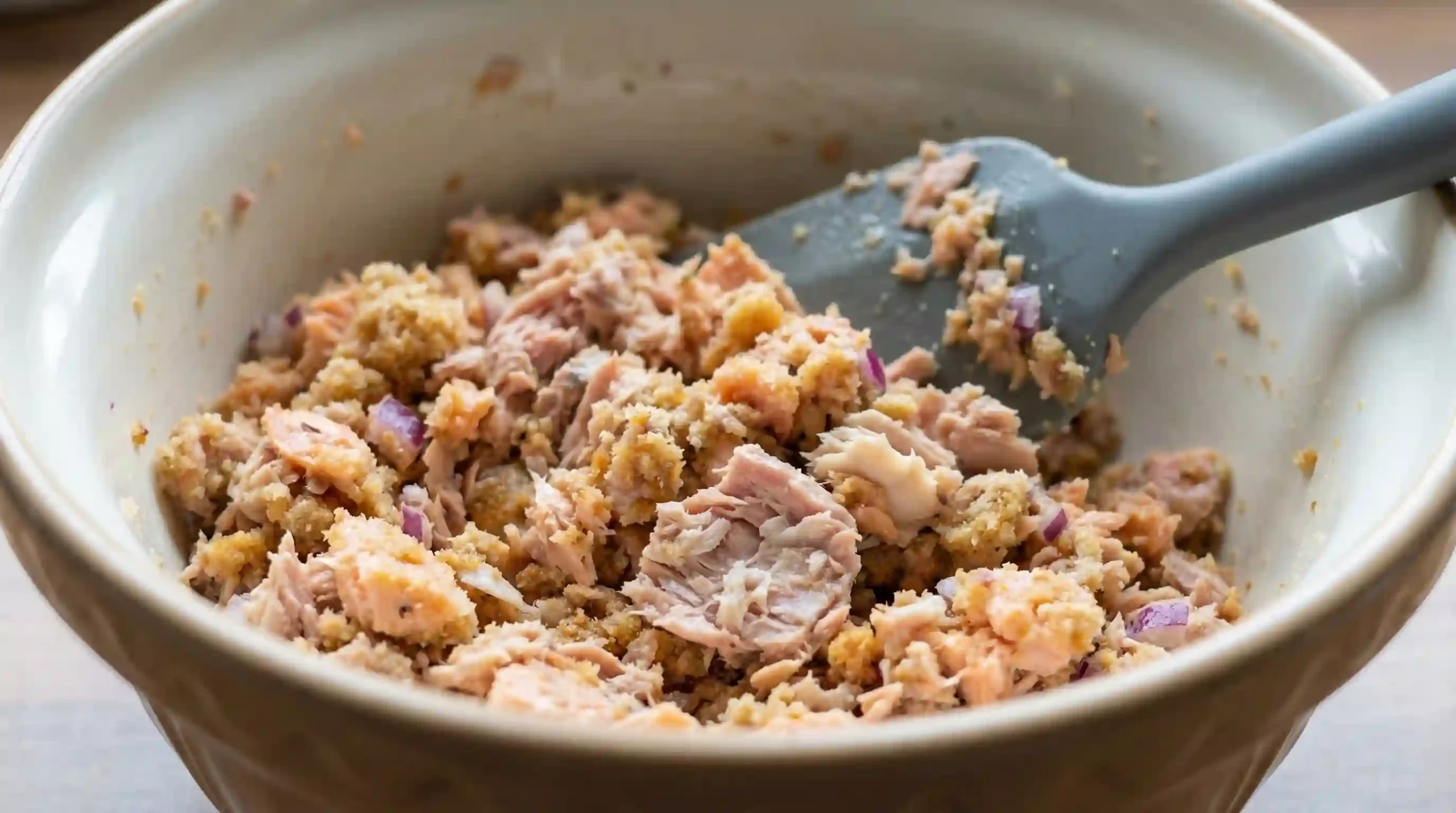 Next, I scrape it into the pan and press gently so there aren’t any air spaces. Then I bake 45 minutes and let it cool before slicing. After it hardens, I slice and serve.
Doneness checks (best practice)
Don’t play guessing games. The safest check is 145°F at the center. If you don’t have a thermometer, use the old method. Check if a knife comes out clean. The loaf should look opaque and separate easily with a fork.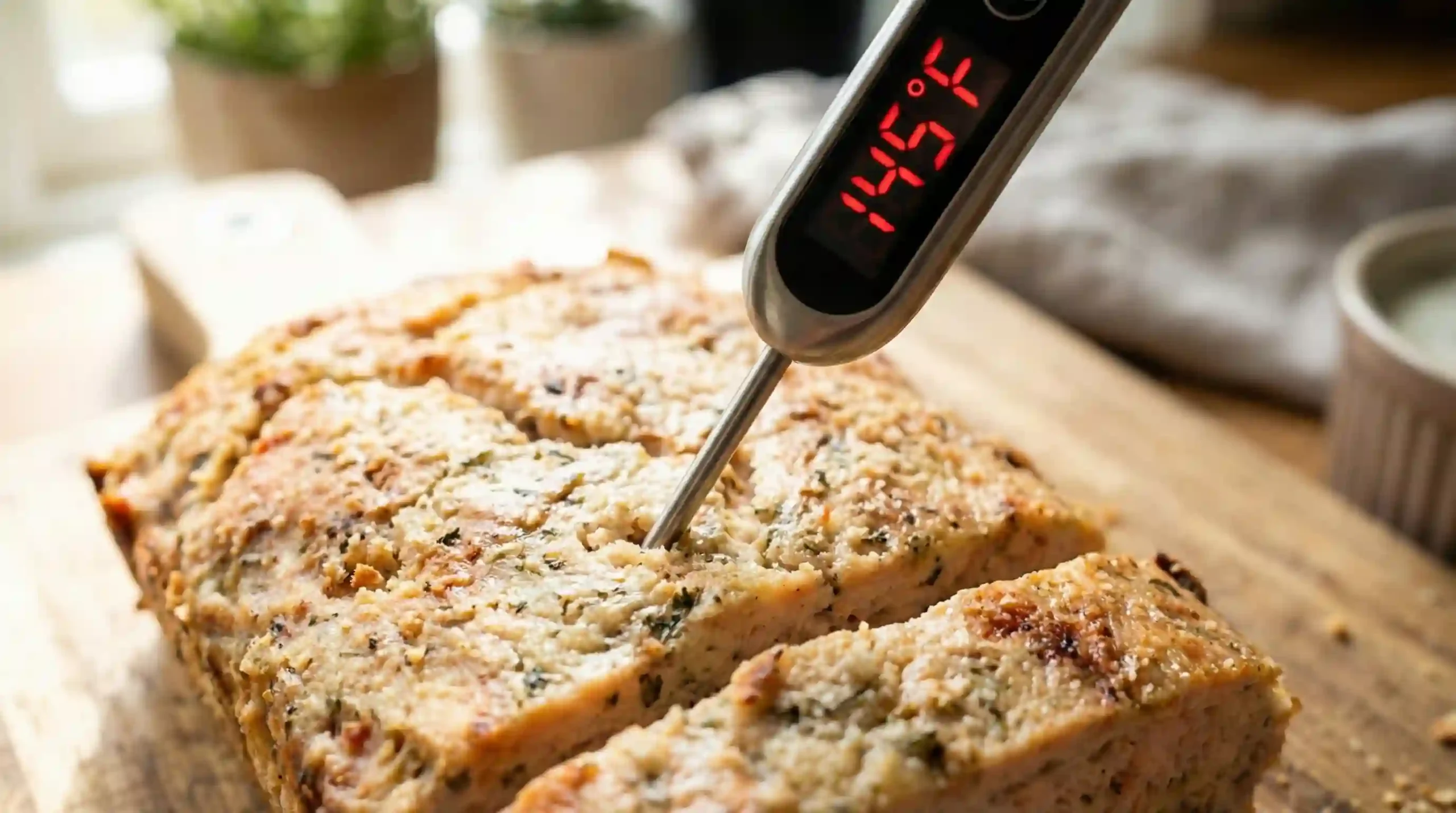
Cook the loaf until the center reaches 145°F. At 145°F, the fish looks opaque and separates easily with a fork, so you can stop baking before it dries out.
Troubleshooting (Fix Every Common Problem)
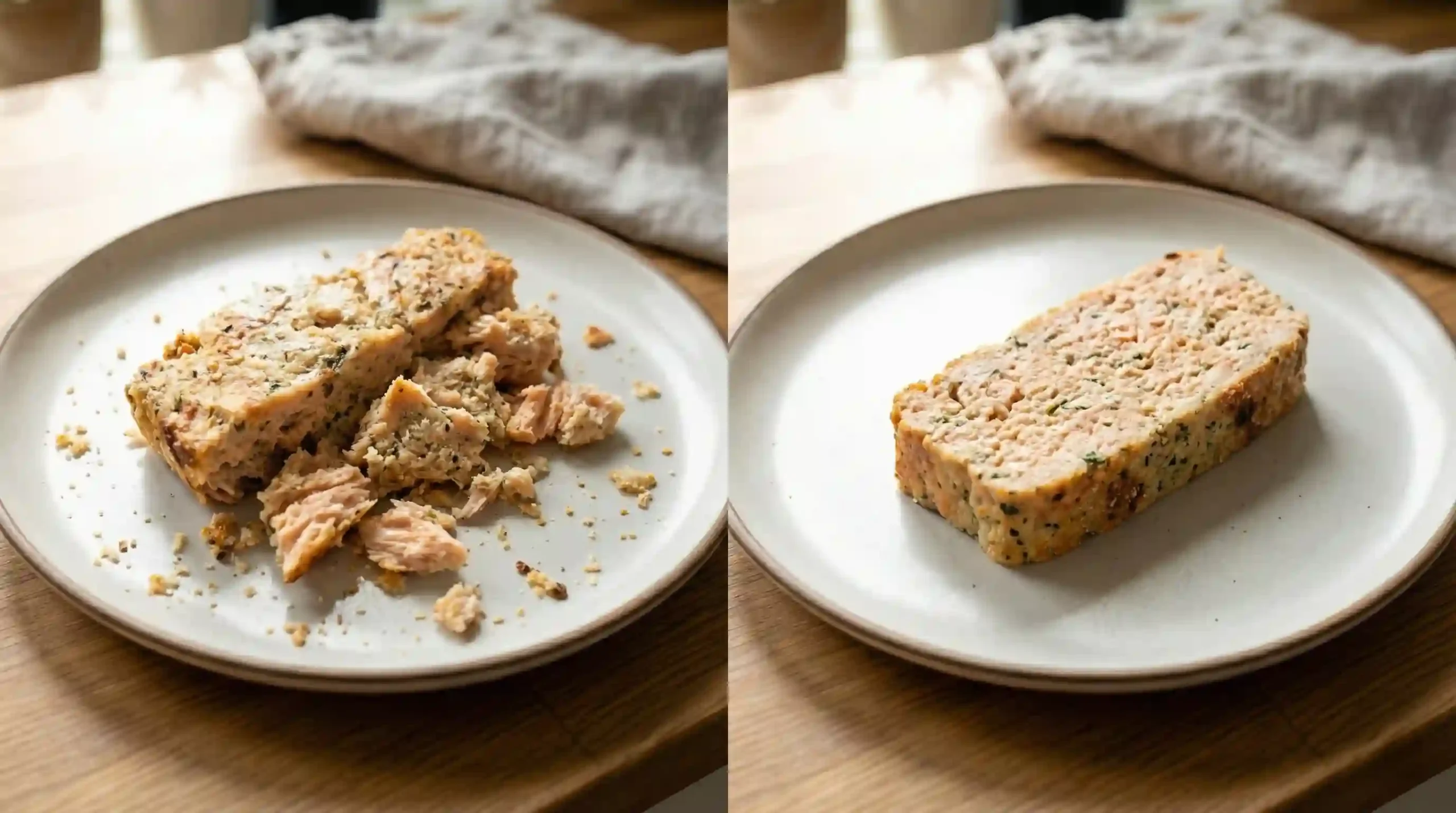 Most loaf problems arrive from one thing. The mix is off, or the bake is off. If yours is too dry, falls apart, too wet, has a fishy taste, or you imagine overcooking, use the fixes below.
If it’s dry
This is the big one. Overcooking dries the loaf, even when the ingredients are right. I also watch the bake time because salmon takes longer to cook. This can trick you into leaving the whole loaf in too long. Fix it with moisture, not more heat. I add moisture (milk/extra egg) the next time, and I stop baking as soon as it’s done. If you reheat pieces, cover them so they don’t dry out again.Fix 1: Check doneness early and stop at 145°F so overcooking doesn’t dry the loaf. Fix 2: Next batch, add moisture (milk/extra egg) to keep the crumb tender. Fix 3: If you’re using more salmon, remember salmon takes more time to cook (monitor baking), so rely on temp, not the clock.
If it won’t hold together
When a loaf falls apart, it’s usually a balance problem. Your binder ratio is low, your breadcrumbs and eggs aren’t doing enough work, or you ran the set. You can fix it in three moves. I keep the binder ratio steady. I press gently into the pan to remove air pockets. Also, wait for the cooling time before slicing. That’s how you get slices that don’t crumble.Variations
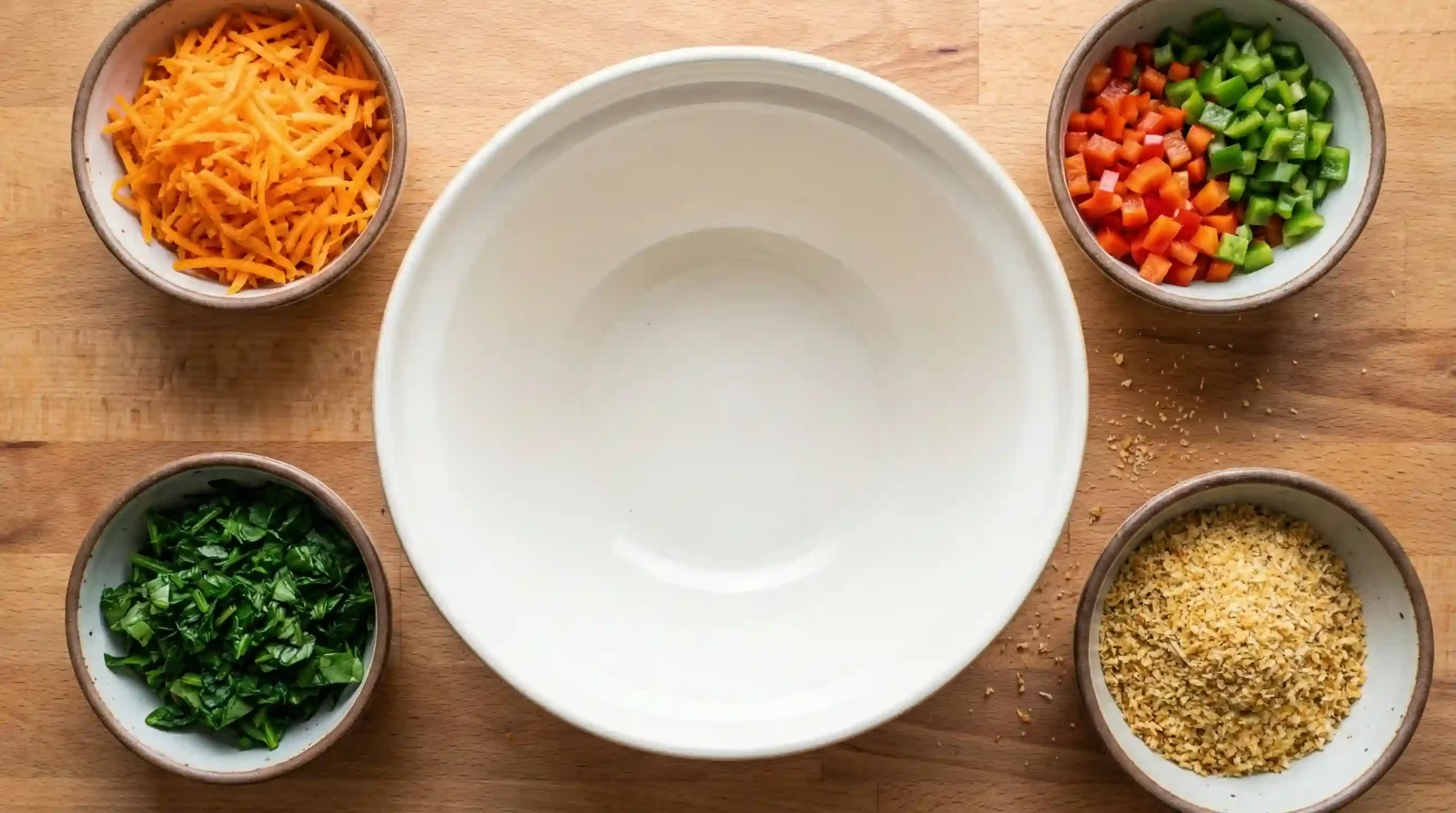 This loaf is highly flexible, so you don’t have to eat the same slice all week. I swap in seasoned breadcrumbs when I want more flavor without extra work. I also mix in vegetables (carrots, bell peppers, spinach) when I want a stronger taste.
Sauce changes everything. Some days, I go classic with tartar sauce. Other days, I want a lighter hit, so I spoon on dill sauce.
This loaf is highly flexible, so you don’t have to eat the same slice all week. I swap in seasoned breadcrumbs when I want more flavor without extra work. I also mix in vegetables (carrots, bell peppers, spinach) when I want a stronger taste.
Sauce changes everything. Some days, I go classic with tartar sauce. Other days, I want a lighter hit, so I spoon on dill sauce.
Option 1: tartar sauce for a tangy, creamy bite. Option 2: dill sauce for a fresh, herby finish.
Meal-prep formats
If you live on leftovers, change the shape. I bake mini loaves when I want grab-and-go servings. I use muffin tin portions when I want built-in slices for packed lunches.Sauce options (including vintage tomato sauce)
If you want an old-school vibe, go tomato. I heat stewed tomatoes in a small pot and season lightly. Then I whisk in cornstarch (thickener) and bring to a boil, stirring constantly until it turns glossy. Once it thickens, I keep it warm on low heat and add a pinch of thyme leaves right at the end. It’s simple, and it tastes right with fish loaf slices.What to Serve With Tuna and Salmon Loaf
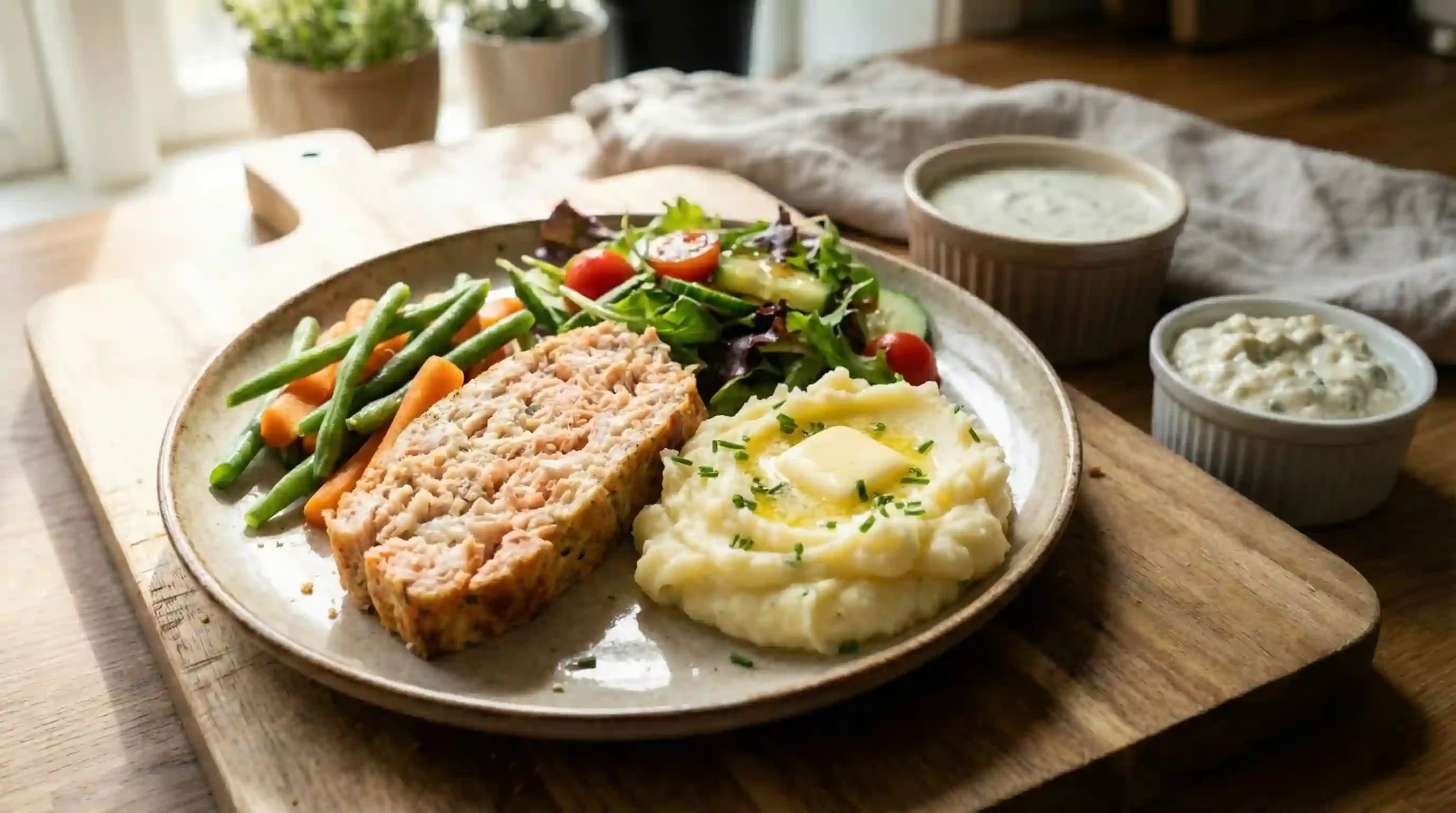 I keep sides simple so the loaf stays the star. Mashed potatoes make it feel like comfort food. Steamed vegetables keep the plate light and clean.
If you want fresh crunch, go with a salad. I enjoy a squeeze of citrus and a handful of herbs to reduce the richness. That small acid impact helps the fish taste brighter.
I keep sides simple so the loaf stays the star. Mashed potatoes make it feel like comfort food. Steamed vegetables keep the plate light and clean.
If you want fresh crunch, go with a salad. I enjoy a squeeze of citrus and a handful of herbs to reduce the richness. That small acid impact helps the fish taste brighter.
Row 1 (Starch): mashed potatoes or grains (rice or quinoa) Row 2 (Veg): steamed vegetables or a simple salad Row 3 (Finish): citrus squeeze + herbs on top, then choose one of your favorite sauces Optional: Add nuts (optional pairing cluster) to the salad for crunch.For heartier dishes, add grains on the side. If you want texture, scatter nuts (optional paring cluster) over the salad or veggies. Keep it light, and let the bread do its thing.
Nutrition Notes
This loaf can be a solid pantry meal. You get protein (22-25g per 3.5 oz) from fish. It also provides omega-3 and vitamin D. You will also get B vitamins like B6 and B12. Additionally, fish contains minerals like selenium, potassium, and phosphorus.Use the Nutrition Facts labels to fill this in: calories, protein, total fat, saturated fat, carbs, fiber, and sodium. Note: Some versions have about 450 kcal per serving. Your number may vary based on the brand of canned tuna, canned salmon, and how many breadcrumbs (plain or seasoned) you useIf you’re monitoring intake, this may still fit. Keep amounts stable and choose lighter sides, and it maintains low calories (weight loss friendly) for many meal plans. If salt is important to you, pick lower-sodium cans and drain carefully. People often ask about wellness claims. People often link omega-3 to heart health. Also eople talk about it for its ability to reduce inflammation and lower blood pressure. I treat that as a bonus, not a promise, and I focus on hitting the right portion and sides.
The American Heart Association says eating fish at least twice a week is part of a heart-healthy eating pattern. Fatty fish like salmon and some tuna are higher in omega-3 fats. A serving is about 3 ounces cooked (around 3/4 cup flaked fish. The FDA and EPA say that albacore, or white tuna, has about three times more mercury than canned light tuna. If you choose albacore (a “Good Choice”), have only 1 serving that week and skip other fish that week.
Conclusion
You can bake a combo tuna and salmon loaf without overthinking it. This fish loaf works because canned tuna and canned salmon balance flavor and bite in one easy loaf recipe. Keep it safe and juicy. Use a food thermometer and stop at the safe internal temperature 145°F/63°C, because overcooking dries the loaf. Then let it rest, cool before slicing, and you’ll get clean slices every time. Make it fit your week. Store leftovers in the refrigerator for 3 to 4 days, freeze slices if you need more time, and reheat gently so it stays moist.FAQ’s
What’s the best tuna-to-salmon ratio for flavor and texture?
I like a 50-50 split for balance. It gives you mild savory tuna plus rich buttery salmon in the same bite. If you want it richer, use more salmon. If you want it leaner and firmer, use more tuna.
How do I keep a tuna salmon loaf from falling apart?
Use enough breadcrumbs (plain or seasoned) and eggs (beaten) to lock it in. Keep your binder ratio steady, press gently into the pan, and respect the cooling time before slicing. Those three steps fix most crumble problems.
What internal temperature should a fish loaf reach?
A fish loaf should reach 145°F/63°C at the center. That’s the standard safe internal temperature for cooked fish. At 145°F/63°C, the flesh turns opaque and flakes easily with a fork, so you can stop baking before the loaf dries out.
If you don’t have a thermometer, use the legacy check. The loaf should look opaque and separate easily with a fork, and a knife should come out clean (legacy method).
Can I make it gluten-free (no breadcrumbs) or dairy-free (no milk)?
Yes, you can make it gluten-free. Use gluten-free breadcrumbs, oats, or crushed crackers instead. You can also make it dairy-free by using plant-based milk. Keep the mixture moist but not wet, and bake until 145°F/63°C so it sets without drying.
I keep the swap simple. Change one thing at a time, then adjust only if the mix feels too loose.
Do I need to remove bones from canned salmon?
Most canned salmon has soft bones that are safe to eat, but texture matters. If you want a smoother slice, remove skin and bones (salmon) before mixing. If you don’t mind a more rustic bite, mash them in.
How long does cooked tuna salmon loaf last in the fridge?
Cooked tuna salmon loaf lasts 3 to 4 days in the refrigerator when stored in an airtight container. Keep it chilled, don’t leave it out for long, and reheat only what you’ll eat so you’re not warming the whole batch over and over.
I label the container with the cook date. It saves guesswork later.
Can I freeze tuna salmon loaf and how do I reheat it?
Yes, you can freeze it. I freeze slices so they thaw fast, then I reheat gently so it stays moist. Cover it in the oven, or use short microwave bursts until hot through.
Which tuna is lower in mercury: canned light or albacore?
Canned light tuna is typically lower in mercury than albacore (white tuna). The FDA and EPA say that albacore usually has more mercury. So, it is best to limit it, especially for pregnant women and children.
If mercury is a big concern, rotate fish and don’t rely on tuna every week.
Can I use fresh salmon/tuna instead of canned?
Yes, but you’ll need to cook and flake it first, then manage moisture. Fresh fish can add more water than canned tuna and canned salmon, so your binder matters more. Drain well, keep the mix tight, and bake to 145°F/63°C.