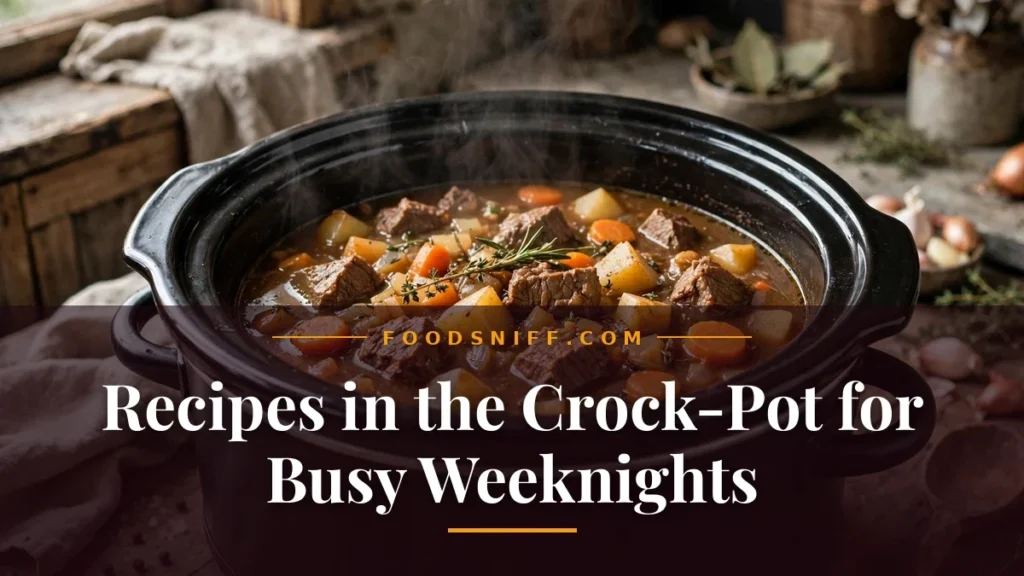
Recipes in the crock-pot are slow cooker meals that cook themselves while you are out, usually on low for 6 to 8 hours or on high for 3 to 4 hours. The beef stew below is one example at 356 calories a serving, with 30 minutes of prep and 8 hours in the pot.
The crock-pot earns its place in a busy kitchen because it moves the work to the morning. Ten minutes of prep, the lid goes on, and dinner is ready when you walk back in. Tough cuts turn tender, broths build flavor for hours, and even dessert cooks without the oven.
This guide covers the whole range: soups, stews, chicken, beef, pork, pasta, and desserts, with a full beef stew recipe, a timing table, and the food safety rules that matter.
If you want chicken only, our chicken crockpot recipes page covers five chicken dinners, and our slow cooker chicken recipes page explains timing by cut. If your stomach needs gentler food, or you want a faster appliance, these weeknight appliance dinners use the Instant Pot instead.
What makes a recipe work in the crock-pot
A good crock-pot recipe has three things: a tough cut or a sturdy vegetable, enough liquid to cover about two thirds of the food, and a long, gentle cook. Beef chuck, pork shoulder, chicken thighs, beans, and root vegetables all get better with hours of low heat. The slow cooker breaks down the tough parts and lets the flavors build while you are not watching.
Some foods do not belong in the pot for the whole cook. Dairy splits if it cooks for hours, so cream, cheese, and sour cream go in near the end. Delicate vegetables like peas and fresh herbs go in last too, or they turn to mush. Pasta goes in for the last 30 minutes, or it soaks up all the liquid and falls apart.
Size matters as much as the recipe. A slow cooker works best when it is half to two thirds full. A pot that is too empty cooks too hot and dries the food out, and a pot that is too full takes too long to reach a safe temperature. A 6 quart oval cooker is the size most of these recipes are written for, and it serves about 6 people.
Dump and go: the 10 minute method
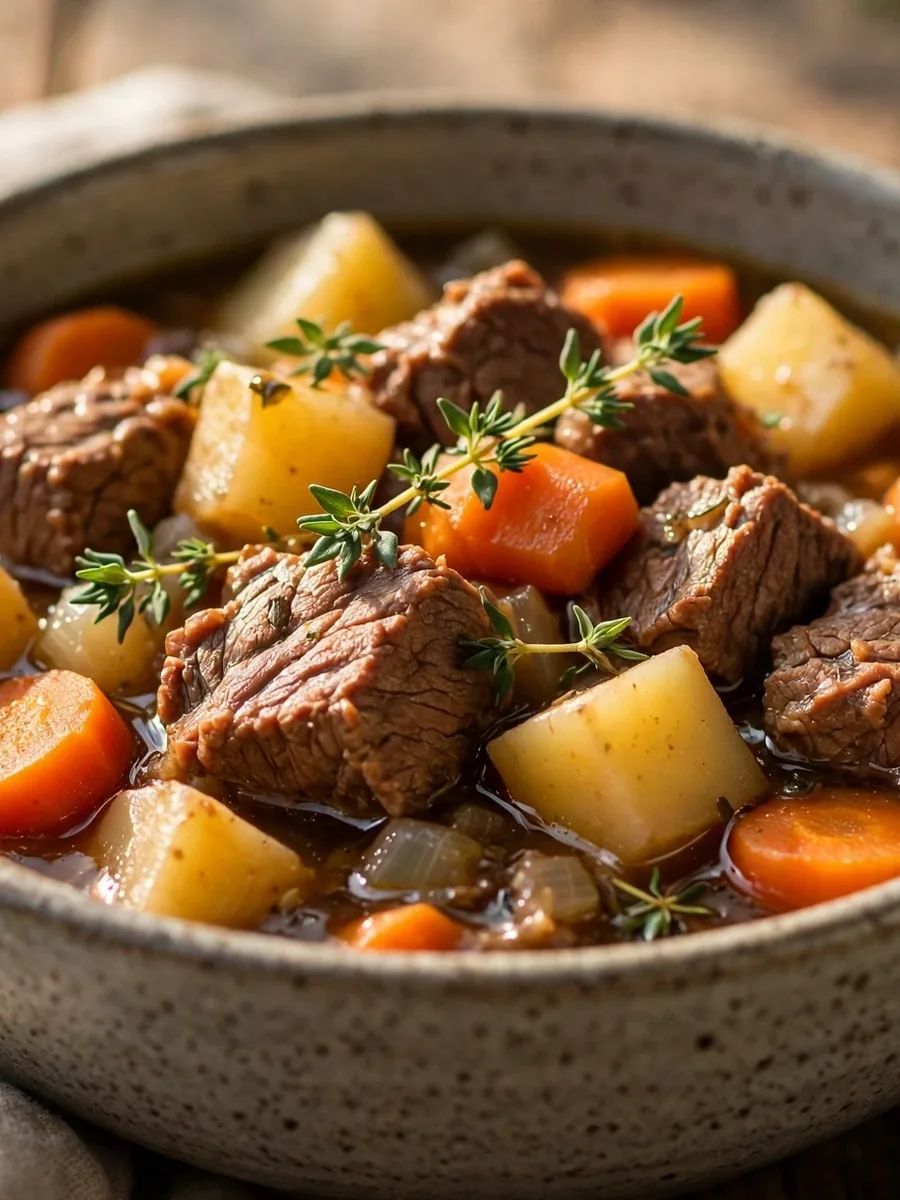
Dump and go is the simplest way to use a crock-pot. Everything goes into the pot in the morning, the lid goes on, and there is nothing else to do until dinner. No browning, no sauteing, no extra pans. Fork to Spoon builds a whole collection around this method, with 23 dinners that take only a few minutes of prep.
The method suits recipes where the sauce comes from the ingredients themselves: chicken with salsa, pork with barbecue sauce, beef with tomatoes and beans, meatballs in marinara. It does not suit recipes that need browning for flavor, like the beef stew below, or recipes with dairy, pasta, or delicate vegetables that need to go in late. Use dump and go for the busy nights, and save the browned recipes for the weekend.
The featured recipe: Slow cooker beef stew
Prep time: 30 minutes
Cook time: 8 hours
Serves: 6 servings
Why this recipe leads the guide
Beef stew is the dish the crock-pot was made for. A tough cut of chuck, root vegetables, and a rich broth cook for 8 hours until the meat falls apart, and the whole house smells like dinner by the time you get home. It is also the recipe that shows every crock-pot rule in one pot: brown the meat first, keep the liquid low, and add the peas at the end.
The numbers check out
The amounts below come from Skinnytaste, where Gina Homolka builds the same stew from boneless chuck roast, Yukon Gold potatoes, carrots, celery, onion, mushrooms, and peas, with a published nutrition figure of 356 calories per serving.
Other publishers land in the same range: A Sweet Pea Chef lists 383 calories per serving, Natasha’s Kitchen lists 415 calories per serving, and Show Me the Yummy lists 310 calories per serving, so 356 sits in the normal range for a crock-pot beef stew.
The slow cooker does not evaporate as much liquid as the stove, so this recipe uses one cup less broth than a stovetop stew. That is the detail that keeps the broth rich instead of thin, and it is the reason the flour and tomato paste go into the blender with the broth before anything goes into the pot.
Ingredients
- 2 cups low-sodium beef broth
- 3 1/2 tablespoons flour or gluten-free flour
- 3 tablespoons tomato paste
- 1 1/4 teaspoons kosher salt, plus more to taste
- 1/4 teaspoon black pepper
- 2 1/2 pounds boneless chuck roast, trimmed and cut into 1 inch cubes
- 1 1/2 cups Yukon Gold potatoes, peeled and diced into 1 inch pieces
- 1 1/2 cups carrots, sliced 1/2 inch thick, from 3 to 4 medium carrots
- 1 cup chopped celery, from 3 ribs
- 1 medium onion, cut into 1/2 inch pieces
- 2 cloves garlic, minced
- 4 ounces white button mushrooms, quartered
- 3 sprigs fresh thyme
- 2 bay leaves
- 1/2 cup frozen peas, thawed
Steps
- Combine the broth, flour, tomato paste, kosher salt, and black pepper in a blender and blend until smooth.
- Heat a large skillet over high heat, spray with oil, and brown the beef on all sides in two batches. Transfer the beef to the slow cooker, then spray the skillet again.
- Add the carrots, celery, onion, and garlic and brown, stirring, for about 5 minutes. Transfer to the slow cooker and add the potatoes, mushrooms, thyme, and bay leaves, then pour the broth mixture on top.
- Cover and cook on low for 8 hours, until the meat and vegetables are tender.
- Discard the thyme and bay leaves, stir in the peas, and let them sit for 1 minute until heated through. Taste for salt and adjust as needed.
Soups and chowders in the crock-pot
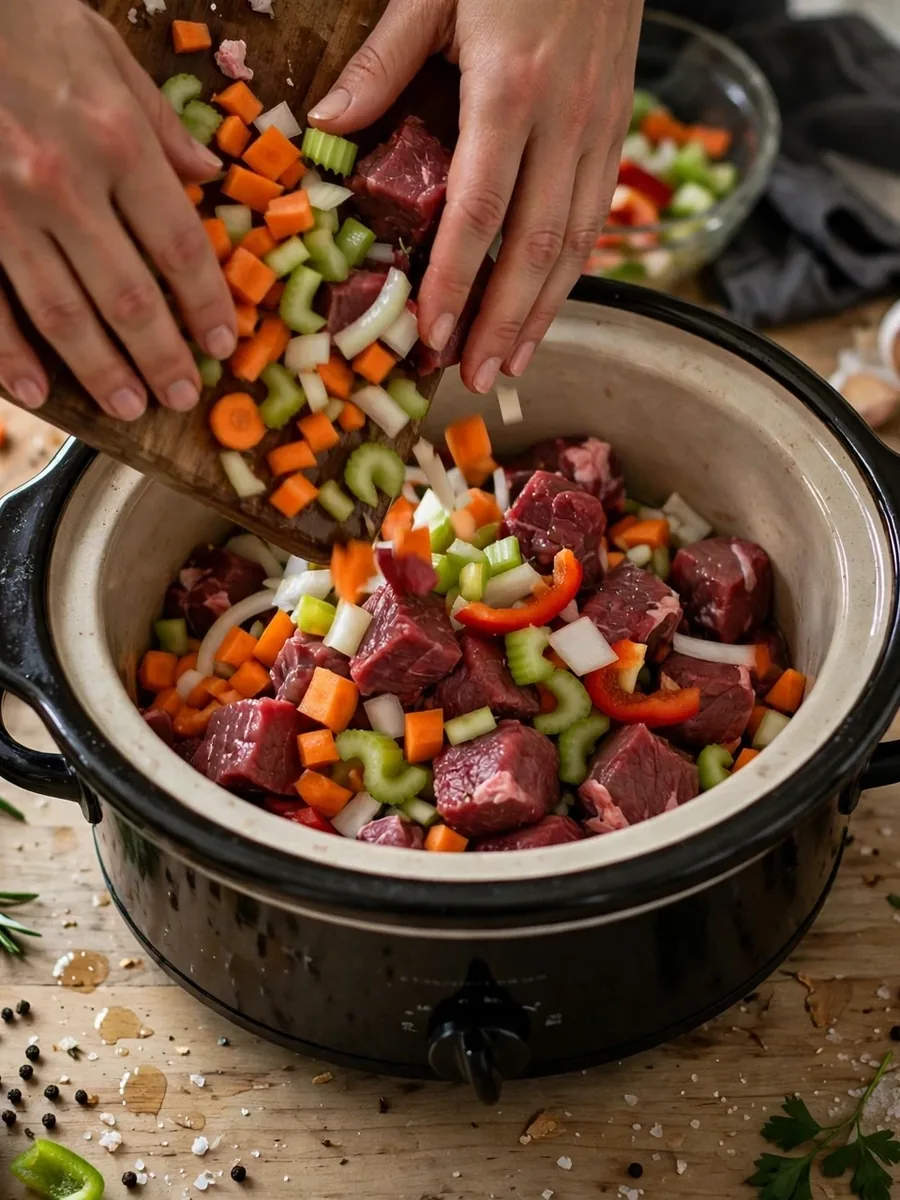
Soup is the most forgiving thing you can put in a crock-pot. The slow cooker is practically made for it: set it up in the morning and come home to a fully developed broth with minimal effort. Clam chowder, pasta fagioli, lemon chicken orzo soup, Tuscan chicken soup, and chicken pozole all work, because the broth builds flavor for hours while the ingredients stay tender.
Keep two rules in mind. First, add the pasta, rice, or noodles near the end, or they will soak up the broth and go soft. Second, hold back a cup of broth and add it at the end if the soup looks too thick. A soup that is too thick at noon is easy to fix, and a soup that is too thin is not.
Browning the meat and vegetables first gives a soup a deeper flavor, but it is optional. If you skip it, add a spoonful of tomato paste, a splash of soy sauce, or a parmesan rind to the pot instead. Those three add the savory depth that browning would have given, without an extra pan.
Which soups work best
Bean soups, lentil soups, and chicken soups work best, because their main ingredients get better with a long cook. Cream soups work too, but stir the cream in during the last 30 minutes. Clear broth soups with delicate greens are the weakest choice, since the greens wilt away by dinner.
Stews and chili
Stews and chili are where the crock-pot earns its keep. Long, slow heat is exactly what they need to build deep, layered flavor, and they get better the longer they cook. The beef stew above is the classic, but the same method works for Hungarian goulash, Cincinnati chili with its warm cumin and cinnamon notes, and African peanut stew with shredded chicken in a mild peanut sauce.
Chili is the easiest stew to scale for a crowd. Brown the beef, stir everything together, and let the slow cooker finish the job. A pot of chili feeds 8 to 10 people, freezes well, and tastes better the next day, which is why it shows up at nearly every cold weather gathering.
If a stew comes out too thin, the fix is simple. Stir a tablespoon of flour or cornstarch into a little cold water, stir the slurry into the pot, and cook on high for 30 minutes. Mashing a cup of the beans or potatoes against the side of the pot thickens a stew the same way, with no extra ingredients at all.
Chicken mains
Chicken thighs and breasts both turn tender in the slow cooker, soaking up whatever sauce surrounds them. Orange chicken, kung pao chicken, chicken adobo, jerk chicken, and Korean BBQ chicken all work, and each one takes about 10 minutes of prep before the lid goes on.
Thighs are the safer choice for a long cook, because breasts dry out if the pot runs hot. If you use breasts, check them early: many cooks find them ready on high after about 2 and a half hours, well before the timer says so. Our slow cooker chicken recipes guide has the full timing table by cut, and our chicken crockpot recipes give five chicken dinners that follow the same dump and go method.
Shredded chicken is the most useful thing a crock-pot makes. Cook a batch of thighs in broth with garlic and onion, shred them with two forks, and let the meat rest in its own sauce for 10 minutes before serving. The same chicken fills tacos, sandwiches, rice bowls, and soup for the rest of the week.
Beef and pork
Tougher, more flavorful cuts like chuck roast, brisket, and pork shoulder are where the slow cooker really shines. The long cook breaks the meat down into something fork tender and deeply savory. Mississippi pot roast, beef stroganoff, Italian beef, corned beef and cabbage, and pulled pork all come from this same idea: a tough cut, a simple sauce, and 8 hours of patience.
Pork shoulder is the most forgiving cut of all. It is hard to overcook, it shreds easily, and it works for sandwiches, tacos, and rice bowls from the same pot. A 3 pound pork shoulder with a jar of salsa or a bottle of barbecue sauce is a full dinner with almost no prep.
A Dutch oven gives you the same slow cooking on the stove when you want to watch the pot. Our dutch oven slow cooking collection has 10 small batch dishes built the same way.
Pasta and casseroles
One pot pasta and casserole recipes are the ultimate weeknight shortcut, and the slow cooker makes them even more hands-off. Chicken tetrazzini, beef enchilada casserole, vegetable lasagna, and crock-pot spaghetti all cook in the same pot, and the pasta goes in late so it stays firm.
The trick is the liquid. Pasta absorbs broth as it cooks, so a casserole that looks too wet at noon is usually right by dinner. If it still looks dry, stir in half a cup of warm broth and give it 15 more minutes. For a bigger crowd, our casserole recipes cover the same dishes baked in the oven, with the same comfort and a crisp top.
Desserts in the crock-pot
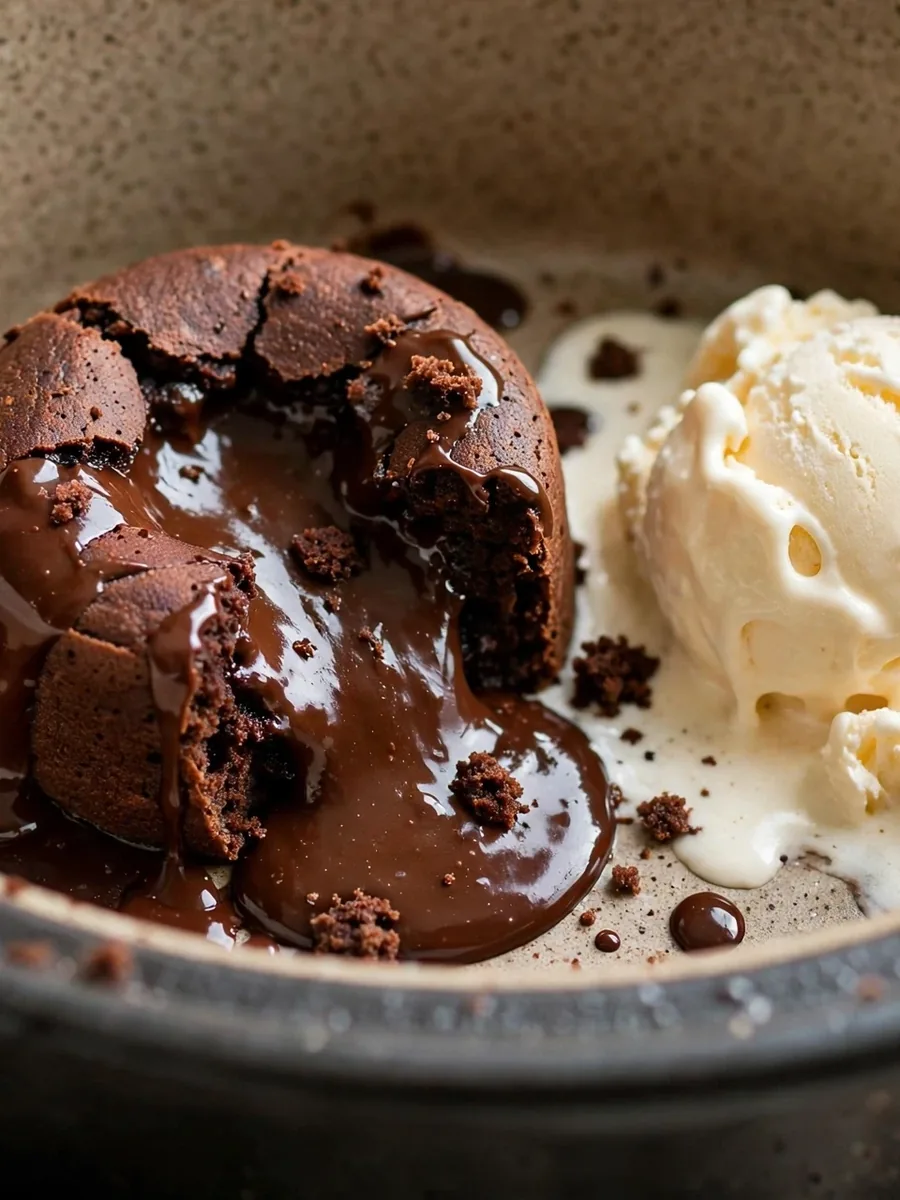
The crock-pot can handle dessert too. Chocolate lava cake, rice pudding, monkey bread, and cherry dump cake all cook in the slow cooker without turning on the oven, which is a real help on a hot day or a busy holiday.
Lava cake is the simplest: chocolate chips and chocolate pudding create a rich, gooey cake right in the pot, and it is best with a scoop of vanilla ice cream. Rice pudding is the most hands-off, since the rice, milk, and cinnamon cook together for hours into a creamy pudding. For single serving sweets, our cozy pot cooked meals include individual dishes that scale the same idea down.
Crock-pot timing table
Most crock-pot recipes give two times: low and high. Low is the safer choice for a full workday, and high is the choice when you start at lunch. Use this table as a starting point and check early the first time you make a recipe, since every slow cooker runs a little hot or a little cool.
| Food | Low | High |
|---|---|---|
| Chicken breasts | 4 to 6 hours | 2 to 4 hours |
| Chicken thighs | 5 to 6 hours | 3 to 4 hours |
| Beef stew | 8 hours | 4 to 5 hours |
| Pork roast or shoulder | 8 to 10 hours | 5 to 6 hours |
| Chili | 6 to 8 hours | 4 hours |
| Soup | 6 to 8 hours | 3 to 4 hours |
| Meatballs in sauce | 5 to 6 hours | 3 hours |
When a recipe says 8 hours on low, it usually means the meat is tender at 7 hours and still good at 9. When it says 4 hours on high, check at 3, because the high setting varies more between cookers than the low setting does.
Food safety rules for the crock-pot
Food safety in a slow cooker comes down to temperature. Bacteria grow fastest between 40 and 140 degrees F, so the food needs to pass through that range quickly and stay above it. A slow cooker on low takes a few hours to reach a safe temperature, which is why the rules below matter.
The frozen meat rule
Thaw the meat first. Raw frozen chicken or pork stays too long between 40 and 140 degrees F in a slow cooker, because the pot heats too slowly to move frozen meat through the danger zone in time. Thaw meat in the fridge overnight, or in cold water if you are short on time, and never put a frozen roast straight into the pot.
Do not reheat leftovers in the slow cooker either. The pot heats too slowly for safe reheating, so warm leftovers on the stove or in the microwave until steaming, then hold them in the cooker on warm if you need to serve a crowd.
Scaling, storage, and reheating
Scaling a crock-pot recipe is mostly about the pot. A recipe written for a 6 quart cooker doubles cleanly into an 8 quart cooker, but it does not double into the same 6 quart pot, because the pot would be too full to heat safely. Halving a recipe works in a smaller cooker, but watch the time, since a half full pot cooks faster than a full one.
Leftovers keep in the fridge for 3 to 4 days in shallow covered containers. The beef stew above keeps 4 days in the fridge and 3 months in the freezer, in airtight containers. Thaw frozen stew overnight in the fridge, then warm it gently on the stove or in the microwave until steaming.
Frequently asked questions
How long does beef stew take in a crock-pot?
Beef stew takes 8 hours on low or 4 to 5 hours on high. The stew in this guide cooks on low for 8 hours, until the meat and vegetables are tender. Check at 7 hours the first time you make it, since every slow cooker runs a little hot or a little cool.
Can you overcook food in a crock-pot?
Yes. Meat cooked too long dries out, and vegetables turn mushy. Chicken breasts are the first to suffer, so check them early on high. Use the timing table in this guide, and check any recipe 30 minutes before the timer ends the first time you make it.
Do you need to brown meat before putting it in a crock-pot?
You do not have to, but browning adds flavor and color that the slow cooker cannot make on its own. The beef stew in this guide browns the meat and vegetables first, and it is worth the extra pan. Dump and go recipes skip the browning and still work when the sauce carries the flavor.
What size crock-pot do I need?
A 6 quart oval slow cooker is the size most recipes are written for, and it serves about 6 people. Fill the pot half to two thirds full. A pot that is too empty cooks too hot, and a pot that is too full takes too long to reach a safe temperature.
Can I cook dessert in a crock-pot?
Yes. Chocolate lava cake, rice pudding, monkey bread, and cherry dump cake all cook in the slow cooker without the oven. Lava cake is the simplest, and rice pudding is the most hands-off, since the rice, milk, and cinnamon cook together for hours.