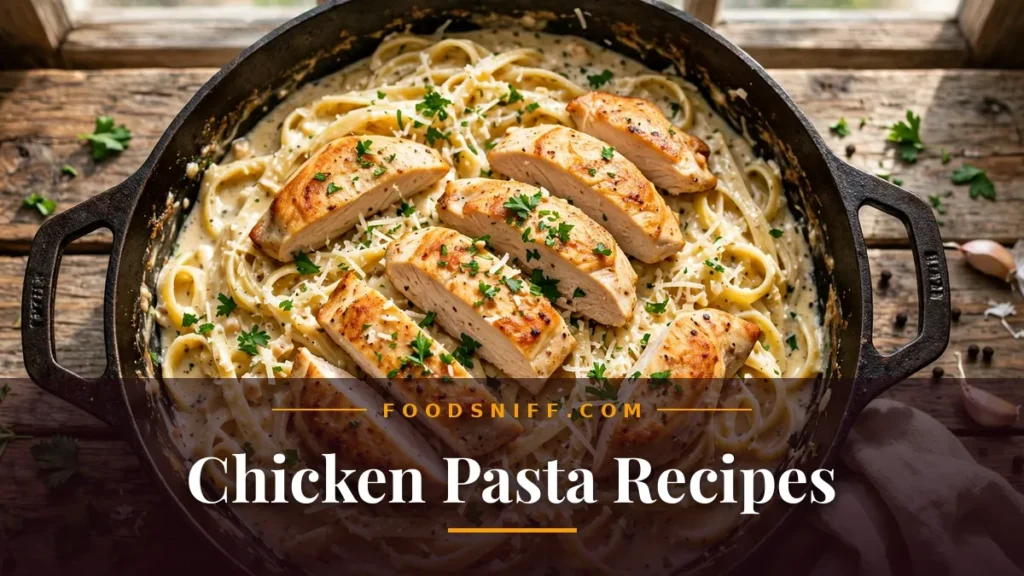
Chicken pasta recipes pair cooked chicken with pasta in a sauce, and the four styles that cover most weeknights are creamy garlic parmesan, tomato, pesto, and one pot. The lead recipe below is a creamy garlic parmesan version that serves four in 30 minutes. Pick a style from the table, then cook it the same night.
Chicken pasta earns its place on busy nights because it uses one pan, one pot, and ingredients most kitchens already hold. The chicken brings protein and the pasta brings comfort, while the sauce decides the mood.
This guide gives you one full recipe and three shorter ones you can cook as written, plus the ratios and methods that keep every version from turning mushy or dry. These recipes sit well beside other weeknight Italian dinners when you want a second option later in the week.
The four styles at a glance
Start by picking a style, not a recipe. Each style below uses the same chicken and pasta base, so the only real choice is the sauce. The table shows what each one needs and how long it takes.
| Style | Sauce base | Best shape | Time |
|---|---|---|---|
| Creamy garlic parmesan | Heavy cream, broth, Parmesan | Fettuccine or penne | 30 minutes |
| Tomato | Crushed tomatoes, cream | Penne or rigatoni | 30 minutes |
| Pesto | Prepared pesto, pasta water | Fusilli or penne | 25 minutes |
| One pot | Broth, cream, Parmesan | Penne or orzo | 30 minutes |
If your table leans cheesy, these cheesy chicken dinner ideas give you a second option for another night. For tonight, pick one row from the table and cook it straight through.
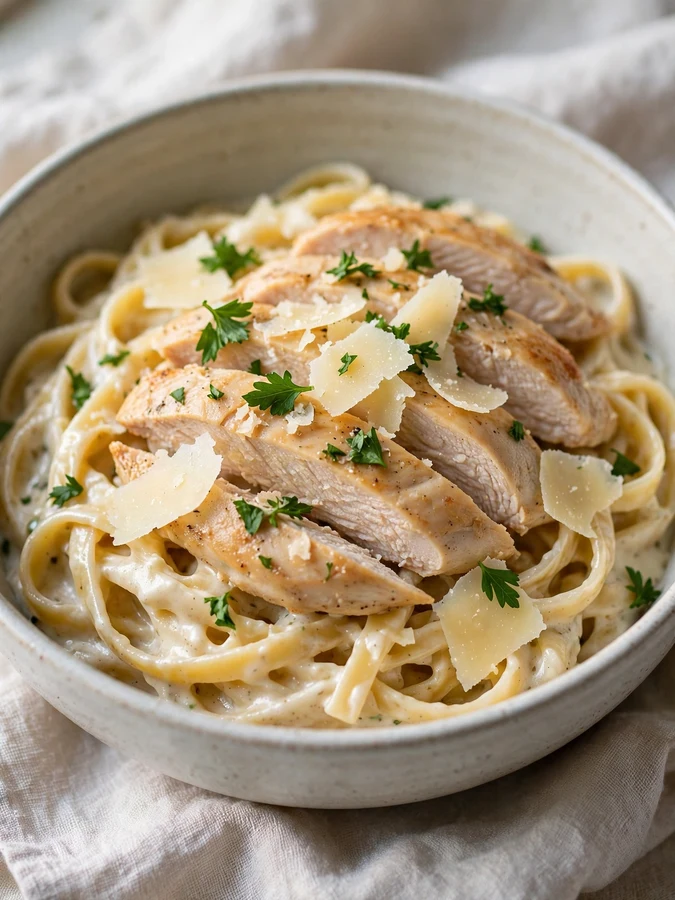
Creamy garlic parmesan chicken pasta
This is the lead recipe, and it is the one to cook first. Sliced chicken browns in the skillet, then the sauce builds in the same pan from the browned bits the chicken leaves behind. Parmesan goes in only after the cream has reduced a little, which keeps the sauce smooth instead of grainy. The whole pan serves four in 30 minutes.
Prep time: 10 minutes
Cook time: 20 minutes
Total time: 30 minutes
Serves: 4
Calories: 620 per serving (1 1/2 cups)
Ingredients
- 1 lb boneless, skinless chicken breasts, sliced
- 2 tablespoons olive oil
- 1 teaspoon salt
- 1/2 teaspoon black pepper
- 1 teaspoon garlic powder
- 3 cloves garlic, minced
- 2 cups heavy cream
- 1/2 cup chicken broth
- 1 cup grated Parmesan cheese
- 8 oz fettuccine or penne pasta, cooked and drained
- 1 tablespoon butter (optional, for richness)
- Chopped parsley, for garnish
How to make it
Steps:
- Season the sliced chicken on both sides with the salt, black pepper, and garlic powder.
- Heat the olive oil in a large skillet over medium heat. Add the chicken and cook 5 to 6 minutes, turning once, until golden and cooked through. Move the chicken to a plate.
- Add the minced garlic to the same skillet and cook for 30 seconds, just until it smells fragrant.
- Pour in the heavy cream and chicken broth. Stir, scraping up the browned bits, and simmer 4 to 5 minutes until the sauce thickens slightly.
- Stir in the Parmesan and the butter, if using. Keep the heat low and stir until the cheese melts and the sauce turns creamy.
- Add the cooked pasta and toss until every strand is coated.
- Return the chicken to the skillet and stir it through. Simmer 2 more minutes, then serve hot with parsley and extra Parmesan.
Why this method works
Cooking the chicken first and taking it out of the pan does two jobs. It keeps the chicken from overcooking while the sauce simmers, and it leaves browned bits in the skillet that flavor the cream. Adding Parmesan after the cream has reduced gives the cheese a warm, fluid base to melt into, so it stays smooth.
Check the thickest piece of chicken with a thermometer before serving. Chicken is done at 165 degrees F, and the USDA safe temperature chart lists that number for all poultry. A quick check beats guessing, and it keeps the chicken juicy instead of cooked past done.
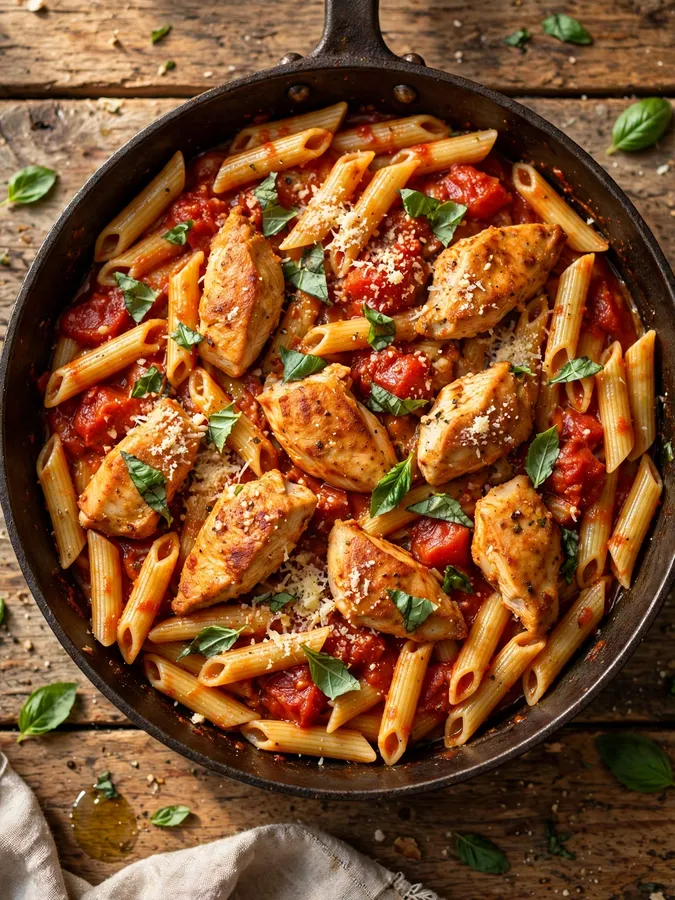
Tomato chicken pasta
Tomato chicken pasta is the lightest of the four styles, and it is the one to cook when you want bright flavor without a heavy sauce. Crushed tomatoes simmer with garlic and Italian seasoning, then a little cream rounds the edges. It serves four in 30 minutes.
Prep time: 10 minutes
Cook time: 20 minutes
Total time: 30 minutes
Serves: 4
Ingredients
- 1 lb boneless, skinless chicken breasts, cut into bite-size pieces
- 12 oz penne or rigatoni pasta
- 2 tablespoons olive oil
- 3 cloves garlic, minced
- 1 can (28 oz) crushed tomatoes
- 1 teaspoon Italian seasoning
- 1/2 cup heavy cream
- 1/2 cup grated Parmesan cheese
- Fresh basil leaves, torn, for serving
- Salt and black pepper, to taste
How to make it
- Cook the pasta in salted water until just shy of al dente, then drain. Save 1/2 cup of the pasta water.
- Heat the olive oil in a large skillet over medium-high heat. Add the chicken, season with salt and pepper, and cook 6 to 7 minutes until golden and cooked through. Move it to a plate.
- Add the garlic and cook 30 seconds. Pour in the crushed tomatoes and Italian seasoning, then simmer 8 to 10 minutes until the sauce thickens slightly.
- Stir in the cream and Parmesan. Return the chicken to the pan, add the pasta, and toss. Add a splash of pasta water if the sauce needs loosening.
- Serve hot with torn basil and extra Parmesan.
Chicken pesto pasta
Chicken pesto pasta is the fastest style here, and it asks the least of the cook. The pesto does the seasoning work, so the ingredient list stays short and the pan stays on the heat for about 25 minutes. Use a prepared pesto you like, since its flavor carries the dish.
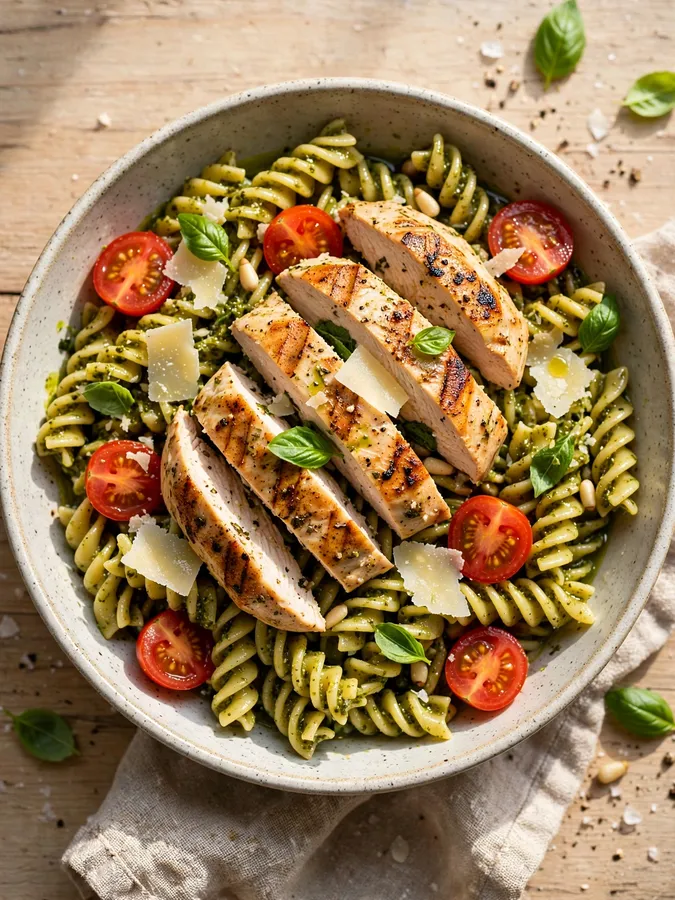
Prep time: 10 minutes
Cook time: 15 minutes
Total time: 25 minutes
Serves: 4
Ingredients
- 1 lb boneless, skinless chicken breasts, sliced
- 12 oz fusilli or penne pasta
- 2 tablespoons olive oil
- 1/2 cup prepared basil pesto
- 1 cup cherry tomatoes, halved
- 1/4 cup grated Parmesan cheese
- Salt and black pepper, to taste
How to make it
- Cook the pasta in salted water until al dente. Drain, saving 1/2 cup of pasta water.
- Heat the olive oil in a large skillet over medium-high heat. Season the chicken, then cook 5 to 6 minutes per side until golden and cooked through. Slice it into strips.
- Turn the heat to low. Add the pasta, pesto, and cherry tomatoes to the skillet and toss. Add pasta water a spoonful at a time until the pesto coats the pasta in a thin, glossy layer.
- Stir in the Parmesan, top with the sliced chicken, and serve right away.
One-pot chicken pasta
One-pot chicken pasta cooks the pasta in the same pot as the chicken and sauce, so dinner needs one pot and no colander. The trick is the liquid amount: too much leaves soup, too little leaves crunchy pasta. The ratio below works for penne, and the pasta finishes in the sauce, which makes the sauce cling better.
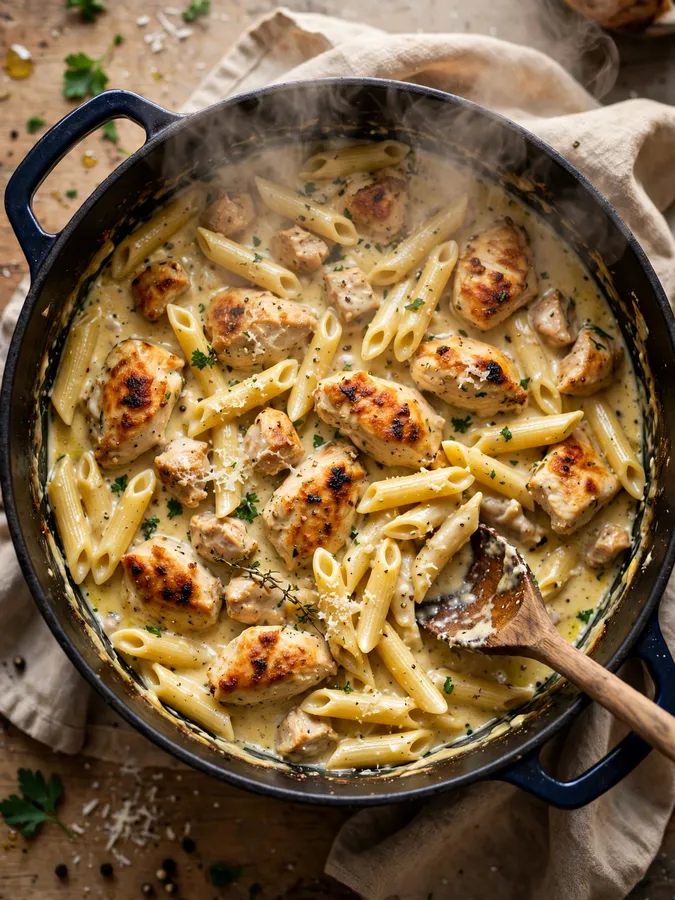
Prep time: 10 minutes
Cook time: 20 minutes
Total time: 30 minutes
Serves: 4
Ingredients
- 1 lb boneless, skinless chicken breasts, cut into bite-size pieces
- 12 oz penne pasta
- 2 tablespoons olive oil
- 3 cloves garlic, minced
- 2 cups chicken broth
- 1 cup water
- 1 cup heavy cream
- 1 cup grated Parmesan cheese
- 1 teaspoon Italian seasoning
- Salt and black pepper, to taste
How to make it
- Heat the olive oil in a large pot or Dutch oven over medium-high heat. Season the chicken, then cook 5 to 6 minutes until golden. Move it to a plate.
- Add the garlic and cook 30 seconds. Pour in the broth and water, scraping up the browned bits, and bring it to a boil.
- Add the penne and Italian seasoning. Reduce the heat to a steady simmer, cover, and cook 10 to 12 minutes, stirring once halfway through so the pasta does not stick.
- Stir in the cream and Parmesan. Return the chicken to the pot and simmer 2 minutes more. Rest the pot off the heat for 2 minutes so the sauce thickens, then serve.
Which pasta shapes work best
Shape matters more than most recipes admit, because the shape decides how much sauce reaches each bite. Short shapes with ridges or curves trap sauce, long flat shapes suit cream, and tiny shapes belong in soups. Pick from the table and the sauce will sit on the pasta instead of pooling at the bottom of the bowl.
| Shape | Best sauce | Why it works |
|---|---|---|
| Fettuccine | Creamy garlic parmesan | Wide flat strands hold a thick cream sauce |
| Penne | Creamy, tomato, one pot | Tubes and ridges catch sauce inside and out |
| Rigatoni | Tomato | Large tubes hold chunky tomato sauce |
| Fusilli | Pesto | Spirals grip pesto in every twist |
| Orzo | One pot | Small shape cooks fast and thickens the sauce |
| Ditali | One pot, soupy styles | Tiny tubes suit brothy, spoonable pasta |
For a closer look at the small shapes, the ditali pasta guide explains where ditali fits and what to cook with it. Whatever shape you pick, cook it one minute short of the package time when it will finish in sauce, since it keeps cooking in the pan.
Which chicken cuts to use
Chicken breast is the default cut for chicken pasta, and it works well when it is sliced thin and cooked just until done. Thick breasts cook unevenly, so slice them in half across the middle before they hit the pan. Thin, even pieces brown fast and stay juicy.
Chicken thighs are the forgiving option. They carry more fat, so they stay moist even if they cook a minute too long, and they suit the one-pot version well. Trim the visible fat, cut them into even pieces, and brown them the same way as breast meat.
Rotisserie chicken is the fastest option. Shred it, skip the browning step, and stir it in during the last 2 minutes so it warms through without drying out. It suits the tomato and pesto versions best, since those sauces come together quickly. For a crunchy coated version, start with the krispie chicken method, then slice the cooked chicken over the pasta instead of tossing it through the sauce.
How to cook pasta and chicken in one pot without mush
Mushy one-pot pasta comes from two mistakes: too much liquid and too much time. The pasta keeps absorbing liquid after the heat goes off, so it needs to come off the heat while it still has a firm bite. Pull it when it is just shy of al dente and let the 2-minute rest finish it.
Use 3 cups of total liquid for 12 oz of penne, which is 2 cups of broth plus 1 cup of water in the recipe above. Stir once halfway through cooking so the pasta does not clump on the bottom, then leave it alone so the starch stays in the sauce. Add the cream and cheese only after the pasta is nearly done, since dairy scorches when it boils hard for long.
Brown the chicken first and take it out while the pasta cooks. Chicken that simmers with the pasta for the full 12 minutes turns rubbery, and it also sheds water that thins the sauce. Return it for the last 2 minutes only.
Sauce ratios that work every time
Every sauce in this guide follows a ratio, and the ratio is what makes the recipe repeatable. The amounts below cover 8 oz of dry pasta, which serves about four people. Scale the sauce with the pasta, not by feel, and the result stays consistent.
| Sauce | Amount per 8 oz pasta | Notes |
|---|---|---|
| Creamy garlic parmesan | 2 cups cream, 1/2 cup broth, 1 cup Parmesan | Add cheese off the boil so it melts smooth |
| Tomato | 2 cups crushed tomatoes, 1/2 cup cream | Simmer tomatoes first, cream goes in last |
| Pesto | 1/3 to 1/2 cup pesto, 2 to 4 tbsp pasta water | Add pesto off the heat so it stays bright |
| One pot | 3 cups liquid total, 1 cup cream, 1 cup Parmesan | Liquid includes broth and water together |
If a sauce turns out too thick, loosen it with pasta water a spoonful at a time. The starch in the water helps the sauce cling instead of sliding off. If it turns out too thin, simmer it for 2 more minutes before adding the pasta, since the pasta itself will not fix a watery sauce.
How to store, reheat, and freeze chicken pasta
Cool leftovers within 2 hours and store them in a sealed container in the fridge for 3 to 4 days. The pasta will absorb some sauce as it sits, so it will look drier the next day. That is normal, and a splash of liquid fixes it when you reheat.
Reheat on the stove over low heat with a splash of chicken broth or cream, stirring until the chicken is hot through. Cream sauces split when they boil, so keep the heat gentle and stop as soon as it steams. In the microwave, use 50 percent power in 1-minute bursts, stirring between each one.
Chicken pasta freezes for up to 3 months in a sealed, freezer-safe container. Tomato and pesto versions freeze best, since their sauces hold up after thawing. Cream sauces can separate a little, so stir in a spoonful of cream while reheating to bring them back. Thaw overnight in the fridge, never on the counter.
Scaling chicken pasta for a crowd
Doubling the recipe works, but only in a pot big enough to hold it. A doubled batch needs a large Dutch oven or a stockpot, since pasta swells and sauce bubbles up. In a small pot, the pasta cooks unevenly and the top stays crunchy while the bottom turns to mush.
For eight or more servings, cook the pasta and sauce in two pots, or cook one big batch of sauce and two separate pots of pasta, then combine them at serving time. Season in stages and taste before adding more salt, since doubling salt by the book often overshoots. For more crowd friendly pasta dishes, a cold pasta salad covers the same table without a second hot pot.
For a crowd of ten or more, turn the dish into a baked version instead. Toss the cooked pasta, chicken, and sauce in a large baking dish, top with extra cheese, and bake at 375 degrees F for 20 minutes until bubbling. The casserole recipes guide shows how that format works across different mains.
What to serve with chicken pasta
Chicken pasta is rich, so the sides should stay light and crisp. A green salad with a sharp vinaigrette cuts through the cream, and garlic bread handles the last of the sauce. Roasted broccoli or green beans add color and crunch without another heavy dish.
Keep dessert simple when the main is this filling. Fresh fruit, a small scoop of sorbet, or a light cookie ends the meal without a second rich course. Set the table with extra Parmesan and chili flakes so each person seasons their own bowl.
Chicken pasta rewards one habit above all: cook the chicken just until done, and let the sauce and the pasta finish together. Pick one of the four styles, follow its ratio, and the pan will be empty before the table cools.
Frequently asked questions
How do you keep chicken pasta from getting mushy when you cook it in one pot?
Use 3 cups of total liquid for 12 oz of penne, and pull the pasta off the heat while it is still just shy of al dente. Stir once halfway through so it does not clump, and let the 2-minute rest off the heat finish it. Add cream and cheese only after the pasta is nearly done.
Can you reheat chicken pasta without the sauce splitting?
Yes, if you keep the heat gentle. Reheat on the stove over low heat with a splash of chicken broth or cream, stirring until it steams. Cream sauces split when they boil, so stop as soon as it is hot. In the microwave, use 50 percent power in 1-minute bursts and stir between each one.
Can you freeze chicken pasta?
Yes, for up to 3 months in a sealed, freezer-safe container. Tomato and pesto versions freeze best, since their sauces hold up after thawing. Cream sauces can separate a little, so stir in a spoonful of cream while reheating. Thaw overnight in the fridge, never on the counter.
What is the best pasta shape for chicken pasta?
Penne suits most styles because its tubes and ridges catch sauce inside and out. Fettuccine is best for creamy sauces, fusilli grips pesto in every twist, and rigatoni holds chunky tomato sauce. For soupy one-pot versions, small shapes like orzo or ditali work best.
How long does chicken pasta last in the fridge?
Chicken pasta lasts 3 to 4 days in a sealed container in the fridge. Cool it within 2 hours of cooking. The pasta absorbs some sauce as it sits, so it looks drier the next day; a splash of broth or cream while reheating brings it back.