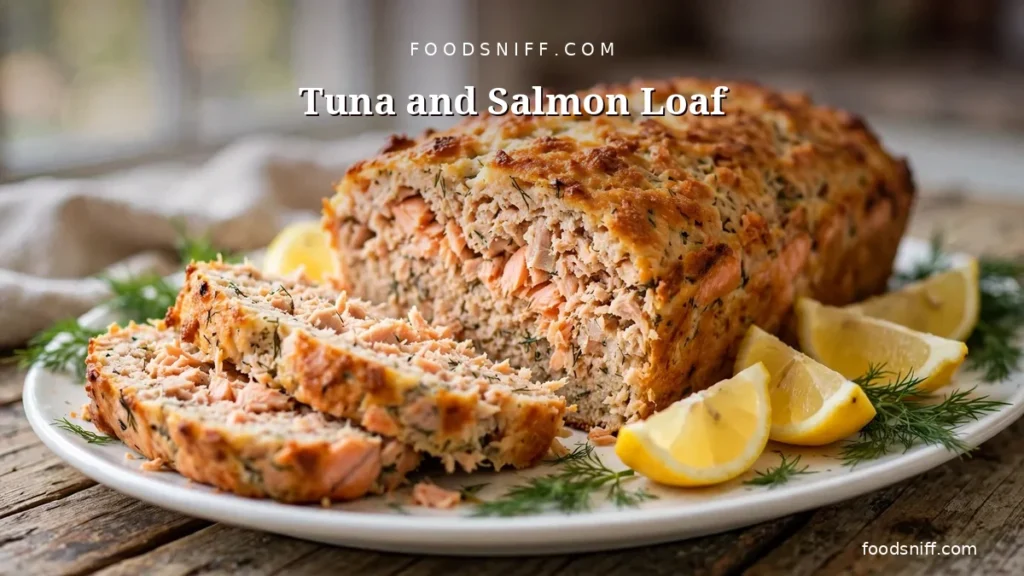
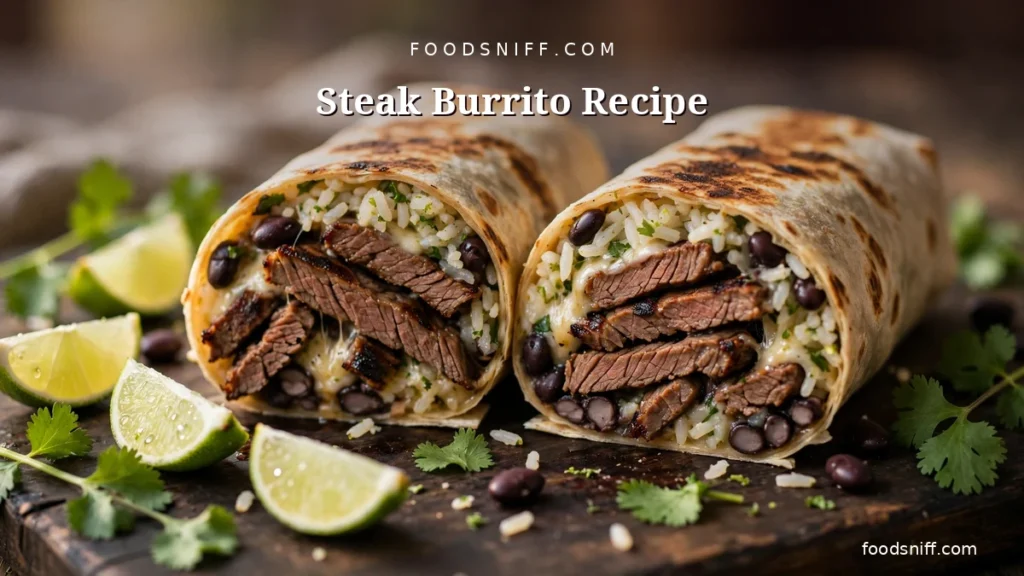
Steak Burrito in About an Hour
This steak burrito recipe uses flank or skirt steak, a lime and cumin marinade, cilantro lime rice, black beans, cheese, pico de gallo, and avocado. It takes about 55 minutes from marinade to table, and most of that time the steak is sitting in the fridge doing the work for you.
A good steak burrito starts before the skillet gets hot. The steak needs a short marinade, the tortilla needs real warmth, and the fillings need an order. Skip any one of those and the burrito falls apart in your hands or turns soggy by the third bite.
The part other recipes rush is the build. Below you get the cut comparison, the marinade timing, and the layering order that holds a loaded burrito together, plus the fixes for the three ways burritos usually fail.
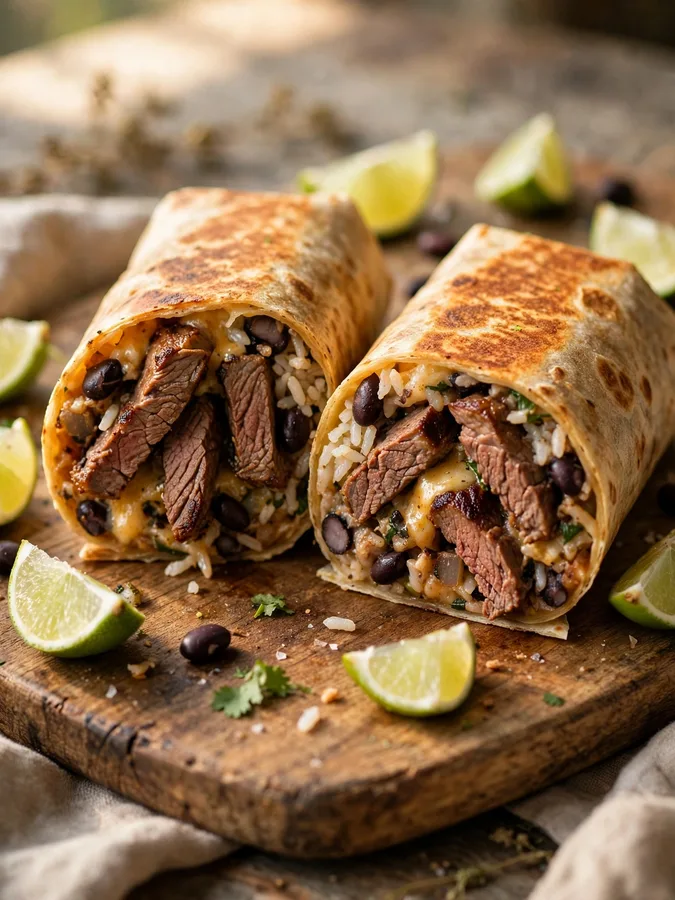
Which Cut of Steak Works Best for Burritos
Flank and skirt steak lead every serious burrito recipe for the same reason. Both are lean, full of beef flavor, and thin enough to sear fast and slice into strips. They also drink up a marinade in 30 minutes, which matters on a weeknight.
Sirloin costs a little more and stays tender with less fuss. It suits cooks who worry about overcooking a thin cut. Ribeye tastes rich, but its fat can leak into the tortilla and soften it, so it works better in a bowl than inside a wrap.
| Cut | Flavor | Best for | Watch out for |
|---|---|---|---|
| Skirt steak | Bold, beefy | Carne asada style burritos | Cooks fast, dries out past medium |
| Flank steak | Lean, clean beef flavor | Slicing into even strips | Tough if sliced with the grain |
| Top sirloin | Mild, tender | Beginners, thicker slices | Less flavor, needs a strong marinade |
| Ribeye | Rich, marbled | Steak bowls, not wraps | Fat softens the tortilla |
Skirt Steak
Skirt steak is the classic carne asada cut. It has loose fibers that soak up lime, garlic, and cumin, and it sears in about 2 to 3 minutes per side. Buy it when you want the strongest beef flavor and you can watch the pan closely.
Flank Steak
Flank steak is leaner and a little more even in thickness, so it cooks predictably. Slice it thin against the grain and it turns tender. It is the safest pick if you are buying one cut for the whole family.
Sirloin and When to Pick It
Top sirloin forgives a minute too long on the heat. It also slices into neat strips without shredding. Pick sirloin when the store is out of skirt and flank, or when you want a milder steak that lets the toppings lead.
The Marinade That Does the Heavy Lifting
A burrito marinade has two jobs. The lime juice and salt season the meat through, and the oil carries the spices onto every strip. Garlic, cumin, chili powder, smoked paprika, and oregano give it a warm, smoky base without heat that overwhelms the other fillings.
What Goes In
Whisk 3 tablespoons olive oil, the juice of 2 limes, 3 minced garlic cloves, 1 teaspoon cumin, 1 teaspoon chili powder, half a teaspoon smoked paprika, half a teaspoon dried oregano, 1 teaspoon kosher salt, and half a teaspoon black pepper.
Pour it over 1 and a half pounds of steak in a shallow dish and turn the meat to coat it.
How Long to Marinate
Thirty minutes is the floor. The flavor reaches the surface and the salt starts working in that time. Two to 4 hours is better, and it fits a normal afternoon: mix the marinade after lunch, cook at dinner.
Do not push past 6 hours. The lime juice keeps working on the meat fibers, and the outside turns soft and a little mushy. Averie Cooks gives the same warning for its California burrito, and it holds here too: longer is not automatically better with an acidic marinade.
How to Make a Steak Burrito
Prep time: 40 minutes | Cook time: 15 minutes | Total time: 55 minutes | Serves: 4 | Category: Main Dishes
Ingredients
For the steak and marinade:
- 1 and 1/2 pounds flank steak or skirt steak
- 3 tablespoons olive oil
- Juice of 2 limes
- 3 garlic cloves, minced
- 1 teaspoon ground cumin
- 1 teaspoon chili powder
- 1/2 teaspoon smoked paprika
- 1/2 teaspoon dried oregano
- 1 teaspoon kosher salt
- 1/2 teaspoon black pepper
For the burritos:
- 4 large flour tortillas, 12 inch burrito size
- 2 cups cooked cilantro lime rice, warm
- 1 can (15 ounces) black beans, drained and rinsed
- 1 cup shredded Monterey Jack or cheddar cheese
- 1 cup pico de gallo, drained
- 1 avocado, sliced
- 1/2 cup sour cream
- 1/4 cup chopped fresh cilantro
- Lime wedges, for serving
Steps
- Mix the marinade in a shallow dish. Add the steak, turn it to coat, cover, and refrigerate for 30 minutes to 4 hours.
- Take the steak out of the fridge 15 minutes before cooking. Pat it dry with paper towels so the surface sears instead of steaming.
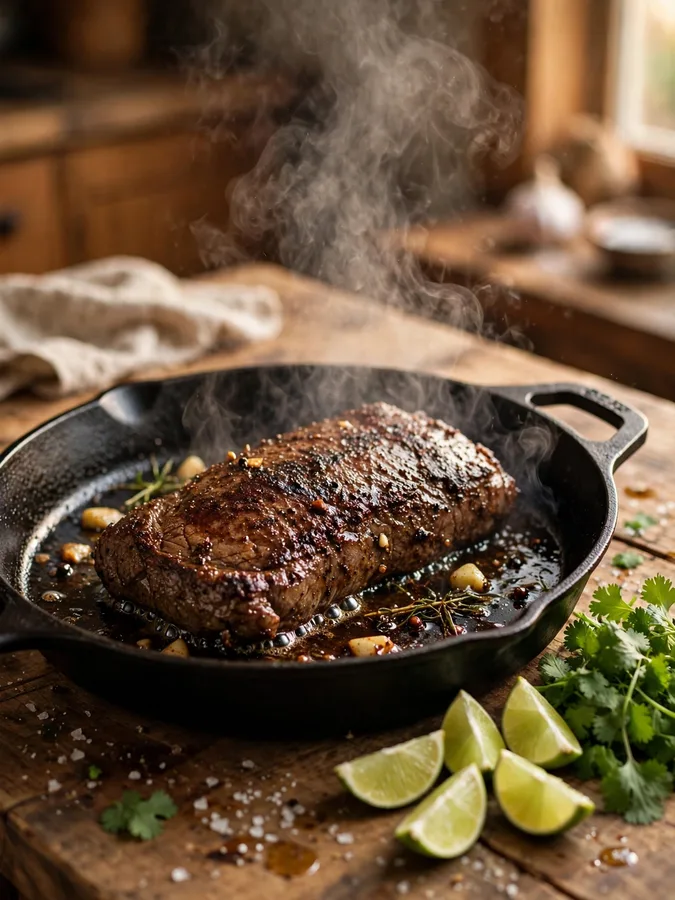
- Heat a cast iron skillet over medium high heat until a drop of water sizzles and vanishes. Add a thin film of oil.
- Lay the steak in the pan and leave it alone for 3 to 4 minutes per side. You want a dark crust. Check the thickest part with a thermometer.
- Move the steak to a cutting board and rest it for 5 to 10 minutes. The juices settle back into the meat instead of running onto the board.
- Slice the steak thin against the grain, then cut the strips into bite size pieces. Look for the lines running through the meat and cut across them.
- Warm each tortilla in a dry skillet for about 20 seconds per side, then stack them under a clean kitchen towel.
- Build each burrito in the order below, fold the sides in, roll from the bottom, and toast seam side down for 1 to 2 minutes.
The Build Order That Keeps a Burrito Together
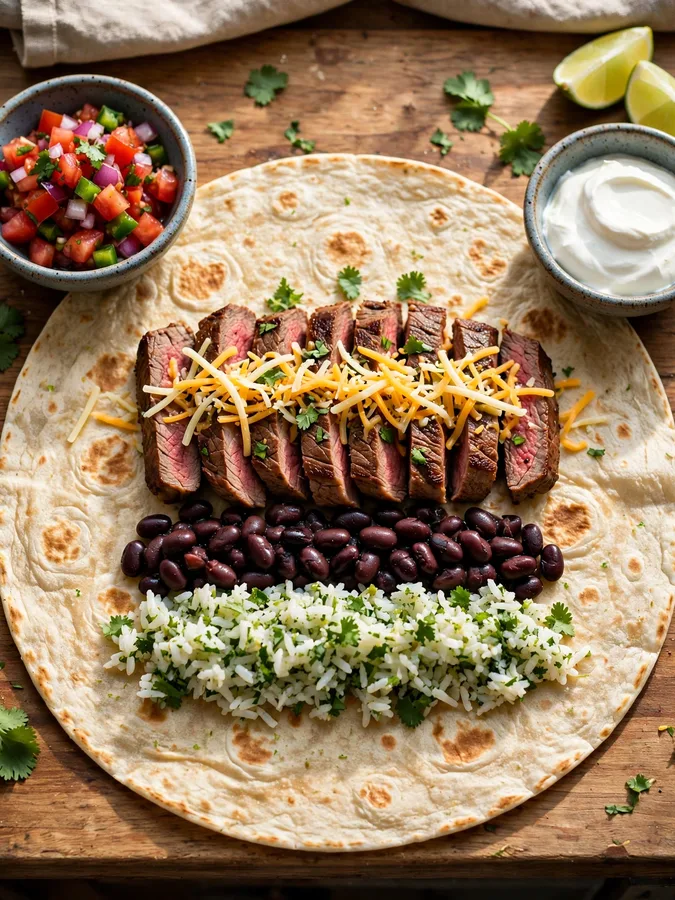
This is the section most recipes skip, and it is the reason so many homemade burritos split open. A burrito holds together when wet fillings stay away from the tortilla and the cheese melts into a kind of glue. The order below does both.
How Much Filling Per Burrito
Aim for about 2 and a half cups of filling per burrito. That means roughly half a cup of rice, a third of a cup of beans, a generous handful of steak, a quarter cup of cheese, and a few spoonfuls of pico and avocado. More than that and the tortilla cannot close.
Keep the filling in a tight line down the center, with at least 2 inches of bare tortilla on each side. Spread it too wide and the ends have nothing to fold over.
The line should sit slightly below center, closer to you, so the roll has room to travel.
Warm the Tortilla First
A cold tortilla cracks. A warm one bends.
Twenty seconds per side in a dry skillet is enough, or wrap a stack in a damp paper towel and microwave for 15 to 20 seconds.
Do not overheat them. A tortilla left on the heat too long dries out and turns stiff, which is worse than cold. Warm, soft, and a little steamy is the target. If a tortilla tears while you roll, it was either cold or overfilled, and warming the next one fixes the first problem.
Fold, Tuck, and Toast Seam Side Down
Spread a thin line of sour cream down the center first. It acts as a moisture barrier between the rice and the tortilla. Then add rice, beans, steak, cheese, pico, and avocado in that order, with the wettest items in the middle of the pile.
Fold the left and right sides in, then lift the bottom edge up and over the filling. Tuck it tight under the pile as you roll away from yourself. Set the burrito seam side down in the hot skillet for 1 to 2 minutes. The heat seals the fold and crisps the outside, so the burrito holds its shape when you pick it up.
Why Burritos Fall Apart or Go Soggy
Three problems cause most burrito failures, and each one has a plain fix. Work through them in order the next time a burrito splits or soaks through.
Torn Tortillas
Tears come from cold tortillas, stale tortillas, or too much filling. Warm every tortilla and check the date on the bag. Measure the filling instead of eyeballing it.
A 12 inch tortilla is the right size for this recipe. A 10 inch one will fight you on the last fold.
Soggy Bottoms
Soggy burritos come from wet fillings touching the tortilla. Drain the pico de gallo in a strainer for a minute before you build. Rinse the beans and shake them dry.
Put the sour cream and rice down first so they shield the tortilla from the juicy steak and salsa. Toasting seam side down after rolling drives off the last bit of surface moisture.
Cold Centers
A cold center usually means the rice or beans went in cold. Warm both before building, and slice the steak while it is still warm from its rest. A burrito assembled from warm parts stays warm. One built from fridge cold parts never catches up, even after toasting.
Variations Worth Trying
The California burrito is the best known twist. Add a handful of crispy French fries inside the wrap, with the cheese melting over them. The California burrito is a San Diego creation built around carne asada and fries, and the fries belong in a single layer so the burrito still rolls.
For a breakfast version, swap the rice for scrambled eggs and add crispy hash browns. For heat, add sliced jalapenos or a spoonful of chipotle in adobo. For a lighter wrap, use a low carb tortilla and skip the rice, doubling the beans and avocado instead.
If steak night turns into chicken night, the same rice, beans, and toppings work over baked chicken hindquarters recipes from this site. The build order stays the same, only the protein changes.
Make Ahead, Storage, and Freezing
Steak burritos suit a weeknight because the parts keep separately. Cook the steak and rice on Sunday, and the assembly takes 10 minutes on a busy night.
Fridge
Store cooked steak in an airtight container for up to 3 days. Keep the rice, beans, pico, and avocado separate so nothing turns wet. Assembled burritos keep for up to 3 days wrapped in foil, but leave out the avocado and sour cream and add them fresh.
Freezer
Freeze burritos without sour cream, avocado, or pico. Wrap each one tight in foil, then slide the wrapped burritos into a freezer bag and press out the air. They keep for up to 2 months.
Reheating Without Drying Out
The oven beats the microwave here. Unwrap the burrito, wrap it loosely in foil, and heat at 350 degrees for about 15 minutes. The foil traps steam, so the tortilla softens instead of turning leathery.
A microwave works in a pinch. Wrap the burrito in a damp paper towel and heat in 30 second bursts until warm through. Skip the oven step if the burrito is already toasted, since a second crisping can dry the edges.
What to Serve With Steak Burritos
A steak burrito already carries rice, beans, and vegetables, so the sides can stay simple. Tortilla chips with salsa or guacamole cover the crunch.
For the table, set out extra lime wedges and hot sauce, with sour cream on the side, so everyone seasons their own plate. Leftover steak also folds into tender beef taco fillings for the next night, which stretches one cook into two dinners.
A plate of juicy ground meat dinners makes a good second main when the crowd is large, and deli style stacked sandwiches suit a lunch spread the next day if steak runs out. Both keep the same Tex-Mex mood without repeating the burrito.
Steak Burrito FAQ
How long should I marinate steak for burritos?
At least 30 minutes, and 2 to 4 hours is better. Do not push past 6 hours. The lime juice keeps working on the meat fibers, and the outside turns soft and a little mushy. Mix the marinade after lunch and cook at dinner for an easy window.
How do I keep my burrito from falling apart?
Warm the tortilla first, keep the filling to about 2 and a half cups per burrito, and build in order with the wettest fillings in the middle of the pile. Fold the sides in, roll tight from the bottom, then toast the burrito seam side down for 1 to 2 minutes so the heat seals the fold.
Can I freeze steak burritos?
Yes, but leave out the sour cream, avocado, and pico de gallo. Wrap each burrito tight in foil, slide them into a freezer bag, and press out the air. They keep for up to 2 months. Reheat wrapped loosely in foil at 350 degrees for about 15 minutes, then add the fresh toppings.
A Burrito Built to Hold
Cook the steak hot and fast, rest it, and slice it thin against the grain. Warm the tortillas and build in order, with the wet fillings in the middle. That is the whole method. The USDA lists 145 degrees with a 3 minute rest as the safe minimum for whole cuts of beef, so check the thickest part with a thermometer and let the steak rest before you slice.
Make one tonight and watch where it holds. If the seam stays shut and the last bite is as dry on the outside as the first, the build did its job.