What Is Crab Brûlée?
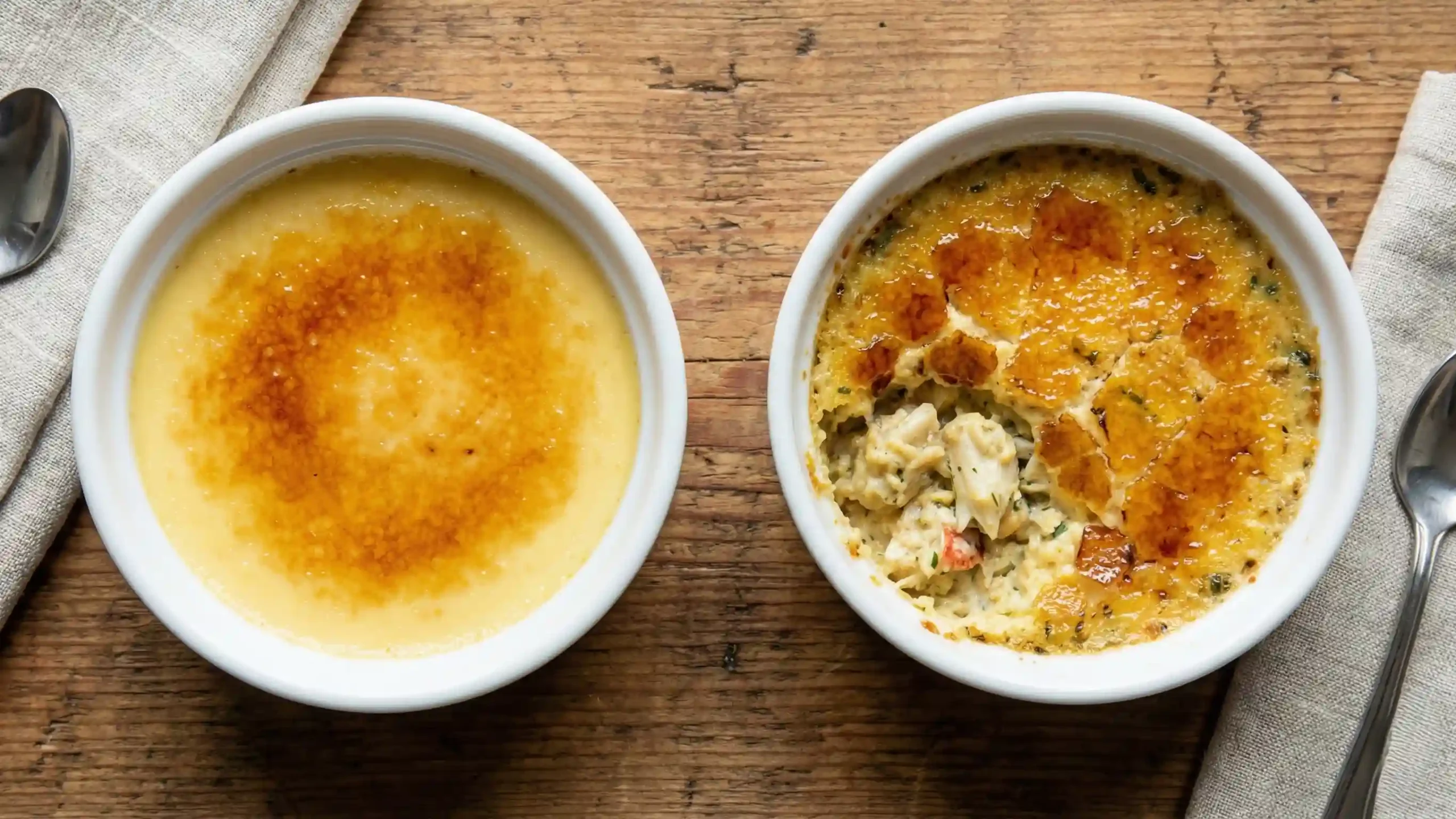
Crab brûlée changes expectations quickly. It takes the framework of classic crème brûlée and changes it into a savory crème brûlée suited for seafood lovers. Think custard, not dessert. Serve it warm or lightly chilled for a rich, smooth taste in this Crab Brulee Recipe.
Crème brûlée is a baked custard made from cream, egg yolks, and sugar. Cook it slowly until it becomes firm and forms a caramelized sugar topping. The method emphasizes regulated heat, a water bath, and cooling to obtain a smooth custard texture.
Savory vs Classic Crème Brûlée
The difference showed up quickly. Classic crème brûlée depends on sugar and vanilla, whereas savory crème brûlée substitutes sweetness for salt, fat, and depth. This creates a clear contrast between sweet and savory custards, which affects how and when you present the dish.
In savory variations, sugar becomes a thin crust, not the focus. The custard below remains creamy, balanced, and grounded.
Why Crab Works in a Custard Base
Crab fits custard naturally. Its gentle sweetness and natural umami flavor mix well with cream and egg yolks. This creates a smooth seafood custard that does not overpower the base. The outcome is a refined crab cream custard that tastes rich but not heavy.
Crab also holds texture nicely. Folded carefully, it provides substance without breaking the custard.
The Origin & Culinary Inspiration Behind Crab Brûlée
This meal didn’t emerge by chance. Crab brûlée arises out of the old-school custard method blended with current savory cookery. That combination is precisely why it seems familiar
French Custard Techniques Explained Simply
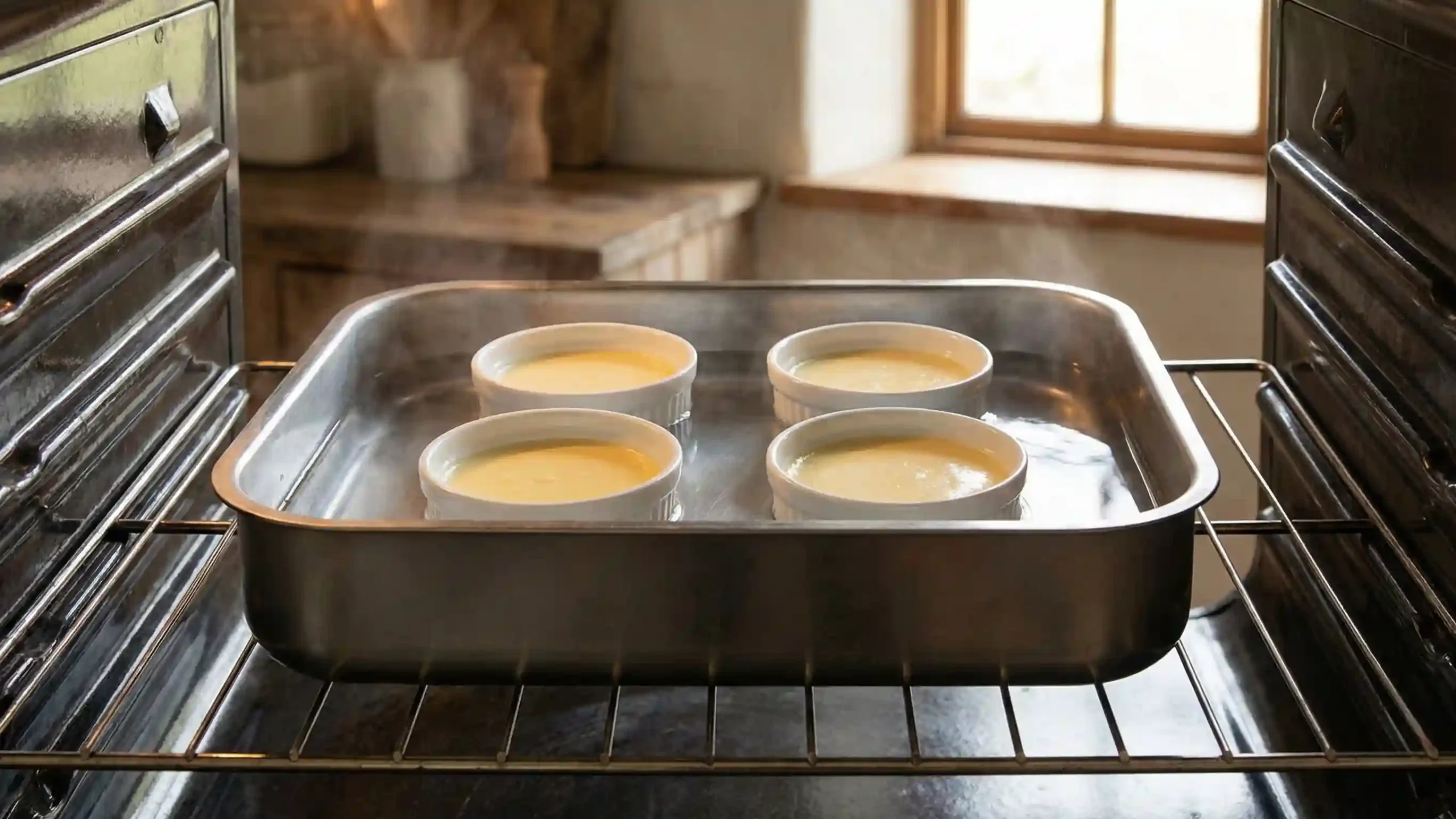
French chefs excelled in custard control. A perfect French custard depends on mild heat, patience, and balance between eggs and cream. The core baked custard technique employs a water bath to retain texture and avoid curdling.
That same strategy continues over here. Only the taste profile changes, not the science.
Professional cooking schools say that baked custards firm up when the inside temperature is between 170°F and 175°F. This allows the egg proteins to thicken gently without separating. This temperature range helps preserve a smooth texture while preventing curdling.
Modern Savory Brûlée Variations
Chefs subsequently extended custard beyond dessert. Today, savory brûlée recipes contain cheese, veggies, and seafood, generally served as appetizers rather than desserts. Crab variants stand out because they blend easily into gourmet seafood appetizers without straining contrast.
The sugar crust stays thin. The custard stays savory. The balance stays clean.
Ingredients for the Best Crab Brulee Recipe
Ingredients determine everything here. When each component pulls its weight, the custard remains smooth, and the crab stays front and center. I concentrate on quality first, then balance.
Best Type of Crab Meat for Brûlée
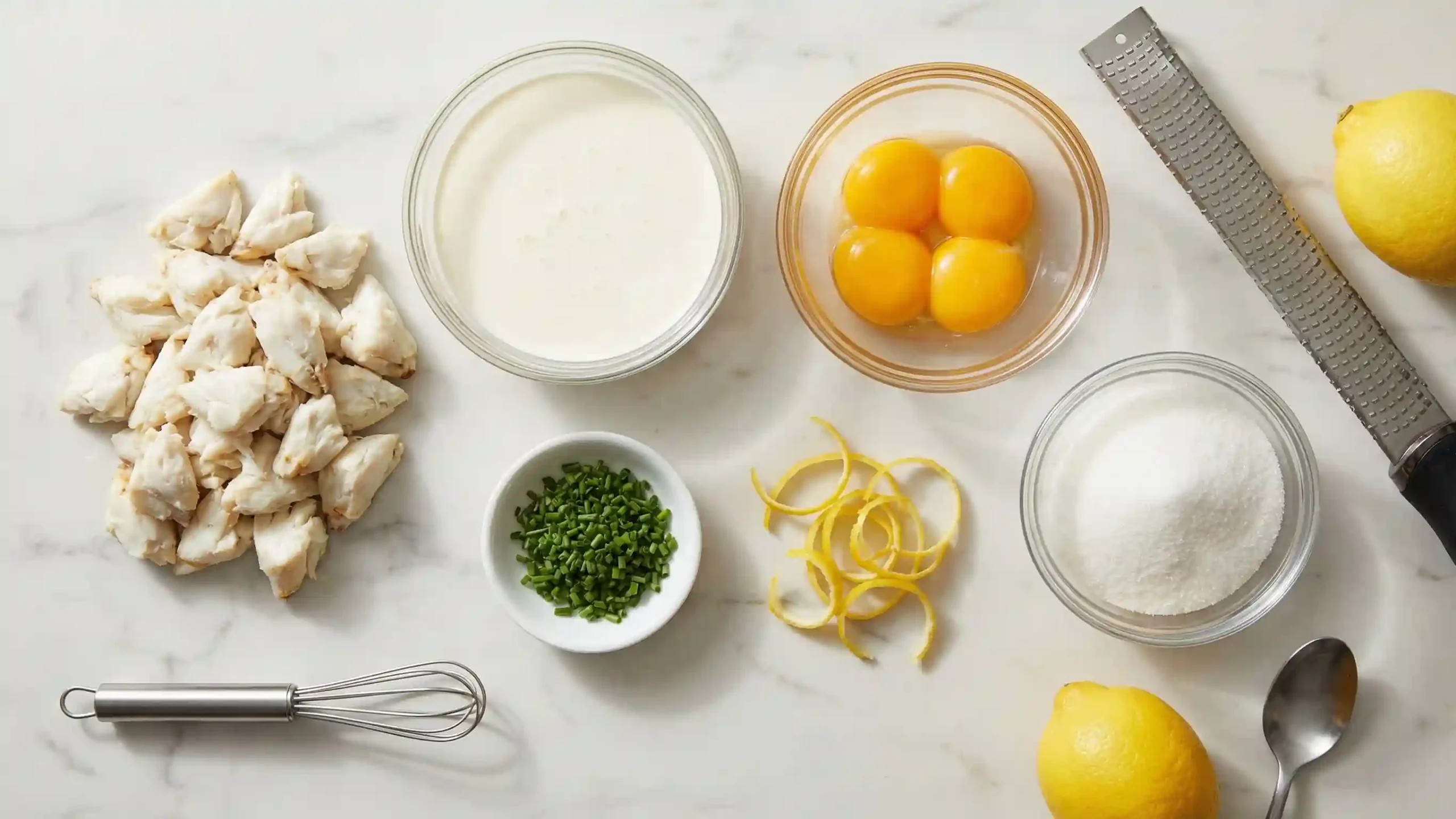
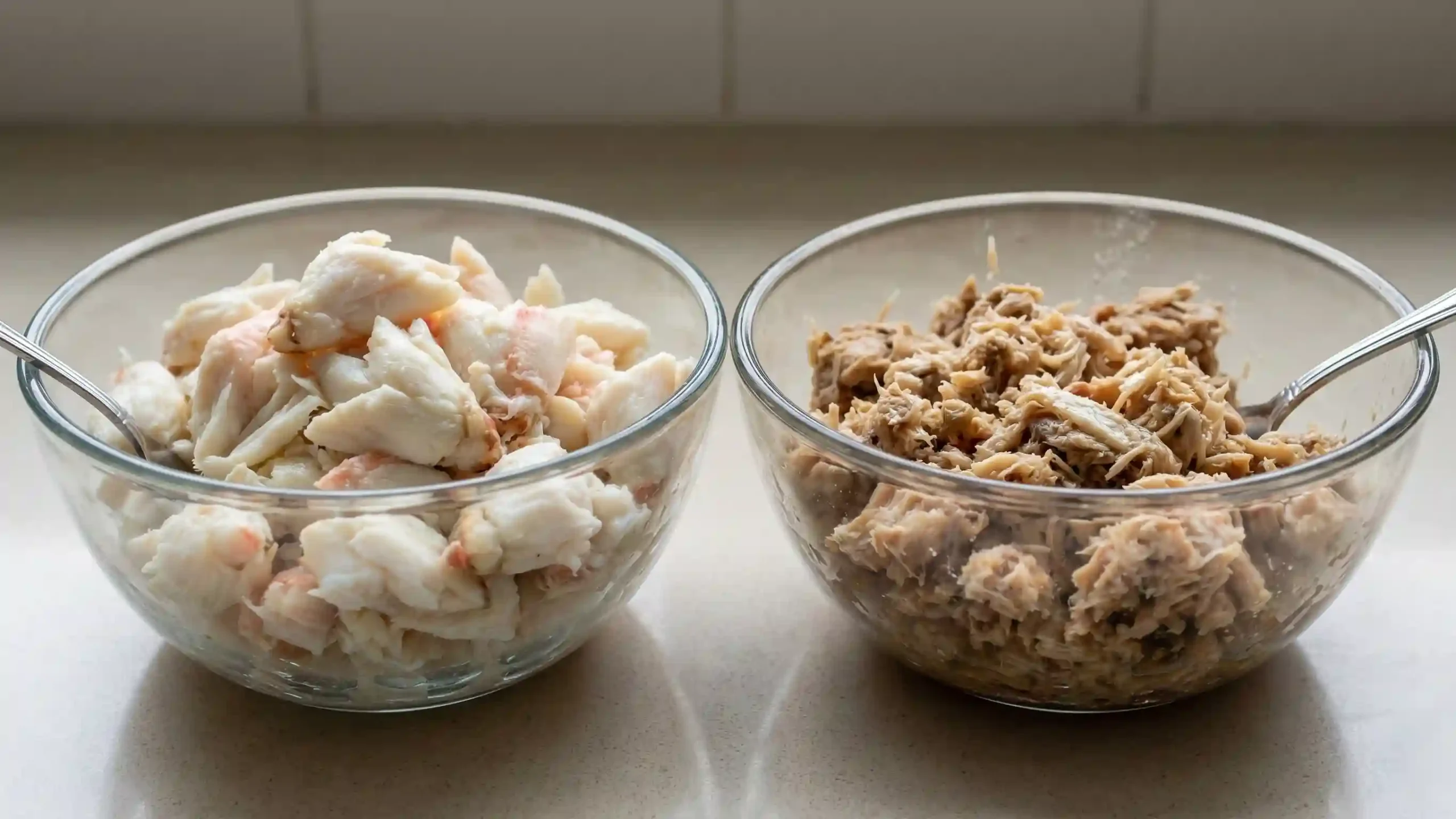
Crab pick matters more than seasoning. Lump crab meat works best because it remains soft and keeps its form within the custard. Dungeness crab gives a slightly sweeter taste, which works beautifully with cream.
When comparing fresh crab vs canned, fresh crab delivers a cleaner taste and firmer texture. Canned works if drained thoroughly, but additional moisture might thin the custard.
Seafood handling rules highlight that excess moisture in crab flesh might dilute custard combinations and hinder proper setting. Draining and gently pressing the crab meat before mixing helps keep the custard thick. This also ensures the eggs mix well during baking.
Dairy, Eggs & Flavor Builders
The basis remains basic. Heavy cream offers richness and body, while egg yolks thicken the recipe without making it stiff. Together, they make a sturdy custard base that bakes evenly.
I avoid substitutions here. Lower-fat dairy weakens structure and dulls flavor.
Optional Add-Ins (Spicy, Herb, Citrus)
Flavor accents should complement the crab, not bury it. A modest bit of chili garlic sauce provides spice without making the meal harsh. Old Bay seasoning gives typical seafood richness when applied gently.
Fresh chives provide sharpness. A bit of lemon zest elevates the custard and keeps the finish clean.
Equipment You’ll Need (And Smart Substitutes)
Tools shape the outcome. The right setup keeps the custard smooth and the topping crisp. I keep this list short and practical.
Ramekins, Torch & Water Bath
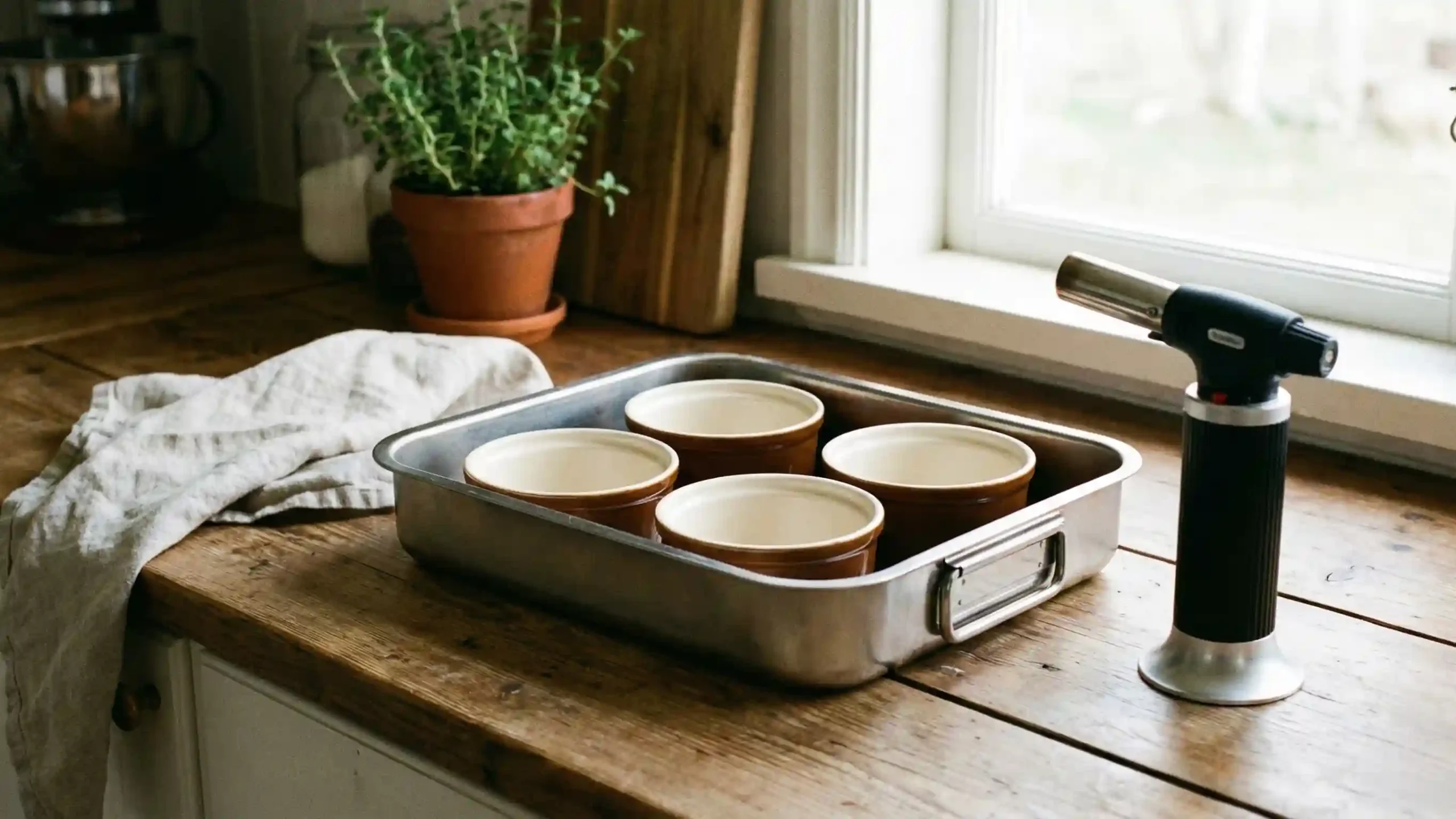
Start with oven-safe ramekins. They heat evenly and distribute the custard neatly. A kitchen torch delivers rapid, regulated heat for the sugar coating.
The bain-marie counts just as much. Baking the ramekins in boiling water protects the custard from direct heat and avoids breaking.
Culinary baking standards say that a water bath slows down heat transfer during baking. This helps prevent sudden temperature changes around custards. This continuous heat helps eggs set uniformly, avoids surface breaking, and maintains the custard smooth rather than rubbery.
How to Caramelize Without a Torch
A torch isn’t necessary. You may utilize a broiler brûlée technique by putting cold custards under a hot broiler for brief bursts. This still generates a caramelized sugar crust without torch usage.
Watch closely. Sugar burns fast, and the custard underneath should stay cold.
Step-by-Step Crab Brulee Recipe
This is when technique pays dividends. Each step develops texture, not simply taste. I follow the sequence carefully since custard doesn’t tolerate shortcuts.
Preparing the Custard Base Correctly
Start gradually and keep control. I always temper egg yolks by whisking heated cream in gradually, not all at once. This stops the eggs from scrambling and maintains custard consistency.
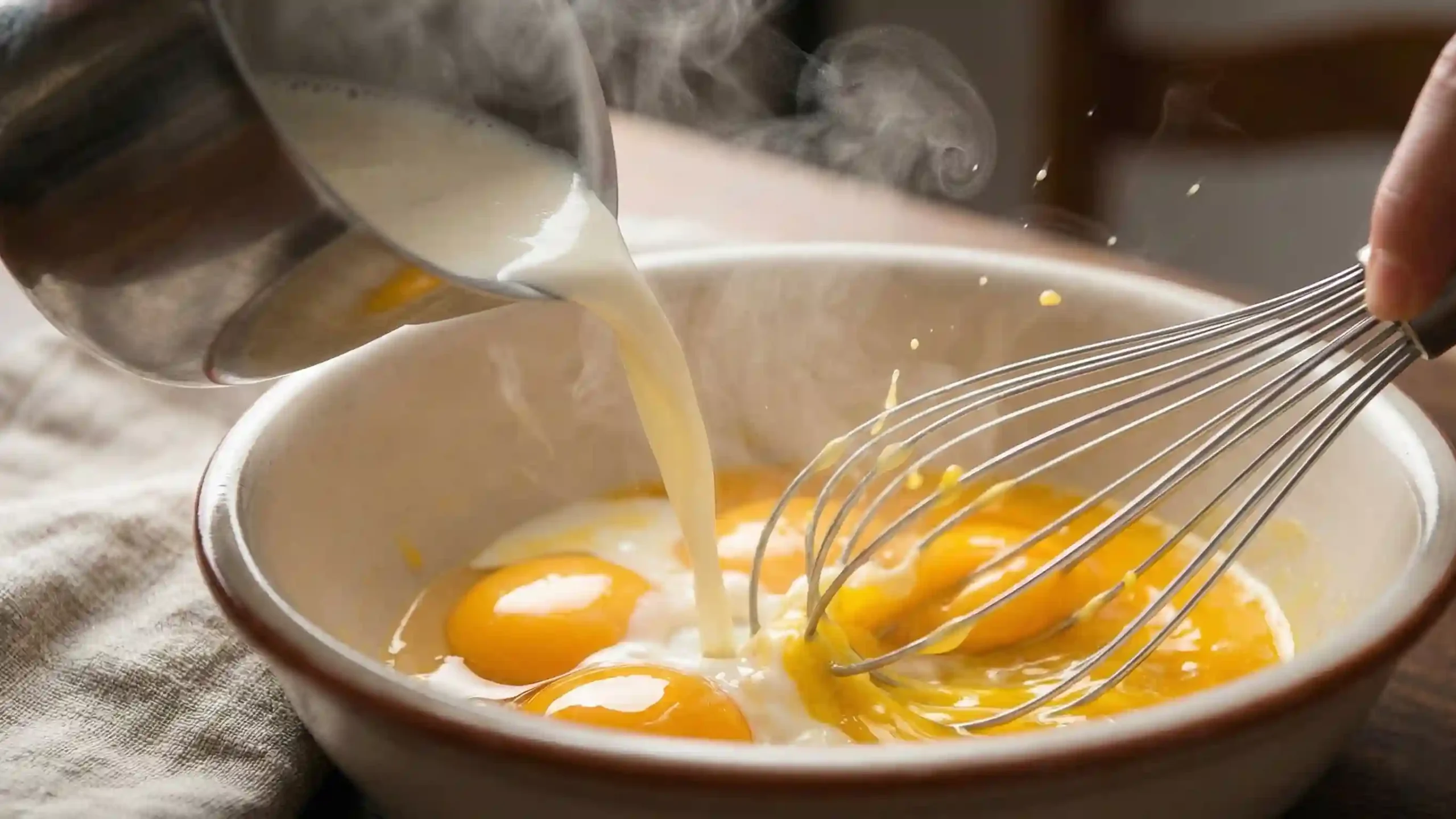
Once smooth, I fold the crab in carefully. Rough mixing disrupts texture and is evident in the final set.
Cooking texts show that egg yolks thicken slowly when cooked. They can curdle if exposed to high temperatures suddenly. Slowly increasing the temperature while whisking helps the proteins to set uniformly, which maintains custards smooth instead of gritty.
Baking in a Water Bath (Why It Matters)
Custard requires protection. When you bake in a water bath, the heat hits the ramekins equally from all sides. This is one of the most dependable custard-baking tips for smooth results.
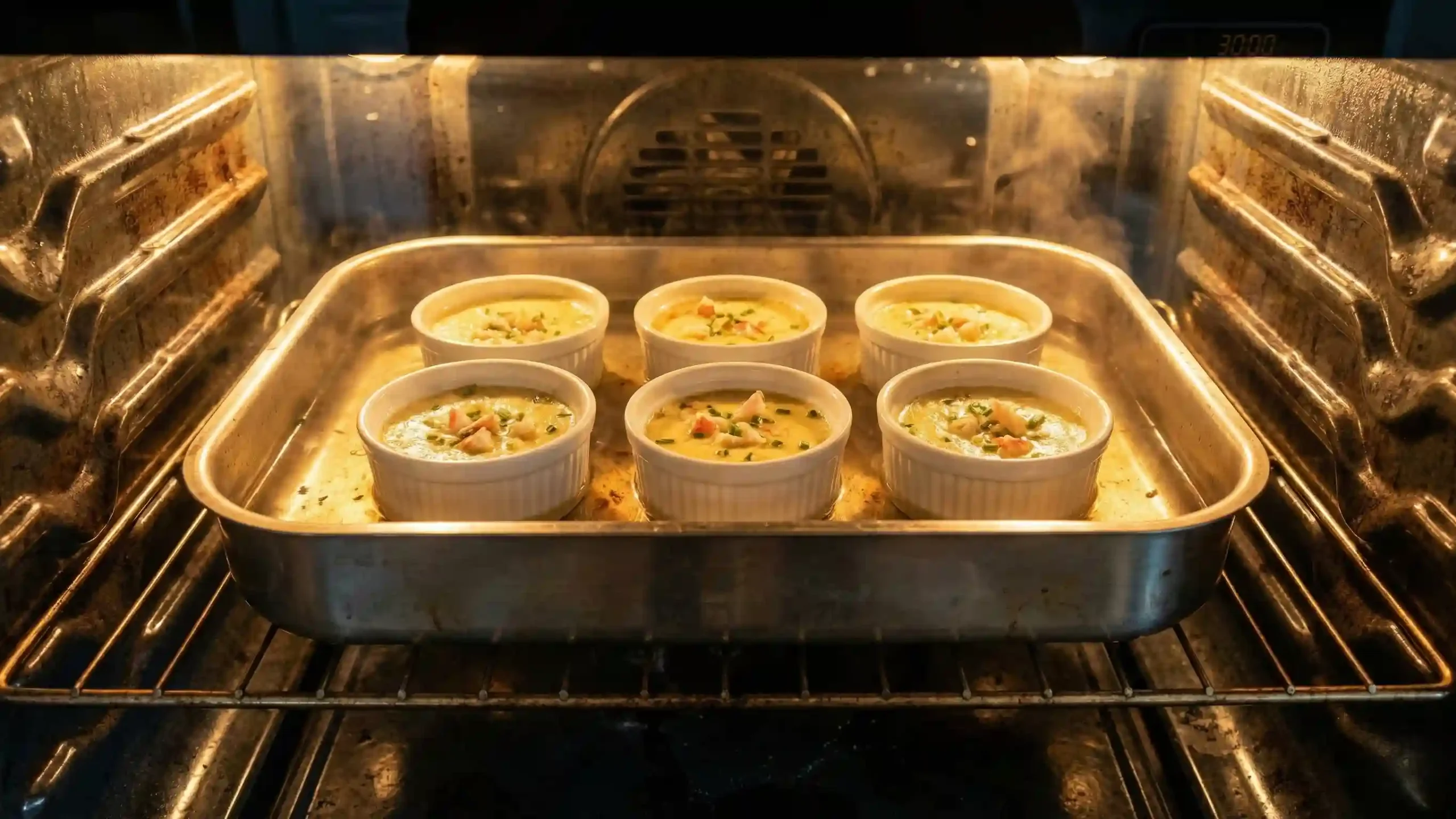
I pull the tray once the centers still wobble somewhat. They finish setting as they cool.
Chilling & Caramelizing the Sugar Topping
Cooling is not optional. I always chill custard sufficiently before adding sugar, else the topping melts instead of hardening. Cold custard adds contrast when you flame the brûlée topping.
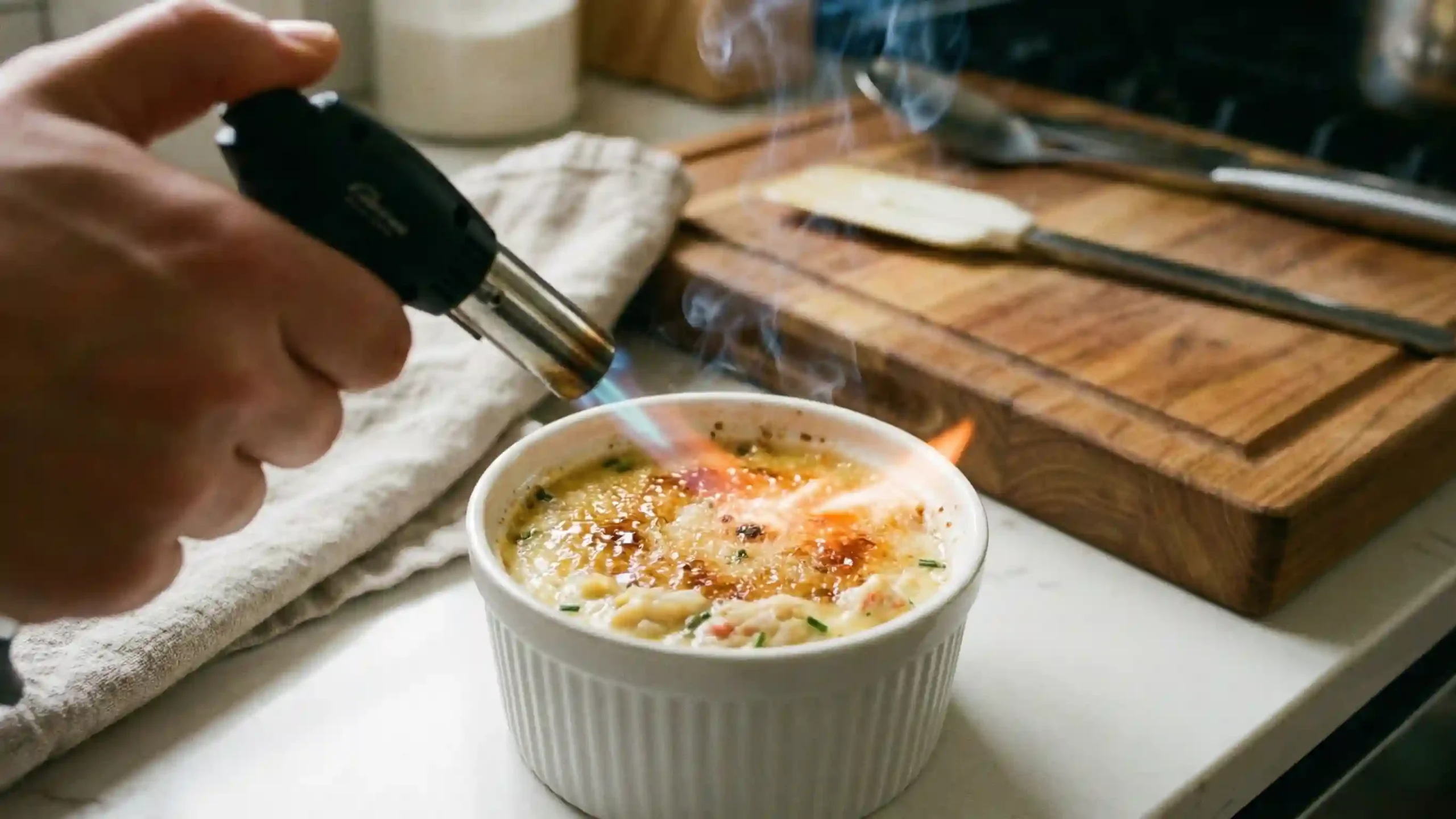
Sprinkle sugar evenly. Torch in tiny circles until the surface hardens.
Food safety and pastry handling rules advocate allowing cooked custards to cool fully before putting a sugar coating. Cooling the custard completely stops it from overheating during caramelization. This helps avoid uneven texture or separation when you use high heat.
The Science Behind a Perfect Silky Texture
Texture is the real test. Flavor grabs attention, but mouthfeel defines whether this meal succeeds. I concentrate on control, not guessing.
Egg-to-Cream Ratios Explained
Custard relies on balance. A greater cream ratio gives a silky custard texture, whereas too many eggs promote hardness. The appropriate combination regulates custard thickness without rendering the center rigid.
I stick to yolks exclusively. Whites tighten too rapidly and battle the texture you desire.
Pastry training manuals reveal that egg yolks contain emulsifiers and lipids that enable custards to thicken softly when cooked. This creates a smoother texture than whole eggs. Whole eggs set more firmly, which can lead to a gritty or rubbery feel.
Avoiding Grainy or Overcooked Custard
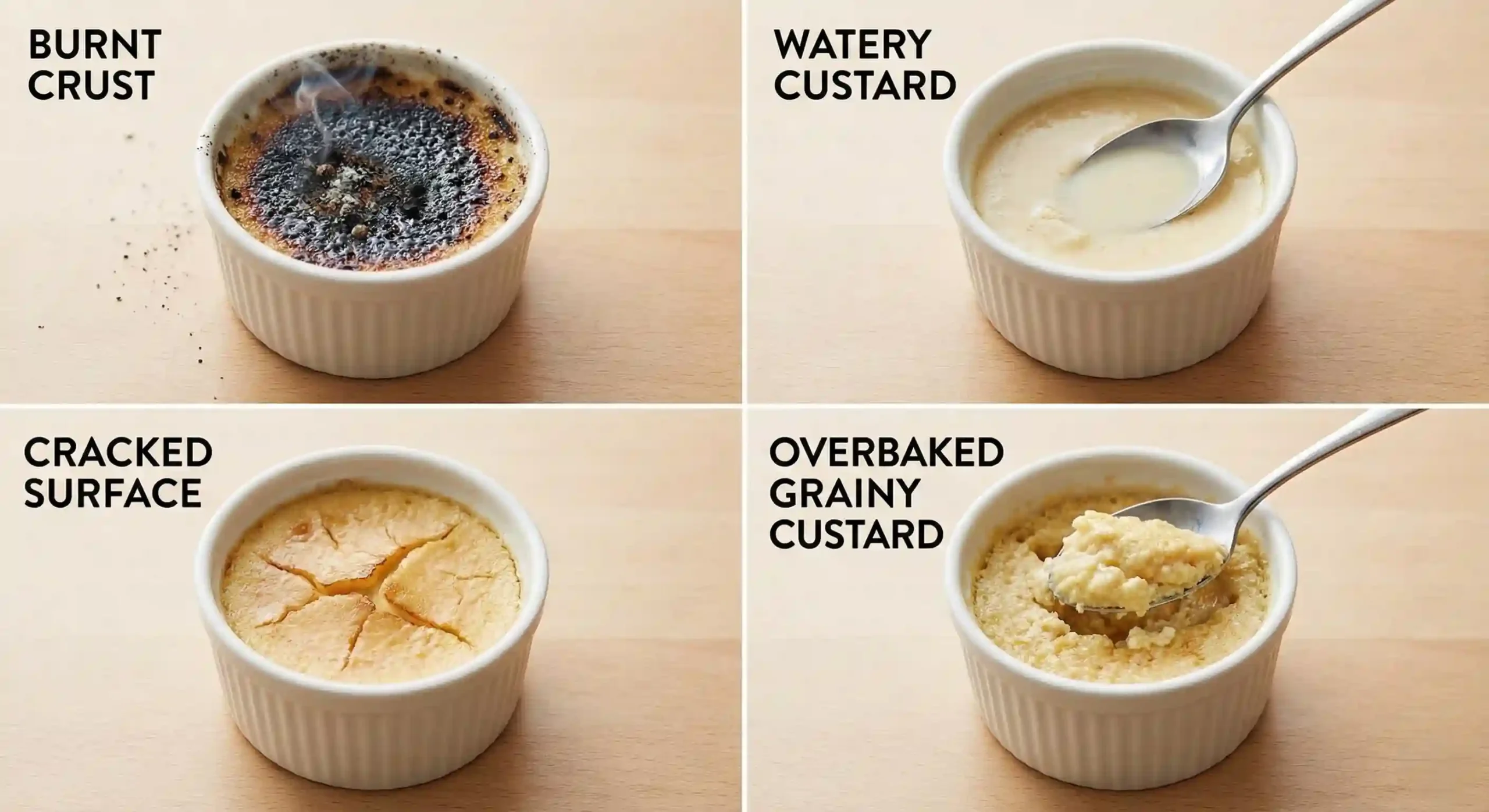
Heat is the enemy here. Most custard troubleshooting comes down to temperature increasing too rapidly or baking too long. An overbaked custard appears set but feels gritty on the spoon.
I watch the borders, not the clock. When the center still trembles slightly, it’s ready.
Baking literature says that warming custard makes egg proteins stiffen too quickly and push out moisture. This process makes the custard lose its smooth texture. It will become gritty or curdled instead of creamy.
Common Mistakes to Avoid
Most failures originate from little missteps. These crab brulee mistakes are simple to make and hard to remedy afterward. I monitor these points every time I make this meal.
Overheating Cream
The heat should stay mild. When cream becomes too hot, eggs seize up later and create a gritty texture. This is one of the most typical custard-baking errors I notice.
Warm the cream. Never boil it.
Skipping the Water Bath
Custard dislikes direct heat. Skipping the water bath exposes ramekins to oven spikes and leads to uneven setting. This mistake alone damages texture more than any seasoning fault.
Always use hot water. Fill halfway up the ramekins.
Using Watery Crab Meat
Moisture breaks the structure. Wet crab loses liquid when the custard bakes, hindering proper setting. This renders the center loose and dulls taste.
Drain crab well. Pat it dry before mixing.
Torch Held Too Close
Sugar requires distance. Holding the heat too near burns the top before it melts evenly. That burnt flavor overpowers the custard below.
Move the flame slowly. Keep it in motion.
Culinary safety rules say to hold a kitchen torch a few inches away from the sugar. This distance helps heat spread evenly. It allows the sugar to melt and caramelize slowly. This method prevents harsh burned spots and stops too much heat from reaching the custard below.
Flavor Variations & Creative Twists
Once the basis is perfect, taste becomes flexible. I keep the adjustments minor so the custard remains balanced. Each option below builds on the same framework.
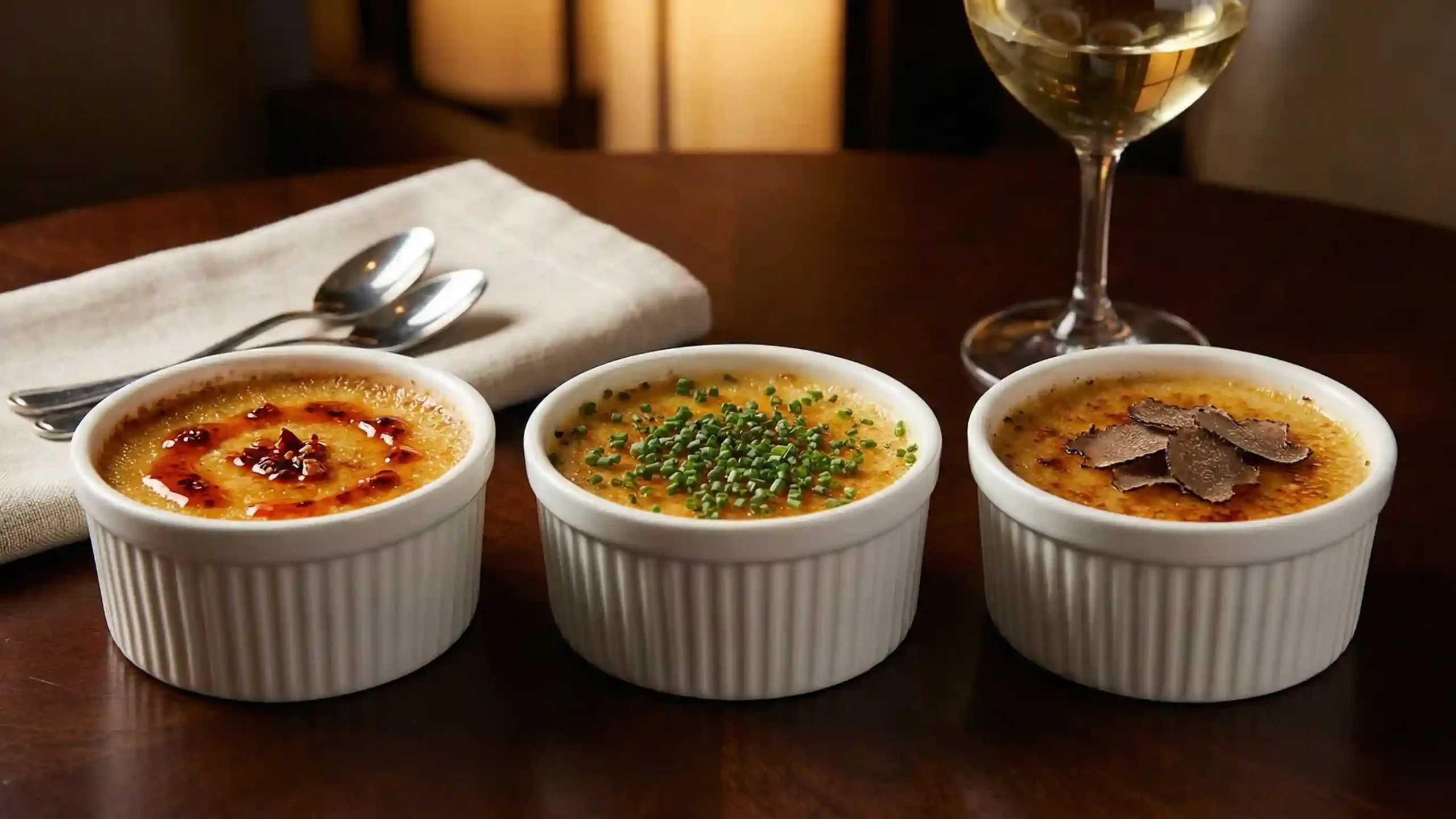
Spicy Crab Brûlée
Managing heat makes it work best. Spicy crab brulee focuses on mild warmth, not burn. A small amount of chili mixed into the base creates a tasty chili crab custard that is rich and delicious.
I avoid heavy spice blends here. Too much heat masks the crab.
Culinary science says that lipids, like cream, coat the tongue. This slows down how we feel capsaicin, the chemical that causes heat. In custards, this effect lowers spice strength, enabling chili notes to register as warmth rather than intense heat.
Herb & Citrus Versions
Fresh herbs sharpen taste rapidly. An herb-infused custard with chives or thyme offers lift without heaviness. For brightness, lemon crab brulee works when the zest remains light and fine.
I never add juice. Zest offers scent without diluting the custard.
Luxury Add-Ons
Some versions lean upmarket. Truffle crab brulee provides richness with only a few droplets of oil or shaved truffle. These touches position the meal firmly among gourmet seafood recipes without affecting the main approach.
Restraint matters most here. Too much richness flattens flavor.
What to Serve with Crab Brûlée
Pairing matters more than people realize. The custard is rich, so everything surrounding it should seem clean and supportive. I regard this meal as a beginning, not a showpiece.
Wine & Drink Pairings
Balance is the objective. A fresh white wine cuts through cream and complements crab without hiding it. This strategy works well for wine pairing seafood custard because acidity refreshes the palate between bites.
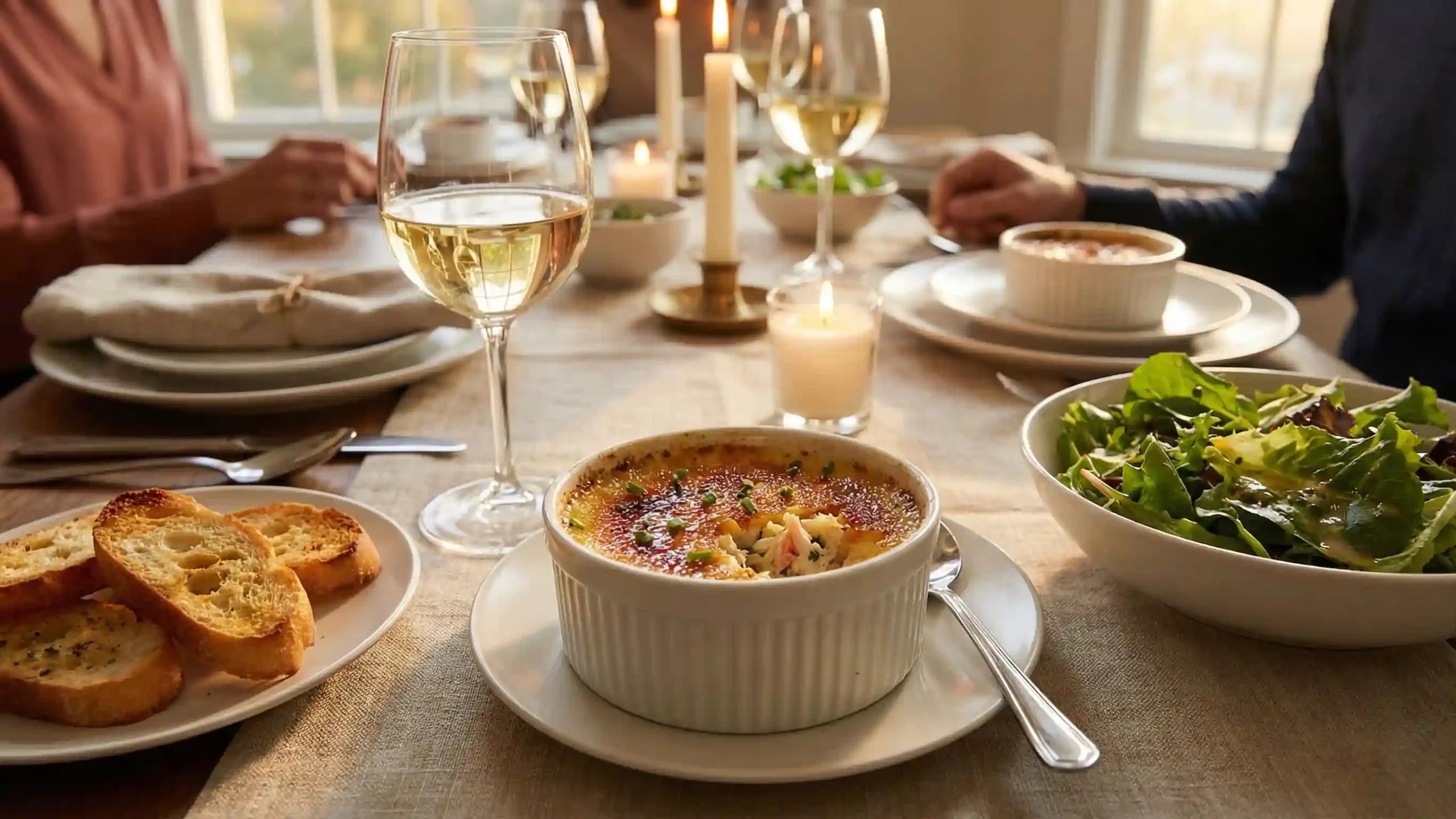
Dry sparkling wine also fits well. Light citrus notes mirror the custard’s savory profile.
Wine pairing guides say that wines with higher natural acidity help balance creamy seafood dishes. They cut through fat and refresh the taste. This contrast keeps rich custards from feeling heavy. It also helps delicate crab flavors stay clear from the first bite to the last.
Side Dishes & Menu Ideas
Keep sides light and basic. This dish performs well among polished dinner party appetizers rather than heavier dishes. Think crisp greens, toasted bread, or raw veggies for contrast.
I frequently put it at the start of a meal constructed around seafood starter ideas. It sets the tone without dominating the table.
Make-Ahead, Storage & Reheating Tips
Timing matters with custard. Done well, preparing ahead reduces stress and keeps texture intact. I depend on a few simple guidelines here.
Can You Make Crab Brûlée Ahead of Time?
Yes, you can prepare crab brulee ahead of time. Bake the custard up to 24 hours in advance. Let it cool completely. Then, store it covered in the refrigerator without the sugar topping. Add the brûlée crust just before serving to protect the texture and prevent it from melting.
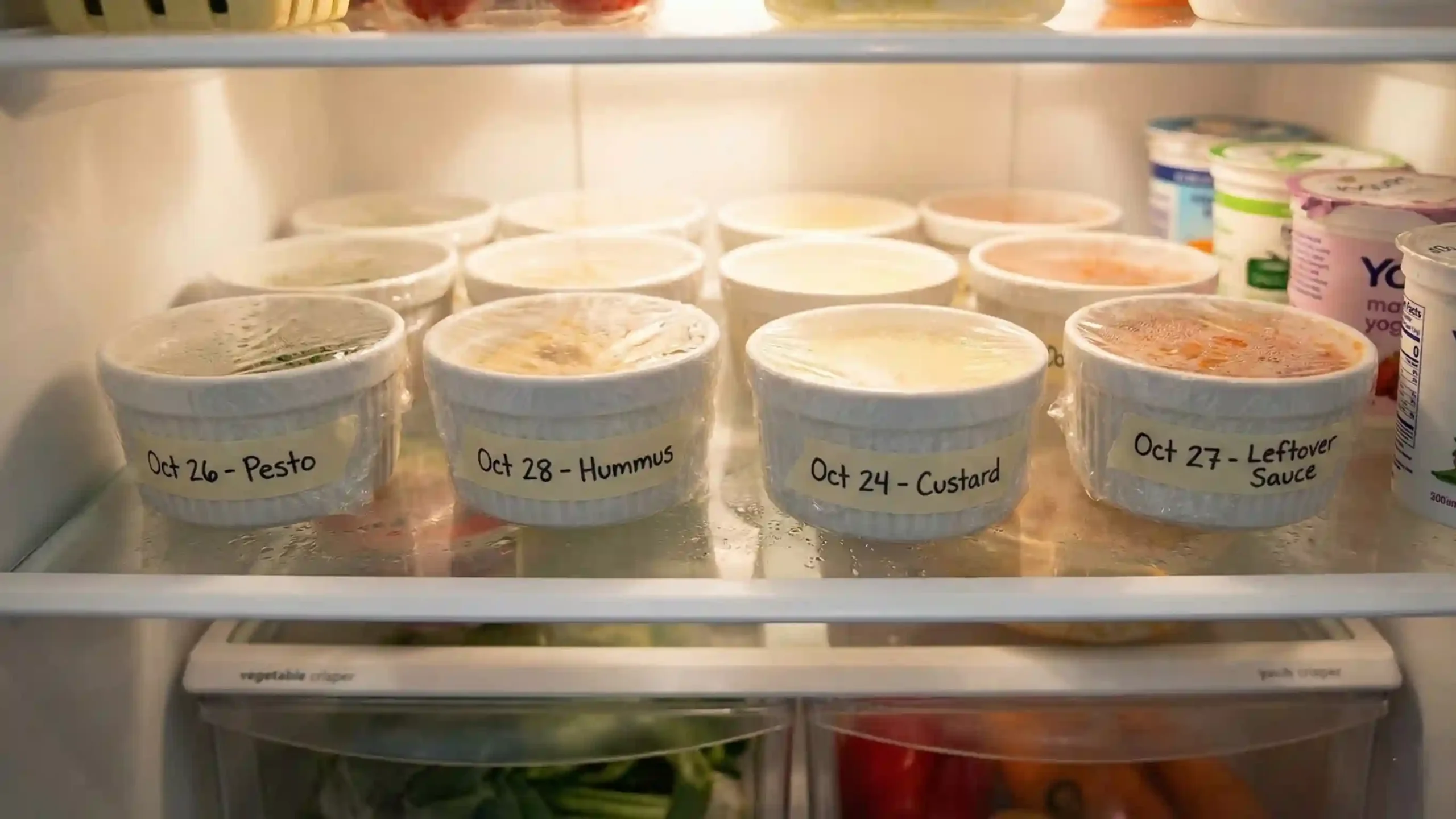
This procedure maintains the custard’s smoothness and keeps it clean. Add sugar only when visitors are ready.
Storage & Food Safety
Custard requires care. Properly storing custard needs an airtight covering and consistent refrigeration. Because the dish includes crab, cold storage and short holding times ensure seafood safety.
I never leave custard uncovered. Odors transfer fast, and texture suffers.
Food safety rules say you should chill cooked seafood and custard-based foods, like crab, quickly. Keep them in the refrigerator at temperatures below 40°F. For the best safety and quality, eat these meals within 48 hours. Keeping them longer can increase the risk of spoiling and change the texture.
Nutrition Information & Dietary Notes
I know what you’re thinking. Rich food raises questions fast. This section keeps things clear and grounded.
Calories, Protein & Fat Breakdown
This meal is rich by design. Crab brulee calories come largely from cream and egg yolks, while the crab offers lean protein. From a seafood nutrition viewpoint, crab delivers protein, minerals, and low carbs.
Portion size matters. Small ramekins keep balance without overdoing it.
Nutrition references show that crab meat is high in protein and low in carbs and fat. This makes crab a healthy seafood choice. It adds structure and satisfaction to custard recipes without extra sugars or carbs.
Keto, Low-Carb & Gluten-Free Notes
This meal suits clean eating regimens effortlessly. Without extra starch, it qualifies as a keto seafood recipe when sugar consumption remains modest. The custard also works as a gluten-free custard as it includes neither wheat nor cereals.
Sweeteners can be adjusted. The base stays the same.
Final Tips for Restaurant-Quality Crab Brûlée
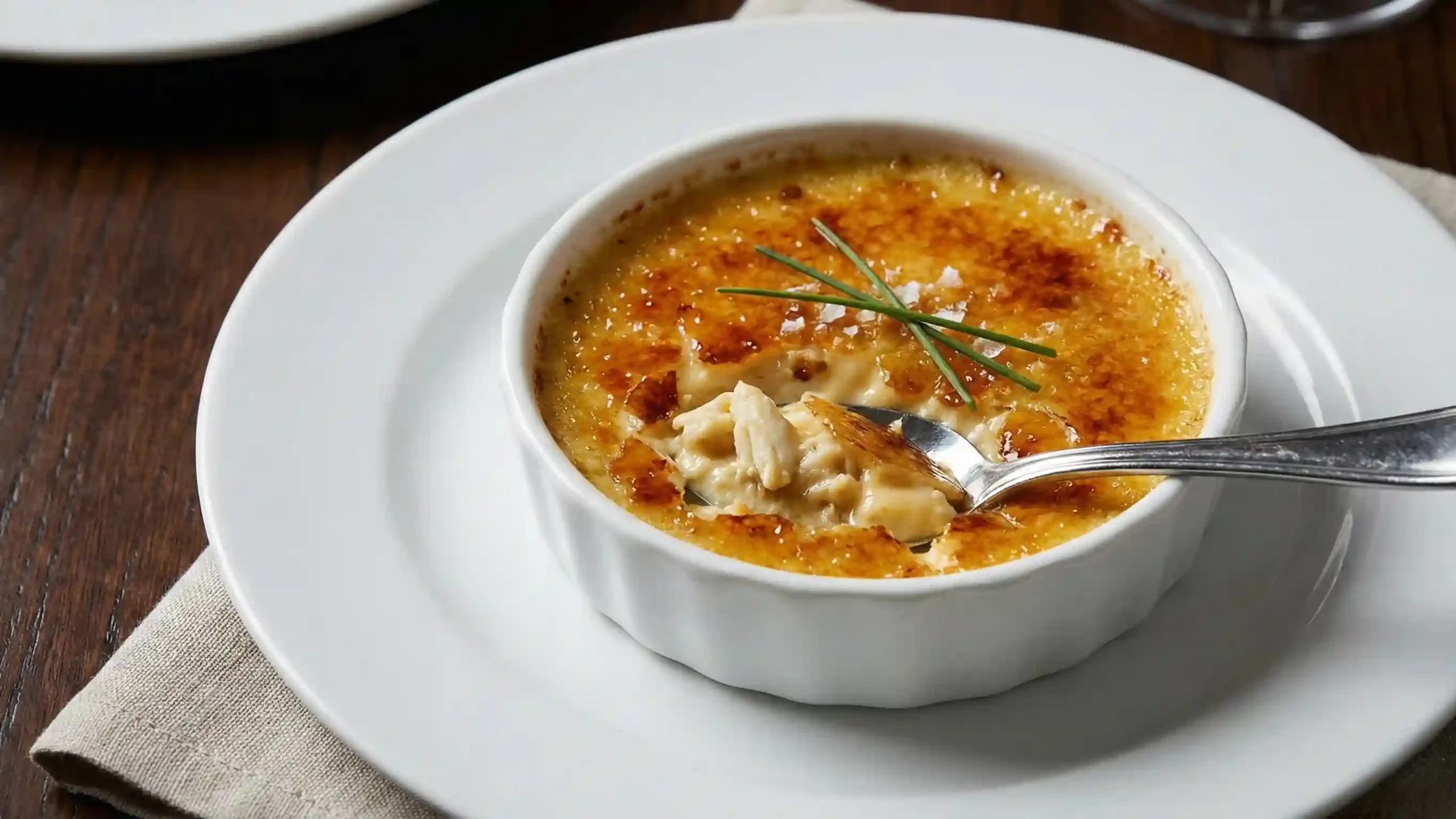
Small decisions impact the ultimate effect. When I strive for gourmet crab brulee, I slow everything down and keep it exact. That approach resembles true professional cooking tips more than any particular skill.
I taste before baking. Salt shifts as custard sets, and early correction matters.
Keep portions modest. Smaller ramekins cook evenly and feel refined.
Serve immediately after caramelizing. The contrast between warm crust and cool custard is the payoff.
Professional kitchen service requirements require chefs to caramelize and serve brûlée-style items quickly. This timing retains the contrast between the crunchy sugar crust and the creamy custard below, which starts to melt if left standing after torching.
FAQ’s
Why is creme brulee a good dessert?
Crème brûlée works well as a dessert because it balances textures and flavors. The crunchy caramelized sugar contrasts with the smooth custard below. Its mild sweetness makes it rich but not too heavy after a meal.
How to caramelize creme brulee?
Crème brûlée is made by adding a thin layer of sugar on top of chilled custard. Then, heat it with a kitchen torch or oven broiler to caramelize the sugar. The heat melts and browns the sugar, forming a crisp crust without reheating the custard.
What does creme brulee taste like?
Crème brûlée tastes creamy and lightly sweet with a mild vanilla flavor. The custard is smooth and rich. The caramelized sugar adds a bit of bitterness and crunch. This balances the soft inside.
Is creme brulee hot or cold?
Crème brûlée is served cold or lightly chilled with a warm sugar crust on top. The custard stays cool, while the caramelized sugar is warm and crisp. This creates a nice contrast in temperature and texture.
What country is known for creme brulee?
France is most commonly associated with crème brûlée. It is a classic French dessert. You can find it in French cuisine, especially in restaurants and pastry shops.
Can I use milk instead of cream in creme brulee?
Milk can be used, but it changes the result. Cream provides fat that gives crème brûlée its smooth texture and richness. Using milk creates a thinner custard that sets less firmly and lacks the traditional mouthfeel.
Is creme brulee basically custard?
Yes, crème brûlée is a type of baked custard. It is made from cream, egg yolks, and sugar, then gently cooked until set. What makes it distinct is the caramelized sugar layer on top.
Is creme brulee same as caramel?
Crème brûlée is not the same as caramel. Caramel is cooked sugar, while crème brûlée is a custard dessert. The only caramel element is the thin sugar crust on top, not the custard itself.
Is creme brulee burnt?
Crème brûlée is not burnt. The sugar is intentionally caramelized until browned, not burned. Proper caramelization creates a crisp crust with slight bitterness, while burnt sugar would taste harsh and unpleasant.