
Introduction
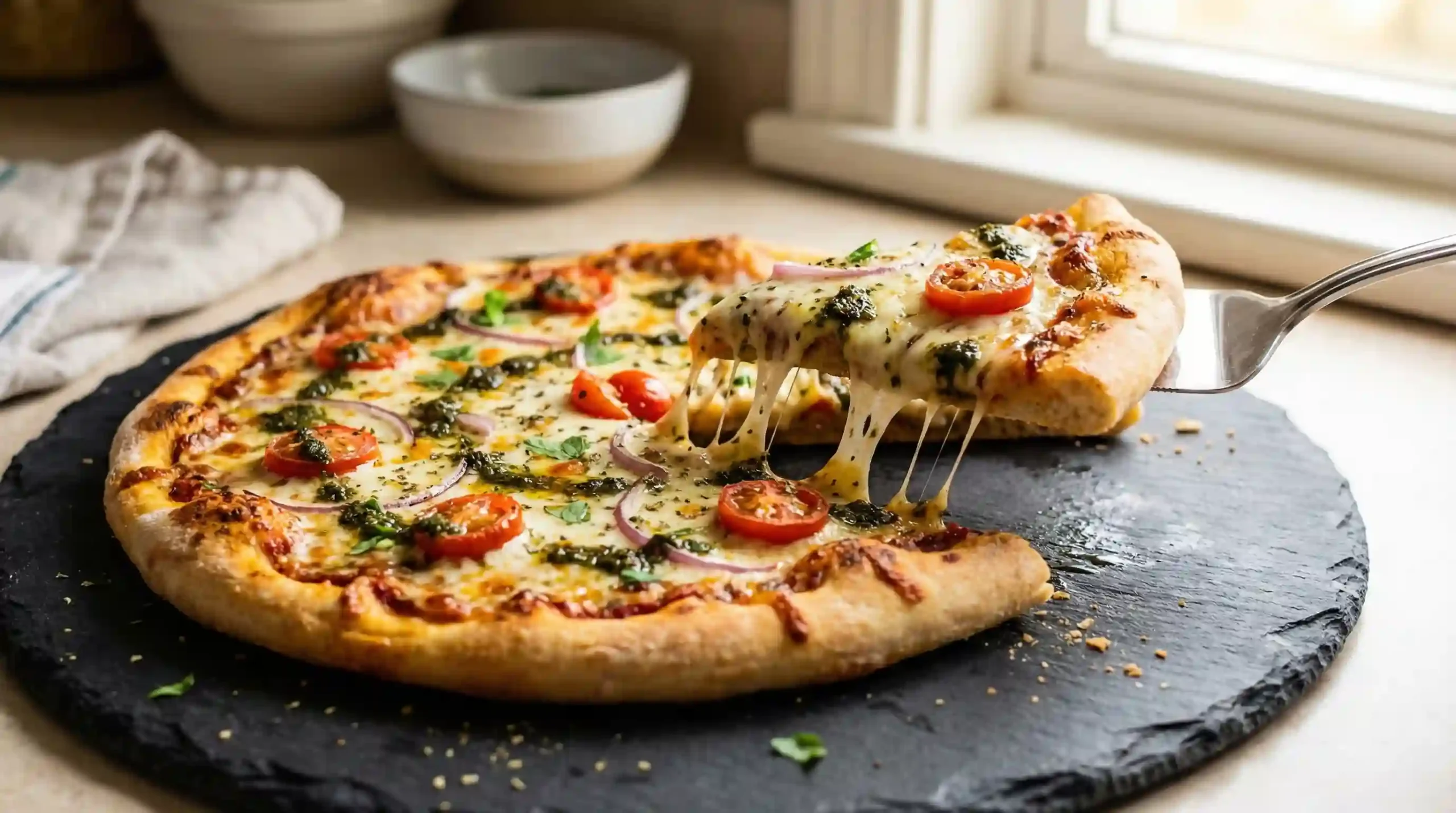
I love this Chimichurri Tomato Pizza Recipe. It skips the usual sauce and uses chimichurri as the pizza base. You get a crisp crust, a juicy topping, and a bite that’s bold herbs with tangy snap. It’s Argentine-inspired comfort with a clean, fresh finish.
USDA food safety guidance says refrigerated leftovers are best used within 3 to 4 days. Store your chimichurri in an airtight container. Keep it refrigerated. Use clean utensils to avoid adding bacteria.
Why Chimichurri Tomato Pizza Works (Flavor + Fusion)
This works because chimichurri as a pizza base brings snap, not heaviness. The flavor stays herbaceous, bright, tangy, and garlicky, even under heat. Add fresh tomatoes and melty mozzarella, and you get a clean, punchy Argentine-inspired Italian fusion bite.
Moisture varies by variety, but published lab testing shows most tomatoes sit around 90.92% to 96.16% moisture. In a 2023 study, “regular” tomatoes had about 1.90% more moisture than cherry tomatoes. This helps explain why smaller tomatoes feel less watery on pizza
Chimichurri vs Traditional Red Sauce
I use chimichurri instead of red sauce because it hits quickly. Olive oil + vinegar gives clean acidity and supports the bite feeling freshness forward. That combo tastes zesty and carries bold herbs in every corner of the piece.
The Two-Stage Chimichurri Method (Your Signature Edge)
Here’s my edge: I treat chimichurri like a two-part move. I spread a thin layer before baking for coverage. Then, I add a drizzle after baking. This way, the fresh herbs keep their aroma and color. This also helps oil-control and helps prevent soggy crust.
How to Prevent an Oily / Soggy Crust
I keep it simple. I reduce the oil in the sauce, and I don’t oversauce the dough. I also pat the tomatoes dry and drain/salt them before they go on the pizza. Then, I bake at high heat on a preheated stone/steel. This helps the bottom cook quickly.
Ingredients You’ll Need (With Best Substitutions)
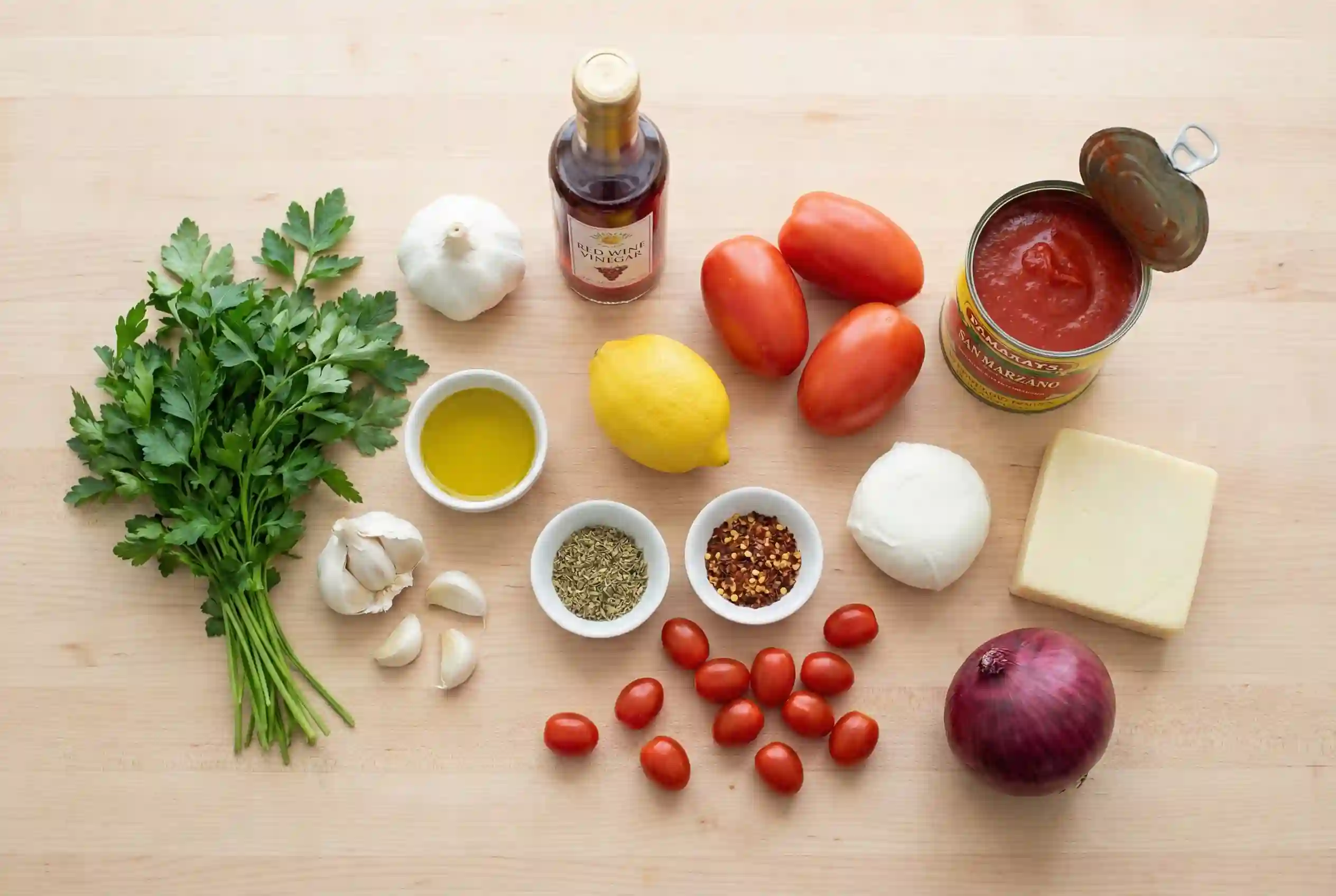
This pizza stays simple. I begin with parsley, garlic, olive oil, red wine vinegar, and lemon juice to make the sauce. Then, I layer tomatoes (cherry/Roma/San Marzano) and mozzarella on the dough. I often add provolone (optional) and some red onion for flavor. I also include oregano and red pepper flakes/chile for some heat.
Moisture matters. Raw ripe tomatoes are mostly water. USDA nutrition data shows 94.50 g of water per 100 g of raw tomatoes. This means extra tomato juice can quickly soften your crust. A 2023 study found that tomato varieties had moisture levels from 90.92% to 96.16%. It also showed that “regular” tomatoes had about 1.90% more moisture than cherry tomatoes
Chimichurri Ingredient Breakdown (Authentic Profile)
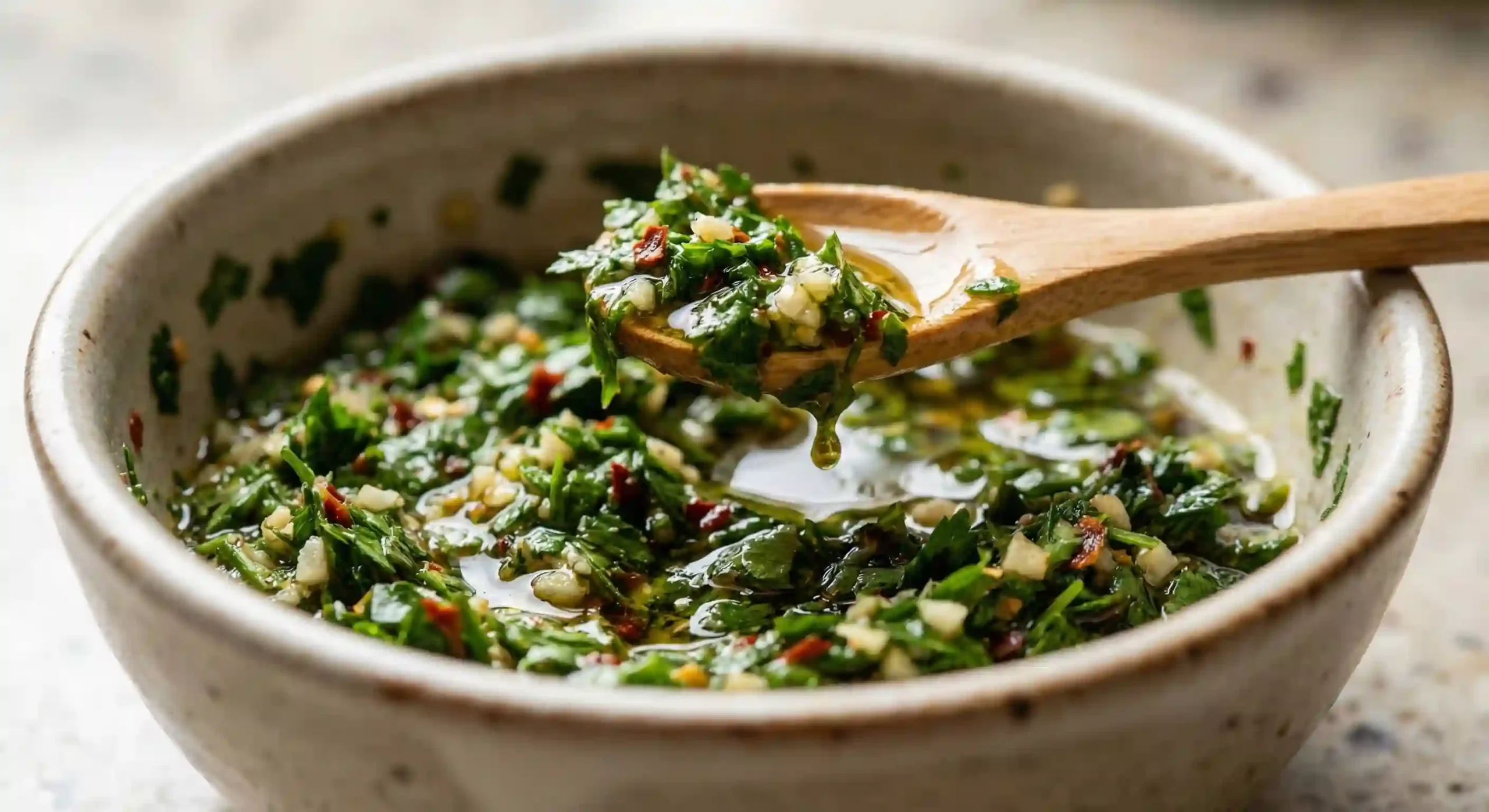
For the classic profile, I stick to parsley and minced garlic, then I add vinegar and olive oil for the base. I use dried oregano for that familiar note, and I change the spice level with red pepper flakes/chile. If you want a twist, I can do a parsley vs cilantro option. I’ll add paprika (optional) for a warmer finish.
Knife-Chopped vs Food Processor (Texture Control)
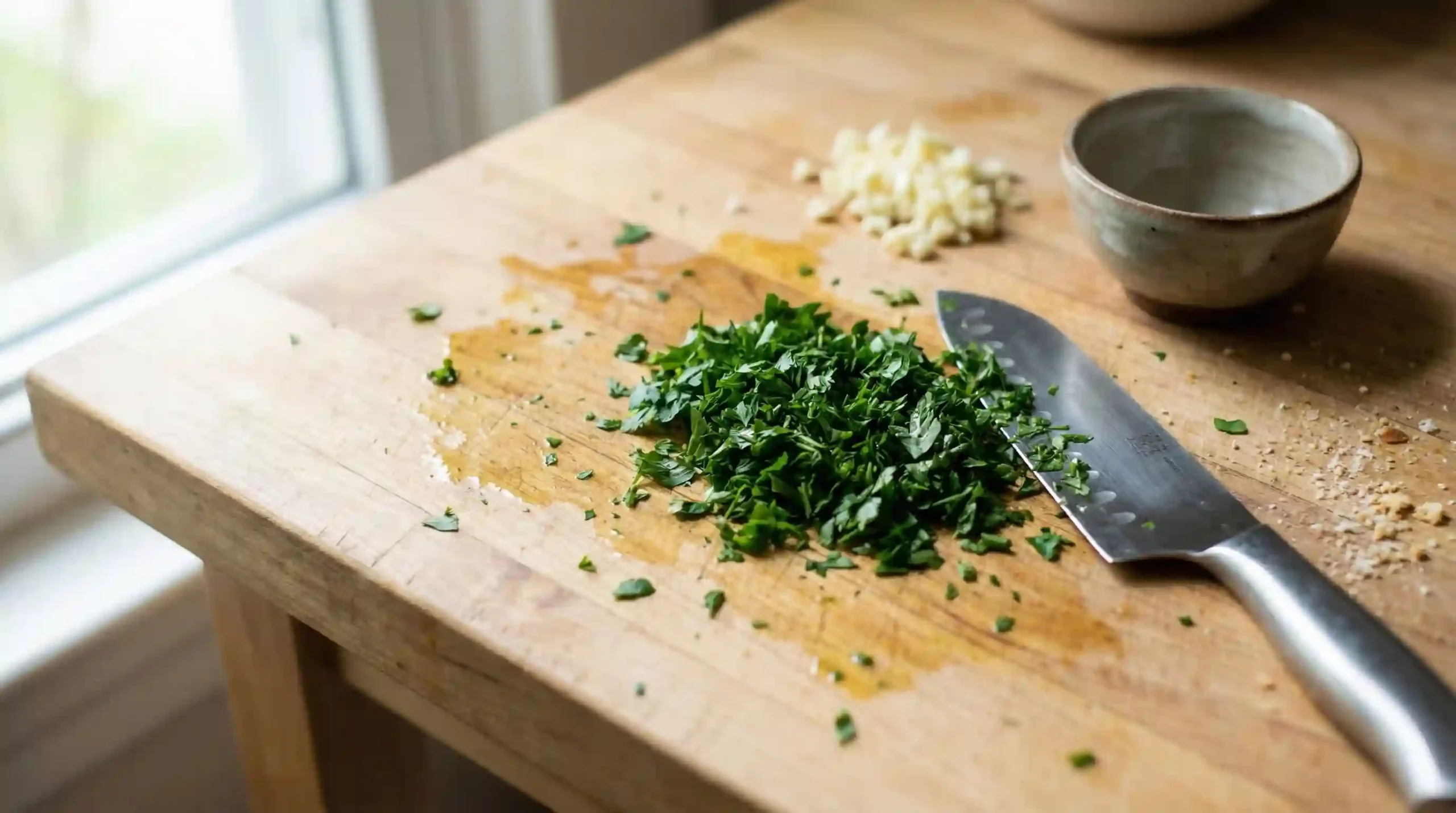
I go knife-chopped when I want the greatest texture. I keep everything finely chopped and mince the garlic, then I emulsify/stir so it stays together. I omit the food processor since it may become pesto-like, and that affects the bite.
Best Tomatoes for Pizza (Fresh, Roasted, or Marinated)
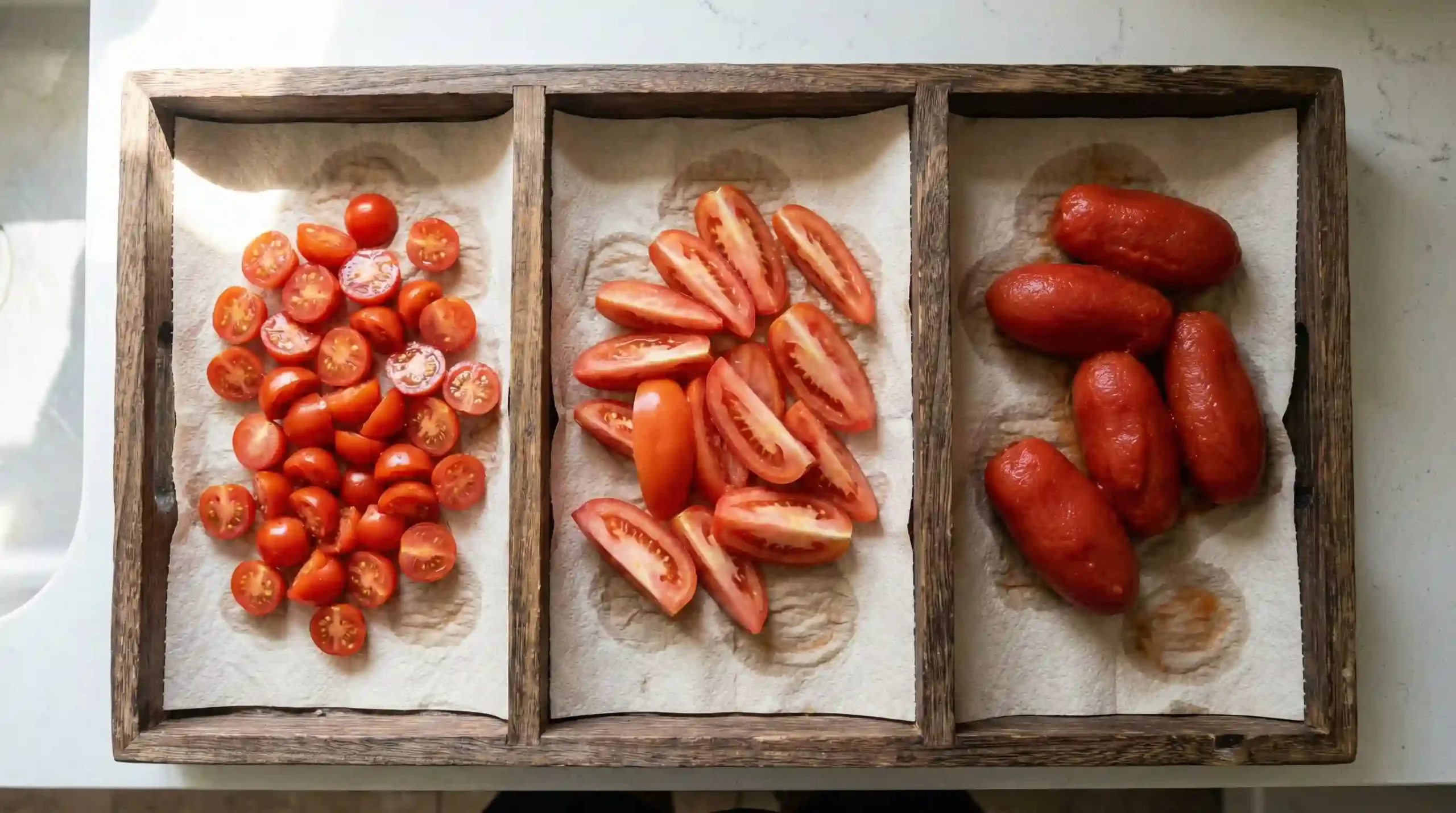
I chose tomatoes depending on water and taste. Cherry tomatoes are sweet and burst with flavor. Plum or Roma tomatoes hold their shape and are less messy when cut properly. If you use San Marzano, emphasize seed removal and slice thickness so the moisture doesn’t overwhelm the crust.
Quick Tomato Prep to Avoid Watery Pizza
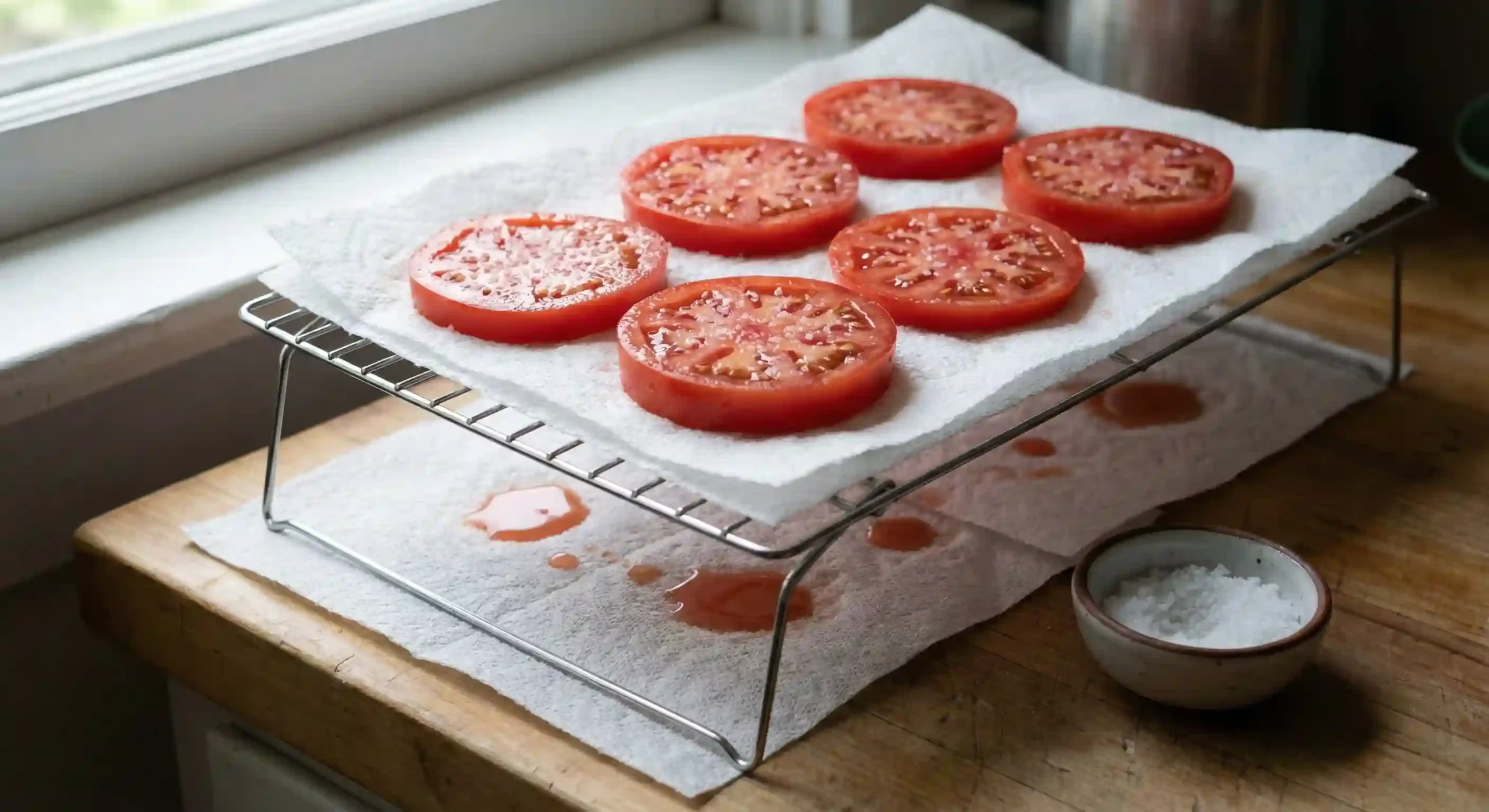
I utilize a rapid procedure. I perform a salt-rest, then drain, then pat dry with paper towels, and I pay attention to timing so they don’t sit too long and grow limp. When tomatoes seem extremely moist, I utilize a roast option and finish with rapid blotting before they touch the pie.
Cheese Choices (Melt + Flavor)
Cheese is where the entire thing clicks. Fresh mozzarella tastes clean but may leak, so I blend it with low-moisture mozzarella when I want a smoother melt. If you want more flavor, a provolone blend adds sharpness and helps with browning. That’s why mozzarella and provolone work well together here.
Dairy-Free / Vegan Cheese Swap
You can still get a great result. I use dairy-free mozzarella as the main melt, and I keep it simple with a vegan option topping pack. Watch the bake behavior closely. Different brands melt in different ways. Finish with a finishing drizzle of chimichurri. This keeps the flavor strong.
Equipment + Oven Options (Standard Oven, Stone/Steel, Pizza Oven)
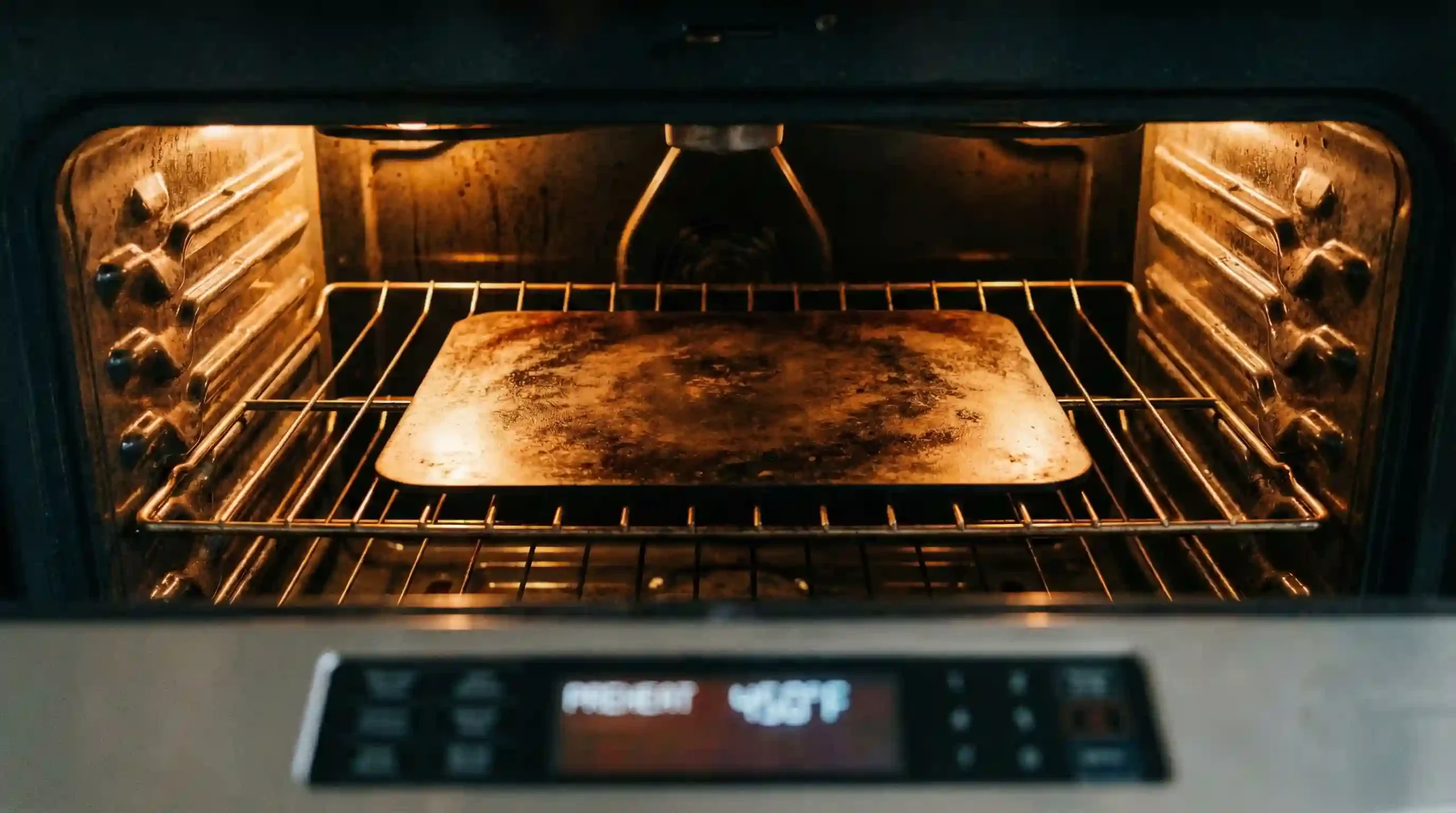
You don’t need fancy gear, but the right setup makes this pizza easier. I depend on a baking stone or baking steel, a solid preheat, and the right oven rack position so the crust sets fast. If you can, bake at high heat (475–550°F) and keep your toppings light.
Why preheat matters. King Arthur Baking says to get a deep golden brown, crispy crust, bake on a baking stone. Preheat the stone in the middle of the oven for 45–60 minutes before adding the pizza. Serious Eats adds that a baking steel is also good. Its high conduction and thermal mass help with faster bottom browning
Best Setup for a Crispy Crust
I regard the oven as a heat bank. I perform a 45–60 min preheat so stone/steel heat retention is actual, not wishful thinking. That’s how you achieve clean bottom browning and a solid thin crust bite.
No Stone? Sheet Pan or Cast-Iron Skillet Method
You’ve still got options. For sheet-pan pizza, I focus on oiling the pan lightly and spreading the dough evenly so it bakes straight. For cast-iron skillet pizza, I lightly oil the pan. I also chose a thicker crust option that stays crisp at the edges.
Step-by-Step Recipe (Fast, Repeatable, Foolproof)
I keep the flow tight. I stretch dough, leave crust border, spoon chimichurri, top tomatoes/onion/cheese, then bake, rotate, and rest 3–5 min. Do it once, and you’ll feel the rhythm.
Step 1 – Make Chimichurri (and Let It Rest)
I mix/stir until the herbs look evenly coated and glossy. Then I rest 30–120 min so the flavor effect kicks in. For an overnight option, I refrigerate it and stir again before using.
The USDA FSIS says leftovers last 3 to 4 days in the fridge. The FDA says your fridge should be 40°F (4°C) or lower. Keep chimichurri in an airtight container. Put it back in the fridge right after you use it. Use a clean spoon each time to avoid spoiling the jar
Step 2 – Prep Dough (Store-Bought or Homemade)
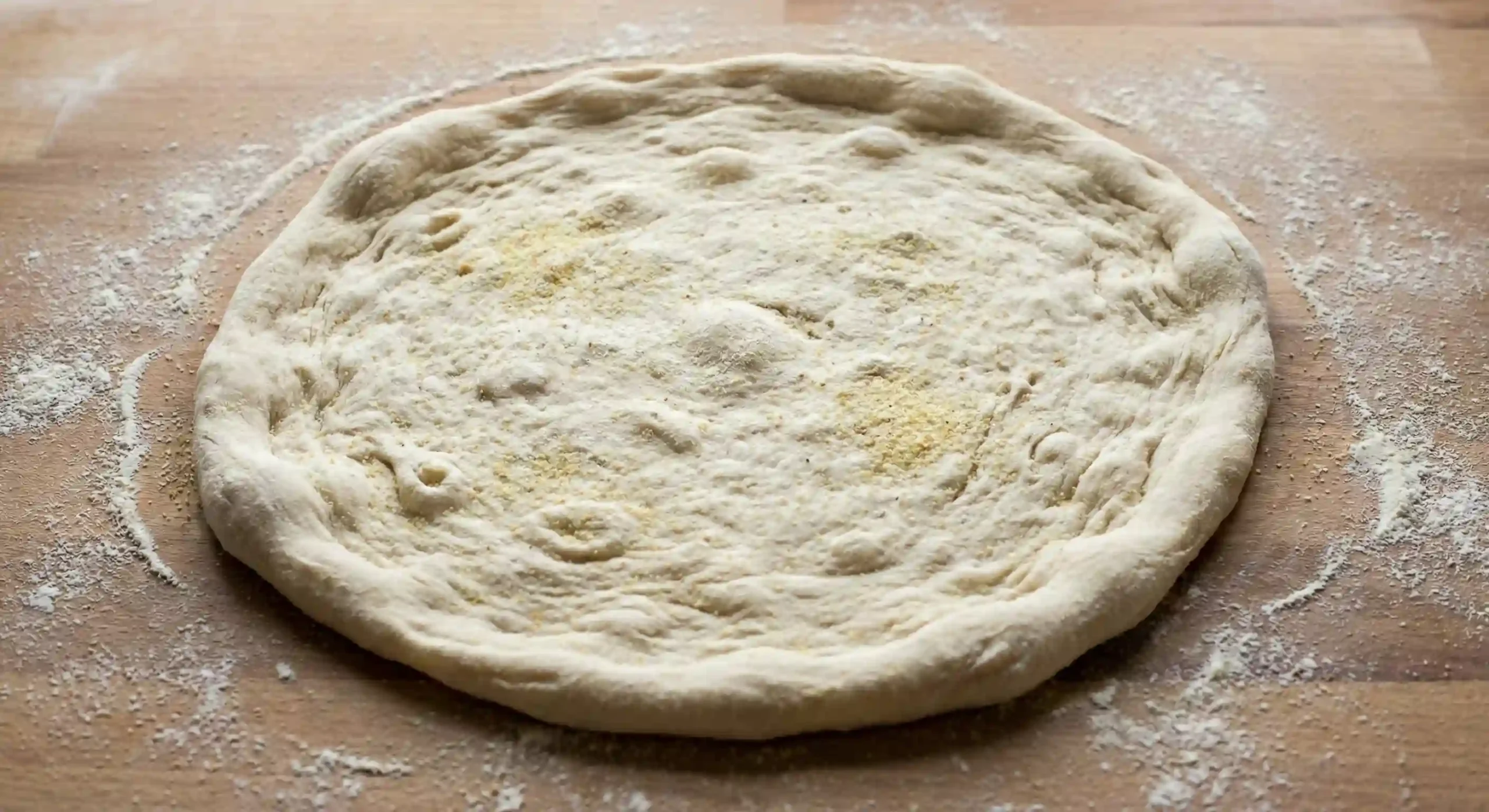
Start with room temperature dough so it doesn’t fight you. Give it proof/rest time, then use flour/semolina dusting so it glides neatly. Now go gentle and steady with stretching.
Step 3 – Assemble (Correct Order Matters)
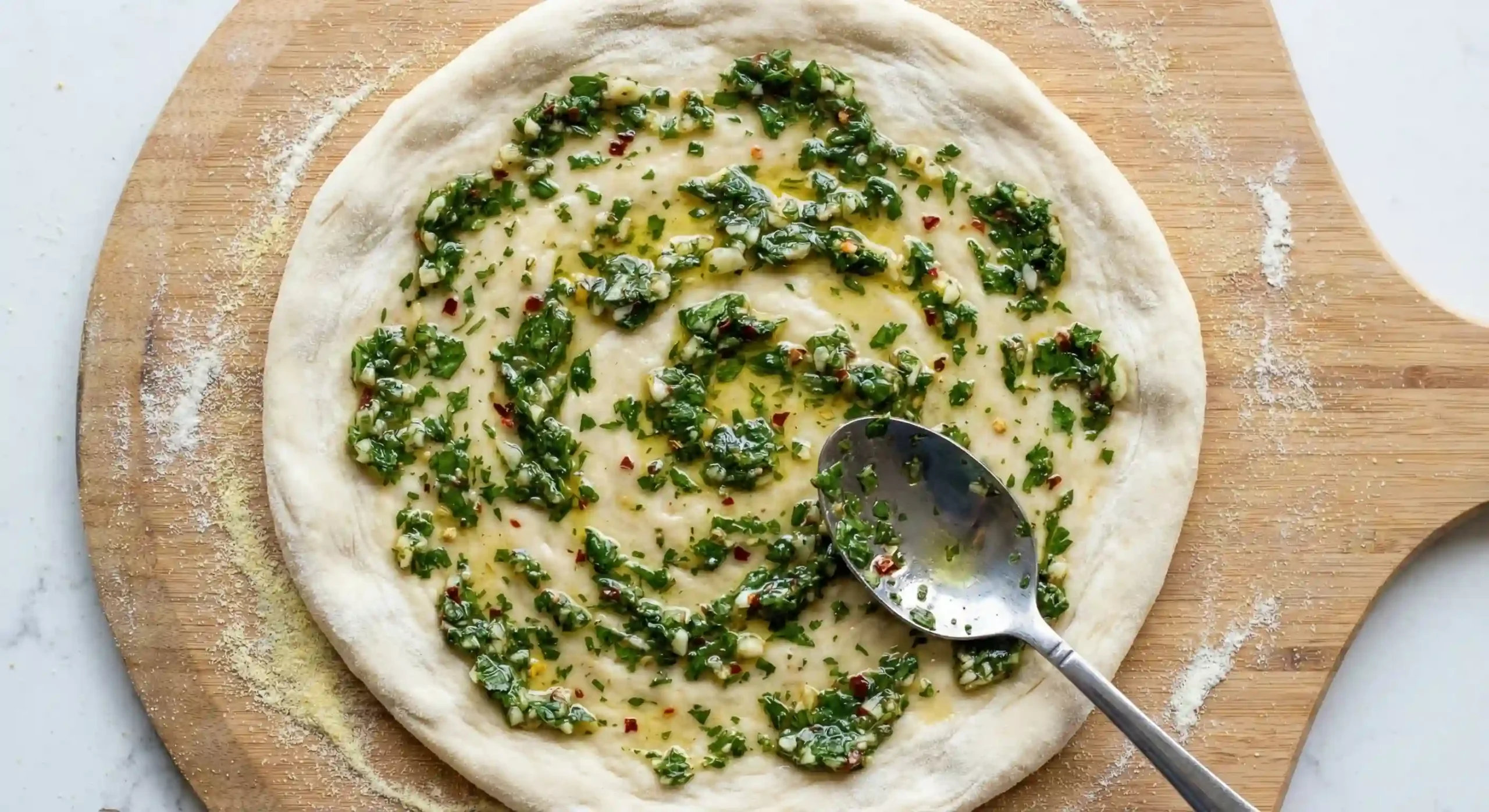
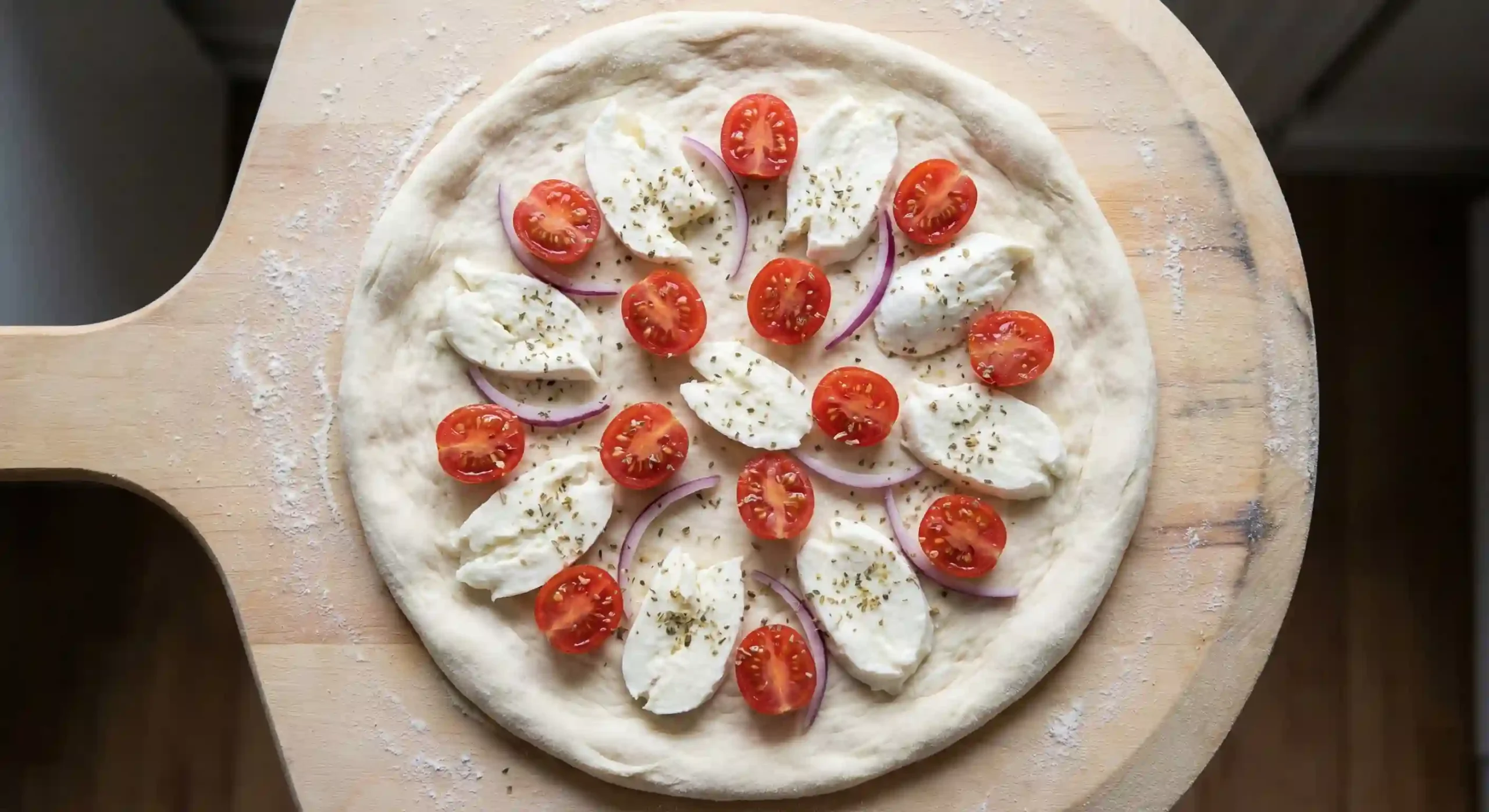
First comes a thin chimichurri base, not a puddle. Next comes even cheese distribution, then clean tomato spacing so steam can escape. The Last rule is to avoid overload, or the center turns soft.
“Finishing Drizzle” After Bake (Do This for Maximum Flavor)
I finish with fresh chimichurri right after it comes out. I drizzle so you get instant brightness without cooking the herbs hard. I also keep an optional extra for dipping on the side.
Step 4 – Bake (Oven + Pizza Oven Timing)
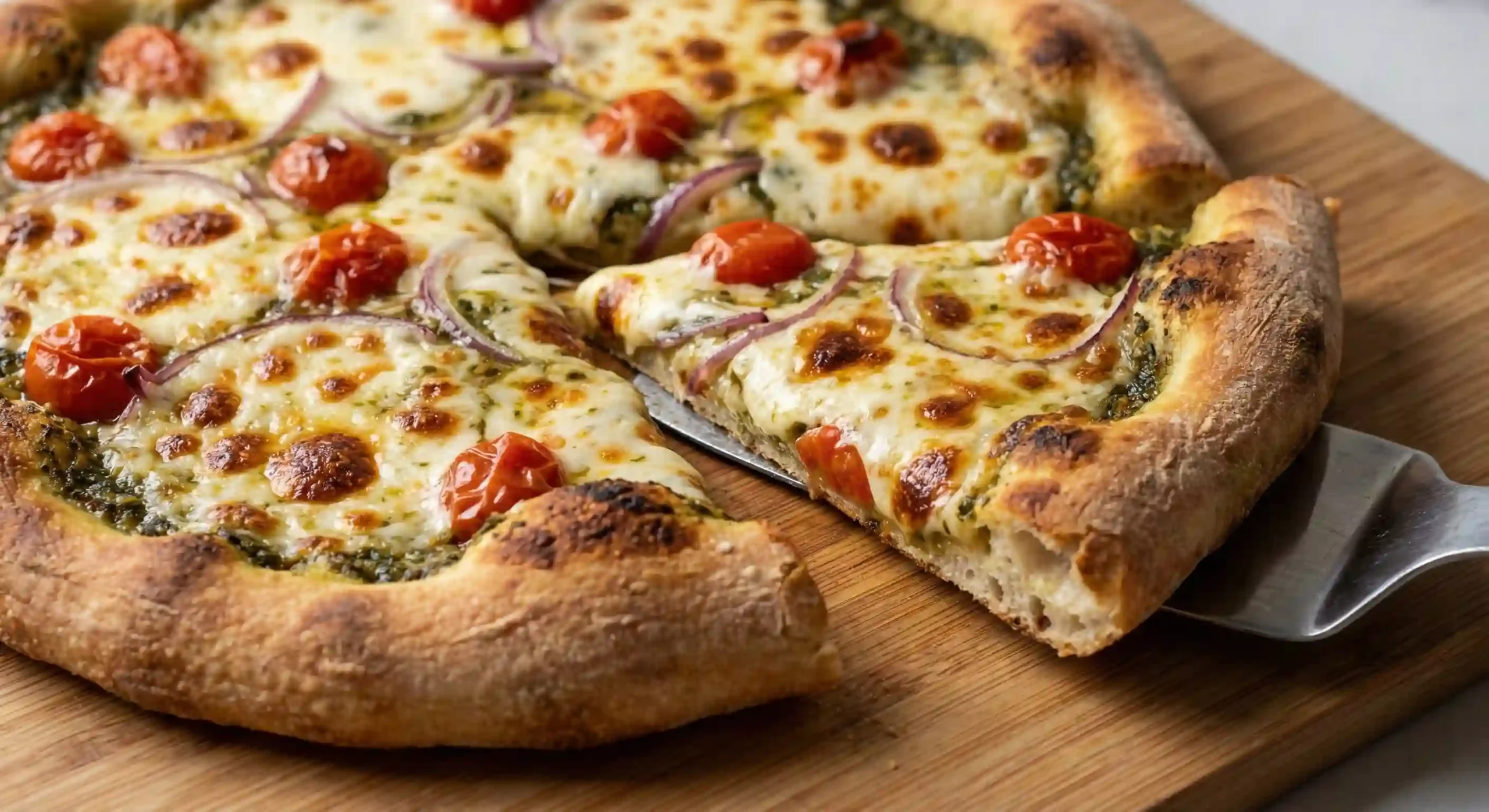
Bake hot at 475–550°F and watch the first minutes closely. Use your bake time range as a guide, then rotate/turn so heat hits evenly. Pull it when you see bubbling cheese and browned edges.
Variations (Vegetarian, Vegan, Protein, Heat Level)
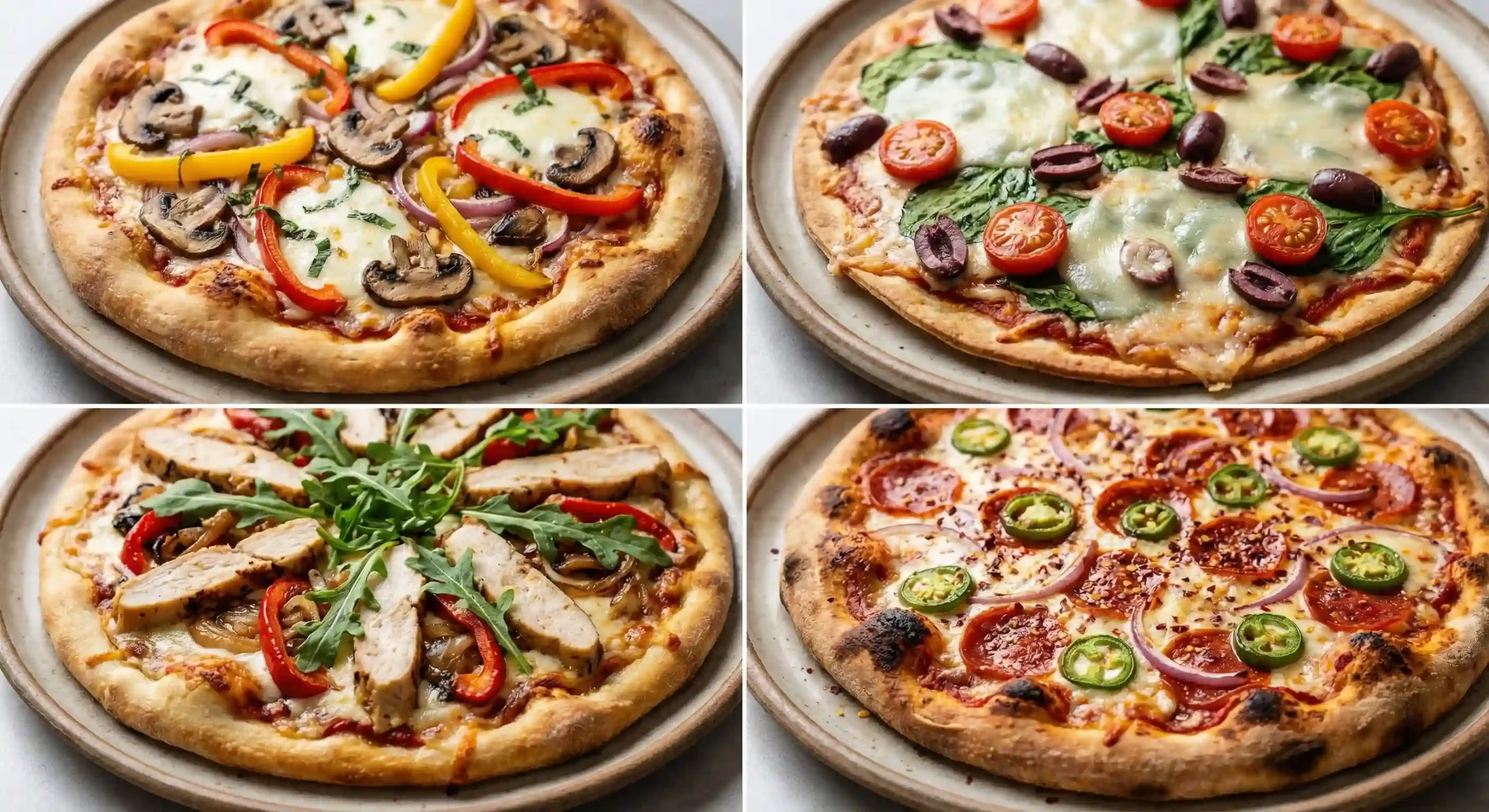
I treat this pizza like a playlist. You can keep it vegetarian with additional veg, or go vegan with dairy-free cheese and a larger herb finish. You may also add chicken/steak/shrimp (optional), put on mushrooms and peppers, and calibrate the spice from mild to spicy.
| Heat level | What to add | How much to use | Where to add it |
| mild | Skip crushed red pepper | 0 | None |
| Medium | crushed red pepper | 1/8 tsp | Mix into chimichurri or sprinkle before baking |
| spicy | crushed red pepper | 1/2 tsp | Sprinkle before bake, then add a pinch after bake for a sharper bite |
Protein Add-Ons That Pair With Chimichurri
Protein works best when it’s simple. I use grilled chicken, sliced steak, or quick-cooked shrimp, and I keep amounts low so the crust remains crunchy. If you’ve got leftover roast, slice it thin and finish with chimichurri so it tastes fresh again.
Flavor Twists (Cilantro Chimichurri, Smoky, Citrus-Forward)
When I want a different lane, I substitute parsley for cilantro. For smoky depth, I add smoked paprika and keep it balanced with extra lemon. If I want a warmer note, I add cumin (optional), then I punch it up with crushed red pepper for a clean bite.
Troubleshooting (Fix the Most Common Failures)
Most problems come from moisture, heat, or overload. I’ve seen soggy crust, watery tomatoes, burnt herbs, and bland flavor happen fast when the build gets messy. You might also run into dough tearing or cheese pooling oil if the dough is cold or the cheese is too wet.
Soggy crust: Use less sauce, bake hotter, and don’t overload toppings.
Watery tomatoes: Salt-rest, drain, and pat dry before topping.
Burnt herbs: Use a thin base, then add fresh chimichurri after baking.
Bland flavor: Add more vinegar or lemon, plus a pinch of salt and chili.
Dough tearing: Let the dough warm up and rest before stretching.
Cheese pooling oil: Use low-moisture mozzarella or blot fresh mozzarella first.
Why Is My Pizza Soggy?
If your pizza gets wet, it’s likely one of five reasons. Too much chimichurri soaks the dough, tomato moisture steams the center, and an under-preheat leaves the top tepid. Add low heat and overload toppings, and the crust never gets its chance.
Fix it by thinning the sauce, draining the tomatoes, and baking it hotter. Keep toppings light and separated so steam can escape.
How to Stop Herbs from Burning
Herbs burn when they sit under direct heat for too long. The clean remedy is two-stage chimichurri with a light foundation and a finish afterward. Use a minimum pre-bake sauce, then apply a post-bake drizzle so the herbs remain green and vibrant.
Make-Ahead, Storage, and Food Safety
I approach prep as a shortcut. I refrigerate leftover chimichurri quickly, put it in an airtight container, and keep it cool until pizza time. If the oil congeals in the fridge, I simply let it rest for a few minutes, then stir.
The USDA FSIS says you can keep leftovers in the refrigerator for 3 to 4 days (or freeze them for 3 to 4 months). FoodSafety.gov says to set your refrigerator to 40°F (4°C) or below. Store chimichurri in an airtight container, keep it refrigerated, and use a clean spoon each time.
How Long Does Chimichurri Last?
For the best taste, I use chimichurri within 2–3 days best flavor, held refrigerated in an airtight container. It often stays usable up to ~1 week (practical range) if it gives smell/appearance checks and you use clean utensils. If it smells off, looks dull, or shows mold, toss it.
If I want a longer buffer, I utilize a freeze option. The USDA says you can store frozen leftovers for 3 to 4 months, so freeze small quantities to decrease waste.
Best Way to Reheat Chimichurri Pizza
I use oven reheat to restore crispiness and keep the foundation dry. I avoid the microwave since it steams the slice and delivers it back to reheat without sogginess concerns. Heat it till the bottom feels solid again, then add a quick new spoon of chimichurri if you want that vibrant finish.
Serving Ideas (Turn It Into a Full Meal)
I like this pizza best when the plate has different toppings. I’ll add a side salad, some grilled vegetables, and a couple of simple Argentine-inspired sides so the meal feels complete. Then I set out extra chimichurri dip and cut the pizza into party appetizer slices.
WebstaurantStore’s catering portion chart lists 2 to 3 slices of pizza per person as a planning baseline. Pizza Hut also suggests 2 to 3 slices per adult and 1 to 2 per child, depending on appetite. If you’re serving lots of sides, stay closer to 2 slices per person.
What to Serve With Chimichurri Pizza
I start with fresh greens because they refresh your taste. I put citrus in the dressing to complement the chimichurri taste, and I bring in a crunchy side like toasted almonds or sliced cucumbers. That mix helps balance richness from the cheese while keeping each piece feeling light.
Nutrition + Dietary Notes
I treat nutrition like a guide, not a rulebook. Use a calorie estimate as a rough guide. Also, remember that cheese and salted tomatoes can quickly add a lot of sodium. For portion guidance, I plan one to two slices as a meal, then I adjust based on sides and appetite.
For swaps, you’ve got options. A dairy-free option works well if you use dairy-free mozzarella. Add extra chimichurri after baking for more flavor. A gluten-free option is simple with a trusted gluten-free pizza crust mix or a store-bought base. Bake it hot to keep it crisp.
Conclusion
That’s my Chimichurri Tomato Pizza Recipe in a nutshell. When you use chimichurri as a pizza base, it has a fresh and vibrant flavor. It remains herbaceous, bright, tangy, and garlicky when you follow the two-stage chimichurri. This way, the crust does not become heavy.
Keep the build neat. Use a pre-bake thin layer, then finish with a post-bake drizzle of fresh chimichurri to lock in aroma and color. To avoid a soggy crust, control the moisture in tomatoes. Bake at high heat, between 475°F and 550°F. Use a preheated stone or steel for the best results.
FAQ’s
Should chimichurri go under the cheese or on top after baking?
Put a pre-bake thin layer of chimichurri under the cheese, then add a post-bake drizzle after baking. The thin base gives coverage, while the finish keeps fresh herbs, aroma, and color intact. This two-step move also helps prevent soggy crust and avoids burnt herbs.
If you do only one step, choose the finish. It tastes fresher.
What are the best tomatoes for chimichurri pizza, cherry, Roma, or San Marzano?
All three work, but they behave differently. Cherry tomatoes add quick sweetness without much mess. Plum or Roma slices keep their shape well. San Marzano tomatoes can taste juicier, but you need to remove the seeds and control the thickness. Pick the one you can prep to control moisture.
If your tomatoes look extra wet, roast them first. It concentrates flavor and cuts water.
How do I keep chimichurri pizza from getting soggy crust?
Start with high heat and a full preheat on a baking stone or baking steel. Use a thin chimichurri base, don’t oversauce, and avoid overload on toppings. Prep tomatoes with a salt-rest, drain, and pat tomatoes dry so tomato moisture doesn’t steam the center.
Spacing matters too. Leave gaps so steam can escape.
What temperature should I bake chimichurri pizza in a home oven vs a pizza oven?
In a home oven, bake at high heat (475–550°F) and keep the surface fully preheated. In a pizza oven, you still want high heat, but you’ll often bake faster, and you must rotate/turn more. Watch for bubbling cheese and browned edges, not the clock alone.
If the top browns too fast, lower the flame or move the pizza away from the hottest spot.
How long does chimichurri lasts in the fridge, and can I freeze option it?
I keep chimichurri in an airtight container and refrigerate it right away. For the best flavor, I aim for 2 to 3 days. After that, I check the smell and appearance. I consider up to about 1 week as a safe limit. Yes, a freeze option works well in small portions.
If the oil congeals, let it sit for a few minutes, then stir. That’s normal.
What’s the best cheese combo for chimichurri pizza?
I like a mix of low-moisture mozzarella for steady melt and a little fresh mozzarella for clean dairy flavor. Add a provolone blend when you want more sharpness and better browning. This mozzarella + provolone pairing logic keeps the slice stretchy but still punchy.
If fresh mozzarella weeps, blot it first. That helps prevent cheese from pooling oil.
Can I make this recipe vegan?
Yes. Use a dairy-free option with dairy-free mozzarella and keep your topping load light. Since baked behavior varies by brand, start with less cheese and add more next time if it melts well. Finish with a finishing drizzle of fresh chimichurri for brightness.
I also add more red onion and tomatoes for texture. It keeps the slice lively.
Why did my herbs taste bitter, did the chimichurri burn?
The most bitter herb taste comes from heat exposure. If you bake a thick layer of chimichurri, you can scorch the herbs and dull the flavor, which reads as bitter. Fix it with two-stage chimichurri, using minimal pre-bake sauce and a post-bake drizzle instead.
Also, avoid over-processing. A pesto-like paste can cook harsher than a chopped sauce.
Can I make chimichurri tomato pizza on a sheet-pan pizza or cast-iron skillet pizza?
Yes, both work well. For sheet-pan pizza, focus on oiling the pan lightly and spreading the dough evenly for edge-to-edge browning. For cast-iron skillet pizza, use oiling pan and embrace a thicker crust option that crisps at the rim. Keep the chimichurri layer thin either way.
Finish with that post-bake drizzle. It makes the whole pan taste fresher.

It’s nearly impossible to find educated people on this topic, but you sound like you know what you’re
talking about! Thanks