
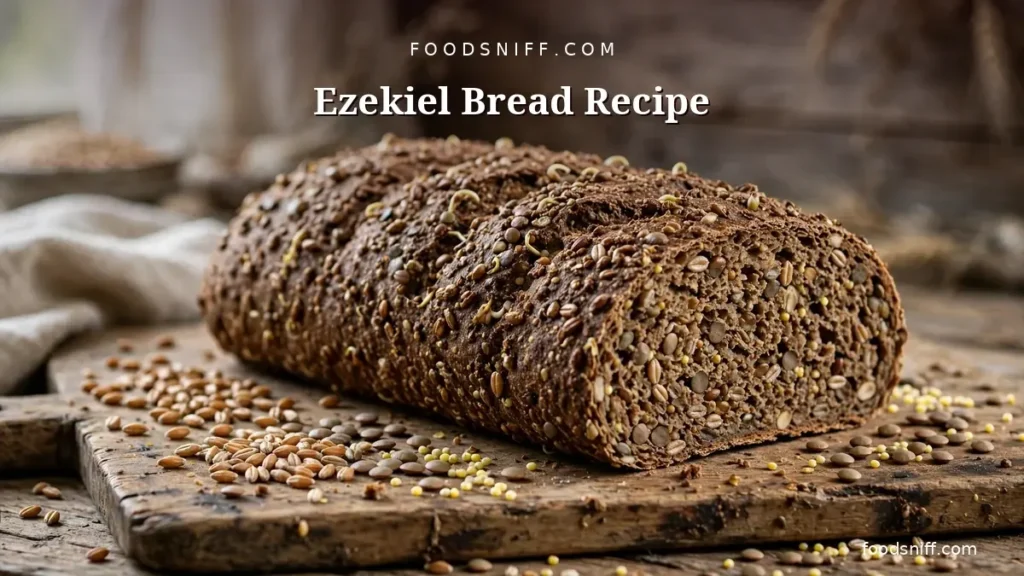
This ezekiel bread recipe gives you a dense, nutty loaf with a clean slice, not a brick. It uses store-bought sprouted flour, so the work takes about three hours from mixing bowl to oven, plus cooling time. The six grains and legumes come straight from Ezekiel 4:9, wheat, barley, beans, lentils, millet, and spelt, for complete protein.
Two steps decide whether the loaf slices clean or turns gummy. Bake it to 205 to 210 degrees F in the center, then let it cool for three to four hours before you cut it. Do those two things and the crumb sets up firm.
What Is Ezekiel Bread?
Ezekiel bread is a sprouted grain bread named for Ezekiel 4:9, where the prophet is told to take wheat, barley, beans, lentils, millet, and spelt, put them in one vessel, and make bread from them. The modern loaf follows that list, with each grain and legume sprouted before it is milled into flour. Food for Life sells the best known version, Ezekiel 4:9 bread, and this recipe is a homemade take on the same idea.
Sprouting means soaking the grain until it just starts to germinate, then drying it and milling it. The Whole Grains Council explains how sprouting changes whole grains, with sprouted wheat carrying three to four times the folate of unsprouted wheat, plus more fiber and free amino acids. Sprouted grains are always whole grains, since a grain that is not whole will not sprout.
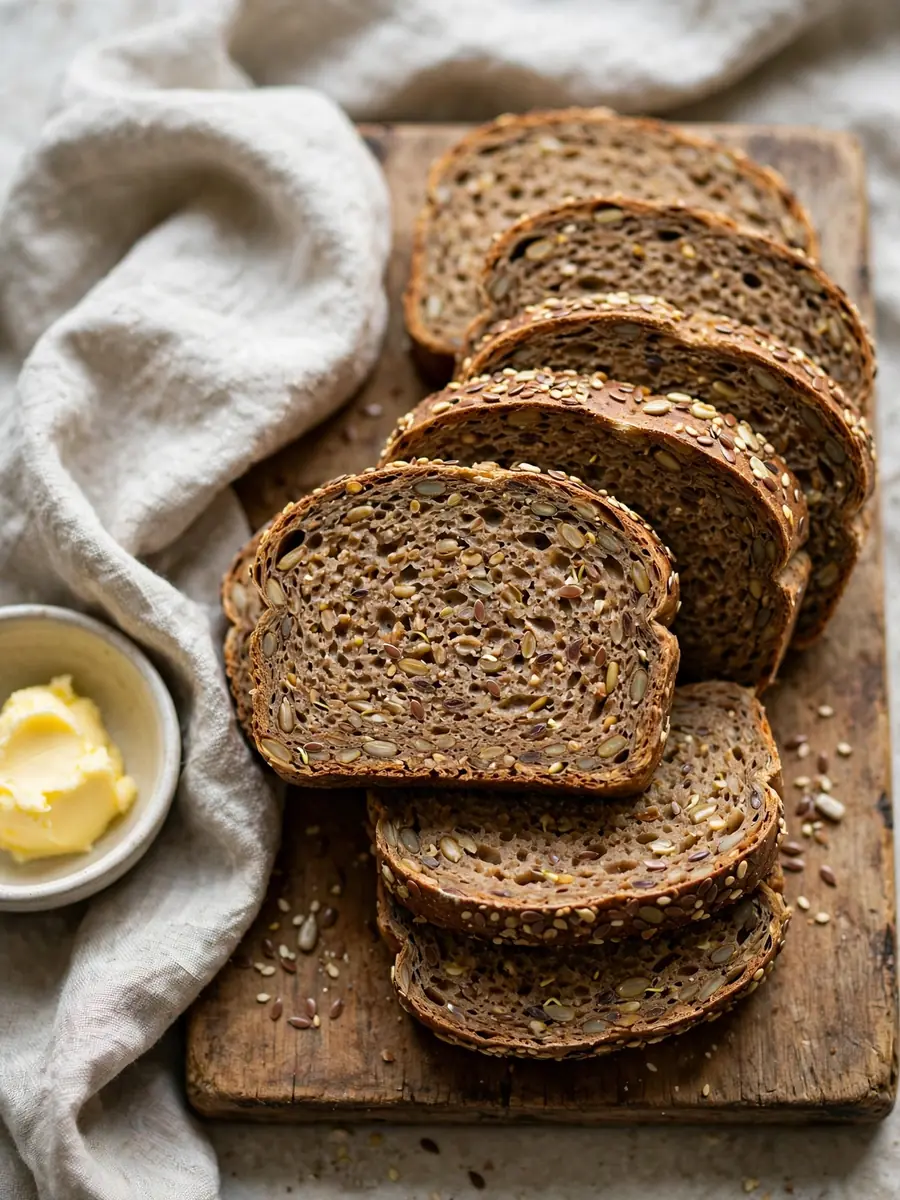
Expect a dense loaf with an earthy, faintly sweet flavor and a tight crumb. It toasts well, holds up under avocado and fried eggs, and makes a sturdy base for soup. It is not a soft sandwich loaf and it never will be, so judge it on its own terms. It is also not gluten-free, since wheat, spelt, and barley all contain gluten.
The Six Ingredients in Ezekiel 4:9
| Ingredient | What it adds to the loaf |
|---|---|
| Hard red wheat | Structure and most of the rise |
| Spelt | A mild, sweet flavor and a softer crumb |
| Hulled barley | Gentle sweetness and a moist crumb |
| Millet | Small crunch and a light, nutty note |
| Green lentils | Protein and the amino acid lysine, which grains lack |
| Great northern beans | More protein and a firm, sliceable crumb |
Use great northern beans or navy beans for the bean flour. Do not use raw kidney beans. Raw kidney beans contain phytohaemagglutinin, a toxin that needs a full boil to break down, and the center of a loaf never gets hot enough. Several popular recipes still call for raw kidney beans, and that is a mistake worth avoiding.
Sprouted Flour or Sprout Your Own?
You have two ways to get sprouted flour, and the choice sets the whole schedule. Buy sprouted wheat, spelt, barley, and millet flours, grind dried lentils and beans into flour in a blender, and you can bake the same day. Sprout the grains yourself and the project takes three to four days, with most of that time spent waiting and rinsing.
| Path | Time | Equipment | Best for |
|---|---|---|---|
| Sprouted flour, store-bought | About 3 hours of baking day | A blender for the lentil and bean flour | A first loaf, and most bakers |
| Sprout, dry, and mill at home | 3 to 4 days | Sprouting jars, a dehydrator or low oven, a grain mill | Bakers who want the full process |
Start with the flour path. It teaches you how the dough should feel, how slow the rise runs, and what a finished crumb looks like, without a three day commitment. This ezekiel bread recipe uses that path, and the sprouting path can wait until the loaf earns a regular spot in your kitchen.
Ezekiel Bread Recipe
Prep time: 20 minutes | Cook time: 40 minutes | Total time: 5 hours 30 minutes | Serves: 12 slices | Category: Baking & Desserts
Ingredients
For the flour blend
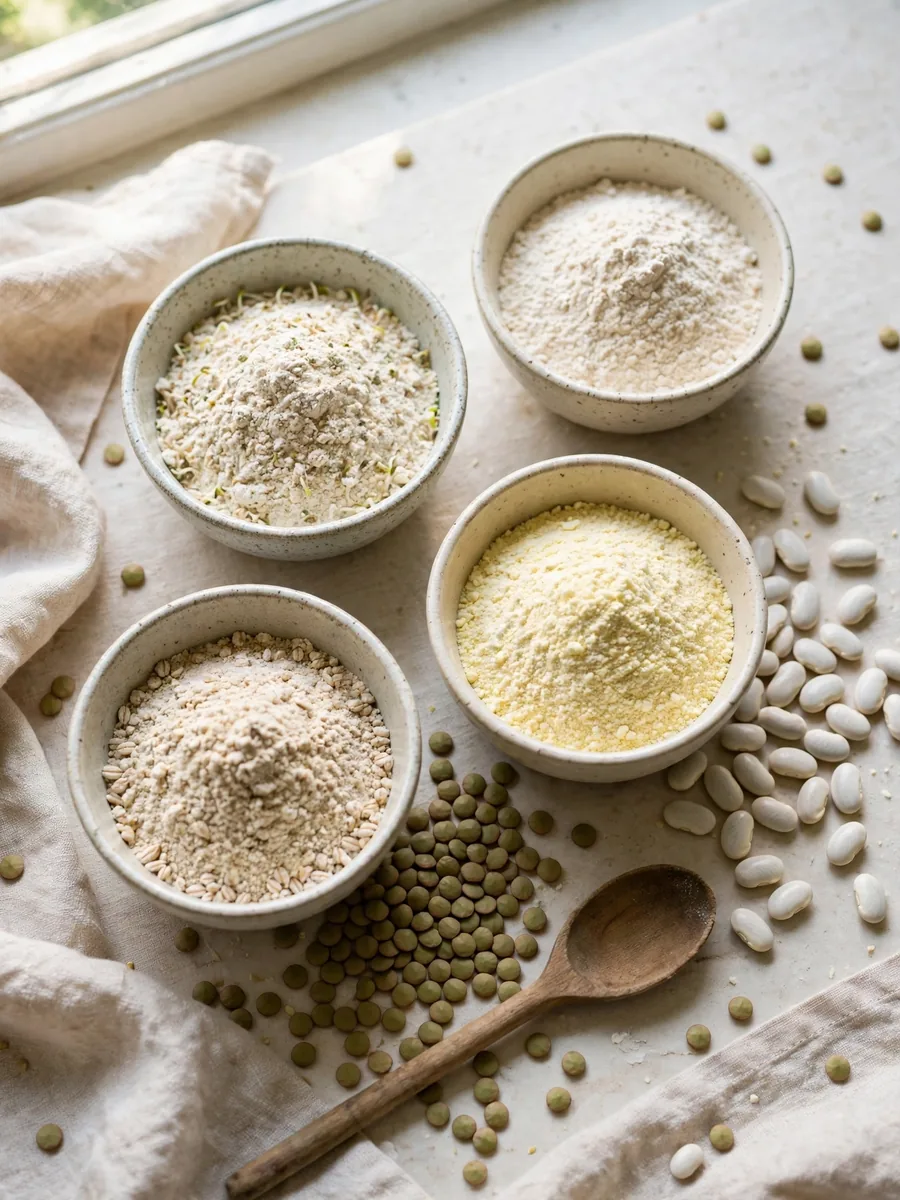
- 2 cups sprouted wheat flour
- 1 cup sprouted spelt flour
- 1/2 cup sprouted barley flour
- 1/4 cup sprouted millet flour
- 1/4 cup lentil flour, ground from dried green lentils
- 2 tablespoons bean flour, ground from dried great northern beans
For the dough
- 1 1/4 cups warm water, about 110 degrees F
- 2 1/4 teaspoons active dry yeast
- 2 tablespoons honey
- 2 tablespoons olive oil
- 1 1/2 teaspoons fine salt
- 1 tablespoon vital wheat gluten, optional
Steps
- Whisk the sprouted wheat, spelt, barley, and millet flours with the lentil flour, bean flour, and wheat gluten, if using, in a large bowl. Break up any lumps with your fingers so the blend is even before the water goes in.
- Stir the warm water, honey, and yeast in a second bowl or large measuring cup. Let it sit for 5 to 10 minutes until foamy. If it never foams, the yeast is dead, so start again with a fresh packet.
- Pour the yeast mixture and the olive oil into the flour blend. Stir with a wooden spoon until a shaggy, sticky dough forms and no dry flour remains at the bottom of the bowl.
- Add the salt and knead the dough in the bowl for a minute, then turn it onto a lightly floured counter and knead for 8 to 10 minutes. The dough stays tacky, so resist adding flour.
- Shape the dough into a ball and set it in a lightly oiled bowl. Cover with a damp towel or plastic wrap and let it rise in a warm spot for 60 to 75 minutes, until roughly doubled in size.
- Press the dough down gently to release the gas, then shape it into a log about the length of your loaf pan. Pinch the seam closed and set it seam side down in a greased 9 by 5 inch loaf pan.
- Cover the pan loosely and let the dough rise again for 30 to 45 minutes, until it crowns about 1 inch above the rim. Heat the oven to 375 degrees F during the last 15 minutes of the rise.
- Bake for 35 to 40 minutes, until the top is deep golden brown and firm. Check the center with an instant-read thermometer. It should read 205 to 210 degrees F.
- If the top darkens too fast, lay a sheet of foil loosely over the pan for the last 10 minutes. Do not pull the loaf early to save the crust, since the center needs the full time.
- Let the loaf cool in the pan for 10 minutes, then turn it out onto a wire rack.
- Cool the loaf completely, 3 to 4 hours or overnight, before slicing. A dense loaf keeps setting as it cools, and a slice cut at one hour can still look gummy the next morning.
- Slice with a long serrated knife using a gentle sawing motion. Cut the slices as thick as you like, about 1/2 inch for toast and thinner for sandwiches.
Why This Loaf Is Dense and How to Get a Better Rise
Legume flours carry no gluten, so a good share of this dough cannot help it rise. Wheat and spelt do the lifting, and they work harder here than in a white loaf. That is why the loaf comes out compact even when everything goes right, and why the rise runs slow.
Knead Long Enough
Kneading builds the gluten net that traps gas from the yeast. Eight to ten minutes by hand, or five to six minutes with a dough hook, is about right. The dough should feel smooth and spring back when poked, not tear at once. Stop there. Over kneading a sticky dough tempts you to add flour, and extra flour dries the crumb.
Proof by Look, Not by Clock
Sprouted flour dough rises more slowly than refined flour dough, and a cool kitchen slows it further. Watch the dough, not the timer. The first rise is done when the dough has roughly doubled and a gentle fingertip poke leaves an indent that fills back slowly.
The second rise is done when the dough crowns about an inch above the pan rim. If your kitchen runs cool, both rises can take half an hour longer, and waiting beats baking an underproofed loaf. The same patient approach pays off in other hearty homemade bread methods.
A Spoonful of Vital Wheat Gluten
Vital wheat gluten is the elastic protein from wheat, sold as a powder in most baking aisles. One tablespoon in this recipe gives the dough more structure and a slightly higher rise, which helps balance the legume flours. It is optional, and the loaf works without it. Skip it if you bake for someone who avoids added gluten, and accept a shorter loaf.
Troubleshooting a Gummy Crumb
Underbaked in the Middle
A dense loaf made from freshly milled flour reaches 190 degrees F in the center long before its starches have set, so the thermometer can say done when the crumb is still wet. Take it to 205 to 210 degrees F instead. If the center reads under 205, give it another 5 to 10 minutes in the oven.
Sliced Too Soon
Cutting a warm loaf lets steam escape and leaves the inside tacky, even when the bake was right. Let the loaf cool for three to four hours, or overnight, on a wire rack. A slice that looks gummy at one hour can cut clean the next morning, because the crumb keeps setting as it cools. This is the single most common reason a good bake looks like a failure.
Too Much Water in the Dough
Wet dough is the usual result of sprouting the grains and then adding the full amount of water on top of grain that is already soaked through. The flour path in this recipe avoids that trap, since dry sprouted flour takes up water in a normal way. If you use the sprouting path instead, cut the added water by a few tablespoons. A tacky, cohesive dough is correct. A batter is not.
Rolls and a Sandwich Loaf
The same dough makes twelve rolls, which is a handy form of this ezekiel bread recipe for weekday lunches. Divide it after the first rise, shape each piece into a tight ball, and set them in a greased 9 by 13 inch pan with a little space between them. Let them rise for 30 minutes, then bake at 375 degrees F for 20 to 25 minutes, until the centers read 205 degrees F.
For a softer sandwich loaf, bake the dough in a greased pullman pan with the lid on, or cover a standard loaf pan loosely with foil for the first 20 minutes. The lid traps steam and keeps the crust thin.
Slice it thin once it has cooled, and toast each slice. Toasting is where this bread shines, since the heat crisps the outside while the inside stays moist. If you want a quicker bake for the weekend, these simple rustic bread recipes need no yeast at all.
How to Serve It
Toast is the best use for this loaf. A thick slice, toasted until the edges crisp, takes butter, jam, avocado with a fried egg, or peanut butter with sliced banana. For lunch, use thin toasted slices for tuna salad or hummus with cucumber, where the firm crumb holds up instead of tearing.
At dinner it works as a side for soup and stew, and it is sturdy enough to dunk without falling apart. A bowl of lentil soup with a warm slice and a smear of butter is a complete, filling meal. If you want a second bread on the table, these quick breads for dinner bake in about 30 minutes and bring a soft, cheesy contrast to the table.
Storage and Freezing
On the Counter and in the Fridge
This bread has no preservatives, so it stales faster than a store loaf. Keep it cut side down on a board under a clean towel, or in a bread bag, for up to 2 days at room temperature. In the refrigerator it keeps for up to 5 days, wrapped well. Warm a cold slice in the toaster and it comes back to life.

Freezing Slices
Freeze slices, not the whole loaf. Let the loaf cool completely, slice it, and stack the slices with small squares of parchment between them. Wrap the stack tightly in plastic wrap, then in foil, and freeze for up to 3 months. Toast slices straight from frozen, adding a minute to the usual time, or thaw them overnight in the refrigerator still wrapped.
Ezekiel Bread FAQ
Do I have to sprout the grains myself?
No. Store-bought sprouted flour gives the same flavor and crumb in about 3 hours of baking day. Sprouting the grains yourself takes 3 to 4 days and is worth trying only after the flour version works.
Why is my Ezekiel bread gummy in the middle?
Almost always one of three things: the center never reached 205 to 210 degrees F, the loaf was sliced before it cooled completely, or the dough held too much water. Bake to temperature, cool for 3 to 4 hours, and check the water if you sprouted the grains yourself.
How long does Ezekiel bread keep?
Up to 2 days at room temperature in a bread bag, up to 5 days refrigerated and wrapped, or up to 3 months frozen as slices. Toast frozen slices straight from the freezer.