What Is African Blue Basil?
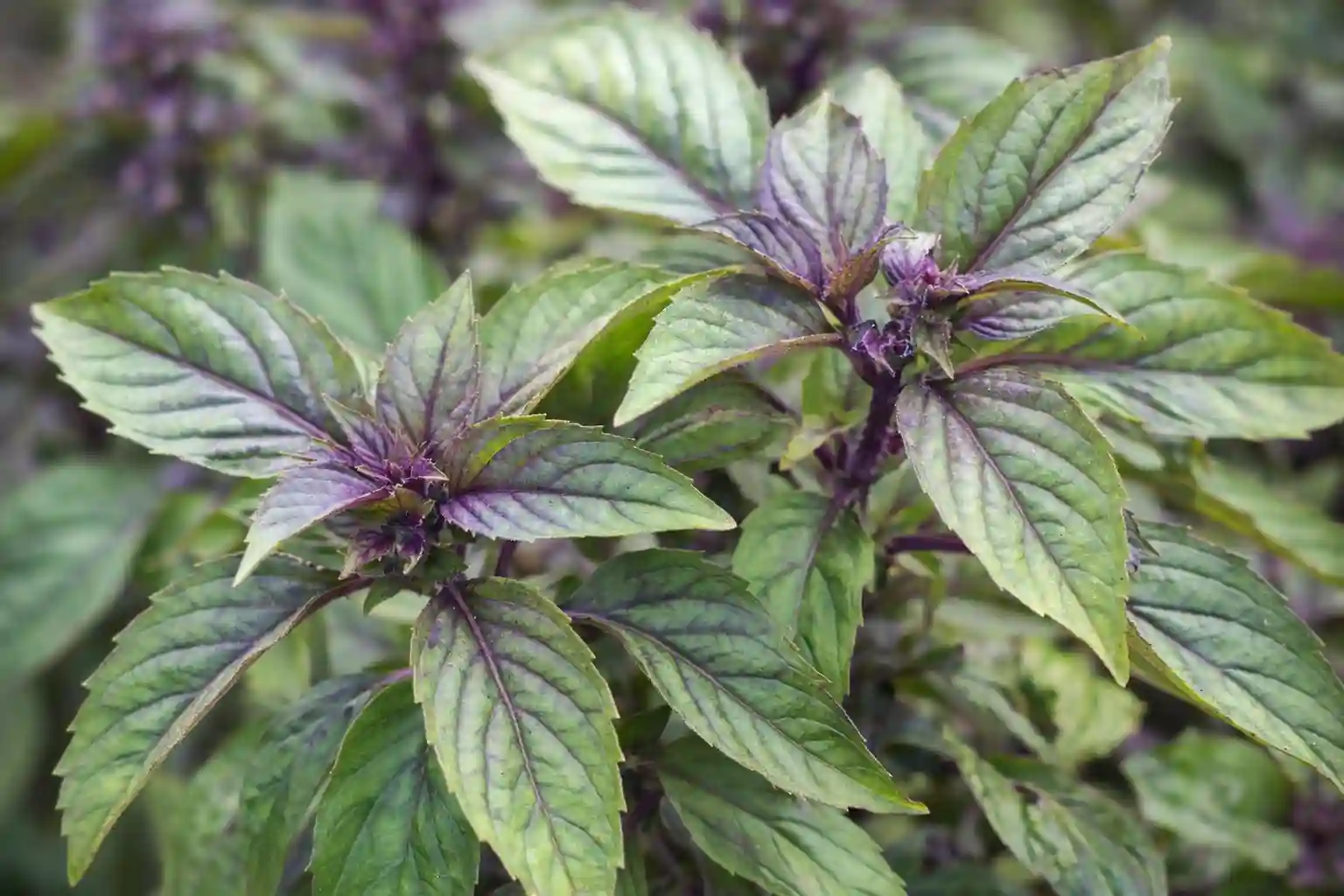
African blue basil isn’t just any basil. I regard it as a robust, aromatic herb that acts differently in the kitchen and the garden. This African blue basil plant is a purple basil variety. Chefs and gardeners admire it for its strength, aroma, and durability, making it ideal for African blue basil recipes.
Origin and Botanical Background
This plant originates from nature, doing its thing. African blue basil is a basil hybrid herb, formed by a cross between basil species rather than selective breeding. That makes it a real hybrid basil variety.
It also violates expectations. Unlike sweet basil, this is a perennial basil plant in warm areas, not a one-season grower. The leaves emit powerful oils, which explains their aromatic herb characteristics and why it keeps taste after cooking.
Flavor Profile and Aroma
The first thing you notice is intensity. The African blue basil flavor tends toward a spicy basil flavor, neither sweet nor mild. It has mild camphor-like notes that strike the nose swiftly.
That smell becomes delicious on the platter. Expect a strong, savory herbal aroma that works well in sauces, oils, and mixes. These features show the difference between African blue basil and sweet basil. They explain why African blue basil is better for strong dishes instead of delicate recipes.
How African Blue Basil Is Different From Other Basil Varieties
Basil isn’t one-size-fits-all. I’ve found that using the incorrect kind can destroy a meal quickly. This section explains how African blue basil is different from other common basil varieties. This way, you will know when it works and when it doesn’t.
African Blue Basil vs Sweet Basil
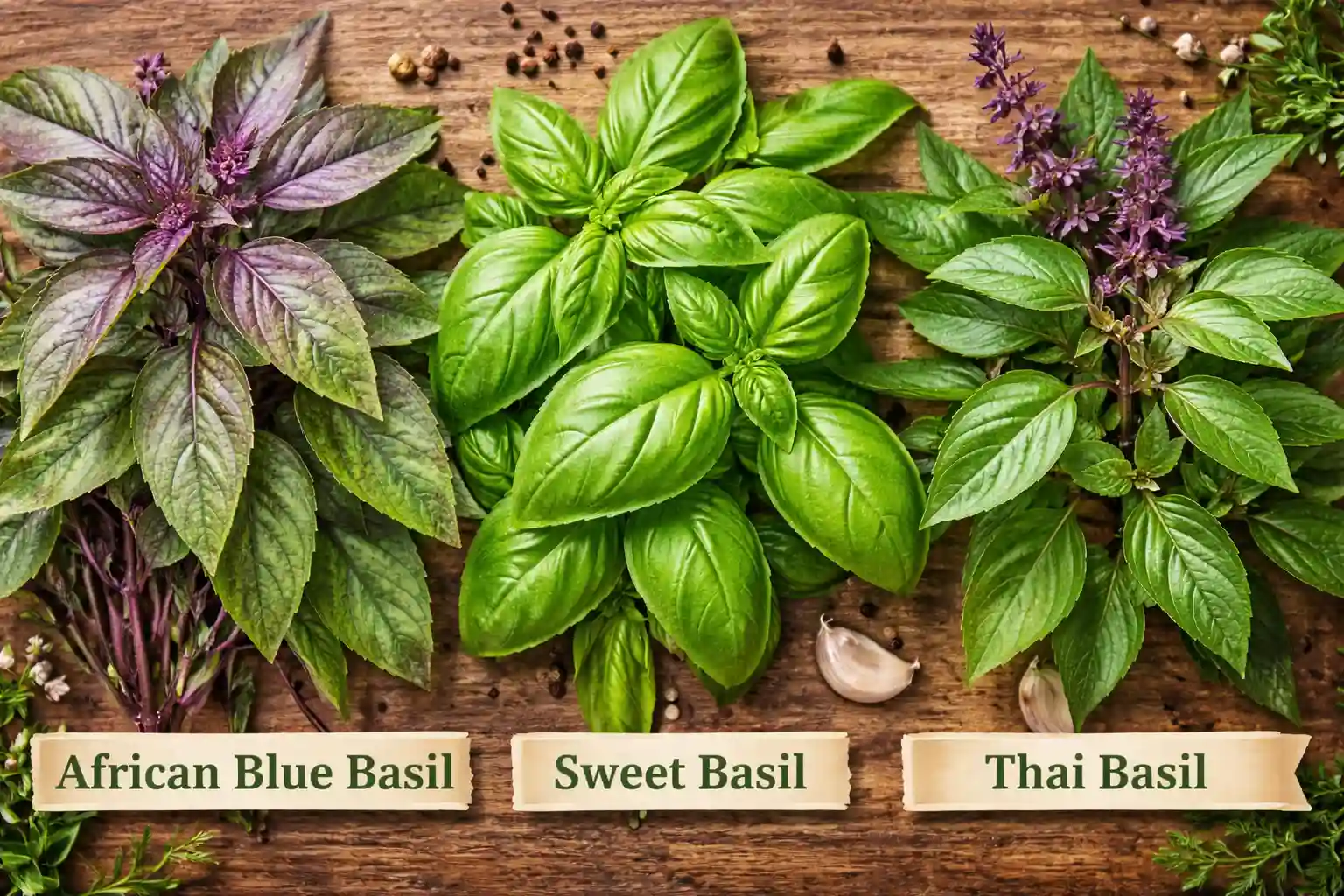
The contrast is stark. African blue basil vs sweet basil boils down to strength and sweetness. Sweet basil tastes gentle and somewhat sweet, whereas African blue basil smacks stronger with spice and herbal depth.
This distinction solves a popular question. Can you replace sweet basil with African blue basil? Yes, but only in prepared dishes like sauces, pestos, and oils. Raw meals suffer because the taste overpowers too soon.
| Attribute | African Blue Basil | Sweet Basil |
| Flavor strength | Spicy basil flavor with bold herbal bite | Mild, lightly sweet |
| Aroma | Savory herbal aroma with camphor-like notes | Soft, sweet, grassy |
| Texture | Thick leaves, sturdy stems | Thin, tender leaves |
| Heat tolerance | Holds flavor during cooking | Loses aroma quickly |
| Best uses | Sauces, pestos, chutneys, infused oils | Salads, garnishes, and fresh dishes |
| Raw use | Limited due to intensity | Ideal for raw use |
| Substitute Match | Works as a Genovese basil substitute in cooked recipes | Poor substitute for African blue basil |
African Blue Basil vs Thai Basil
The gap narrows here. In a Thai basil comparison, both share spice and aggressiveness. Thai basil leans anise-like, whereas African blue basil retains a more herbal, earthy taste.
I use African blue basil if Thai basil is too sweet. Stir-fries, chutneys, and marinades benefit from that deeper character without adding sugar notes.
When to Substitute and When Not To
Substitutions require moderation. African blue basil may function as a Genovese basil substitute in pesto, compound butter, and infused oil. It fails in caprese salads or fresh garnishes.
Here’s my rule. Use it when heat, fat, or acid is present. Skip it when a meal relies on freshness and suppleness.
Health Benefits of African Blue Basil
I don’t use this herb only for taste. The actual worth shows up in how it supports the body. These health benefits of African blue basil give the plant a role beyond just recipes. People use it for many purposes.
Nutritional and Antioxidant Properties
The leaves carry natural plant chemicals. These chemicals work as basil antioxidants, which assist the body in regulating oxidative stress from regular wear and tear. The rich hue hints at its density.
Strong aroma matters here. These oils are why African blue basil is on lists of anti-inflammatory herbs. People use it in food and herbal medicine.
Digestive and Gut Health Support
Digestion benefits from bitterness and fragrance. African blue basil suits both uses, which is why food-based health circles classify it alongside gut-healing herbs. The oils may help digestion when used fresh or gently processed.
I go for it in chutneys and sauces. Those forms enable the body accept strong herbs without discomfort, particularly when coupled with fat and acid.
Traditional and Herbal Uses
This basil wasn’t created in stylish kitchens. Historical medicinal basil uses centered on digestion, circulation, and respiratory comfort. People used the leaves fresh, crushed, or infused.
Today, I handle it the same way. Food first. Support second. That balance makes the herb helpful without overthinking it.
Ethnobotanical records reveal basil utilized throughout African, South Asian, and Southeast Asian societies for digestion, respiratory comfort, and food-based wellbeing. Herbal books, local farming records, and cooking medicine studies show that people use basil leaves fresh, steeped, or ground into meals. People do not typically use them as standalone remedies.
Cooking With African Blue Basil, Best Uses and Tips
Cooking this plant needs intention. I’ve learnt that knowing how to cook African blue basil matters more than the dish itself. Its strength encourages stability and punishes guessing.
When to Use It Fresh vs Cooked
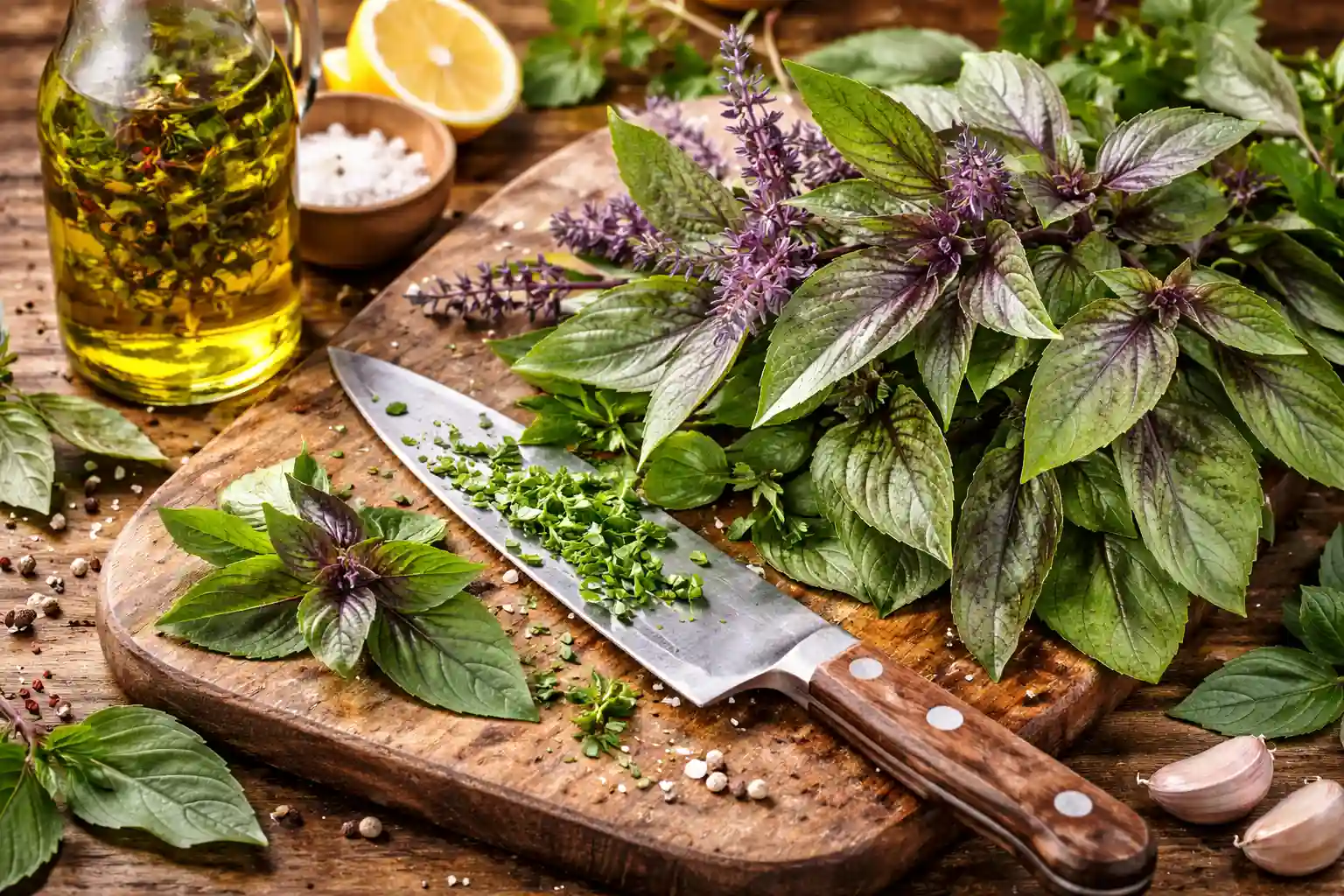
Fresh usage necessitates moderation. When I add it raw, I keep quantities minimal since cooking with strong basil may dominate rapidly. Chutneys and sauces handle it better than salads.
Heat alters everything. Cooking softens the flavor and spreads the aroma evenly. This makes sauces one of the best ways to use African blue basil. That’s where control resides.
Ingredients That Pair Well With African Blue Basil
Pairing keeps tastes grounded. I depend on garlic to anchor the herb and avoid harsh edges. It rounds the fragrance instead of resisting it.
Acid matters next. Citrus removes heaviness and keeps the taste clean. Fat finishes the job, particularly olive oil, which distributes scent throughout the meal.
Texture seals it. Nuts give body to pestos, while chili peppers sharpen the finish. Together, they form the backbone of clever fresh basil recipes designed on power, not sweetness.
Common Mistakes to Avoid
Most difficulties originate from pushing too hard. African blue basil develops overpowering flavors when growers handle it like sweet basil. I keep quantities modest and put it in gently so the herb supports the meal instead of taking over.
Heat creates the next difficulty. Overcooking basil eliminates scent and leaves bitterness behind. I add it late or cook it softly so the oils remain intact.
Substitutions trip folks up. Incorrect substitutions show evidence when it substitutes sweet basil in raw foods. I avoid exchanging unless the dish incorporates heat, fat, or acid to balance the strength.
African Blue Basil Recipes You Must Try
This is when the plant earns its position. I use these recipes when I want robust taste without misunderstanding. Each one illustrates how African blue basil recipes function best with balance and purpose.
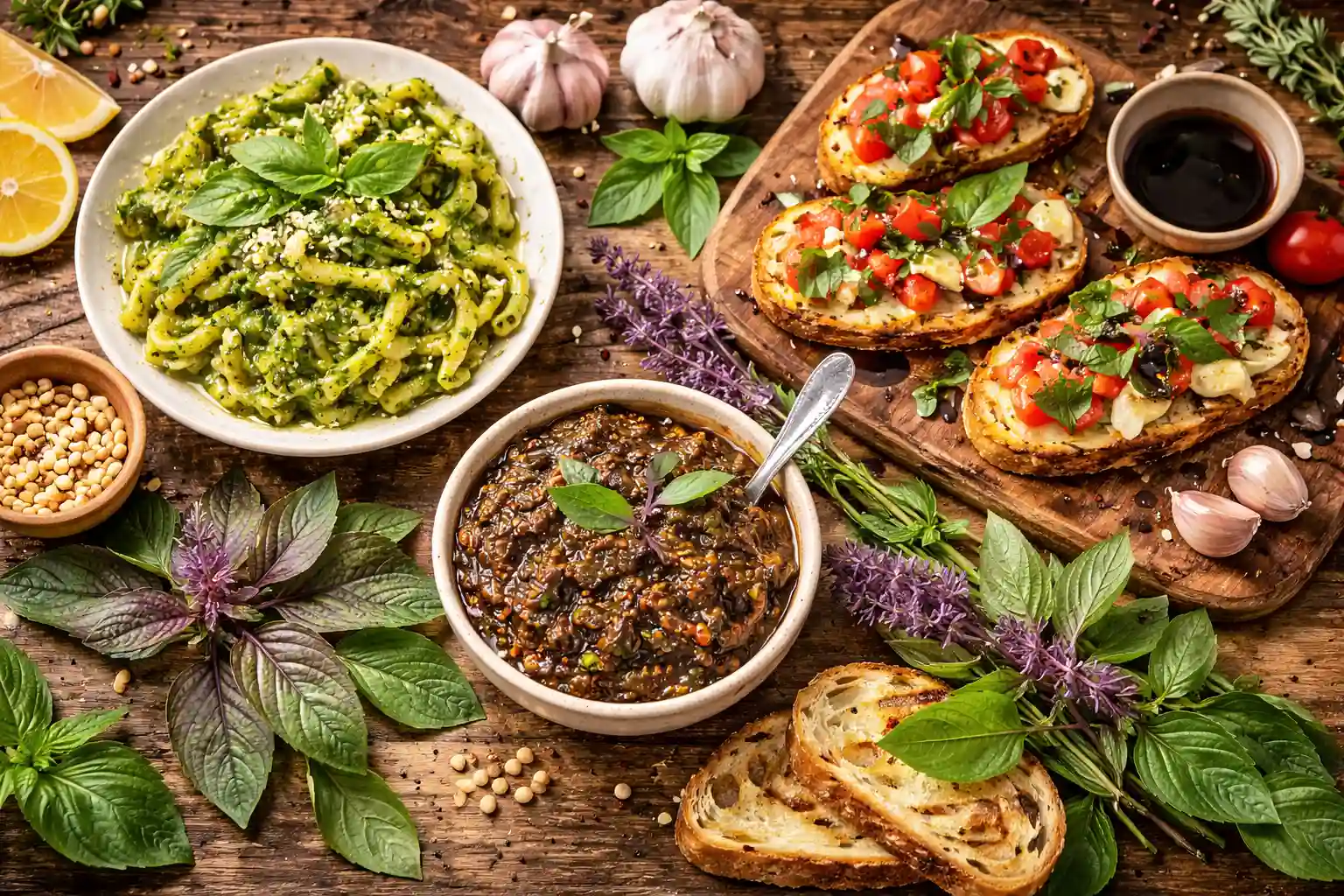
African Blue Basil and Lavender Pesto
This pesto leans savory with flowery richness. African blue basil pesto works because fat and salt keep the taste consistent. I approach it as a homemade basil sauce, not a garnish.
I spice things up with nut variations like almonds or walnuts. For a vegan pesto option, I eliminate cheese and add more almonds. It shines with pasta and bread pairings, particularly toasted sourdough.
African Blue Basil Vinaigrette
This dressing strikes a crisp and clean note. African blue basil vinaigrette keeps up better than sweet basil versions because the oils remain robust. I depend on it for robust basil dressing recipes.
It works beyond salads. I use it for salad dressing ideas, fast marinades, and warm grain bowls where heat softens the taste.
Gut Healing African Blue Basil Chutney
This one focuses on digestion. A basil chutney recipe allows the herb remain raw without getting harsh. I mix it smoothly and keep servings small.
There’s flexibility here. You may retain it as a raw chutney or try a fermented option for depth. Both variants integrate nicely into digestive-friendly sauces coupled with grains or meats.
Additional Recipe Ideas Competitors Did Not Cover
These concepts extend the herb without pushing it. African blue basil compound butter melts wonderfully over veggies. Basil-infused olive oil is good for roasting and finishing.
For sauces, I cycle between basil garlic aioli and basil yogurt dip depending on richness. When I seek mild taste, basil herb rice delivers without overwhelming the platter.
How to Preserve African Blue Basil for Year-Round Use
Fresh basil doesn’t last long. That’s why I plan and lock in taste early. Knowing how to preserve basil keeps this plant usable long after the blooming season finishes.
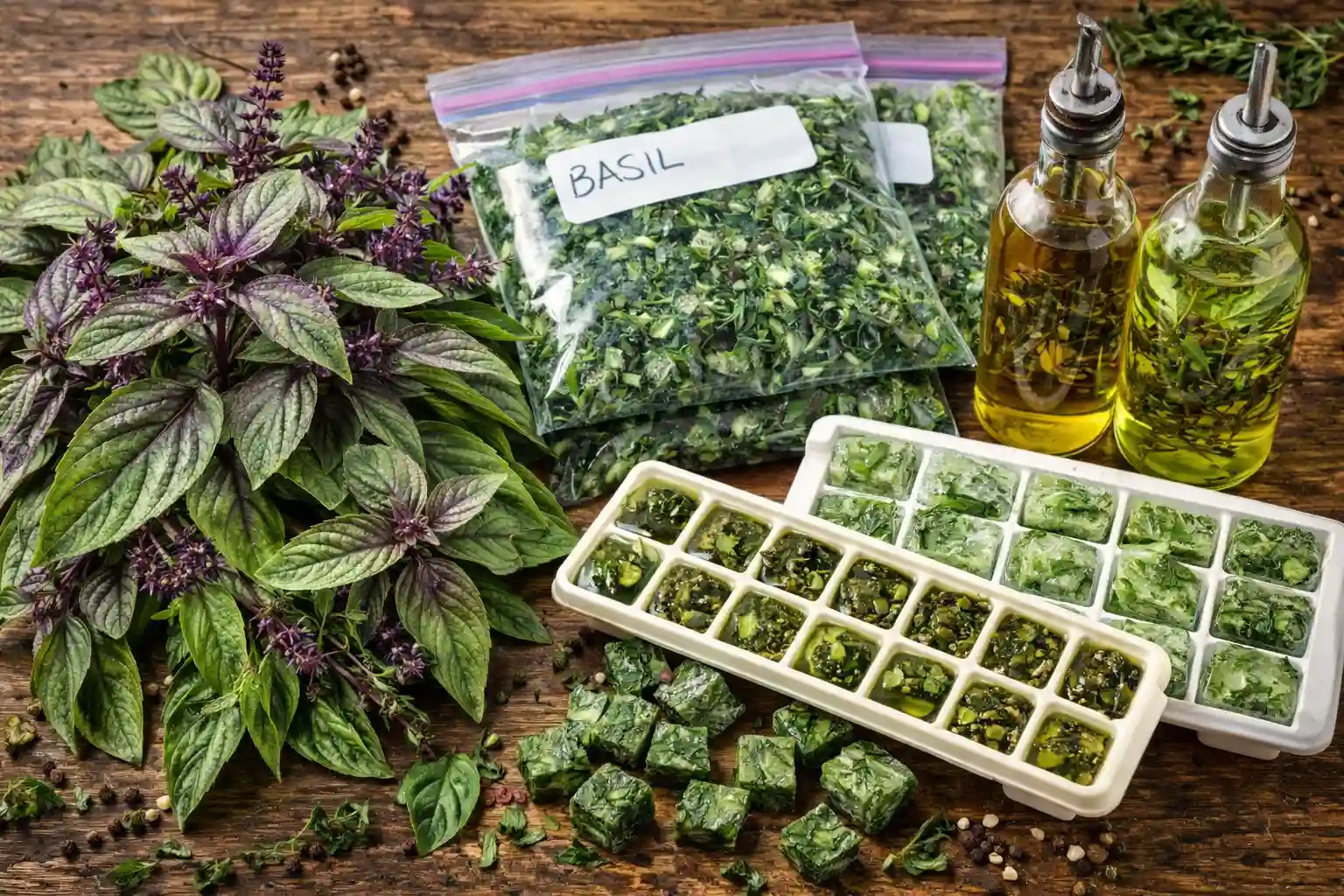
Freezing African Blue Basil
The freezing works well for bold plants. Freezing African blue basil keeps its scent intact when done properly. I cut the leaves, coat them with oil, and freeze them in little parts.
This strategy prevents bitterness. The oil preserves the greens and makes fast sauces simple afterward.
Drying and Storing Leaves
The drying changes the taste. Drying basil leaves intensifies the scent but reduces the freshness. I air-dry full stems in a dark, dry location.
Storage matters here. Airtight jars and low light are crucial basil storage tips that limit taste loss over time.
Making Basil Oil and Herb Cubes
Oil locks in fragrance. Basil oil infusion works great for roasting, dipping, and finishing foods. I reheat oil gradually, add basil, then filter.
For speed, herb cubes aid. I freeze chopped leaves with oil or water, so recipes come together quickly without wastage.
Growing and Harvesting African Blue Basil at Home
I like control over taste, and growing does that. Growing African blue basil provides you with thicker leaves and a regular supply. It also saves waste and guesswork.
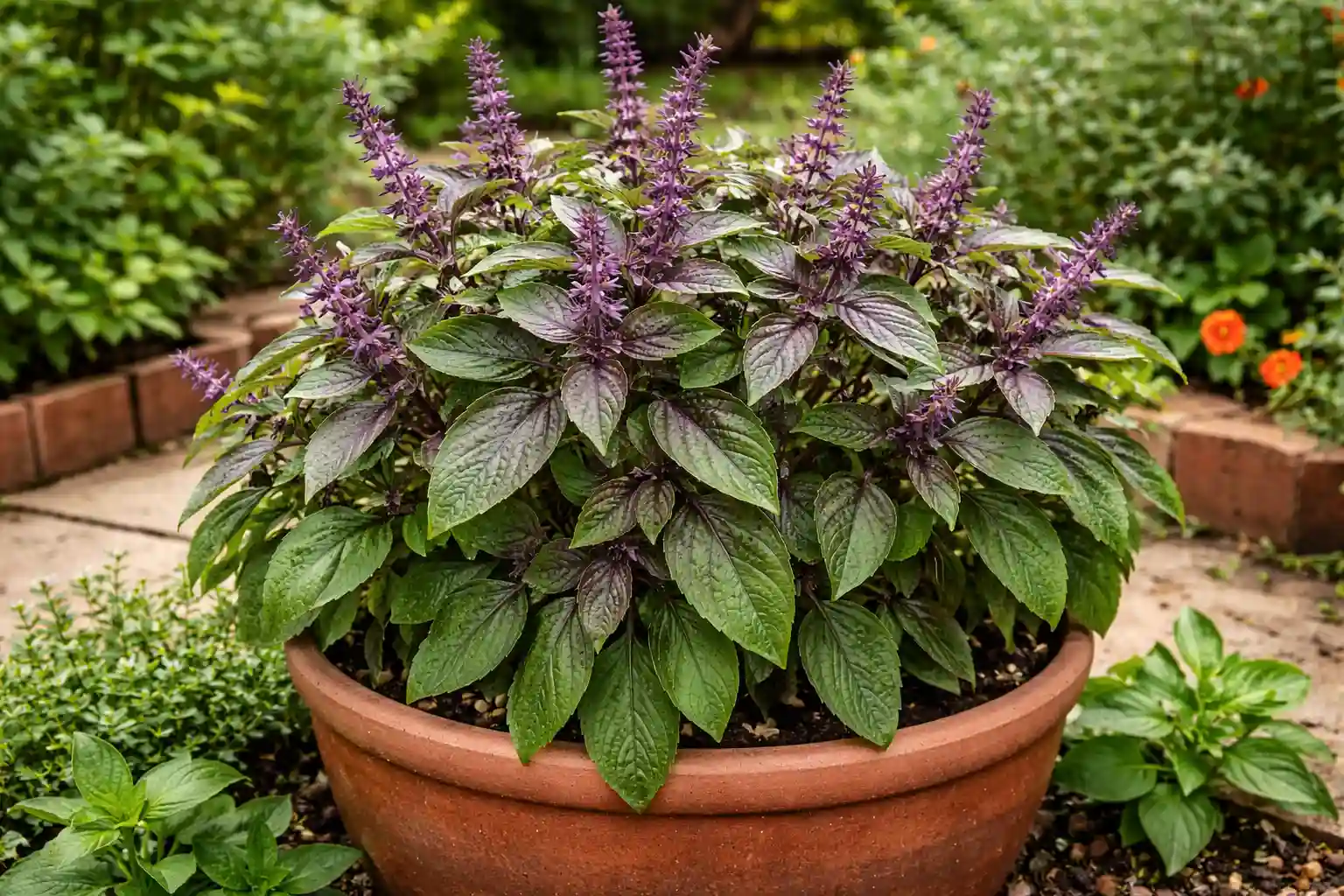
When and How to Harvest
Timing matters first. Harvesting basil leaves works best before blooming, when oils peak. I cut stems right above a leaf node to encourage new growth.
I don’t strip the plant naked. Regular, gentle cuts keep it productive and balanced.
Best Conditions for Maximum Flavor
Flavor begins from the roots. Warm sun, constant watering, and ventilation encourage robust oils. That’s the bedrock of effective perennial basil care.
I eat gently and prune regularly. Simple basil plant maintenance maintains leaves thick and flavorful without straining the plant.
Basil plants produce more essential oil when they grow in full sun. This information comes from herb researchers and agricultural extension sources. Studies show that basil with six to eight hours of direct sunlight has a stronger aroma and flavor than plants grown in partial shade.
How Harvesting Affects Taste
Cutting alters chemistry. Frequent harvest promotes fresh leaves that taste brighter and cleaner. Late harvest offers heavier, sharper notes.
I adjust depending on usage. Early cuts work for sauces. Later cuts suit oils and prepared meals.
African Blue Basil Substitutes and Alternatives
Sometimes the plant isn’t available. That doesn’t imply the recipe ends. Knowing the correct substitute for African blue basil rescues the meal without pushing the taste.
Best Substitutes by Recipe Type
No plant duplicates it perfectly. Still, several basil alternatives work when coupled to the proper meal. For prepared sauces and pestos, Thai basil or holy basil comes closest in strength.
For oils and chutneys, I blend sweet basil with a tiny bit of mint or oregano. These mixes come under herbs similar to African blue basil when heat and fat soften the edges.
Recipe Type Matched With Best Basil Substitute
This table explains how I chose a substitute for African blue basil based on cooking technique, not guessing. Matching strength and heat tolerance matters more than matching name.
| Recipe Type | Best Substitute | Why It Works |
| Pesto | Thai basil | Holds up to blending and fat, the closest strength among basil alternatives |
| Cooked sauces | Sweet basil + oregano | Sweet basil softens flavor, oregano adds an herbal bite similar to herbs similar to african blue basil. |
| Chutneys | Sweet basil + mint | Mint adds sharpness that replaces lost intensity |
| Infused oils | Thai basil | Strong oils transfer well during infusion |
| Raw salads | Sweet basil only | Milder flavor avoids overpowering |
Flavor Adjustments When Substituting
Substitutes require control. I always lower the amount first, then adjust gently. Strong plants blossom swiftly once heated.
Acid and fat assist. A dab of citrus or additional oil retains the balance when shifting herbs. That step counts more than the substitution itself.
How to Choose, Store, and Buy African Blue Basil
Buying herbs seems straightforward until taste fades. I pay attention before money crosses hands. Knowing where to buy African blue basil and how to care for it after purchase maintains its quality high.
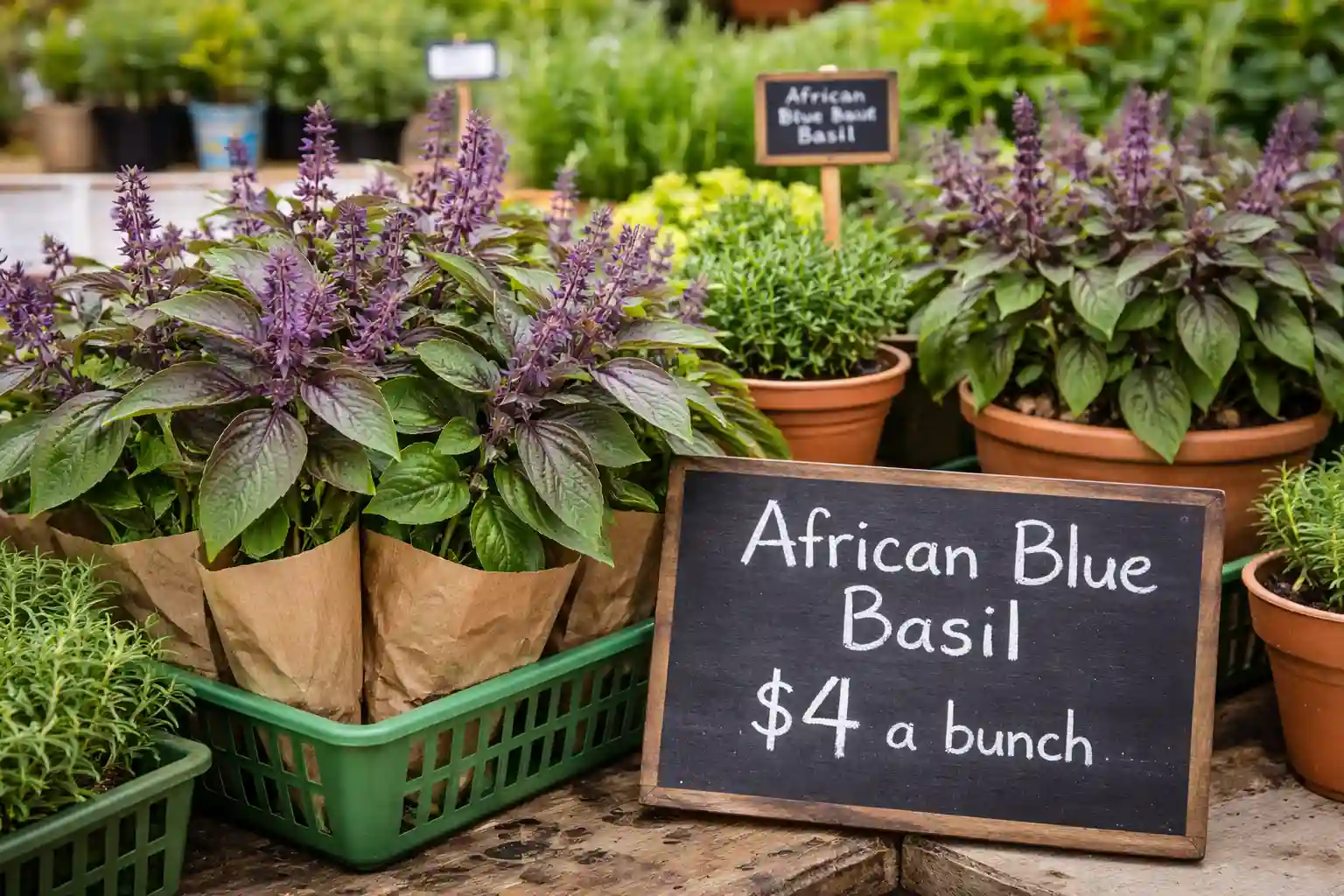
Fresh vs Homegrown Basil
Store-bought works in a pinch. Homegrown wins on strength and smell every time. When I’m selecting fresh herbs, I look for sturdy leaves, purple stems, and no yellowing.
Homegrown plants give control. You cut just what you need, when you need it. That timing keeps oils intact.
Storage Tips for Maximum Freshness
Storage ruins basil rapidly if done incorrectly. For the short term, I treat it like flowers. A jar with water and a loose lid facilitates fresh basil storage without chilling damage.
For extended storage, cooling works only after drying leaves entirely. Moisture promotes decay. Airflow and patience keep taste alive.
Final Thoughts: Why African Blue Basil Deserves a Place in Your Kitchen
This plant merits its position. I go for it when I want unique basil recipes that don’t fade into the background. It lends meaning to the plate.
I regard it as a tool, not a garnish. Cooking with specialty herbs like this demands intent, but the return is depth and control. That’s why it belongs among bold-flavored herbs that form a meal instead of adorning it.
FAQ’s About African Blue Basil
Is African blue basil edible?
African blue basil is entirely edible and often used in cooking, sauces, and herbal preparations. Both the leaves and stems are safe to eat. However, the leaves are preferred because they have more oil and a better texture, whether fresh, cooked, or preserved.
Edibility isn’t the problem. Flavor strength is. Treat it differently from sweet basil.
Does African blue basil taste like mint?
African blue basil does not taste like mint, but it has faint cooling undertones owing to comparable aromatic constituents. The main taste is herbal and peppery. There are also slight camphor-like notes instead of the usual sweetness of mint leaves.
That resemblance explains why many mistake them. On the plate, they act extremely differently.
Can African blue basil be used in pesto?
African blue basil may be used in pesto and performs best in cooked or blended variants. Its powerful oils stand up nicely with fat, nuts, and cheese. Using lower amounts of sweet basil minimizes bitterness and maintains the sauce balanced and smooth.
This is one of my favorite applications. Heat and fat keep it in control.
Is African blue basil good for digestion?
African blue basil is helpful for digestion. This is due to its fragrant oils and its long history in food health. These chemicals may enhance digestive comfort when ingested in sauces, chutneys, or prepared foods rather than big raw quantities.
I depend on it in meals, not supplements. Food-first usage works best.