What Is Beef Liver and Why People Still Cook It
I’ll be honest, beef liver has a reputation issue. Some people adore it, others won’t touch it. It keeps appearing in kitchens because it is an organ meat. This meat is important in many traditional recipes and is very nutritious.
For centuries, home chefs depended on beef offal like liver because it was inexpensive, hearty, and filled with nutrients. That rationale still applies today, particularly if you care about utilizing the entire animal and making actual meals.
Taste, Texture, and Common Misconceptions
When individuals discuss the taste of beef liver, they frequently rush to extremes. Either they recall a horribly prepared dish from childhood, or they’ve never had it at all. The truth resides in the center.
Yes, people ask, does liver taste bitter? It can, but only when it’s overdone or badly prepared. Cooked well, the taste is rich and delicious, not harsh.
The liver texture should be delicate and sensitive, not rubbery. If it seems harsh, it remained on the heat too long. Liver cooks rapidly, and you miss the delicious spot.
Tip: Overcooking is the number one reason people say they detest beef liver. Liver cooks quickly. Even one extra minute can make it tough and gritty instead of soft and tender.
Beef Liver vs Calf Liver: What Is the Difference
Beef liver versus calf liver boils down to age and intensity. The Beef liver comes from an older animal, so the taste is richer and deeper.
Calf liver soreness is greater since the animal is younger. That makes calf liver gentler and softer, which some people like when they’re new to cooking liver.
Both come within common liver types, and neither is superior across the board. If you enjoy robust taste, beef liver suits. If you want something milder, calf liver makes sense.
Beef Liver vs Calf Liver, Side-by-Side Comparison
| Liver Types | Flavor Strength | Liver Texture | Best Uses |
| Beef liver | Strong, deep, mineral-rich | Firmer when raw, tender when cooked correctly | Beef liver recipes, liver and onions, and gravy-based traditional recipes |
| Calf liver | Mild, slightly sweet | Naturally softer, higher calf liver tenderness | Quick pan frying, Italian-style dishes, and lighter meals |
Nutritional Benefits of Beef Liver
I prepare beef liver for one main purpose, thats are nutrients. Few meals give as much benefit in such a small quantity. When people talk about beef liver nutrition, they usually mean the nutrients you get from a small serving.
It’s one of those iron-rich foods that come up in ancient cuisine traditions for a reason. The body understands what to do with it, quickly.
Vitamins and Minerals in Beef Liver
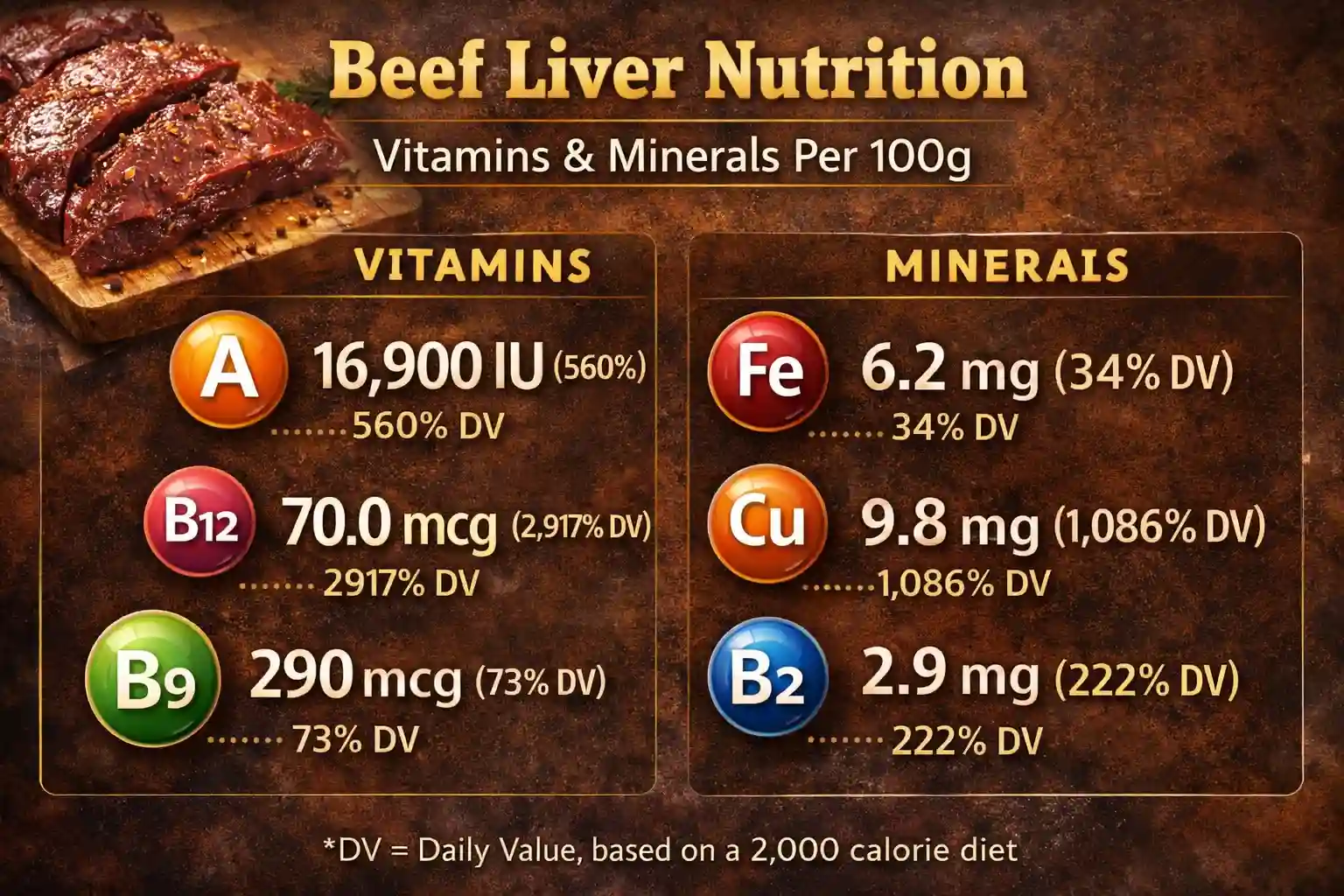
Beef liver contains a complex blend of elements your body requires every day. The most spoken about are vitamin A, vitamin B12, iron, copper, and folate.
Vitamin A helps eyesight and immunological function. Vitamin B12 assists with energy and neurological function, while iron improves oxygen flow in the blood. Copper and folate perform functions in metabolism and cell development.
USDA nutrition data shows that a 100-gram serving of cooked beef liver gives more than 100% of the daily requirement for vitamin B12. It also gives 50 to 70 percent of the daily vitamin A. It also has a good amount of iron, copper, and folate. Beef liver is special for its nutrition, especially for iron. It provides strong nourishment from just a small piece.
This concentration explains why many call the liver a nutritious powerhouse without consuming enormous servings.
Who Should and Should Not Eat Beef Liver
The liver health benefits make this diet valuable for many individuals, particularly those lacking in iron or B12. Small amounts once or twice a week are frequently plenty.
That said, vitamin A toxicity is real if portions go out of hand. This counts more for long-term daily ingestion, not occasional meals.
Pregnancy liver intake requires caution. Many health recommendations advocate minimizing or avoiding liver during pregnancy owing to high vitamin A levels.
Medical recommendations from organizations like the World Health Organization and the NHS say that long-term high consumption of preformed vitamin A from foods such as beef liver may raise the risk of vitamin A toxicity. This caution is particularly tight during pregnancy, when liver intake, when excess vitamin A may harm fetal growth.
This isn’t about fear. It’s about portion knowledge, timing, and understanding when a wonderful thing requires boundaries.
How to Prepare Beef Liver Before Cooking
I’ve learnt this the hard way the preparing beef liver matters more than the recipe. Skip prep, and even superb cooking won’t salvage the dish. Get prep correct, and texture and taste come into place.
How to Clean and Trim Beef Liver Properly
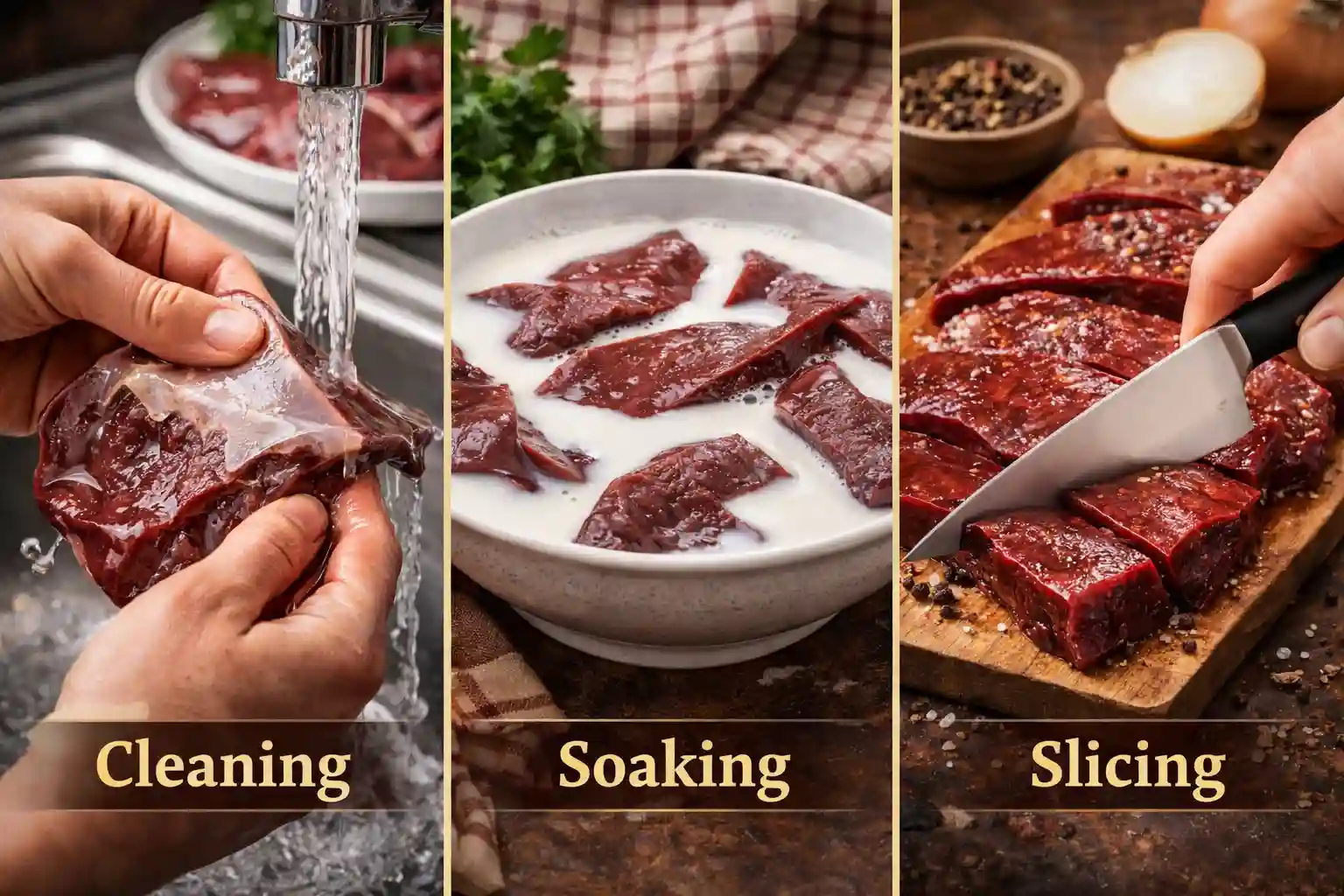
Start by cleaning the liver with cold water. Pat it dry so you can see what needs attention.
Use a sharp knife to remove the membrane from the surface. This thin skin thickens while cooking and creates chewiness. Next, trim connective tissue and visible veins so each bite remains smooth.
Finish by slicing liver just after trimming. Clean cuts now mean even cooking later.
Tip: A sharp knife counts more here than anywhere else. Clean cuts help you remove the membrane and trim connective tissue. They also let you control the thickness of the liver slices. This keeps the liver’s texture delicate and reduces tearing. This way, you can avoid uneven cooking.
Should You Soak Beef Liver in Milk or Lemon Water
Here’s the simple answer. Soaking liver helps, but only if you do it correctly.
Soak the liver in milk for 30 to 60 minutes if you wish to remove bitterness and soften the taste. Milk draws out blood and tempers intensity. Lemon water works quickly but might tighten the texture if left too long.
If your objective is to tenderize liver, milk is safer. Rinse and pat dry before cooking, always.
Cooks recommend soaking beef liver in milk. Do this for 30 to 60 minutes. It helps to remove bitterness. This method keeps the liver tender. Acidic soaks, like lemon water, work quickly but can tighten the surface proteins if left too long. This is why many chefs prefer milk to tenderize liver instead of using acids.
How to Slice Beef Liver for Different Recipes
Cut size controls outcomes. Liver slices’ thickness should remain between a quarter and half an inch for pan frying.
For stir fry or rapid sautés, go with liver strips so heat reaches quickly and evenly. Thicker slices fit gravy-based meals where moderate simmering finishes the cooking.
Watch portion size too. Smaller servings cook better and help prevent overdoing a rich cuisine.
How to Cook Beef Liver Without Making It Tough
I approach liver like a race, not a marathon. These cooking beef liver tips keep it soft, tasty, and quick on the dish. The aim is tender liver, and the adversary is heat that remains around too long, so you must avoid overcooking.
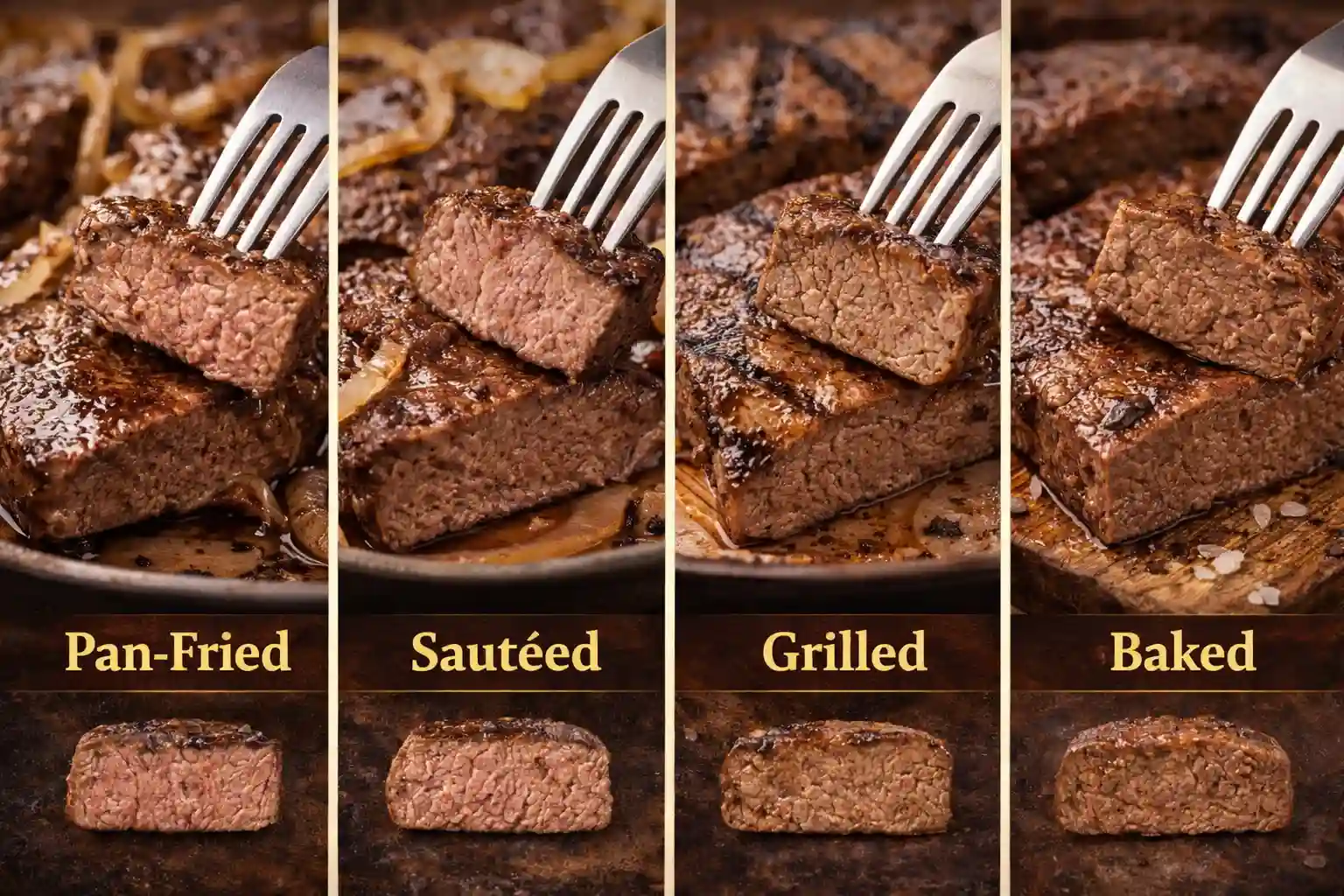
Best Cooking Methods for Beef Liver
Pan-fried beef liver works best for control. A heated pan, thin slices, and fast spins trap in moisture. You’re searching for color on the exterior and gentleness within.
Sautéed liver, strips, and onions. High heat, short duration, continuous movement. It finishes before the pan cools.
Grilled liver requires attention. Use skewers or a grill pan, keep slices thin, and pluck early. Baked liver matches gravy meals, where mild heat finishes the cook without drying it out.
Timing Guide: Minutes Per Side by Cooking Method and Slice Thickness
Pan-fried beef liver cut at a quarter inch cooks for 2 to 3 minutes each side over medium-high heat. Thicker half-inch slices require 3 minutes each side, no more, otherwise the liver gets tough.
Sautéed liver strips cook quickest. Thin strips require 1.5 to 2 minutes total, swirled regularly so they retain tender liver, not dried.
Baked liver in gravy boils slowly at low heat for 20 to 25 minutes, focusing on moisture to avoid rubbery liver and dry liver.
Common Cooking Mistakes That Ruin Liver
The main one is overcooked liver. Even an additional minute may change it from soft to harsh.
Once that occurs, you get a rubbery liver or dry liver that no sauce can repair. Crowding the pan promotes steaming, which contributes to the issue.
Cook in batches. Pull early. Let carryover heat do the rest.
Tip: Beef liver is done when it still responds to a slight finger squeeze. If it feels firm or springy, it is starting to overcook. This leads to rubbery and dry liver. Pull it early and let residual heat do the work.
Classic Beef Liver Recipes
When individuals look for traditional beef liver recipes, they typically desire comfort. These dishes remain around because they work. They’re familiar, filling, and based on basic processes that don’t resist the ingredient.
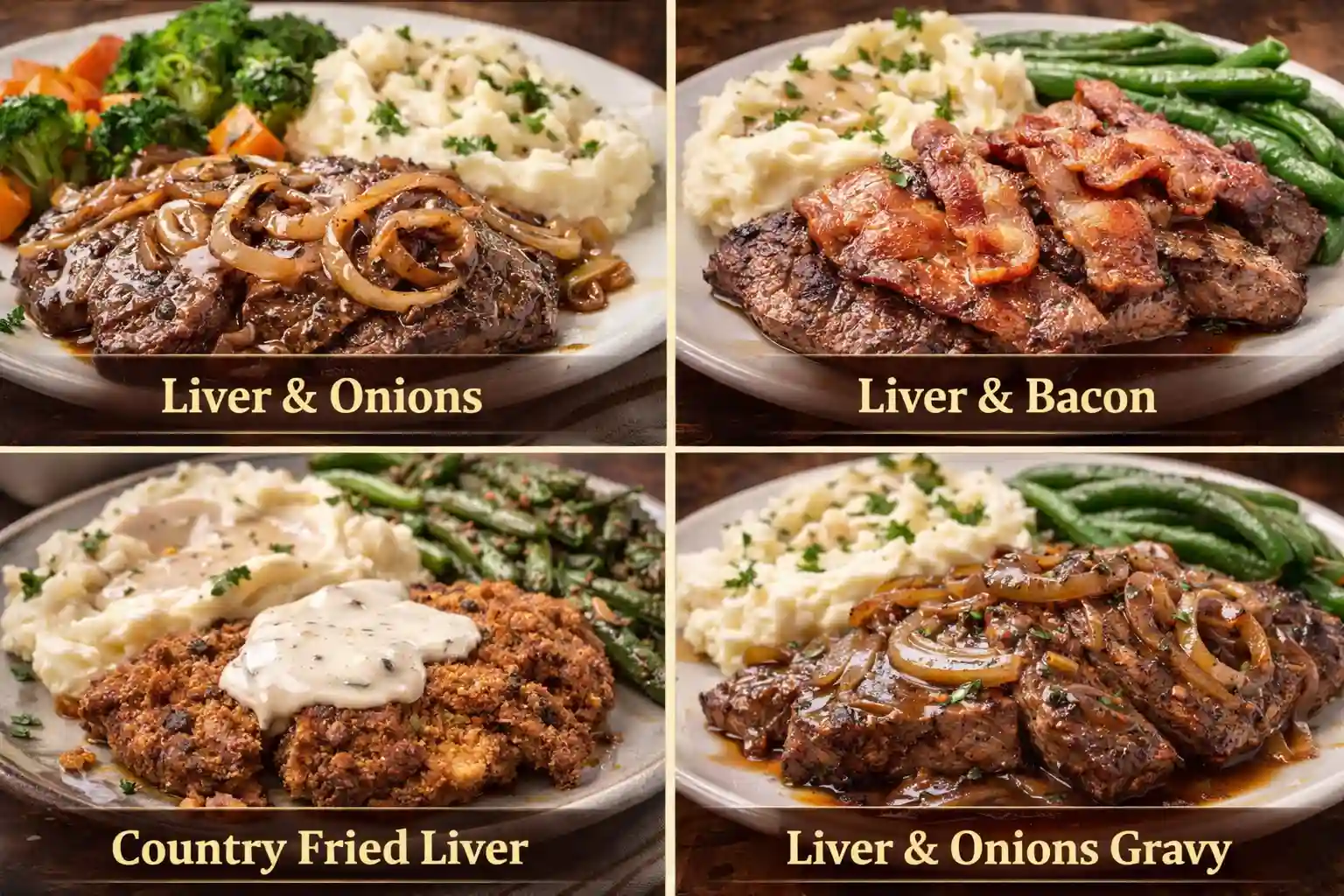
Beef Liver and Onions Recipe
This is the meal everyone knows. Liver with onions remained popular because the sweetness balances the depth.
Thin liver slices cook rapidly, whereas caramelized onions take their time. That contrast important. When done well, the onions soften the taste and transform this into a truly classic liver recipe.
Serve it hot, simply, and without cluttering the platter.
Beef Liver and Onions Recipe Card
Ingredients
- Beef liver, sliced thin
- Yellow or white onions, sliced
- Milk, for soaking
- Flour, for light coating
- Salt and black pepper
- Butter or oil
Quick Steps
- Soak the beef liver in milk for 30 to 60 minutes, then pat dry.
- Lightly coat with flour and seasoning.
- Pan cook the liver quickly, remove it, then slowly cook the onions until soft and deeply caramelized onions form.
- Return liver briefly to warm through and serve.
Cooking Times
Liver cooks 2 to 3 minutes per side. Onions take 20 to 25 minutes over low heat. This timing keeps the dish true to a classic liver recipe and prevents toughness.
Southern Style Beef Liver with Gravy
This variant leans upon comfort. Beef liver gravy provides moisture and warmth, which helps maintain the soft texture.
A traditional Southern liver dish employs pan drippings, onions, and flour to produce a silky sauce. Everything remains soft and gradual after the first year.
That’s why this meal merits its position as comfort food. It fills you full without attempting to impress.
Modern and International Beef Liver Recipes
Once you move past the classics, things open up quickly. These international liver recipes illustrate how various cultures handle the same item with confidence. The outcome is a variety of modern liver dishes that seem new without losing their purpose.
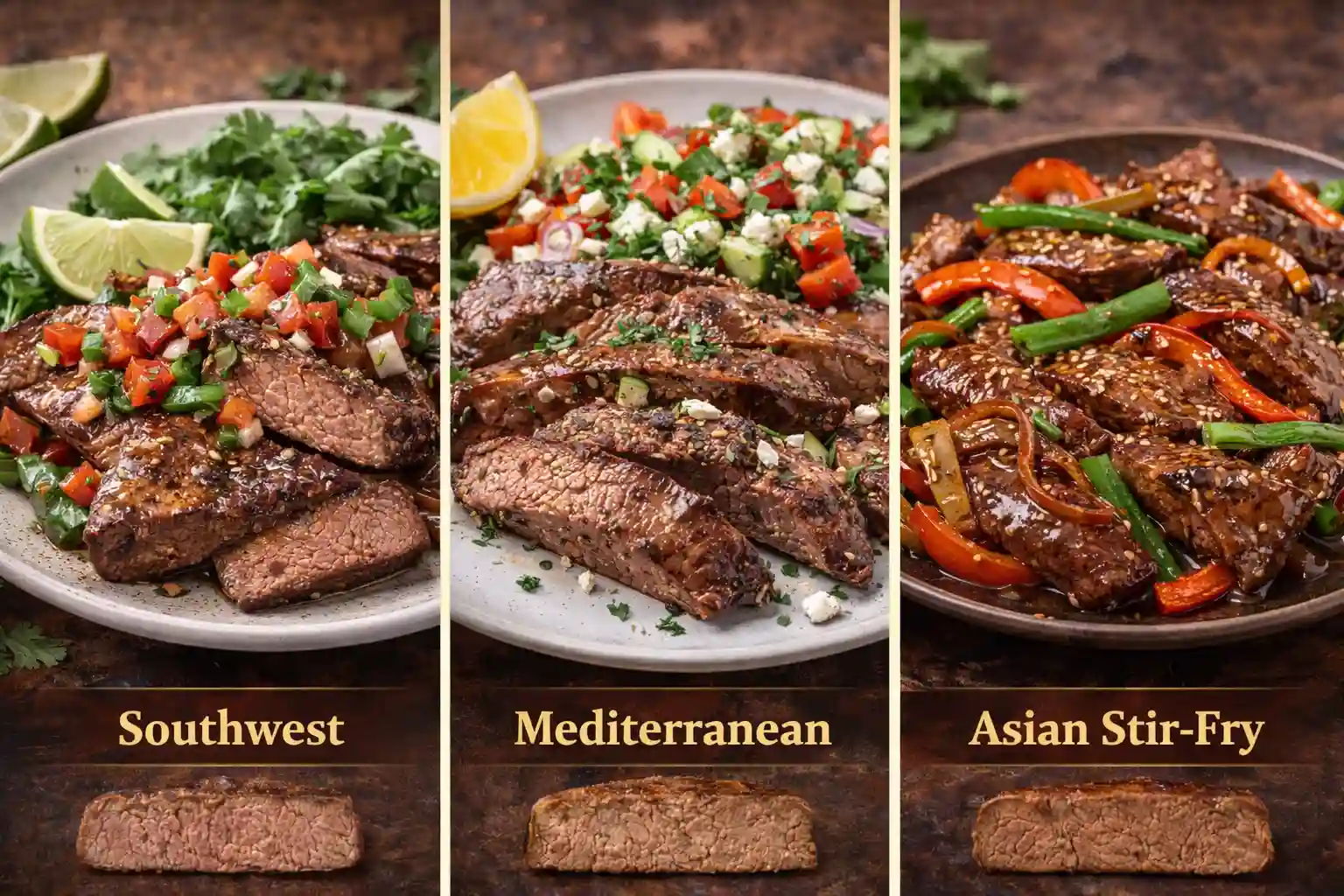
Italian Style Beef Liver with Marsala
This meal reveals that liver doesn’t require extensive treatment. Beef liver Marsala utilizes sweetness and acidity to balance taste.
An Italian liver dish like this depends on onions, butter, and Marsala wine to make a light sauce that covers without drowning. The liver cooks rapidly, then rests while the sauce thickens.
Serve it with bread or potatoes so nothing goes to waste.
Spicy Beef Liver Stir Fry
This one cooks in minutes. A beef liver stir fry maintains slices thin and heat high.
As an Asian liver dish, it depends on garlic, chile, and fast movement in the pan. Nothing sits still. That quickness makes this into a genuine quick liver meal for hectic evenings.
Rice or flatbread works well on the side.
Stir Fry Timing Chart: Seconds Per Step
Heat the pan first for 30 seconds until it’s hot but not smoking. Add oil and aromatics like garlic and chile, then stir for 10 to 15 seconds until fragrant.
Add thin-sliced beef liver and spread it out swiftly. Cook for 30 to 45 seconds, then turn and cook another 30 seconds. Finish with sauce and stir for 15 to 20 seconds before removing from heat. This precise timing maintains a beef liver stir fry tender and prevents it from going dry.
Crispy Pan-Fried Beef Liver
If texture wins you over, this is the play. Crispy liver begins with a little coating and heated oil.
Pan-fried liver works best when slices remain thin and dry before hitting the pan. A fast breading offers contrast without hiding taste, which stops it from feeling heavy.
This breaded liver shines with simple sides and strong sauces.
Healthy Beef Liver Recipes and Diet-Friendly Options
I hear this a lot, liver sounds heavy, but it doesn’t have to eat that way. With the appropriate mixes and amounts, healthy beef liver recipes suit clean eating programs without issue. Liver works well as a low-carb liver meal since it’s satisfying without depending on carbohydrates.
Keto and Low Carb Beef Liver Recipes
Keto beef liver fits nicely into low-carb meals. Liver contains no carbohydrates and provides protein and fat together in one dish.
As low-carb organ meat, it matches well with butter, olive oil, leafy vegetables, and mushrooms. Skip breading and sauces with sugar. Keep the heat quick and servings small.
Macro Box: Net Carbs per Serving of Beef Liver with Keto Friendly Sides
Beef liver provides zero net carbohydrates per typical cooked dish of roughly 100 grams. When you add keto-friendly sides, the total carbs stay low. For example, you can use spinach cooked in butter, mushrooms in olive oil, or steamed zucchini. These options keep the whole dish under 5 net carbs. This makes keto beef liver a solid low-carb organ meat alternative for stringent low-carb diets.
Paleo and Whole Foods Beef Liver Meals
A paleo liver recipe keeps ingredients minimal and familiar. Think liver, onions, herbs, and animal fat.
Within a whole foods diet, liver replaces manufactured supplements with actual nutrients. Roasting vegetables or gently sautéing greens keeps the platter balanced without obscuring the primary item.
Example Paleo Meal Plate: Protein to Vegetable Ratio
A basic paleo liver recipe follows a precise ratio. Non-starchy vegetables fill half the plate. One quarter is beef liver. The last quarter is healthy fats like olive oil or ghee. This balance matches a whole foods diet, aids digestion, and keeps quantities limited without overwhelming the plate.
Best Side Dishes to Serve with Beef Liver
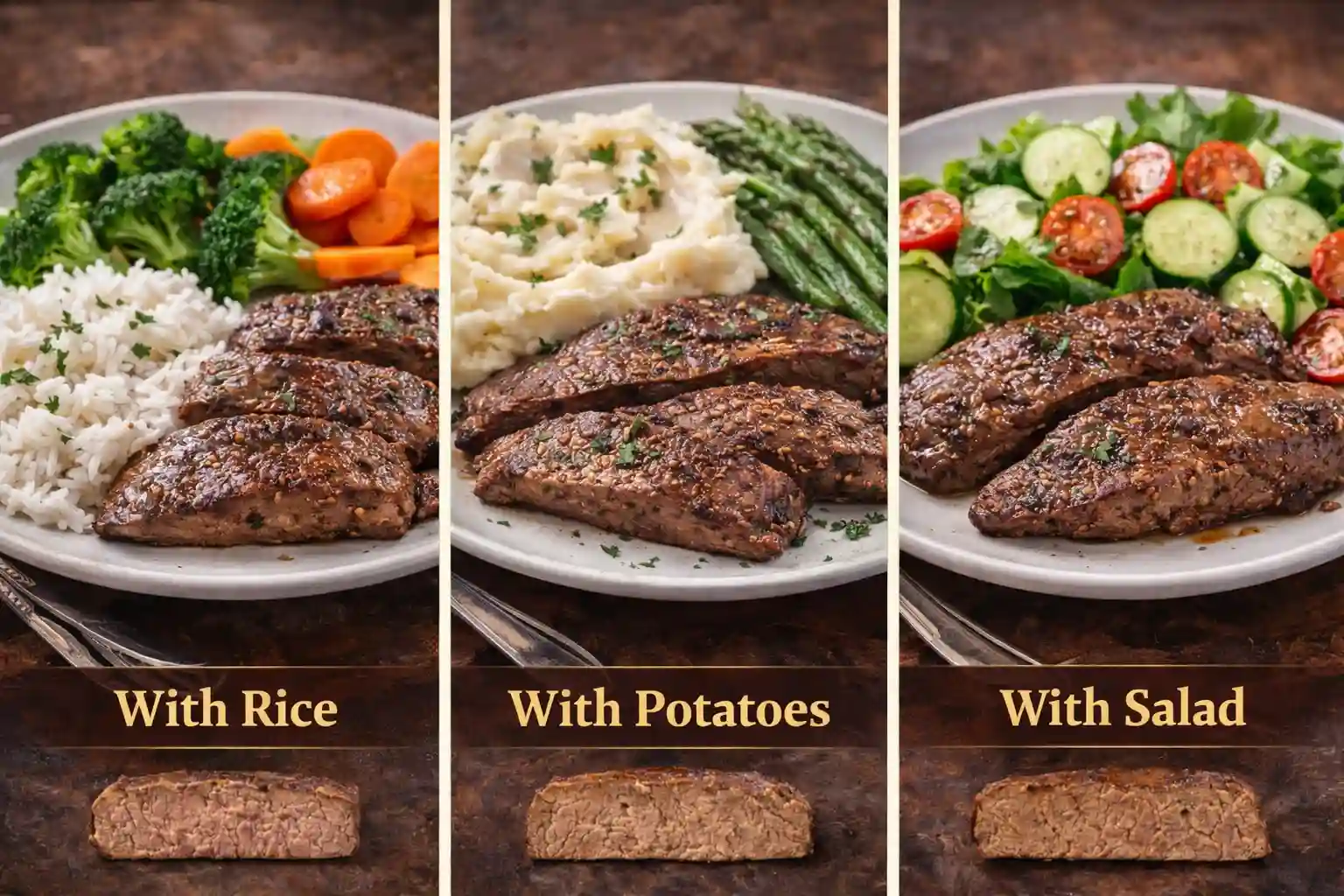
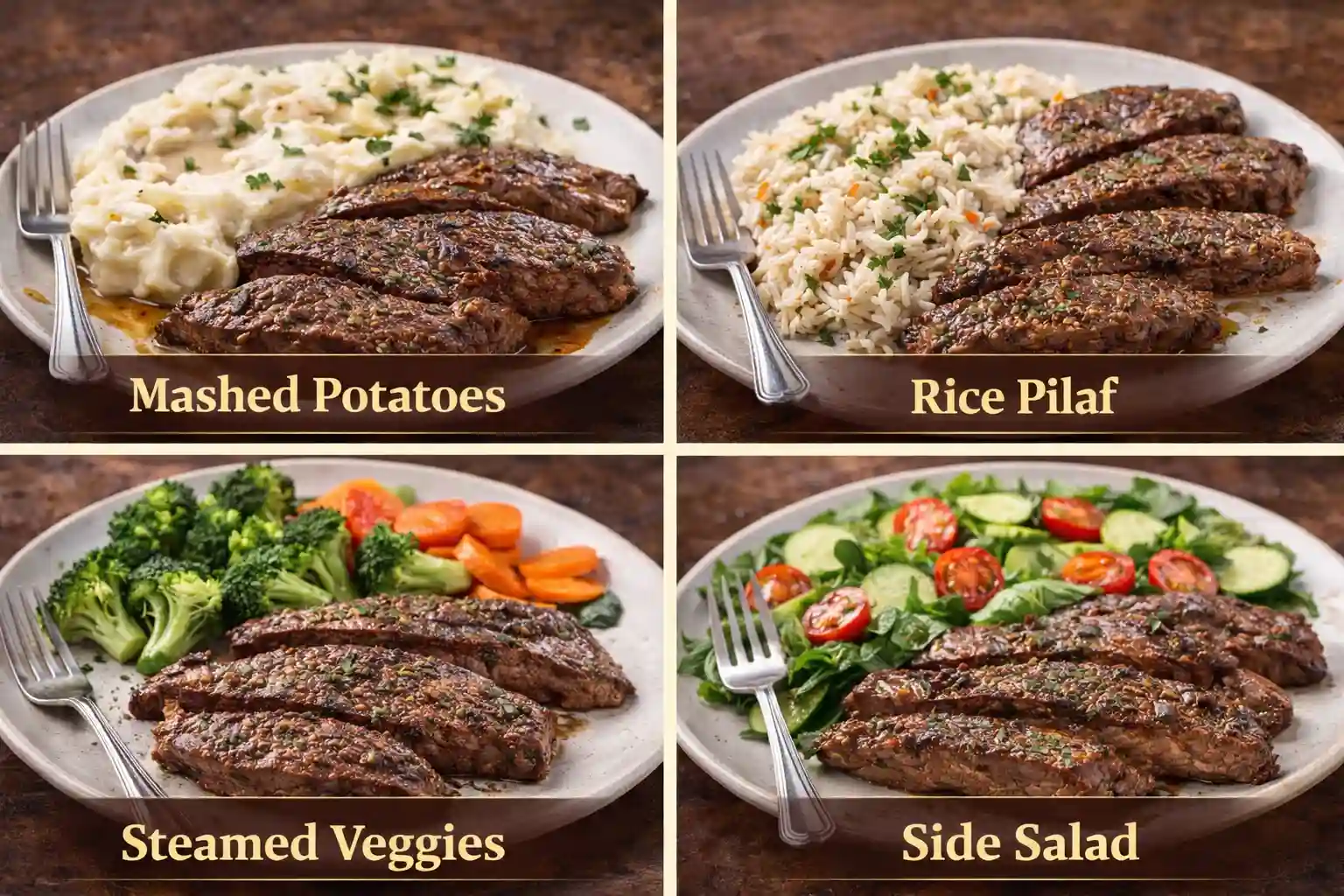
People commonly question what to serve with liver, and the answer influences the entire dinner. The perfect liver side dishes balance richness without taking the spotlight. Think contrast, not competition.
Classic Side Dishes
Old school plates still function. Mashed potatoes take up liquids and mellow harsh tastes. They’re steady, familiar, and filling.
Rice keeps everything clean and neutral, particularly with sauced liver. Add gravy sides, and the platter becomes warm and grounded without seeming heavy.
These sides complement classic dinners where comfort counts more than haste.
Light and Healthy Side Options
If you want stability, go lighter. Steamed veggies keep the platter fresh and decrease richness.
Simple salads offer bite and acidity, which cuts through liver’s depth. These low-calorie sides are nice for smaller servings or diet-oriented meals.
The aim is the same, let the liver lead, not overwhelm.
How Often Can You Eat Beef Liver
This shows up every time. How frequently to eat liver isn’t about fear; it’s about space. Because liver is dense, liver consumption frequency matters more than it does with other meats.
Portion Size Recommendations
An appropriate beef liver serving size remains modest. About 75 to 100 grams cooked is plenty for most people.
That portion nourishes without straining limitations. Larger amounts don’t give much benefit and make the texture tougher to handle.
Think slices, not slabs.
Weekly Intake Guidelines
Most dietary guidelines recommends to liver weekly intake of one to two servings per week for healthy persons. That spacing maintains benefits stable without excess.
The rationale is clear, vitamin A limits matter over time, not in one meal. Eating liver every day for lengthy stretches boosts consumption too high, whereas weekly meals remain within acceptable levels.
Spacing keeps liver helpful, not heavy.
Buying and Storing Beef Liver
Quality begins before the pan. If you want excellent results, buy beef liver with care and treat it properly once you get home. Storage blunders undermine excellent sourcing rapidly.
Where to Buy Fresh Beef Liver
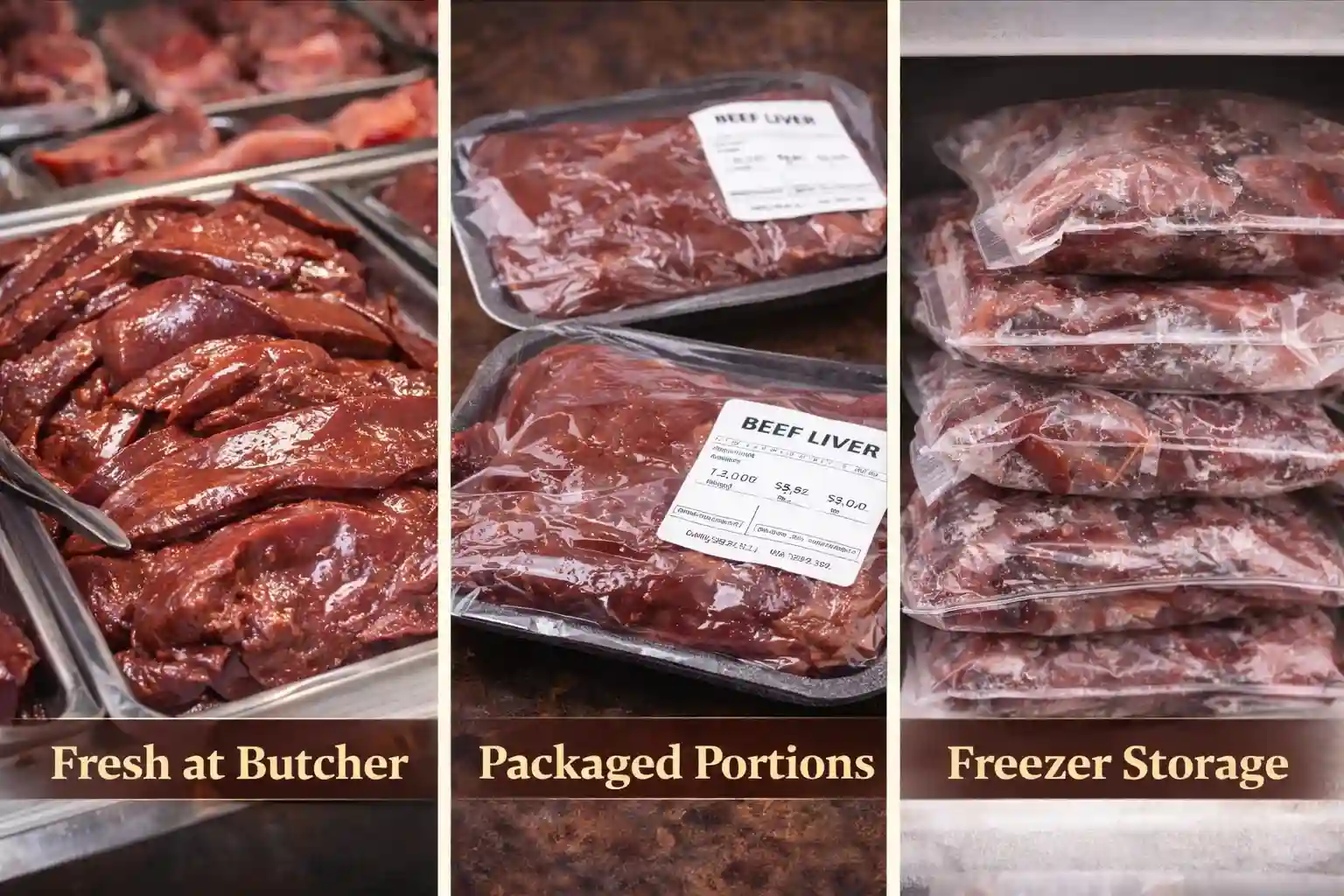
Your best choice is a local butcher. Butcher beef liver is generally fresher, cut better, and simpler to ask questions about. You may order thin slicing or specified parts at the moment.
Many retailers also offer grocery store liver, generally frozen or vacuum-packed. Look for a clear color and no overpowering scent. If feasible, pick grass-fed beef liver, which frequently has a softer taste and firmer texture.
Buying Checklist for Fresh Beef Liver
Look for color first. Fresh beef liver should be rich reddish brown, not gray or light. Dull color signifies aging.
Check the smell. It should be clean and mild, never sharp or sour. Strong odor means pass.
Ask about cut thickness. Even slices cook better and help prevent overcooked liver. Finally, validate the source. A reliable butcher or properly labeled grass-fed beef liver is the safest option.
How to Store and Freeze Beef Liver
Fresh liver doesn’t wait. Store it cool and utilize it within 1 to 2 days to store liver safely.
If plans change, freeze beef liver straight away. Slice it first, wrap parts firmly, and label dates. Frozen liver retains well for up to 3 months without noticeable texture loss.
Thaw slowly in the fridge, never on the counter. That step alone saves flavor and texture.
Final Thoughts on Cooking Beef Liver at Home
I’ll state this simply, liver isn’t hard, it’s just honest. Once you respect heat, time, and prep, easy beef liver recipes come into place quickly.
The key difference is cooking confidence. When you know how thin to slice, when to withdraw from heat, and how to balance sides, liver stops seeming hazardous and begins feeling dependable.
Cook it simply. Cook it fast. Trust your hands more than the clock. That’s how beef liver gets a regular seat at the table.
FAQ’s
Why do you soak liver in milk before cooking it?
Liver is steeped in milk to remove bitterness and soften its strong taste. Milk pulls out extra blood and chemicals that might create an unpleasant taste. It also helps soften the surface, making the liver more tender when cooked fast.
What can I do with beef liver?
Beef liver may be pan-fried, sautéed, grilled, baked with gravy, or sliced for stir fry. It also works great with traditional liver and onions, Italian-style recipes, or simple dinners combined with veggies. Thin-slicing enables several rapid cooking possibilities.
Is beef liver actually good for you?
Yes, beef liver is incredibly healthy and rich in vitamin A, vitamin B12, iron, copper, and folate. Small portions deliver a great quantity of vital nutrients. Because it is quite thick, it is better consumed seldom rather than every day.
Is there a downside to eating liver?
The biggest drawback is excess vitamin A if liver is consumed too regularly or in excessive volumes. High ingestion over time may induce vitamin A toxicity. Moderation is crucial, with most individuals limiting liver to one or two portions per week.