
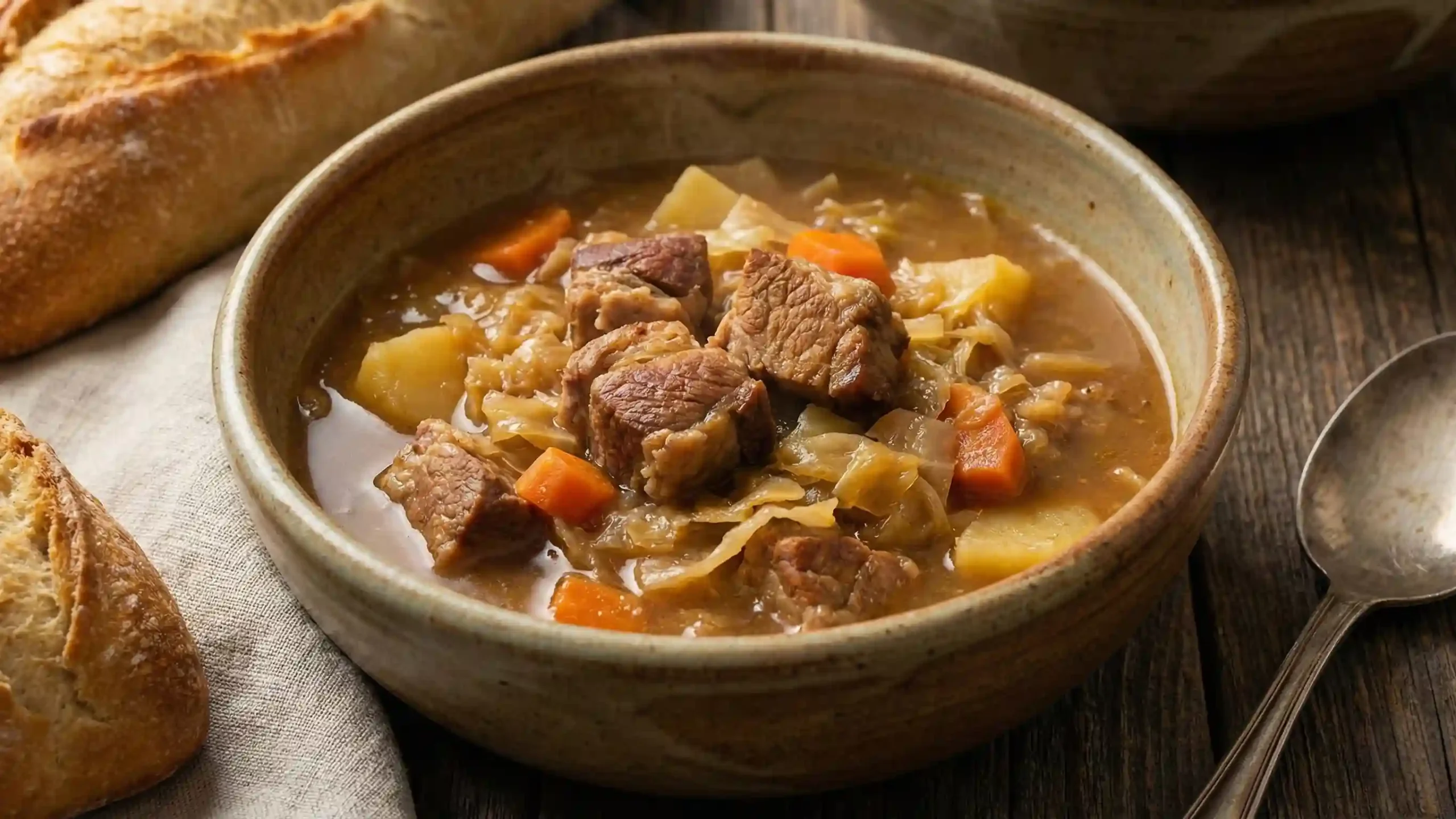
Introduction: Why This is the “King” of Winter Soups
This Eastern European cuisine classic displays an ultimate comfort meal by blending smoky pork and sour cabbage. It is a hearty stew laden with Vitamin C, functioning as a potent immune-boosting soup. Locals depend on this winter warming remedy as a reliable hangover cure that replenishes minerals and warms you fast.
Cold winds demand substantial meals. You cannot survive winter on salads alone. You need warmth, fat, and acid to feel alive. That is why you must create this pork and sauerkraut soup.
It nails every single taste note. You taste smoky pig fat, sour fermented cabbage, and flavorful broth in one spoon. It wakes up your palette immediately.
One cup of sauerkraut has about 21 mg of Vitamin C. This is about 35% of the daily recommended amount, according to the USDA.
It isn’t just about the flavor. This meal acts as a great immune-boosting soup throughout flu season. The Vitamin C from the cabbage forms a repair bomb. That is why people recognize it as a hangover cure throughout Poland.
Kwaśnica vs. Kapuśniak: What is the Difference?
Kwaśnica is a bitter, fatty soup from the Tatra Mountains. This dish uses smoked beef, potatoes, and cabbage, but includes no sweet vegetables. Kapuśniak is the common home-style version found in many places. It usually uses root vegetables like carrots for sweetness and gets its red color from tomato paste.
You cannot use these names in the same way. They represent two very distinct,t authentic Polish soup types. I see recipes mix them often, yet the taste profiles are separate.
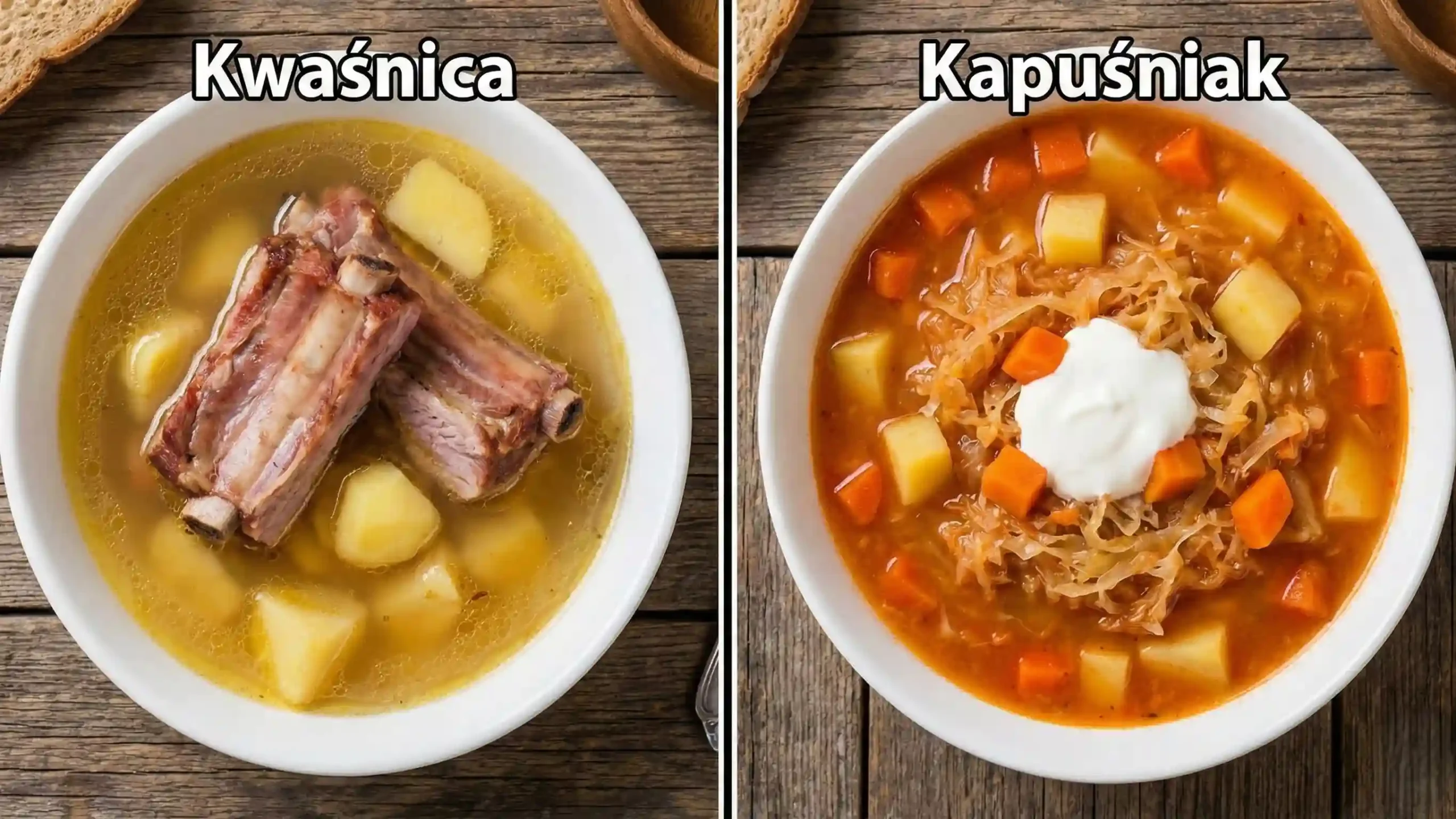
Kwaśnica is a severe Highlander tradition. It originates from the Podhale region in the south. The residents there experience hard winters; they require fat and acid.
This variation involves smoked ribs or mutton. You will observe a clear broth that is murky with fat. It never includes carrots or tomato paste because sweetness destroys the harsh sourness.
Kapuśniak is what most grandmothers make. It is the “kitchen sink” variant. You cook it with pork, but you also add root vegetables like parsnips and carrots.
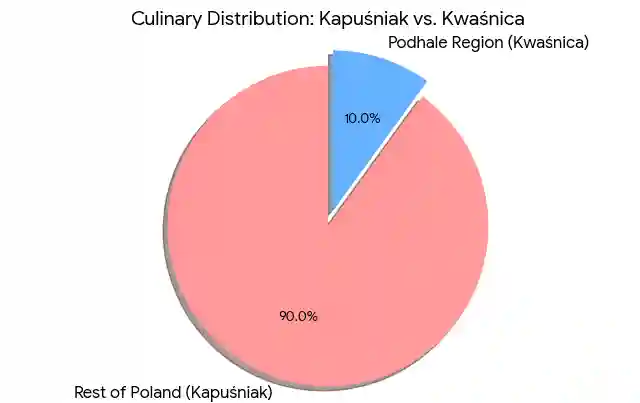
The broth becomes crimson or orange. The carrots contribute sugar, which reduces the acidity. It is gentler, thicker, and feels more like a vegetable stew than the raw, meaty Kwaśnica. Unlike light summer dishes found in round zucchini recipes, this soup relies on heavy winter root vegetables to sustain you through the cold.
Essential Ingredients for the Perfect Broth
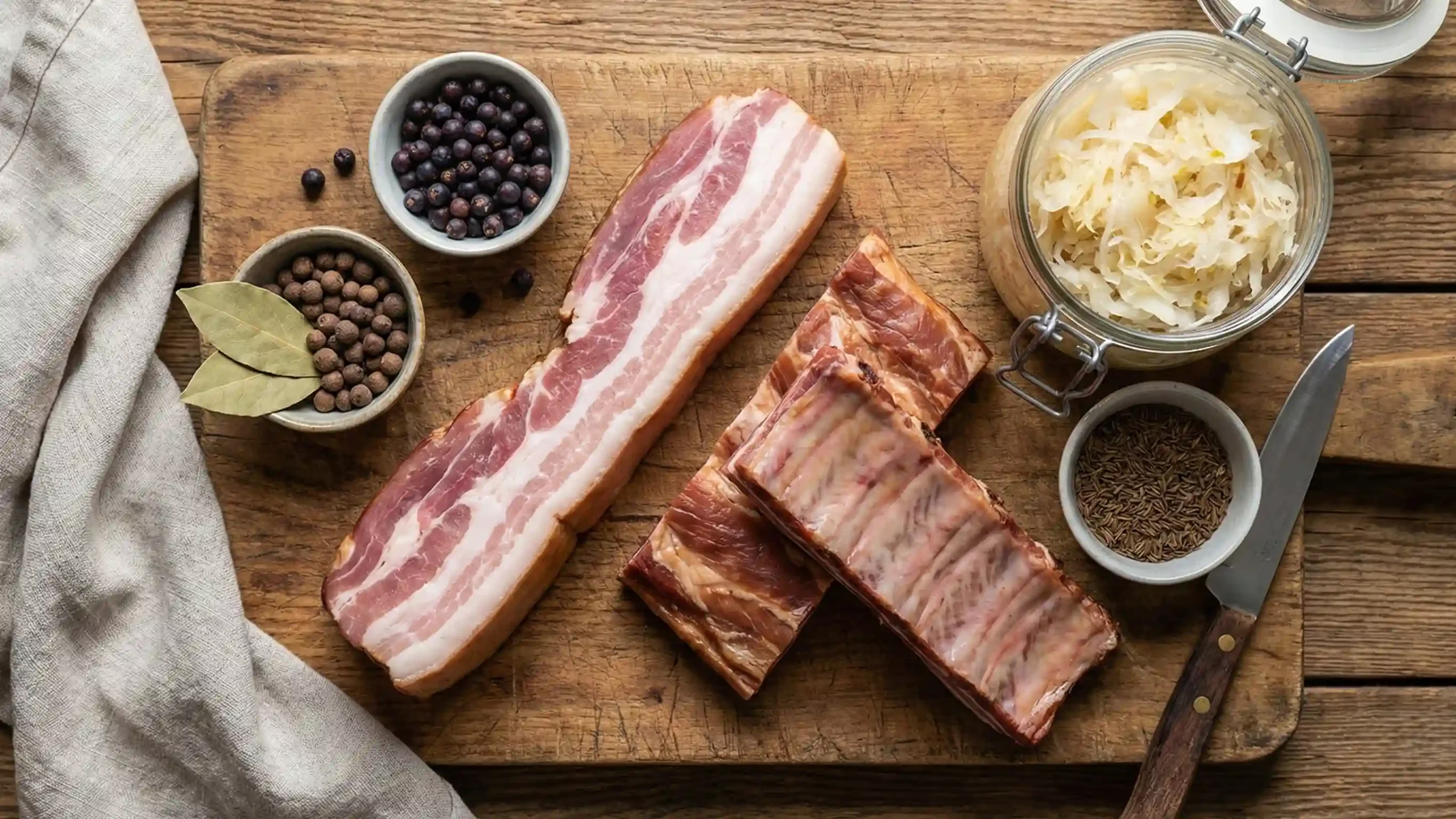
You cannot fake this soup. The taste originates from a special “Holy Trinity” of components. You must get the meat, the cabbage, and the seasonings absolutely correct.
The Meat
You require a precise balance. You must blend Smoked Meat for taste and Raw Meat for texture. If you use solely raw meat, the soup feels bland.
Start with Smoked pork ribs or hocks. These infuse the water with that characteristic wildfire fragrance. You should also add fatty pork belly or classic boczek.
According to culinary science, the dehydration process during smoking hardens the external collagen matrix (the pellicle). This causes smoked bones to release gelatin roughly 20% slower than raw bones. To get the same thick, tasty texture, simmer the broth for another 45 to 60 minutes. This will help rehydrate and remove the collagen.
You may also throw in Polish sausage or kielbasa toward the end. This offers you distinct bits of meat. The rendered fat from these slices forms the soup’s body.
The Sauerkraut
Do not purchase the can. Producers frequently pasteurize canned sauerkraut, which eliminates both the taste and the germs. You want “Live” refrigerated kraut available in the deli area.
You must keep the fermented cabbage juice. This liquid is gold. Pouring it down the drain is a crime. You will add this brine at the very end to adjust the sourness.
The Spices
You need aromatic depth. Polish food depends largely on caraway seeds for a very practical purpose. They assist digestion and minimize bloating from the cabbage.
You must also use allspice berries and bay leaves. For the authentic hunter-style flavor, add juniper berries. These give the soup a characteristic gamey taste that simulates wild boar. A dash of marjoram pulls it all together.
The Potatoes
Texture matters here, too. You should use Waxy potatoes like Yukon Golds. Starchy potatoes break apart in the acid. You want the potato to keep its form throughout the boil.
Step-by-Step Recipe: Authentic Polish Pork and Sauerkraut Soup
This master recipe concentrates on the richer Kwaśnica style. It depends on developing layers of taste via fat, browning, and precise timing.
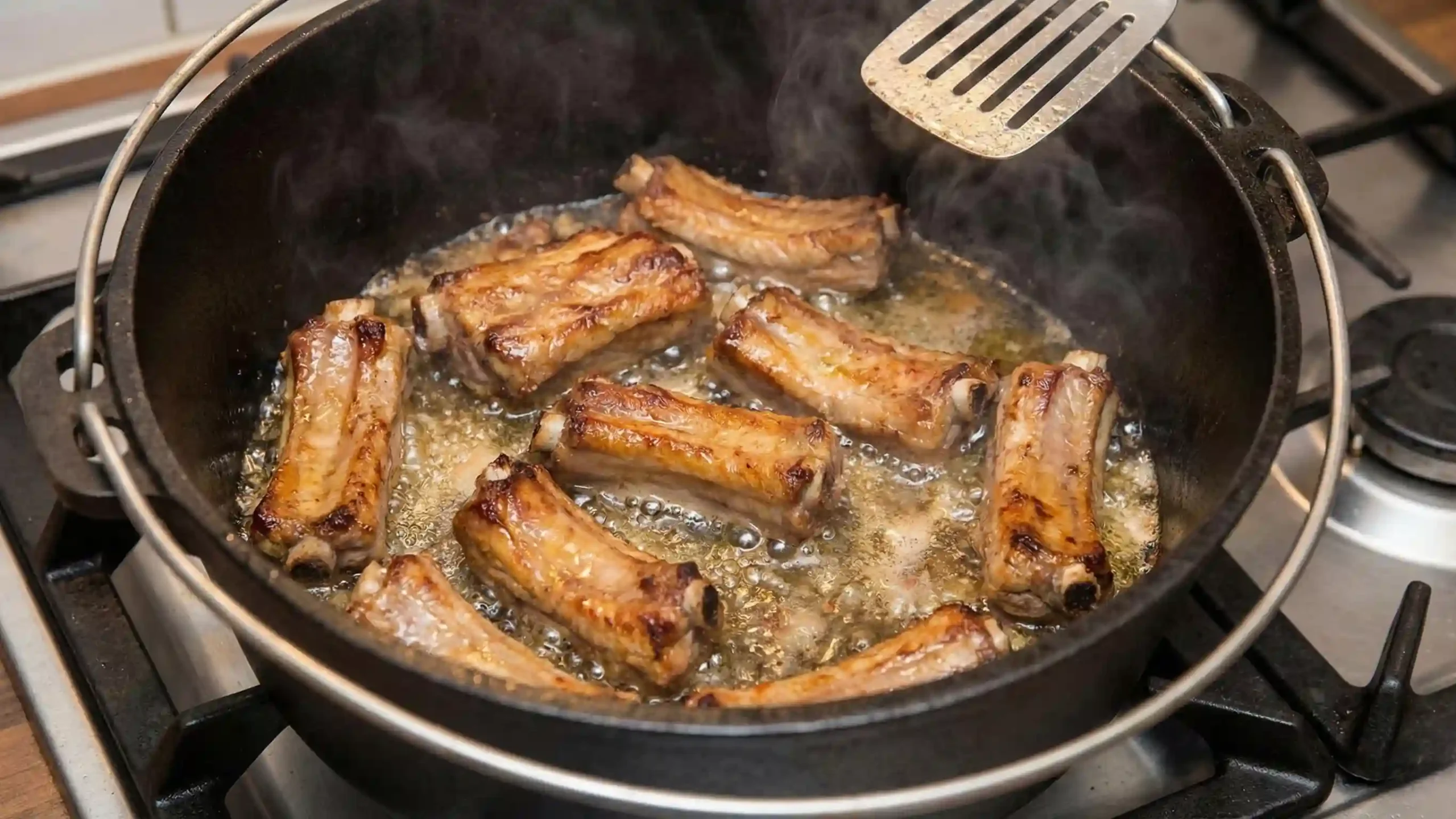
Step 1: Rendering the Fat
Flavor begins with the fat. You should not use oil. You must render fat from chopped bacon or use a spoonful of lard. This animal fat carries the smoky taste better than any vegetable oil could.
Step 2: The Brown
Now you sear the meat. Drop your ribs into the heated pot. You need a rich brown crust to begin the Maillard reaction.

This chemical reaction gives delicious depth. Do not skip this step. Once browned, remove the meat and deglaze the pot with a little water to scrape off the fond
Step 3: The Simmer
Return the meat to the pot. Add your water, spices (allspice, bay leaves, juniper), and bring to a boil. Reduce the heat immediately to a medium simmer.
Food science shows that cooking meat at 212°F (100°C) makes muscle fibers contract. This squeezes out moisture and leads to dry, tough meat. Simmering at a steady 185°F (85°C) is the best temperature. It is hot enough to change collagen into gelatin. However, it is still gentle enough to keep the muscle fibers relaxed and juicy.
Watch the pot attentively. You need to always skim the foam (scum) that comes to the top. This guarantees you end up with a clean, hearty broth.
Step 4: The Vegetables
Timing your potatoes is crucial. Add your diced potatoes just when you have fork-tender meat. If you add them too early, the acid inhibits them from cooking. If making Kapuśniak, this is when you would also add carrots.
Step 5: The Sour
Finally, add the sauerkraut. Dump the cabbage in last. You want to briefly braise it in the liquid, not destroy it.
Cooking it for about 15 minutes guarantees you keep the probiotics. Overboiling transforms the cabbage into mush and eliminates the gut-health advantages.
Cooking Method Variations (Instant Pot & Slow Cooker)
You do not always have hours. Sometimes you need a speedy dump-and-go meal. Modern instruments may imitate classic tastes if you alter the cooking times correctly.
The Instant Pot Method
Pressure cooker soup recipes save substantial time. But you cannot throw everything in at once. If you do, the potatoes will dissolve into glue.
You must cook in two phases. First, seal the meat, spices, and liquid. Cook on High Pressure for 25 minutes. Do a swift release. Then, add your potatoes and sauerkraut. Seal it again for 5 minutes.
This approach works nicely in a Ninja Foodi as well. It keeps the meat soft, much like when preparing Instant Pot beef tongue, and prevents the veggies from turning to mush.
The Slow Cooker Method
Crockpot sauerkraut soup is the simplest option. You can set it and forget it. Cook on Low for 6-8 hours.
You must adjust the water. A slow cooker does not lose moisture like a cooktop pot. Reduce your liquid by 25% to prevent a watery mess. It is the perfect one-pot supper for hectic weekdays.
Pro-Tips for “The Best” Soup (Troubleshooting)
Balance is everything in soup. You can save almost any pot by learning to adjust acidity and texture with these simple cooking techniques.
Is it Too Sour?
Sometimes the cabbage overpowers everything. If the acidity balance is overly aggressive, do not worry. You can solve this easily.
Add a pinch of sugar or caramelized onions. This sweetness neutralizes the acid without destroying the flavor depth.
You may also try washing the sauerkraut before cooking. However, do this only if required. Rinsing wipes away the brine and the umami, leaving you with tasteless cabbage.
Not Sour Enough?
This is a frequent issue. If the soup tastes flat, you likely boiled the acid out. Pour in the reserved sauerkraut juice shortly before serving to restore the punch.
Fixing Soup Consistency
Kwaśnica should be slim, whereas Kapuśniak requires a body. If you are thickening soup organically, mash one boiling potato or add potato starch slurry.
For the classic Kapuśniak texture, you create a roux. Polish chefs call this zasmażka. Fry flour in butter till golden, then whisk it in to produce a smooth, rich finish.
Dietary Adaptations (Keto & Dairy-Free)
You don’t have to break your diet to enjoy this classic supper. This soup is inherently adaptable to practically any current eating plan with only one easy change.
Keto and Low Carb Options
This meal is already a keto pork recipe superstar. The beef and cabbage are pure fat and fiber. The sole “enemy” is the potato.
You can simply create a low-carb soup by substituting the spuds. Use turnips or radishes instead. When simmered in broth, radishes lose their bite and replicate the texture of potatoes flawlessly.
You may also use a cauliflower substitute. Add florets in the final 10 minutes. This makes it paleo-friendly and decreases the carbohydrates to virtually nil.
Dairy-Free and Gluten-Free
Good news: This is naturally a gluten-free soup. You don’t need flour unless you are creating the optional roux.
It is also fully dairy-free. Just omit the spoonful of sour cream at the end. The thick, fatty broth gives enough creaminess on its own.
Serving Suggestions and Storage
Soup is one of the few dishes that defies the rules of freshness. It really improves with age, making it the best option for meal prep.
The “Next Day” Rule
You should wait. Seriously. This soup follows the “Next Day” guideline. It usually tastes better 24 hours later.
Based on science, when the soup cools, the gelatin in the broth traps the fragrant chemicals. The proteins loosen and reabsorb the liquid. Reheating leftovers the following day unleashes these trapped tastes, providing a richer, more unified taste.
What to Serve With It
You need a vehicle for the broth. A thick piece of black rye bread is non-negotiable in Poland. It holds up to the thick soup.
If you can’t locate rye, grab a loaf of crusty bread or sourdough. Slather it with butter. Top the dish with a garnish of fresh dill or parsley to cut through the richness. Save your soft, sweet bakes like a 2-banana bread recipe for dessert; here, you need a dense, savory texture to soak up the fat.
Freezing and Storage
This is one of the greatest freezer-friendly meals you can create. It keeps for 3 months. However, there is one catch: potatoes.
Potatoes may turn grainy when frozen because the ice crystals break their cell walls. If you want to freeze a huge amount, boil the potatoes separately or mash them into the broth before freezing.
Conclusion
You now own the blueprint for the best winter warming formula. This meal is more than simply supper; it is a survival weapon against the cold.
Whether you select the clear, fatty Kwaśnica from the Tatra Mountains or the vegetable-packed Kapuśniak, you are winning. This soup is affordable, tasty, and rich in Vitamin C.
It nourishes your spirit and preserves your health.
Do not overthink it. Go locate some smoked ribs and live sauerkraut. Start your pot today. Your family (and your future self) will beg you for this comfort cuisine all season long.
FAQ’s
What exactly is Kapusniak?
Kapusniak is a classic Polish soup prepared with sauerkraut, pork, and root vegetables. Kapusniak is different from its mountain cousin, Kwaśnica. It is often milder and includes carrots and potatoes for sweetness. This soup is usually thickened with a roux or tomato paste, which gives it a reddish-orange color.
Is sauerkraut soup good for you?
Yes, sauerkraut soup is good for you. It is high in probiotics and Vitamin C. The fermented cabbage helps your gut health and digestion. The broth provides electrolytes and keeps you hydrated. However, to retain the probiotic benefits, add the sauerkraut at the very end of cooking.
What is traditional Ukrainian cabbage soup?
Traditional Ukrainian cabbage soup is called Kapusniak (or Kapustnyak), comparable to the Polish variant. It is cooked with sauerkraut or fresh cabbage, potatoes, carrots, and typically millet or rice to thicken the broth. It is often served with sour cream and rye toast.
Why did God forbid pork?
In religious writings like Leviticus 11:7, pork is banned because pigs do not chew the cud, even though they have cloven feet. In the past, this rule may have been a health measure. It helped protect against trichinosis and other parasites in pork. These parasites could be present in poorly cooked or stored pork in ancient times.
Is eating sauerkraut every day good for your gut?
Yes, eating a tiny quantity of sauerkraut every day may be really helpful for your stomach. It provides helpful microorganisms (probiotics) that enhance digestion and promote immunity. However, since it is heavy in sodium, moderation is crucial; normally, one or two tablespoons a day is plenty.
What do Polish people call sauerkraut?
Polish people call sauerkraut "kapusta kiszona," which literally translates to "soured cabbage." It is a common ingredient in Polish cooking. It is the base for national dishes like Bigos (Hunter's Stew), Pierogi filling, and soups like Kapusniak.
Is golumpki Polish or Ukrainian?
Golumpki (Gołąbki) is the Polish word for filled cabbage rolls. However, the meal itself is ubiquitous throughout Eastern Europe. The Ukrainian version is named "Holubtsi." The recipes are very similar. They use cabbage leaves filled with meat and rice. However, the names and sauces show where they come from.
What is the most popular soup in Poland?
The most popular soup in Poland is probably Rosół (chicken noodle soup) or Zurek (sour rye soup). Kapusniak (sauerkraut soup) and Barszcz (beet soup) are also popular choices. They are especially enjoyed in winter and during holidays like Christmas and Easter.
Who should not take sauerkraut?
People with high blood pressure should restrict sauerkraut owing to its high salt content. Additionally, people with histamine sensitivity or renal illness (related to potassium) should visit a doctor. Individuals using MAOI drugs should also avoid fermented foods that contain tyramine.